Opinion - (2025) Volume 11, Issue 6
Received: 01-Dec-2025, Manuscript No. icoa-25-178183;
Editor assigned: 03-Dec-2025, Pre QC No. P-178183;
Reviewed: 17-Dec-2025, QC No. Q-178183;
Revised: 22-Dec-2025, Manuscript No. R-178183;
Published:
29-Dec-2025
, DOI: 10.37421/2469-9756.2025.11.333
Citation: Adeyemi, Samuel O.. ”Inflammation: Mechanisms, Diseases and Therapeutics.” Immunochem Immunopathol 11 (2025):333.
Copyright: © 2025 Adeyemi O. Samuel This is an open-access article distributed under the terms of the Creative Commons Attribution License, which permits unrestricted use, distribution and reproduction in any medium, provided the original author and source are credited.
The inflammatory response is a fundamental biological process critical for host defense against pathogens and for tissue repair after injury. However, dysregulation of this intricate system can lead to a wide spectrum of chronic and debilitating diseases, necessitating a deep understanding of its underlying molecular mechanisms. Recent advancements have illuminated the complex interplay of signaling pathways and immune cell interactions that govern the initiation, propagation, and resolution of inflammation, offering novel avenues for therapeutic intervention in various pathological conditions. The delicate balance required for effective inflammation resolution is paramount, as failure to do so can precipitate the transition to chronic inflammatory states and associated pathologies. This review delves into these molecular intricacies, aiming to consolidate current knowledge and highlight emerging therapeutic targets for modulating aberrant inflammatory responses across diverse disease contexts. [1] Emerging research is increasingly highlighting the profound influence of the gut microbiome on systemic inflammatory processes. The composition and metabolic activity of gut bacteria can significantly impact immune homeostasis, with dysbiosis â?? an imbalance in microbial communities â?? being implicated in the pathogenesis and perpetuation of chronic inflammatory diseases. Specific microbial metabolites produced within the gut have been identified as key mediators that influence immune cell function, contributing to both local and systemic inflammation and subsequent tissue damage. This understanding opens promising avenues for therapeutic strategies, including probiotics and fecal microbiota transplantation, to manage inflammatory diseases by restoring gut microbial balance. [2] The inflammasome, a multiprotein complex crucial for innate immunity, plays a pivotal role in the pathogenesis of autoimmune inflammatory diseases. Specifically, the NLRP3 inflammasome has been identified as a key driver, mediating the release of potent pro-inflammatory cytokines such as IL-1β and IL-18. The aberrant activation of these inflammasomes can exacerbate disease progression in conditions like rheumatoid arthritis and lupus. Consequently, the development of inflammasome inhibitors represents a promising novel therapeutic approach to target these autoimmune inflammatory processes and mitigate their debilitating effects. [3] Neuroinflammation, characterized by the activation of glial cells and immune responses within the central nervous system, is increasingly recognized as a significant contributor to the pathology of neurodegenerative diseases. Microglial activation, in particular, plays a dual role, both protective and detrimental, but its chronic activation can lead to neuronal damage. Specific inflammatory mediators have been identified that promote this neuroinflammation, driving disease progression in conditions such as Alzheimer's and Parkinson's disease. Consequently, exploring immunomodulatory strategies to dampen these inflammatory cascades is a critical area of research for slowing disease progression and improving patient outcomes. [4] Extracellular vesicles (EVs) have emerged as significant mediators of intercellular communication, including their involvement in inflammatory responses. These nano-sized vesicles, released by a variety of cell types, can carry inflammatory molecules and influence the behavior of recipient cells, thereby contributing to the amplification and propagation of inflammatory signals throughout the body. The ability of EVs to transport inflammatory mediators suggests their potential utility as biomarkers for inflammatory conditions and as novel therapeutic agents designed to modulate immune responses. [5] Metabolic disorders, such as obesity and type 2 diabetes, are intrinsically linked to chronic low-grade inflammation, particularly within adipose tissue. Resident immune cells in adipose tissue become activated, releasing pro-inflammatory cytokines that disrupt metabolic homeostasis and contribute to insulin resistance. Understanding this inflammatory component is crucial for developing effective therapeutic strategies. The study of inflammation in metabolic disorders highlights the importance of dietary interventions and pharmacological agents that specifically target these inflammatory pathways to improve metabolic health and combat related complications. [6] Cardiovascular diseases (CVDs) are profoundly influenced by inflammatory pathways, with endothelial dysfunction and the infiltration of inflammatory cells into the arterial wall being key events in their pathogenesis. Cytokines and chemokines contribute significantly to atherogenesis, the buildup of plaque in arteries, and play a role in the progression from atherosclerosis to heart failure. Consequently, therapeutic strategies aimed at reducing inflammation are crucial for preventing the development and progression of heart disease and improving cardiovascular health outcomes. [7] Allergic diseases are characterized by an exaggerated inflammatory response to otherwise harmless environmental antigens. This response is largely orchestrated by T helper 2 (Th2) cells, mast cells, and eosinophils, which mediate key aspects of the allergic cascade. Signaling pathways involved in allergen recognition trigger the release of mediators responsible for characteristic symptoms such as airway inflammation and tissue remodeling seen in conditions like asthma and allergic rhinitis. Understanding these immunopathological mechanisms is vital for developing targeted and effective therapeutic approaches. [8] The role of inflammation in cancer is complex and multifaceted, acting as a double-edged sword that can both promote tumor development and progression, and conversely, contribute to anti-tumor immunity. Chronic inflammation can lead to genomic instability, increasing the risk of carcinogenesis. Furthermore, immune cells within the tumor microenvironment can either suppress tumor growth or, under certain conditions, promote it. Harnessing the immunomodulatory aspects of inflammation is a key focus in the development of cancer immunotherapies. [9] Infectious diseases trigger robust inflammatory responses as the host immune system attempts to clear pathogens. However, pathogens have evolved sophisticated mechanisms to subvert these responses, leading to persistent inflammation and tissue damage. Pattern recognition receptors (PRRs) and their downstream signaling cascades are crucial for initiating inflammation upon pathogen detection. Understanding how pathogens evade these innate immune defenses is critical for developing strategies to combat infectious diseases and mitigate their inflammatory sequelae. [10]
The field of immunochemistry and immunopathology has seen significant advancements in elucidating the intricate molecular mechanisms that orchestrate the inflammatory response. These studies delve into the complex signaling cascades and cellular interactions that govern the initiation, amplification, and resolution of inflammation, underscoring the critical role of maintaining immune homeostasis. Novel therapeutic targets are being identified that aim to modulate aberrant inflammatory processes implicated in a wide array of disease states, from autoimmune conditions to neurodegenerative disorders. The emphasis on achieving effective inflammation resolution is paramount, as failure to do so often leads to chronic inflammation, contributing to disease pathogenesis and progression. [1] Further investigations have illuminated the profound impact of the gut microbiome on systemic inflammatory conditions. An imbalanced gut microbial environment, or dysbiosis, has been strongly linked to the development and persistence of chronic inflammatory diseases by altering immune cell function and contributing to tissue damage through specific microbial metabolites. This growing body of evidence suggests that manipulating the gut microbiome, through strategies such as the use of probiotics or fecal microbiota transplantation, holds significant promise as a therapeutic approach for managing inflammatory diseases by restoring a healthy microbial ecosystem and its beneficial immunomodulatory effects. [2] Central to the pathogenesis of autoimmune inflammatory diseases is the activation of inflammasomes, particularly the NLRP3 inflammasome. This multiprotein complex acts as a critical sensor of cellular stress and danger signals, leading to the release of pro-inflammatory cytokines like IL-1β and IL-18, which drive tissue inflammation and damage. The overactivity of the NLRP3 inflammasome has been implicated in the exacerbation of autoimmune conditions such as rheumatoid arthritis and lupus. Consequently, the development of targeted small molecule inhibitors designed to block inflammasome activation represents a compelling therapeutic strategy for these debilitating diseases. [3] The brain, once considered an immune-privileged site, is now understood to be a dynamic participant in inflammatory processes, especially in the context of neurodegenerative diseases. Neuroinflammation, driven by the activation of glial cells like microglia and astrocytes, contributes significantly to neuronal damage and dysfunction. Understanding the specific inflammatory mediators and pathways involved in this process is crucial for developing interventions that can slow or halt the progression of diseases such as Alzheimer's and Parkinson's by modulating the neuroinflammatory milieu. [4] Extracellular vesicles (EVs), nano-sized membrane-bound particles released by virtually all cell types, are emerging as key players in intercellular communication and are increasingly recognized for their role in mediating inflammatory responses. These vesicles can transport a variety of bioactive molecules, including proteins, lipids, and nucleic acids, that can influence the inflammatory state of recipient cells, thereby contributing to the spread and amplification of inflammation. Their capacity to carry specific molecular cargo makes EVs promising candidates for use as diagnostic biomarkers and as therapeutic agents in the management of inflammatory diseases. [5] Chronic low-grade inflammation is a hallmark of metabolic disorders, with adipose tissue playing a central role. In conditions like obesity and type 2 diabetes, adipose tissue becomes infiltrated by immune cells that release pro-inflammatory cytokines, contributing to insulin resistance and metabolic dysfunction. Research in this area focuses on understanding the specific inflammatory mediators and cellular pathways involved, with the goal of developing targeted interventions, including dietary modifications and pharmacological agents, to reduce inflammation and improve metabolic health. [6] Inflammatory processes are deeply implicated in the development and progression of cardiovascular diseases, ranging from atherosclerosis to heart failure. Endothelial dysfunction, a critical early event, leads to the recruitment of inflammatory cells to the vessel wall. Cytokines and chemokines orchestrate this inflammatory infiltration, driving plaque formation and contributing to the detrimental remodeling of the heart. Therapeutic strategies that target these inflammatory pathways are essential for preventing cardiovascular events and improving patient outcomes. [7] Allergic diseases, such as asthma and allergic rhinitis, are fundamentally driven by aberrant inflammatory responses to allergens. The immunopathology involves the activation of specific immune cells, including T helper 2 (Th2) cells, mast cells, and eosinophils, which orchestrate the release of inflammatory mediators. These mediators lead to characteristic symptoms like airway inflammation, bronchoconstriction, and tissue remodeling. A thorough understanding of these Th2-mediated inflammatory pathways is crucial for developing effective targeted therapies. [8] The intricate relationship between inflammation and cancer presents a complex challenge in oncology. Inflammation can act as a driver of tumorigenesis, promoting genomic instability and facilitating tumor growth, invasion, and metastasis. Conversely, the immune system, through inflammatory responses, can also recognize and eliminate cancer cells. The tumor microenvironment is a battleground where inflammatory signals can either suppress or promote cancer, making the modulation of inflammation a critical aspect of cancer treatment and immunotherapy. [9] Infectious diseases elicit potent inflammatory responses aimed at eliminating invading pathogens. However, many pathogens have evolved intricate strategies to evade or manipulate these host defenses, leading to persistent inflammation and chronic tissue damage. Understanding the molecular mechanisms by which pathogens trigger and subvert inflammatory pathways, including the role of pattern recognition receptors (PRRs), is vital for developing effective anti-infective therapies and for managing the inflammatory sequelae of infections. [10]
This collection of research articles provides a comprehensive overview of inflammation across various biological and pathological contexts. The studies explore the molecular mechanisms driving inflammatory responses, including signaling pathways and immune cell interactions, and highlight their roles in conditions such as autoimmune diseases, neurodegeneration, metabolic disorders, cardiovascular diseases, allergies, cancer, and infectious diseases. Emerging areas of focus include the impact of the gut microbiome, the function of extracellular vesicles in inflammation, and the crucial role of inflammasomes. Therapeutic strategies aimed at modulating inflammation are discussed throughout, emphasizing the importance of understanding these complex processes for effective disease management. The research collectively underscores the dual nature of inflammation, its essential role in defense, and its detrimental effects when dysregulated.
None
None
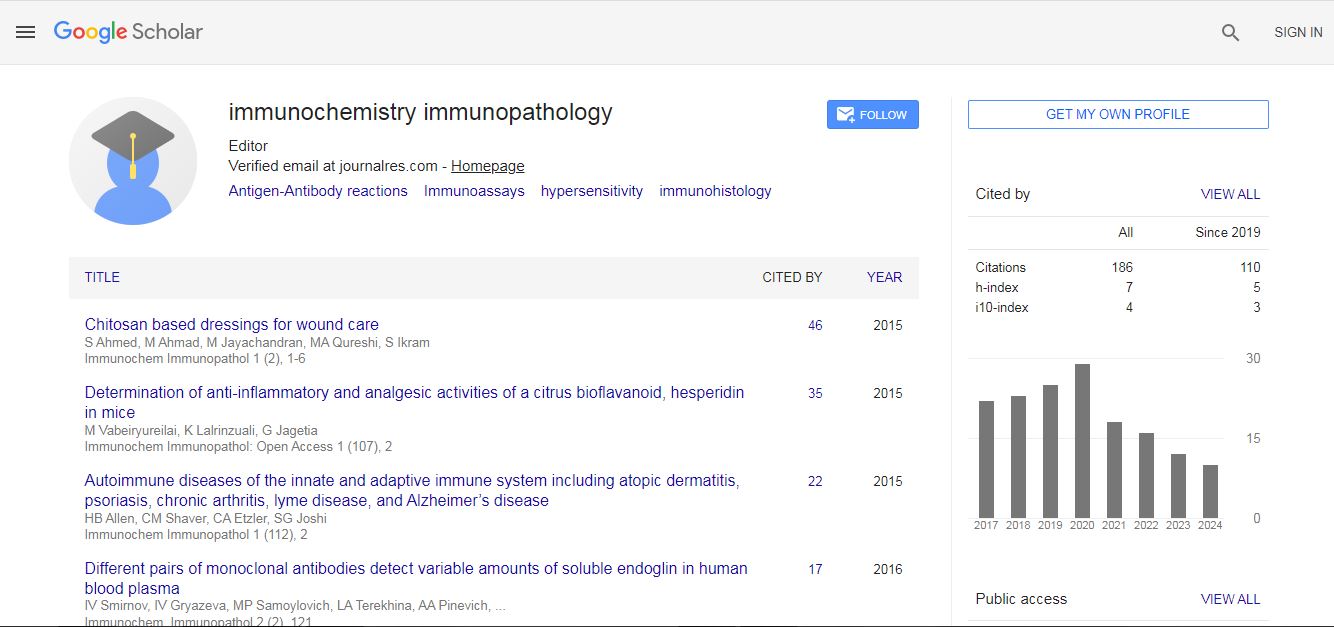
Immunochemistry & Immunopathology received 174 citations as per Google Scholar report