Short Communication - (2025) Volume 13, Issue 3
Received: 03-Jun-2025, Manuscript No. JGPR-26-188024;
Editor assigned: 05-Jun-2025, Pre QC No. P-188024;
Reviewed: 19-Jun-2025, QC No. Q-188024;
Revised: 24-Jun-2025, Manuscript No. R-188024;
Published:
30-Jun-2025
, DOI: 10.37421/2329-9126.2025.13.621
Citation: Isabelle Dubois. ”Family Medicine Lifestyle Counseling For Chronic Disease Prevention.” J Gen Pract 13 (2025):621.
Copyright: © 2025 D. Isabelle This is an open-access article distributed under the terms of the Creative Commons Attribution License, which permits unrestricted use, distribution and reproduction in any medium, provided the original author and source are credited.
Lifestyle counseling stands as a fundamental component of preventive care within family medicine, fundamentally aiming to empower individuals in adopting healthier habits and thereby mitigating the risk of various diseases. This approach is characterized by its emphasis on shared decision-making processes and the application of motivational interviewing techniques to foster enduring behavior change. Key areas addressed include modifications in diet, enhancement of physical activity levels, optimization of sleep patterns, and effective stress management strategies, all crucial for long-term well-being [1].
In the context of general practice, motivational interviewing has demonstrated significant efficacy in facilitating lifestyle transformations. Its application is particularly noted in addressing prevalent health concerns such as weight management and smoking cessation. The inherent patient-centered nature of this technique serves to bolster intrinsic motivation and enhance self-efficacy, ultimately leading to improved adherence to recommended health guidelines and practices [2].
The physician's role in family medicine transcends the mere diagnosis and treatment of existing illnesses; it actively extends to the proactive promotion of wellness through comprehensive lifestyle counseling. This forward-thinking approach is of paramount importance in combating the escalating prevalence of chronic diseases, a significant proportion of which are preventable through strategic lifestyle modifications and early intervention [3].
Principles derived from behavioral economics offer a powerful means to augment the effectiveness of lifestyle counseling within family medicine settings. The strategic implementation of 'nudges' and carefully considered framing techniques can effectively guide patients toward making healthier choices. Examples include encouraging the selection of fruits over processed snacks or promoting the use of stairs instead of elevators, thereby rendering preventive health measures more accessible and intuitive [4].
The integration of digital health tools represents a substantial advancement in augmenting the scope and impact of lifestyle counseling in family medicine. Platforms such as mobile applications and telehealth services provide continuous patient support, deliver personalized feedback, and enable remote monitoring, thereby significantly improving patient engagement and the sustained adherence to prescribed lifestyle interventions [5].
Recognizing and actively addressing the social determinants of health is an indispensable aspect of effective lifestyle counseling in family medicine. A patient's ability to adopt and consistently maintain healthy lifestyles is profoundly influenced by a complex interplay of factors, including socioeconomic status, access to nutritious food options, and the presence of safe and supportive environments [6].
The communication skills of the family physician are undeniably central to the success of lifestyle counseling initiatives. The demonstration of empathy, the practice of active listening, and the capacity to tailor advice to the unique needs and cultural contexts of individual patients are fundamental to cultivating trust and establishing a collaborative foundation for goal setting and achievement [7].
A multidisciplinary, team-based approach has the potential to considerably amplify the reach and overall effectiveness of lifestyle counseling programs within family medicine. By fostering collaboration with other healthcare professionals, such as nurses, dietitians, and various allied health practitioners, specialized support can be provided, leading to the development of more comprehensive and individualized care plans for patients [8].
Tailoring lifestyle advice to the specific needs of diverse patient populations, including those with pre-existing health conditions or individuals from varied cultural backgrounds, is absolutely essential for the development of effective prevention strategies in family medicine. Generic or one-size-fits-all recommendations frequently prove insufficient, underscoring the necessity for highly personalized and contextually relevant approaches [9].
Rigorous evaluation of the long-term effectiveness and cost-effectiveness of lifestyle counseling programs within family medicine is critical for the optimal allocation of healthcare resources and for substantiating the inherent value of preventive care. The establishment and utilization of robust outcome measures are indispensable for supporting the broader implementation and sustainability of these vital initiatives [10].
Lifestyle counseling in family medicine serves as a crucial pillar of preventive care, empowering patients to embrace healthier habits and reduce their susceptibility to disease. This methodology champions shared decision-making and employs motivational interviewing to cultivate lasting behavioral changes, focusing on key lifestyle elements like diet, physical activity, sleep hygiene, and stress management [1].
Motivational interviewing has been identified as a highly effective strategy within general practice for promoting lifestyle modifications, particularly in areas such as weight management and smoking cessation. Its patient-centered framework is designed to enhance intrinsic motivation and self-efficacy, thereby improving patient compliance with health recommendations [2].
The scope of a family physician's responsibility extends beyond the conventional diagnosis and treatment of illness to encompass the active promotion of wellness through comprehensive lifestyle guidance. This proactive orientation is vital for addressing the increasing burden of chronic diseases, many of which are preventable through targeted lifestyle adjustments [3].
Behavioral economics principles can be leveraged to boost the efficacy of lifestyle counseling in family medicine. The judicious use of nudges and framing techniques can subtly guide patients toward healthier choices, making preventive actions more attainable and desirable [4].
Digital health tools, including mobile applications and telehealth platforms, offer a powerful means to enhance lifestyle counseling in family medicine. These technologies provide ongoing support, personalized feedback, and remote monitoring, which collectively contribute to improved patient engagement and adherence to interventions [5].
Addressing the social determinants of health is a paramount consideration in delivering effective lifestyle counseling within family medicine. A patient's capacity to adopt and sustain healthy lifestyles is significantly influenced by factors such as their socioeconomic status, access to healthy food, and the safety of their living environment [6].
The physician's interpersonal and communication skills are central to the success of lifestyle counseling. Empathy, active listening, and the ability to customize advice to individual patient circumstances and cultural backgrounds are essential for building rapport and establishing collaborative treatment goals [7].
A team-based approach can substantially increase the effectiveness and reach of lifestyle counseling services in family medicine. Collaboration with other healthcare professionals, including nurses and dietitians, allows for specialized support and the creation of holistic care plans [8].
Personalizing lifestyle advice for specific patient groups, such as those with chronic conditions or from diverse cultural backgrounds, is critical for successful preventive strategies in family medicine. Generic advice often proves inadequate, necessitating tailored approaches [9].
Assessing the long-term efficacy and economic value of lifestyle counseling programs in family medicine is essential for efficient healthcare resource management and demonstrating the benefits of preventive interventions. The use of solid outcome metrics is vital for widespread adoption [10].
Lifestyle counseling is a vital part of preventive care in family medicine, focusing on empowering patients through diet, exercise, sleep, and stress management. Motivational interviewing is a key technique for driving behavior change, especially in weight management and smoking cessation. Physicians play a proactive role in promoting wellness to combat chronic diseases. Behavioral economics principles, like nudges, can enhance healthier choices. Digital health tools offer continuous support and remote monitoring for lifestyle interventions. Social determinants of health, such as socioeconomic status and food access, significantly impact a patient's ability to maintain healthy habits. Effective communication, including empathy and active listening, is crucial for building trust and setting goals. A team-based approach involving nurses and dietitians can improve care. Tailoring advice to individual patient needs and cultural backgrounds is essential for successful prevention. Finally, evaluating the long-term effectiveness and cost-effectiveness of these programs is necessary for resource allocation and demonstrating value.
None
None
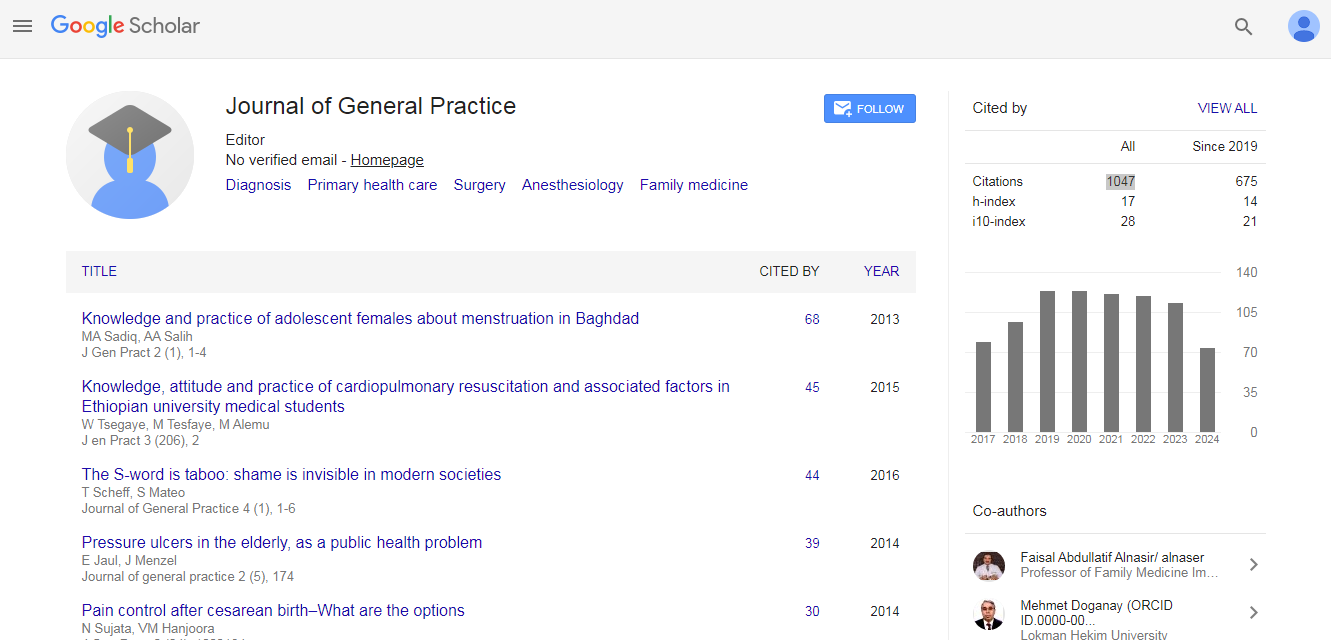
Journal of General Practice received 1047 citations as per Google Scholar report