Commentary - (2025) Volume 9, Issue 6
Received: 01-Dec-2025, Manuscript No. jid-26-188359;
Editor assigned: 03-Dec-2025, Pre QC No. P-188359;
Reviewed: 17-Dec-2025, QC No. Q-188359;
Revised: 22-Dec-2025, Manuscript No. R-188359;
Published:
29-Dec-2025
, DOI: 10.37421/2684-4559.2025.9.356
Citation: Lambert, Sophie. "Hospital Networks: Combating Antibiotic Resistance Spread." Clin Infect Dis 13 (2025):356.
Copyright: © 2025 Lambert S. This is an open-access article distributed under the terms of the Creative Commons Attribution License, which permits unrestricted use, distribution and reproduction in any medium, provided the original author and source are credited.
The complex landscape of antibiotic resistance (AR) spread within urban hospital networks is a critical public health concern. Interconnectedness among healthcare facilities, patient movement patterns, and the practices of healthcare workers are significant drivers of resistant pathogen dissemination [1].
Understanding and mitigating this spread necessitates a shift from single-institution strategies to network-level interventions. Data sharing and coordinated surveillance are paramount for comprehending and managing AR transmission across a city [1].
The rise of carbapenem-resistant Enterobacteriaceae (CRE) in large metropolitan areas is a growing issue, with research detailing clonal spread and key transmission routes within and between hospitals [2].
Rapid diagnostics and strict adherence to infection control protocols in high-risk units are crucial, and environmental contamination has been identified as a more significant factor than previously understood [2].
The impact of patient transfers between hospitals on the dissemination of multidrug-resistant organisms (MDROs) is substantial. Simulation models demonstrate that increased patient mobility directly correlates with a higher risk of inter-facility transmission, highlighting the need for targeted screening of transferred patients and improved communication between facilities [3].
Network analysis offers potential for predicting high-risk transfer pathways [3].
A systematic review of mathematical models used to understand and predict AR spread in healthcare settings reveals various approaches, including compartmental, agent-based, and network models, each with unique strengths and limitations [4].
The evolving complexity of AR demands models that can integrate diverse factors such as human behavior, environmental conditions, and antimicrobial stewardship [4].
Spatial dynamics within hospitals also play a crucial role in AR spread. Geospatial analysis and contact tracing data help identify transmission hotspots within wards and across departments, suggesting that optimizing ward layout and patient assignment can significantly reduce transmission rates [5].
Incorporating infection control principles into architectural planning is therefore advocated [5].
Evaluating the effectiveness of diverse intervention strategies for controlling AR in healthcare networks is essential. Comparisons of enhanced surveillance, antimicrobial stewardship programs, and inter-facility collaboration show that a multi-pronged approach yields the most significant and sustained reductions in AR prevalence, with notable economic benefits [6].
Healthcare-associated infections (HAIs) caused by Gram-negative bacteria contribute significantly to the AR burden in urban hospitals. Persistent challenges are posed by pathogens like *Pseudomonas aeruginosa* and *Acinetobacter baumannii*, underscoring the need for improved diagnostic tools and early detection of HAIs to prevent wider dissemination [7].
The implementation and effectiveness of standardized infection prevention and control (IPC) measures across a hospital network are key. Consistent application of evidence-based IPC practices, staff training, and adherence monitoring demonstrably reduce MDRO incidence, emphasizing the importance of leadership commitment and continuous quality improvement [8].
Network analysis provides a powerful tool for mapping AR transmission pathways in urban healthcare settings. Identifying critical nodes and pathways, such as intensive care units, facilitates targeted interventions and highlights the value of real-time data collection for dynamic modeling and outbreak response [9].
Finally, the impact of antimicrobial stewardship programs (ASPs) on AR development and spread is substantial. Comprehensive ASPs, including guidelines, education, and auditing, are crucial for optimizing antibiotic use and mitigating AR, with inter-hospital collaboration on ASPs further enhancing their effectiveness [10].
The intricate dynamics of antibiotic resistance (AR) spread within urban hospital networks are profoundly influenced by interconnectedness among healthcare facilities, patient movement, and healthcare worker practices. These factors significantly contribute to the dissemination of resistant pathogens, underscoring the necessity for network-level interventions rather than solely focusing on single institutions [1].
Enhanced data sharing and coordinated surveillance are vital for a comprehensive understanding and effective management of AR transmission across urban environments [1].
The escalating prevalence of carbapenem-resistant Enterobacteriaceae (CRE) in large metropolitan areas presents a significant challenge. Research has meticulously detailed the clonal spread of specific CRE strains and identified primary transmission routes within and between healthcare facilities [2].
The implementation of rapid diagnostic capabilities and unwavering adherence to established infection control protocols in high-risk units are paramount. Furthermore, emerging evidence suggests that environmental contamination plays a more substantial role in CRE transmission than previously recognized [2].
Patient transfers between hospitals are a critical vector for the spread of multidrug-resistant organisms (MDROs). Simulation studies have quantitatively demonstrated a direct correlation between increased patient mobility and a heightened risk of inter-facility transmission [3].
Consequently, targeted screening of transferred patients and the establishment of robust communication channels between sending and receiving facilities are essential mitigation strategies. The application of network analysis also holds promise for predicting high-risk transfer pathways [3].
A systematic review of mathematical models employed for understanding and predicting AR spread within healthcare settings reveals a diverse array of modeling approaches, including compartmental, agent-based, and network models, each possessing distinct advantages and limitations [4].
The ever-increasing complexity of AR necessitates the development of models capable of integrating a multitude of factors, such as human behavior, prevailing environmental conditions, and the effectiveness of antimicrobial stewardship programs [4].
The spatial configuration of hospitals and the resultant patient flow patterns significantly influence the spatial transmission of antibiotic-resistant bacteria. Geospatial analysis coupled with contact tracing data is instrumental in identifying 'hotspots' for AR dissemination within hospital wards and across various departments [5].
Optimizing ward layouts, patient assignment protocols, and staff movement patterns can demonstrably reduce transmission rates, suggesting that the integration of infection control principles into architectural planning is a crucial consideration [5].
The evaluation of diverse intervention strategies designed to control AR within healthcare networks is a critical area of research. Comparative analyses of enhanced surveillance, antimicrobial stewardship programs, and inter-facility collaboration indicate that a multi-faceted approach, integrating several interventions concurrently, leads to the most significant and sustained reductions in AR prevalence, often accompanied by demonstrable economic benefits [6].
Healthcare-associated infections (HAIs) caused by Gram-negative bacteria represent a substantial contributor to the overall AR burden within urban hospitals. Particular concern surrounds persistent pathogens such as *Pseudomonas aeruginosa* and *Acinetobacter baumannii*, highlighting the ongoing need for advancements in diagnostic tools and early detection mechanisms to prevent widespread transmission [7].
The implementation and efficacy of infection prevention and control (IPC) measures within a hospital network context are crucial. Standardized IPC protocols, comprehensive staff training, and rigorous adherence monitoring across multiple facilities have been shown to significantly reduce AR transmission [8].
Consistent application of evidence-based IPC practices is directly linked to a reduced incidence of MDROs, underscoring the vital roles of strong leadership commitment and a culture of continuous quality improvement [8].
Network analysis offers a sophisticated methodology for mapping the intricate transmission routes of antibiotic-resistant bacteria between different departments and hospitals in urban settings. This approach allows for the identification of critical nodes and pathways that facilitate AR spread, such as intensive care units and emergency departments [9].
The insights gained from such analyses support the development of targeted interventions at these high-risk locations and underscore the immense value of real-time data collection for dynamic network modeling and effective outbreak response [9].
Furthermore, the effectiveness of antimicrobial stewardship programs (ASPs) in curbing the development and spread of AR within hospital networks is a subject of significant investigation. Analysis of prescribing patterns, resistance trends, and patient outcomes in facilities with varying ASP implementation levels reveals that comprehensive ASPs, encompassing guidelines, education, and auditing, are indispensable for optimizing antibiotic utilization and mitigating AR [10].
The research also emphasizes the importance of collaborative efforts among hospitals to strengthen ASPs [10].
This collection of research explores the multifaceted issue of antibiotic resistance (AR) spread within urban hospital networks. Key themes include the influence of hospital interconnectedness, patient transfers, and healthcare practices on the dissemination of resistant pathogens. Studies highlight the emergence of carbapenem-resistant Enterobacteriaceae (CRE) and multidrug-resistant organisms (MDROs), emphasizing the role of clonal spread and transmission routes. The importance of rapid diagnostics, infection control measures, and environmental contamination are discussed. Patient transfers are identified as a significant risk factor, necessitating targeted screening and improved inter-facility communication. Mathematical modeling approaches are reviewed for their utility in understanding and predicting AR spread, emphasizing the need for integrated frameworks. Spatial dynamics within hospitals, driven by design and patient flow, are shown to impact transmission. Intervention strategies, including enhanced surveillance, antimicrobial stewardship programs (ASPs), and standardized infection prevention and control (IPC) measures, are evaluated, with multi-pronged approaches demonstrating greater effectiveness. Network analysis is utilized to map transmission pathways and identify high-risk areas for targeted interventions. The overarching message emphasizes the need for network-level strategies, robust data sharing, and collaborative efforts to effectively combat antibiotic resistance.
None
None
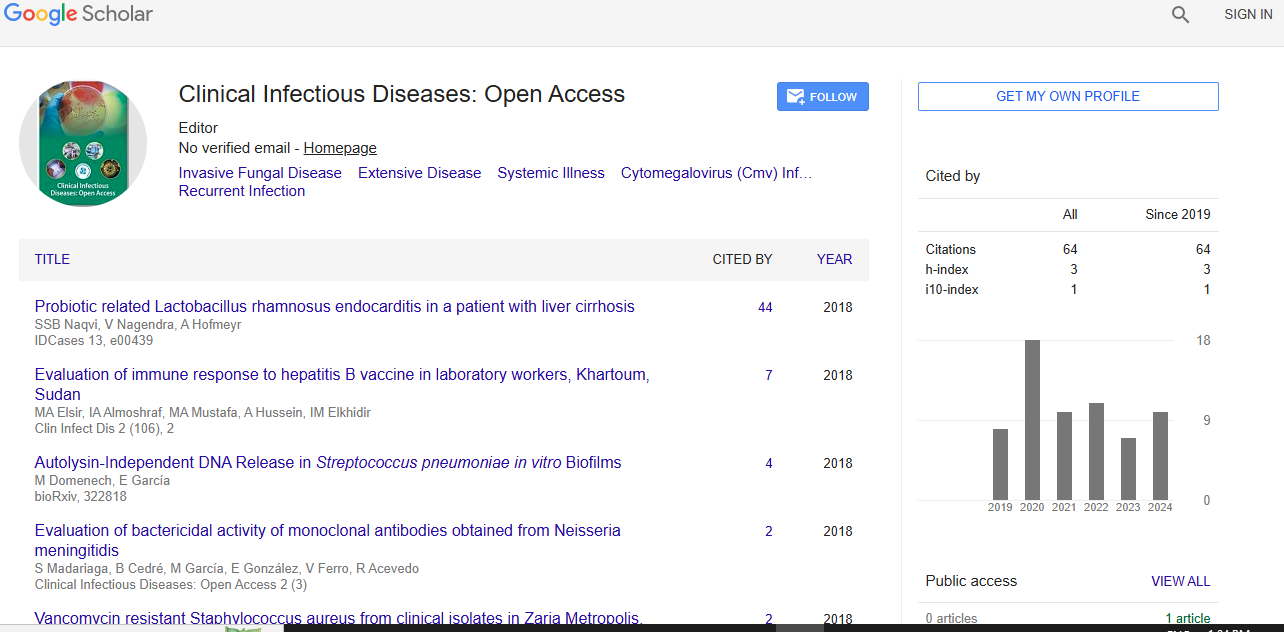
Clinical Infectious Diseases: Open Access received 1149 citations as per Google Scholar report