Commentary - (2025) Volume 11, Issue 3
Received: 02-Jun-2025, Manuscript No. jctt-26-188404;
Editor assigned: 04-Jun-2025, Pre QC No. P-188404;
Reviewed: 18-Jun-2025, QC No. Q-188404;
Revised: 23-Jun-2025, Manuscript No. R-188404;
Published:
30-Jun-2025
, DOI: 10.37421/2471-9323.2024.10.322
Citation: Nair, Priya. ”Holistic Approach to Hair and Skin Radiance.” J Cosmo Tricho 11 (2025):322.
Copyright: © 2025 Nair P. This is an open-access article distributed under the terms of the Creative Commons Attribution License, which permits unrestricted use, distribution and reproduction in any medium, provided the original author and source are credited.
The intricate relationship between scalp health and hair vitality is a cornerstone of dermatological research, influencing the perceived aesthetic and physiological well-being of individuals. A balanced scalp microbiome plays a pivotal role in supporting robust hair follicle function, impacting not only growth but also the inherent texture and resilience of the hair strands. Emerging therapeutic strategies, encompassing both topical applications and systemic treatments, are being developed to enhance the natural sheen and inherent strength of hair, addressing concerns from thinning to dullness [1].
The profound impact of nutritional status on hair structure and growth cannot be overstated. Deficiencies in essential vitamins, minerals, and proteins can manifest as compromised hair quality, increased shedding, and a general lack of vibrancy. Understanding these biochemical underpinnings is crucial for developing effective dietary interventions aimed at achieving what is often termed 'blooming radiance' in hair health [2].
Interestingly, the pursuit of radiant skin and healthy hair are often intertwined, suggesting a common biological basis for their optimal appearance and function. Investigations into the biochemical pathways governing melanin production and keratinization reveal how certain compounds, such as antioxidants and specific peptides, can simultaneously enhance skin luminosity and hair strength, highlighting a synergistic effect [3].
In the realm of regenerative medicine, exosomes are emerging as significant mediators of cellular communication with substantial implications for both hair regeneration and skin repair. Their capacity to stimulate hair follicle stem cells and enrich the extracellular matrix offers promising avenues for fostering a healthier scalp environment and promoting luminous hair [4].
The quest for vibrant hair and glowing skin collectively necessitates a comprehensive approach that integrates advanced dermatological interventions with carefully formulated cosmetic products. These strategies aim to bolster cellular rejuvenation processes and effectively combat oxidative stress, which are fundamental to achieving overall radiance and sustained youthful appearance [5].
Novel peptide complexes represent a significant advancement in the field of cosmetic science, particularly in their demonstrated efficacy in promoting hair growth and improving overall scalp health. Through targeted delivery, these peptides can stimulate keratinocyte proliferation, thereby strengthening the hair shaft and leading to enhanced shine and reduced susceptibility to breakage [6].
Scalp inflammation stands as a critical impediment to optimal hair growth and can drastically diminish hair's natural luster. Research into the management of scalp conditions using anti-inflammatory agents is vital for creating a conducive environment for robust hair development and the restoration of a natural, healthy glow [7].
The utilization of lasers and light-based therapies is increasingly recognized for its potential to improve skin texture and actively stimulate hair growth. The underlying mechanisms involve the enhancement of collagen production and the promotion of a radiant complexion, alongside improvements in hair health [8].
Hyaluronic acid and its various derivatives are celebrated for their potent hydrating capabilities, which extend beneficial effects to both the skin and the scalp. These humectants play a crucial role in maintaining skin plumpness and ensuring adequate moisture retention within the hair structure, contributing to a more luminous and healthy appearance [9].
Finally, the pervasive influence of stress on hair health is a subject of growing scientific inquiry. Understanding the physiological pathways through which chronic stress disrupts the hair cycle and contributes to thinning is essential for developing effective stress-management techniques that foster improved hair vitality and overall well-being [10].
The complex interplay between the scalp's microenvironment and the vitality of hair is a significant area of focus within dermatological science. A balanced scalp microbiome is fundamental for supporting the healthy functioning of hair follicles, directly influencing not only hair growth rates but also the intrinsic texture and resilience of individual hair strands. Current research is actively exploring novel therapeutic approaches, including topical agents and systemic interventions, designed to augment the natural luster and inherent strength of hair, thereby addressing common concerns such as thinning and dullness [1].
The critical role of nutritional status in shaping hair structure and influencing hair growth patterns is well-established. Deficiencies in essential micronutrients, including various vitamins and minerals, as well as insufficient protein intake, can lead to observable deteriorations in hair quality, increased instances of shedding, and a general lack of vibrancy. Therefore, a thorough understanding of these nutritional influences is paramount for designing effective dietary strategies aimed at achieving the desired outcome of 'blooming radiance' in hair [2].
It is increasingly recognized that the pursuit of radiant skin and healthy, lustrous hair are often interconnected, suggesting a shared biological foundation for their optimal appearance and functional integrity. Investigations into the sophisticated biochemical pathways responsible for melanin synthesis and keratinization have illuminated how specific compounds, notably antioxidants and particular peptide sequences, can concurrently enhance skin luminosity and bolster hair strength. This interplay underscores a synergistic relationship between skin and hair health [3].
Within the dynamic field of regenerative medicine, exosomes have emerged as pivotal mediators of intercellular communication, exhibiting significant potential for applications in both hair regeneration and dermal repair. Their demonstrated capacity to activate hair follicle stem cells and to enrich the extracellular matrix provides promising therapeutic avenues for cultivating a healthier scalp milieu and promoting the appearance of luminous hair [4].
Collectively, the aspirations for vibrant hair and glowing skin underscore the necessity for a holistic approach. This involves the synergistic integration of cutting-edge dermatological treatments with meticulously developed cosmetic formulations. Such strategies are strategically designed to enhance cellular rejuvenation processes and to counteract the detrimental effects of oxidative stress, both of which are integral to achieving and maintaining overall radiance [5].
Advanced peptide complexes represent a significant innovation in cosmetic science, particularly for their proven effectiveness in stimulating hair growth and improving the overall condition of the scalp. Through precisely targeted delivery mechanisms, these peptides are capable of promoting keratinocyte proliferation, which in turn fortifies the hair shaft. This fortification results in visibly enhanced shine and a marked reduction in the propensity for hair breakage [6].
Inflammatory processes affecting the scalp can substantially impede the normal hair growth cycle and contribute to a noticeable dullness in hair appearance. Consequently, research focused on the therapeutic use of anti-inflammatory agents for managing scalp conditions is crucial. Such interventions are vital for establishing an optimal environment that supports robust hair development and the restoration of a natural, healthy shine [7].
The application of advanced therapeutic modalities, including lasers and various light-based technologies, is gaining considerable traction for its dual benefits in improving skin texture and actively promoting hair growth. The underlying scientific mechanisms involve the enhancement of collagen synthesis and the stimulation of cellular processes that contribute to a radiant complexion, concurrently with improvements in hair health [8].
Hyaluronic acid, along with its diverse range of derivatives, is widely acknowledged for its exceptional hydrating properties, which confer significant benefits to both the skin and the scalp. These powerful humectants play a critical role in maintaining skin turgor and ensuring optimal moisture retention within the hair shaft, collectively contributing to a more luminous and visibly healthy appearance [9].
Finally, the profound and often underestimated impact of psychological stress on hair health is a subject of intense scientific investigation. Comprehending the complex physiological pathways through which chronic stress interferes with the hair growth cycle and exacerbates hair thinning is imperative for developing effective stress-management strategies. Such interventions are key to promoting enhanced hair vitality and overall systemic well-being [10].
This collection of research explores the multifaceted factors influencing hair health and radiance, often in conjunction with skin luminosity. Key themes include the critical role of scalp health, particularly the scalp microbiome, in supporting hair vitality and growth. Nutritional deficiencies are identified as significant contributors to poor hair structure and shedding, with specific vitamins, minerals, and proteins being essential. The synergistic relationship between skin and hair health is highlighted, with compounds like antioxidants and peptides benefiting both. Advances in regenerative medicine, such as the use of exosomes, show promise for hair follicle stimulation. Therapeutic interventions, including peptide complexes, anti-inflammatory agents, and laser treatments, are discussed for their efficacy in promoting hair growth and improving scalp conditions. The importance of hydration, facilitated by hyaluronic acid, and the detrimental effects of stress on the hair cycle are also examined, emphasizing a holistic approach to achieving vibrant hair and glowing skin.
None
None
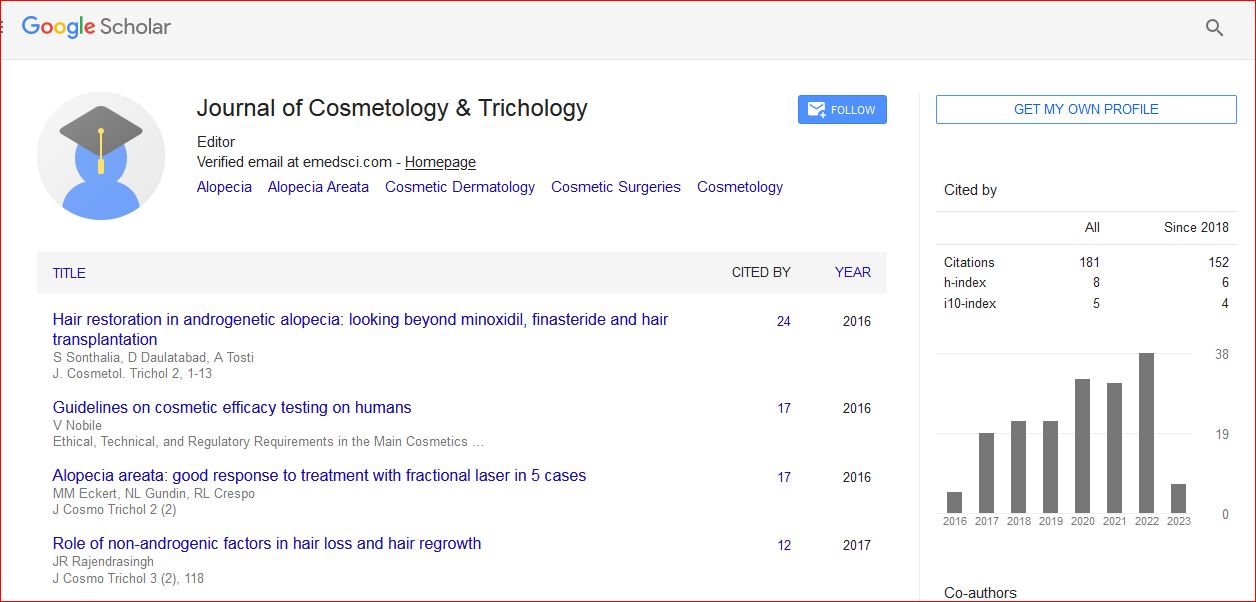
Journal of Cosmetology & Trichology received 180 citations as per Google Scholar report