Perspective - (2025) Volume 11, Issue 5
Received: 01-Oct-2025, Manuscript No. jctt-26-188428;
Editor assigned: 03-Oct-2025, Pre QC No. P-188428;
Reviewed: 17-Oct-2025, QC No. Q-188428;
Revised: 22-Oct-2025, Manuscript No. R-188428;
Published:
29-Oct-2025
, DOI: 10.37421/2471-9323.2024.10.346
Citation: Ivanov, Mikhail. ”Hair and Skin Health: A Holistic Exploration.” J Cosmo Tricho 11 (2025):346.
Copyright: © 2025 Ivanov M. This is an open-access article distributed under the terms of the Creative Commons Attribution License, which permits unrestricted use, distribution and reproduction in any medium, provided the original author and source are credited.
The intricate relationship between scalp health and facial skin radiance is a multifaceted area of scientific inquiry, exploring the biological underpinnings that govern both. This field examines how systemic factors can manifest in visible changes to the skin and hair, highlighting a profound interconnectedness [1].
The influence of the gut microbiome on systemic inflammation presents a significant avenue of research, with implications extending to hair growth and the integrity of the skin barrier. Dysbiosis, an imbalance in gut bacteria, has been correlated with increased inflammatory markers that can exacerbate dermatological conditions and hair loss [2].
Oxidative stress emerges as a pervasive detrimental factor affecting both hair follicles and skin cells, contributing to premature aging and reduced vitality. Understanding the sources of this damage, such as environmental exposures, is crucial for developing effective countermeasures [3].
The role of essential micronutrients in maintaining the physiological functions of hair and skin is well-established. Deficiencies in specific vitamins, minerals, and fatty acids can directly compromise cellular processes critical for keratinization, sebum production, and overall tissue health [4].
Cellular mechanisms underpinning hair follicle regeneration are intrinsically linked to skin rejuvenation processes. Research into signaling pathways involved in hair cycling offers potential therapeutic targets for stimulating new hair growth and enhancing skin texture [5].
Environmental stressors, including pollution and ultraviolet radiation, exert considerable impact on both hair structure and skin integrity. These external factors can induce oxidative damage and inflammation, compromising the skin's protective barrier and affecting hair health [6].
Aging is characterized by physiological changes that affect both the hair and skin. These include reductions in collagen, altered cell turnover, and hormonal shifts that influence hair follicle activity and skin elasticity, necessitating targeted interventions [7].
Scalp inflammation has been identified as a critical yet often overlooked factor in systemic dermatological health. Its direct impact on facial skin appearance and the exacerbation of various skin conditions underscores the importance of scalp care [8].
Psychological stressors and inadequate sleep patterns significantly influence hair and skin well-being. Chronic stress, with its associated hormonal fluctuations, can disrupt hair follicle cycling and compromise skin barrier function, impacting aesthetic outcomes [9].
Peptides represent a class of biomolecules with growing cosmetic applications, demonstrating efficacy in both hair growth promotion and skin rejuvenation. Their ability to modulate cellular processes makes them valuable in advanced formulations [10].
The synergistic interplay between scalp health and facial skin radiance is explored through the lens of underlying pathophysiological mechanisms. Factors like inflammation, oxidative stress, and nutrient deficiencies are identified as key contributors to compromised scalp and dull skin, underscoring the need for a holistic dermatological and trichological approach [1].
The gut-skin axis highlights the profound influence of the gut microbiome on systemic inflammation, which in turn affects hair growth and skin barrier function. Dysbiosis is implicated in inflammatory conditions that can negatively impact both hair and skin health, with interventions like probiotics and prebiotics showing promise [2].
Oxidative stress, driven by internal and external factors such as UV radiation and environmental pollutants, poses a significant threat to hair follicles and skin cells. This damage leads to premature aging and thinning hair, necessitating the use of antioxidant strategies to mitigate these effects [3].
Micronutrients play a pivotal role in maintaining the health and vitality of hair and skin. Specific deficiencies in vitamins, minerals, and essential fatty acids can impair critical cellular functions, impacting keratinization, sebum production, and cell turnover, thereby affecting appearance and growth [4].
Hair follicle regeneration is intrinsically linked to skin rejuvenation, with stem cells and signaling pathways being key players. Targeting these mechanisms offers promising therapeutic avenues for stimulating new hair growth and improving overall skin texture and health [5].
Environmental aggressors, including pollution and UV radiation, detrimentally affect skin and hair by inducing oxidative damage and inflammation. These stressors can lead to a weakened skin barrier, premature aging, hair loss, and increased skin sensitivity, requiring protective and reparative measures [6].
Aging brings about distinct physiological changes in hair and skin, such as diminished collagen production, slower cell turnover, and hormonal fluctuations affecting hair follicles. Addressing these age-related alterations is crucial for maintaining a youthful appearance and function [7].
Scalp inflammation is recognized as a significant, though often overlooked, factor contributing to various dermatological issues affecting facial skin. The interconnectedness of scalp health and conditions like acne and eczema emphasizes the importance of integrated management strategies [8].
Stress and sleep deprivation exert considerable negative effects on hair and skin health. Elevated cortisol levels due to chronic stress can disrupt hair follicle cycling and compromise skin barrier integrity, impacting aesthetic well-being and requiring stress management techniques [9].
Peptides are increasingly utilized in cosmetic applications for their ability to enhance hair growth and promote skin rejuvenation. Their mechanisms of action, including collagen stimulation and improved scalp circulation, make them valuable components in advanced formulations aimed at improving hair and skin vitality [10].
This collection of research explores the interconnectedness of hair and skin health, examining the biological, environmental, and lifestyle factors that influence them. Key areas of focus include the impact of inflammation, oxidative stress, gut microbiome health, nutrient deficiencies, aging, and environmental stressors on both scalp and facial skin. The studies also highlight the role of cellular mechanisms, stem cells, and emerging therapeutic strategies like peptide applications for regeneration and rejuvenation. Addressing these factors through a holistic approach is emphasized for achieving optimal aesthetic outcomes and promoting overall vitality.
None
None
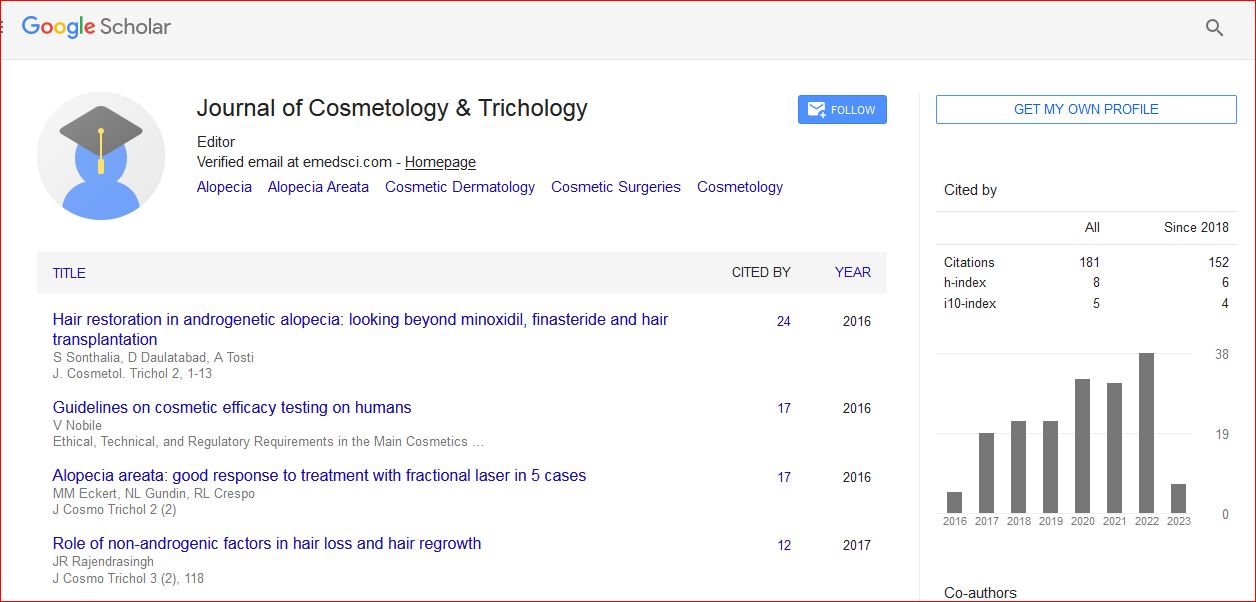
Journal of Cosmetology & Trichology received 180 citations as per Google Scholar report