Short Communication - (2025) Volume 16, Issue 5
Received: 01-Sep-2025, Manuscript No. bej-26-182535;
Editor assigned: 03-Sep-2025, Pre QC No. P-182535;
Reviewed: 17-Sep-2025, QC No. Q-182535;
Revised: 22-Sep-2025, Manuscript No. R-182535;
Published:
29-Sep-2025
, DOI: 10.37421/2161-6219.2025.16.581
Citation: O’Neill, John. ”Globalization: Reshaping Trade, Investment,
and Economies.” Bus Econ J 16 (2025):581.
Copyright: © 2025 O’Neill J. This is an open-access article distributed under the terms of the Creative Commons Attribution License, which permits unrestricted use, distribution
and reproduction in any medium, provided the original author and source are credited.
Globalization has fundamentally altered the landscape of international business and economic development, ushering in an era of unprecedented interconnectedness and interdependence among nations. This transformative force has spurred significant shifts in how businesses operate, how economies grow, and how societies interact on a global scale. The increasing ease of movement for goods, services, capital, and information has created new opportunities and challenges for businesses and policymakers alike. Understanding the multifaceted nature of globalization is therefore crucial for navigating the complexities of the modern global economy. One of the most salient impacts of globalization is its role in fostering increased trade, investment, and competition, thereby reshaping business operations and driving economic growth. This heightened interconnectedness empowers companies to tap into larger markets, diversify their supply chains for greater resilience, and leverage specialized production capabilities. For national economies, this can translate into enhanced productivity, accelerated technological diffusion, and a broader expansion of their gross domestic product (GDP). However, these benefits are often accompanied by drawbacks, such as intensified competition for domestic industries, a potential widening of income inequality, and increased susceptibility to global economic downturns and shocks [1].
A significant manifestation of contemporary globalization is the proliferation of global value chains (GVCs). These chains enable firms to strategically fragment their production processes across various countries, capitalizing on comparative advantages and cost efficiencies. This specialization not only enhances operational efficiency but also drives down costs, providing a powerful impetus for economic growth. The participation of a nation in GVCs is a critical determinant of its export sophistication and its overall integration into the global economic framework. Consequently, supportive domestic policies are paramount in maximizing the benefits derived from GVC engagement [2].
The intricate relationship between globalization and income inequality remains a subject of extensive debate and scholarly investigation. While certain research suggests that globalization may exacerbate internal income disparities by disproportionately benefiting skilled labor and capital owners, other studies posit that it can contribute to a reduction in global inequality by facilitating the upliftment of developing nations from poverty. This area of inquiry delves into the nuanced dynamics, considering critical factors such as trade liberalization, foreign direct investment inflows, and the regulatory frameworks governing labor markets [3].
Foreign Direct Investment (FDI) stands out as a pivotal conduit through which globalization exerts its influence on economic growth trajectories. The influx of FDI into host countries plays a substantial role in facilitating technology transfer, fostering human capital development, and ultimately enhancing overall productivity. Furthermore, the effectiveness of FDI in stimulating economic performance is significantly mediated by the prevailing institutional quality within the host nation, highlighting the importance of a robust and transparent governance environment [4].
Globalization invariably leads to an intensification of competitive pressures, compelling firms to continuously innovate and enhance their operational efficiency to remain viable. This heightened global competition serves as a powerful catalyst, prompting companies to invest more heavily in research and development (R&D) and to adopt cutting-edge technologies as strategic imperatives for sustaining their competitive edge in the international marketplace [5].
The liberalization of trade and investment policies, a hallmark of globalization, often precipitates substantial structural transformations within economies. These shifts involve the strategic reallocation of resources from less productive sectors to more dynamic and efficient ones, thereby contributing significantly to aggregate economic growth. Nevertheless, these transitions are not without their associated costs, including potential dislocations and the necessity for robust adjustment policies to manage the transitional phases effectively [6].
The effects of globalization on labor markets are inherently complex and multifaceted, impacting various dimensions such as wage levels, employment rates, and the demand for specific skill sets. Increased cross-border trade and the outsourcing of production processes can lead to significant shifts in wage differentials, particularly between skilled and unskilled labor. This necessitates the development and implementation of appropriate labor market policies designed to mitigate any adverse consequences and ensure equitable outcomes [7].
Technological advancements, often amplified and accelerated by the processes of globalization, are indispensable drivers of economic progress. The diffusion of technologies across international borders, facilitated by global trade, FDI, and extensive knowledge networks, plays a critical role in boosting productivity and fostering economic development. The ability of nations to adopt and adapt these new technologies is heavily influenced by the receptiveness of their domestic environments [8].
The financial dimension of globalization, characterized by augmented capital flows and a deeper integration of financial markets, carries profound implications for both economic stability and overall growth. This interconnectedness can stimulate investment and consumption but also elevates the risk of financial crises. Consequently, robust financial regulation and stringent prudential oversight are indispensable for safeguarding economic stability in a globalized financial system [9].
The sustainability of economic growth within the context of globalization presents a paramount concern, particularly regarding its environmental ramifications. Globalization has been linked to increased resource consumption and pollution, yet it also offers avenues for global cooperation and the dissemination of green technologies. These collaborative efforts and technological innovations hold the potential to foster sustainable development trajectories and decouple economic expansion from environmental degradation [10].
Globalization's impact on business operations and economic growth is profound, driven by increased trade, investment, and competition. This interconnectedness provides companies with access to larger markets, enables supply chain diversification, and facilitates specialization in production. For economies, these factors can lead to enhanced productivity, the diffusion of technology, and overall GDP expansion. However, globalization also presents challenges such as heightened competition for domestic firms, potential for increased income inequality, and vulnerability to global economic shocks [1].
Global value chains (GVCs) are a central feature of modern globalization, allowing for the fragmentation of production processes across different countries. This specialization enhances efficiency and reduces costs, thereby stimulating economic growth. The extent to which a nation participates in GVCs influences its export sophistication and its integration into the global economy, underscoring the importance of supportive domestic policies in harnessing these opportunities [2].
The relationship between globalization and income inequality is complex and highly debated. Some research indicates that globalization can widen income gaps within nations by favoring skilled labor and capital over others. Conversely, other studies argue that globalization can reduce global inequality by aiding developing countries in escaping poverty. This area of study examines the intricate dynamics influenced by trade openness, foreign direct investment, and labor market regulations [3].
Foreign Direct Investment (FDI) serves as a primary mechanism through which globalization impacts economic growth. Inward FDI contributes significantly to technology transfer, the development of human capital, and improved productivity in host countries. The positive effects of FDI on economic performance are further modulated by the quality of the host country's institutions, emphasizing the role of a strong institutional framework [4].
Globalization intensifies competition, compelling firms to innovate and improve their efficiency. Studies show that increased global competition encourages firms to invest more in research and development (R&D) and to adopt new technologies to maintain their competitive standing in the international market [5].
The liberalization of trade and investment, a key aspect of globalization, drives significant structural changes in economies. This process facilitates the movement of resources towards more productive sectors, contributing to overall economic growth. However, it also entails transitional costs and highlights the need for effective adjustment policies to manage these shifts smoothly [6].
Globalization's effects on labor markets are varied, influencing wages, employment levels, and the demand for different skills. Increased international trade and outsourcing can lead to changes in wage differentials between skilled and unskilled workers, necessitating targeted labor market policies to address potential negative consequences and ensure fair outcomes [7].
Technological advancements, often accelerated by globalization, are crucial for economic progress. The dissemination of technology through international trade, FDI, and global knowledge networks boosts productivity and supports economic development. A receptive domestic environment is vital for the successful adoption and adaptation of these new technologies [8].
The financial aspects of globalization, including the expansion of capital flows and financial integration, have substantial implications for economic stability and growth. Increased financial integration can boost investment and consumption but also heightens the risk of financial crises. Therefore, sound financial regulation and prudential oversight are essential for managing these risks [9].
The sustainability of economic growth in a globalized world is a critical issue, with concerns about environmental impacts such as increased resource consumption and pollution. However, globalization also fosters global cooperation and the adoption of green technologies, which can promote sustainable development and decouple economic growth from environmental degradation [10].
Globalization significantly reshapes international business and economic growth through increased trade, investment, and competition. It enables companies to access larger markets and diversify supply chains, leading to higher productivity and GDP expansion. However, challenges include intensified competition, potential income inequality, and vulnerability to global shocks. Global value chains (GVCs) fragment production for efficiency and growth, while foreign direct investment (FDI) facilitates technology transfer and human capital development. Globalization also drives firm-level innovation and structural economic changes. Labor markets are affected by shifts in wages and skill demand, and technological diffusion is accelerated. Financial globalization impacts economic stability, and environmental concerns are addressed through global cooperation and green technologies. The interplay of these factors underscores the complex, dual nature of globalization's economic and social consequences.
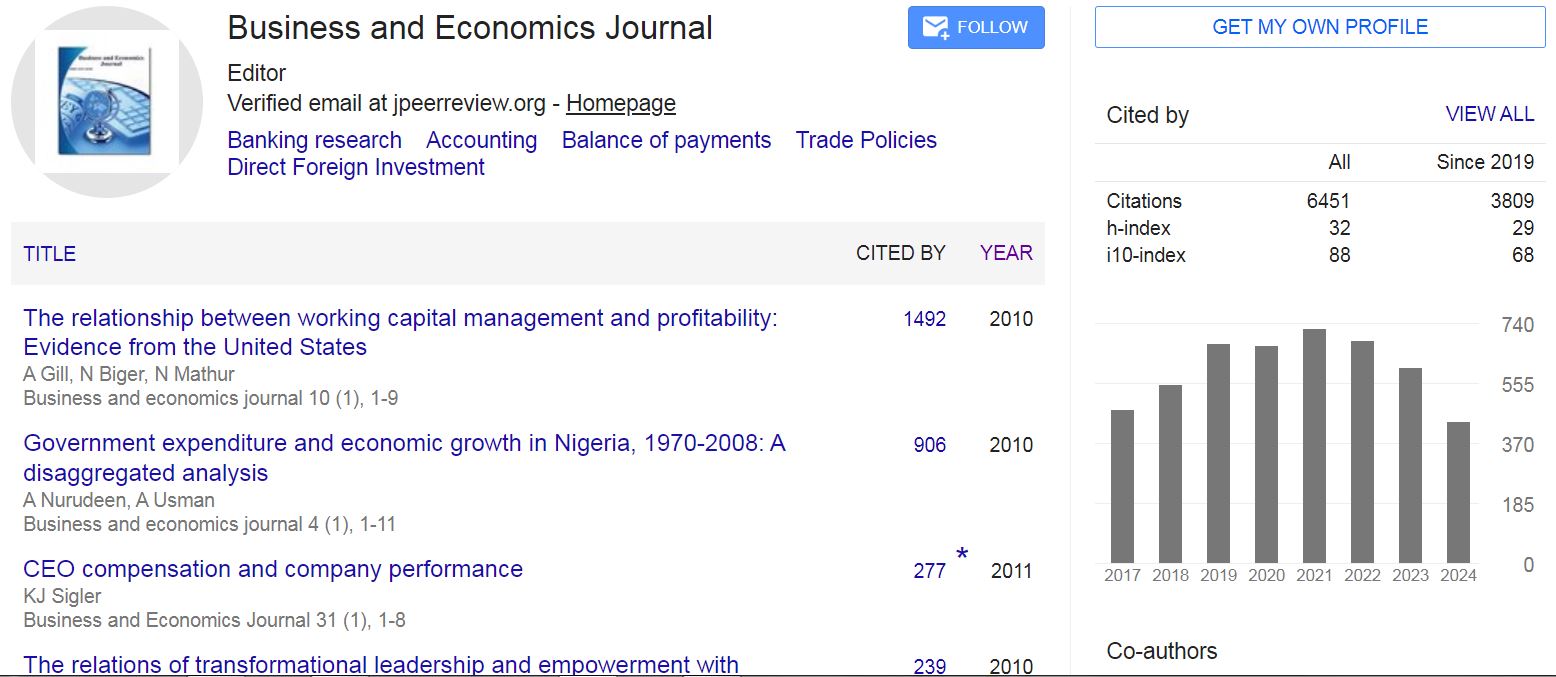
Business and Economics Journal received 6451 citations as per Google Scholar report