Perspective - (2025) Volume 17, Issue 3
Received: 01-May-2025, Manuscript No. jcst-25-172461;
Editor assigned: 05-May-2025, Pre QC No. P-172461;
Reviewed: 19-May-2025, QC No. Q-172461;
Revised: 22-May-2025, Manuscript No. R-172461;
Published:
29-May-2025
, DOI: 10.37421/1948-5956.2025.17.707
Citation: Li, Chen. ”Genomic Instability: Cancer, Aging, Precision
Medicine.” J Cancer Sci Ther 17 (2025):707.
Copyright: © 2025 Li C. This is an open-access article distributed under the terms of the Creative Commons Attribution License, which permits unrestricted use, distribution
and reproduction in any medium, provided the original author and source are credited.
Genomic instability is a fundamental characteristic of cancer, emerging from various processes like replication stress, DNA damage, and faulty repair mechanisms. Understanding these underlying causes is essential, as it helps identify targeted therapies that can exploit cancer's specific vulnerabilities, moving beyond broad-spectrum treatments. The profound implications of these mechanisms underscore the importance of precision approaches in oncology [1].
Here's the thing: genomic instability isn't just about cancer; it also profoundly influences aging and age-related diseases. Targeting DNA repair pathways, which often go awry with age, holds promise for developing new interventions to combat conditions rooted in accumulated genomic damage. This broader perspective highlights the systemic impact of genomic integrity on health span [2].
Telomeres, those protective caps on chromosome ends, are crucial for maintaining genomic stability. When telomeres become dysfunctional or when DNA replication faces stress, cells become prone to significant genomic alterations. This emphasizes how these critical structures are linked to overall genome integrity and cellular homeostasis [3].
Chromosomal instability, a major form of genomic instability, involves errors in chromosome segregation during cell division. What this really means is a significant driver of tumor evolution and heterogeneity, making it a promising therapeutic target. Disrupting this process could effectively impede cancer's ability to adapt and resist treatment, offering a new front in cancer therapy [4].
Replicative stress, occurring when DNA replication forks stall or collapse, is a primary source of genomic instability. This stress creates an environment ripe for mutations and chromosomal rearrangements. Here's why it matters: cancer cells often exhibit increased replicative stress, making it a potential Achilles' heel for new cancer therapies by selectively targeting these vulnerabilities [5].
Epigenetic changes, such as DNA methylation and histone modifications, play a significant role in genomic instability. They often do this by influencing DNA repair pathways or gene expression vital for genome maintenance. This intricate interplay demonstrates how cellular identity and integrity are intertwined, and how dysregulation at the epigenetic level can propagate genomic chaos throughout the cell [6].
Oxidative stress, caused by an imbalance between reactive oxygen species production and antioxidant defenses, directly damages DNA, leading to genomic instability. This continuous assault on the genome is a major contributor to mutations and chromosomal aberrations. It serves as a critical initiating factor in carcinogenesis, pointing to the importance of cellular defense mechanisms [7].
Genomic instability and immune evasion are deeply interconnected in cancer. Tumor cells, with their unstable genomes, generate neoantigens that could theoretically be recognized by the immune system. However, they simultaneously develop sophisticated mechanisms to escape immune surveillance. Understanding this complex interplay is essential for improving current immunotherapeutic strategies and developing more effective ones [8].
In pancreatic cancer, genomic instability is particularly pronounced, contributing significantly to its aggressive nature and resistance to treatment. Let's break it down: by identifying specific instability patterns and vulnerabilities, there's a real opportunity to develop precision medicine strategies tailored to individual patients, offering more effective therapeutic avenues and improving patient outcomes [9].
The DNA Damage Response (DDR) is a complex network that detects and repairs DNA lesions, preventing genomic instability. When DDR pathways are compromised, it fuels the accumulation of mutations and drives tumorigenesis. Understanding the DDR's intricacies offers a therapeutic opportunity to target specific repair deficiencies in cancer cells, potentially leading to synthetic lethality approaches [10].
Genomic instability stands as a central hallmark of cancer, emerging from a confluence of cellular stresses and failures [1]. Processes like replication stress, DNA damage, and the malfunction of intricate DNA repair mechanisms collectively contribute to this unstable state. This inherent instability not only drives tumorigenesis but also profoundly influences aging and the progression of various age-related diseases. By understanding these root causes, researchers can identify specific vulnerabilities within cancerous cells, paving the way for targeted therapies that offer more precise interventions compared to broad-spectrum treatments [1, 2]. The connection to aging means that interventions aimed at bolstering DNA repair pathways could also combat conditions arising from accumulated genomic damage throughout an individual's lifespan [2].
Several key molecular processes underpin genomic instability. Telomeres, the protective caps found at the ends of chromosomes, are fundamental to maintaining genome integrity. Their dysfunction, along with persistent DNA replication stress, significantly increases a cell's susceptibility to genomic alterations [3]. Replicative stress, specifically when DNA replication forks stall or collapse, is a primary driver of instability, creating an environment ripe for mutations and chromosomal rearrangements. What this really means is that cancer cells often exhibit heightened replicative stress, presenting an opportune target for novel therapeutic strategies [5]. Moreover, chromosomal instability, a major manifestation of genomic instability characterized by errors in chromosome segregation during cell division, actively drives tumor evolution and heterogeneity, making it a compelling therapeutic target to counteract cancer's adaptive capabilities [4].
Beyond these structural and replication-associated issues, other cellular stressors and regulatory mechanisms also fuel genomic instability. Oxidative stress, which results from an imbalance between reactive oxygen species production and antioxidant defenses, directly damages DNA. This continuous assault leads to widespread genomic instability, contributing significantly to the accumulation of mutations and chromosomal aberrations, and is a critical initiating factor in carcinogenesis [7]. Additionally, epigenetic changes, including alterations in DNA methylation and histone modifications, play a crucial role. These modifications can impact DNA repair pathways and gene expression, which are vital for maintaining genome stability. This interplay underscores how cellular identity and integrity are intertwined, and how dysregulation at the epigenetic level can propagate genomic chaos throughout the cell [6].
The cell's primary defense against these threats is the DNA Damage Response (DDR). This complex network actively detects and repairs DNA lesions, thereby preventing genomic instability. However, when DDR pathways are compromised, it exacerbates the accumulation of mutations, thus driving tumorigenesis. Understanding the intricate workings of the DDR offers significant therapeutic opportunities, allowing for the targeting of specific repair deficiencies found in cancer cells [10]. Furthermore, genomic instability's impact extends to the tumor microenvironment and treatment resistance. In cancer, there is a deep interconnection between genomic instability and immune evasion. Unstable tumor genomes can generate neoantigens, which theoretically should be recognized by the immune system. Yet, these same cells concurrently develop mechanisms to escape immune surveillance, a complex interplay critical for improving immunotherapeutic strategies [8]. Specifically, in aggressive cancers like pancreatic cancer, genomic instability is notably pronounced, contributing to its resistance to treatment. Let's break it down: identifying specific instability patterns and vulnerabilities in such contexts offers a real opportunity for developing precision medicine strategies tailored to individual patients, promising more effective therapeutic avenues [9].
Genomic instability is a pervasive hallmark of cancer, originating from diverse cellular dysfunctions including replication stress, DNA damage, and compromised DNA repair systems. A deep understanding of these foundational causes is crucial for identifying and developing highly targeted therapies. These therapies aim to exploit the specific vulnerabilities within cancer cells, shifting treatment paradigms away from less precise, broad-spectrum approaches. Importantly, genomic instability isn't confined to cancer; it also profoundly influences the processes of aging and the development of age-related diseases. This broader implication means that interventions focusing on rectifying dysfunctional DNA repair pathways hold considerable promise for combating conditions rooted in cumulative genomic damage over time. Key mechanisms driving this instability include telomere dysfunction, errors in chromosome segregation (chromosomal instability), and replicative stress where DNA replication forks stall. These processes collectively fuel tumor evolution and enhance heterogeneity, making them critical therapeutic targets. Further contributing factors involve epigenetic alterations that affect genome maintenance and oxidative stress, which directly damages DNA and acts as a significant initiator of carcinogenesis. The integrity of the DNA Damage Response (DDR) network is vital in preventing genomic instability; its failure directly promotes mutation accumulation and tumorigenesis, presenting strategic opportunities for therapeutic intervention. Moreover, the interplay between genomic instability and immune evasion in cancer is complex: while unstable tumor genomes produce potentially recognizable neoantigens, cancer cells simultaneously evolve sophisticated methods to escape immune surveillance. This intricate relationship is especially pronounced in aggressive malignancies, such as pancreatic cancer, where pinpointing specific instability patterns offers clear pathways toward developing precision medicine strategies tailored for individual patient benefit.
Indexed at, Google Scholar, Crossref
Indexed at, Google Scholar, Crossref
Indexed at, Google Scholar, Crossref
Indexed at, Google Scholar, Crossref
Indexed at, Google Scholar, Crossref
Indexed at, Google Scholar, Crossref
Indexed at, Google Scholar, Crossref
Indexed at, Google Scholar, Crossref
Indexed at, Google Scholar, Crossref
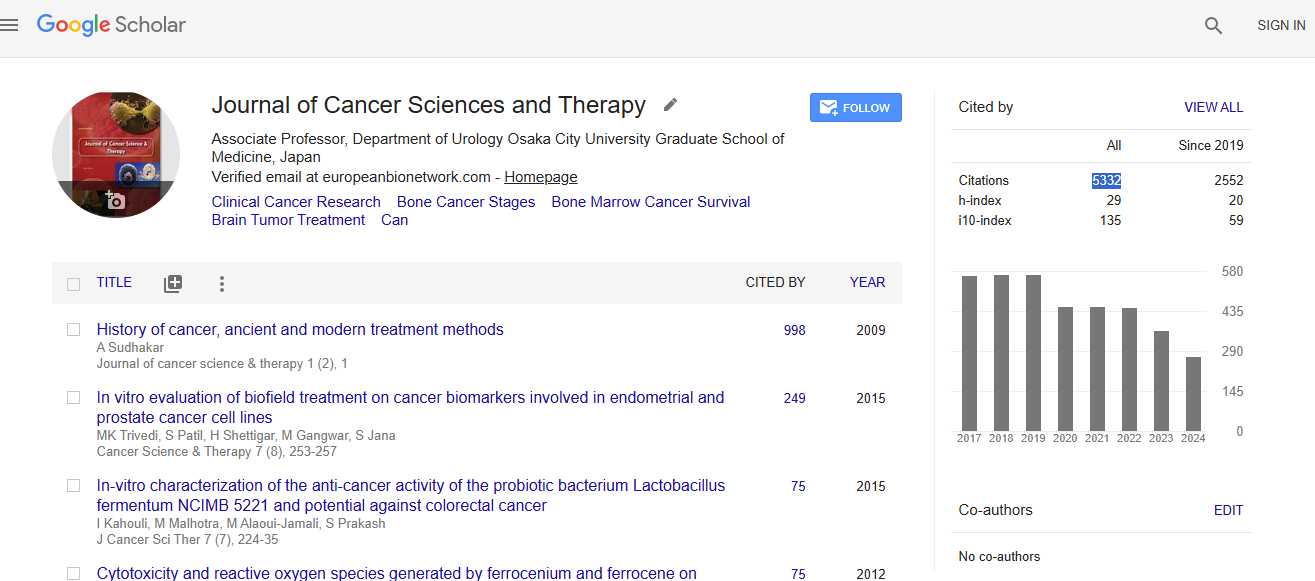
Cancer Science & Therapy received 5332 citations as per Google Scholar report