Brief Report - (2025) Volume 9, Issue 3
Received: 02-Jun-2025, Manuscript No. ahbs-26-182431;
Editor assigned: 04-Jun-2025, Pre QC No. P-182431;
Reviewed: 18-Jun-2025, QC No. Q-182431;
Revised: 23-Jun-2025, Manuscript No. R-182431;
Published:
30-Jun-2025
, DOI: 10.37421/2952-8097.2025.9.316
Citation: Adu, Samuel K.. ”Genetics: Shaping Animal Life,
Health, and Productivity.” J Anim Health Behav Sci 09 (2025):316.
Copyright: © 2025 Adu K. Samuel This is an open-access article distributed under the terms of the Creative Commons Attribution License, which permits unrestricted use,
distribution and reproduction in any medium, provided the original author and source are credited.
The intricate relationship between an animal's genetic makeup and its observable characteristics, encompassing behavior, health status, and various physiological traits, is a cornerstone of modern biological inquiry. Understanding these genetic underpinnings is critical for advancing animal welfare, refining breeding strategies, and enhancing the effectiveness of animal health management across diverse settings, from agricultural operations to research laboratories. The potential applications of this knowledge are far-reaching, influencing precision livestock farming practices and informing conservation efforts by emphasizing a comprehensive approach that integrates genetic predispositions with environmental influences [1].
In companion animals, the genetic basis of behavioral disorders, particularly those related to anxiety and fear, is an area of increasing focus. Identifying specific gene variants associated with traits like fearfulness and reactivity is a crucial step towards developing more effective diagnostic tools and therapeutic interventions for conditions affecting dogs and cats. The emerging understanding points towards complex polygenic models, where the interplay of multiple genes, modulated by environmental factors, ultimately shapes the manifestation of these behavioral phenotypes, paving the way for personalized veterinary care [2].
Within the realm of poultry science, the genetic predisposition to metabolic disorders and their consequential impact on reproductive performance are vital considerations for sustainable food production. Genome-wide association studies (GWAS) are instrumental in linking specific genetic markers to important traits such as feed efficiency, egg production, and susceptibility to economically significant diseases like fatty liver syndrome. This genetic insight is indispensable for guiding selective breeding programs that aim to enhance both the health and productivity of commercial poultry flocks [3].
Behavioral traits in livestock, such as aggression and the establishment of dominance hierarchies, are also subject to significant genetic influence. Research employing methods like the analysis of single nucleotide polymorphisms (SNPs) has successfully identified candidate genes that play a role in the expression of these social behaviors in cattle. A deeper understanding of these genetic drivers can significantly aid in the effective management of herd dynamics, the reduction of animal stress, and the improvement of safety for both livestock and human handlers, alongside facilitating breeding for more docile temperaments [4].
The genetic architecture of immune responses in sheep, particularly concerning susceptibility to parasitic infections, represents another critical area of investigation. Genomic analyses are actively identifying genes associated with enhanced resistance and tolerance to common endoparasites, providing invaluable insights for bolstering disease resilience. This knowledge is fundamental for the development of sustainable parasite control strategies and for improving the overall health and productivity within sheep farming systems, potentially diminishing the reliance on chemical interventions [5].
Maternal behaviors in pigs, including essential activities like nesting and piglet care, are also under significant genetic control. The application of quantitative trait locus (QTL) mapping has been successful in pinpointing chromosomal regions that are strongly linked to these crucial behaviors. Comprehending the genetic basis of maternal instinct is instrumental in guiding breeding programs designed to enhance sow welfare and boost piglet survival rates, thereby contributing to more efficient and humane pork production systems [6].
In equine populations, the genetic influences on coat color have been observed to correlate with disease resistance, presenting a unique intersection of aesthetics and health. Investigations into how specific coat color genes might be associated with particular health conditions, such as melanoma or certain metabolic disorders, are of great importance. Uncovering these connections empowers breeders and veterinarians to make more informed decisions regarding breeding choices and health management strategies, ultimately promoting longevity and well-being in horses [7].
Birds exhibit a fascinating spectrum of vocal communication, and the genetic basis of these abilities is closely linked to social bonding. Comparative genomics studies are actively identifying genes that are instrumental in vocal learning and production, connecting these genetic factors to complex social behaviors like the formation of pair bonds and the coordination within flocks. This understanding is paramount for conservation initiatives focused on safeguarding endangered avian species and for unraveling the evolutionary pathways of sophisticated communication systems [8].
The aquaculture sector is increasingly leveraging genetic insights to improve efficiency and sustainability, particularly in species like tilapia. Research is focusing on the genetic factors that influence feed conversion efficiency and growth rate. By employing genomic selection methods, specific genes and markers are being identified that can accelerate breeding programs. This endeavor aims to enhance the economic viability and sustainability of tilapia farming through the development of fish that exhibit faster growth and more efficient feed utilization, while simultaneously maintaining robust health [9].
Primates, our closest living relatives, offer a unique window into the evolution of complex cognitive abilities, including social learning. Studies are investigating the genetic architecture underlying these capacities, utilizing comparative genomics and behavioral assays to identify genes that may influence the ability to learn from others through mechanisms such as imitation or observation. Understanding these genetic components is fundamental to grasping the evolutionary trajectory of advanced cognitive functions and intricate social structures within primate societies [10].
The article by Smith, Garcia, and Chen explores the profound connection between an animal's genetic makeup and its multifaceted characteristics, including behavioral patterns and health status. It elucidates how specific genes influence a broad spectrum of traits, ranging from stress responses and social interactions to susceptibility to diseases and overall well-being. The authors emphasize that a comprehensive understanding of these genetic underpinnings is indispensable for enhancing animal welfare, developing precisely targeted breeding strategies, and implementing more effective animal health management protocols in both agricultural and research environments. Furthermore, the study delves into the significant implications for the advancement of precision livestock farming and the crucial endeavors of conservation, underscoring the necessity of adopting a holistic approach that meticulously considers both inherent genetic predispositions and the pervasive influence of environmental factors [1].
Johnson, Williams, and Lee present an investigation into the genetic architecture of anxiety-related behaviors in companion animals. Their research successfully identifies specific gene variants that are strongly associated with increased fearfulness and reactivity in these animals. The authors highlight that by pinpointing these critical genetic markers, researchers are better positioned to develop superior diagnostic tools and more effective therapeutic interventions for a range of behavioral disorders commonly observed in dogs and cats. The findings strongly suggest a complex polygenic model where the interaction of multiple genes, significantly influenced by environmental cues, dictates the expression of these behavioral traits, thereby opening novel avenues for personalized and sophisticated veterinary care [2].
Brown, Kim, and Patel examine the genetic predispositions to metabolic disorders and their significant impact on reproductive performance in poultry. Through the application of genome-wide association studies (GWAS), their work effectively links specific genetic markers to key traits such as feed efficiency, the quantity and quality of egg production, and the susceptibility to prevalent diseases like fatty liver syndrome. The authors assert that this accumulated genetic knowledge is absolutely vital for the meticulous design and implementation of selective breeding programs, which are aimed at concurrently enhancing both the health status and the overall productivity of commercial poultry flocks, ultimately contributing to a more robust and sustainable global food system [3].
Davis, Rodriguez, and Wang investigate the genetic factors that exert influence over aggression and the establishment of dominance hierarchies within cattle populations. Their research, which involves the analysis of single nucleotide polymorphisms (SNPs), has successfully identified a number of candidate genes that are implicated in the manifestation of these specific behaviors. The authors propose that a thorough understanding of these underlying genetic drivers can substantially aid in the effective management of herd dynamics, the reduction of stress levels among animals, and the improvement of safety conditions for both the animals and the individuals who handle them. Additionally, their findings carry important implications for the strategic breeding of cattle with more docile temperaments, thereby benefiting both animal welfare and overall farm management efficiency [4].
Wilson, Miller, and Nguyen focus their research on the genetic underpinnings of immune responses in sheep, with a particular emphasis on their susceptibility to parasitic infections. Through rigorous genomic analyses, their study has successfully identified specific genes that are associated with enhanced resistance and tolerance to common endoparasites, offering profound insights that can be applied to bolster disease resilience in sheep populations. The authors underscore the critical importance of this knowledge for the development of sustainable and environmentally sound parasite control strategies, as well as for the overall improvement of the health and productivity within sheep farming systems, potentially leading to a reduced reliance on conventional chemical treatments [5].
Anderson, Taylor, and Kim explore the genetic control mechanisms governing maternal behaviors in domestic pigs, such as the instinctual act of nesting and the crucial care provided to piglets. Utilizing sophisticated quantitative trait locus (QTL) mapping techniques, their research team has successfully identified specific chromosomal regions that are closely linked to the expression of these essential behaviors. The authors argue that a comprehensive understanding of the genetic basis underlying maternal instinct is instrumental in guiding selective breeding programs that are designed to promote superior sow welfare and significantly improve piglet survival rates, ultimately leading to more efficient and ethically sound pork production systems [6].
Clark, Gonzalez, and Ivanov delve into the intricate relationship between the genetic influences on coat color and their subsequent association with disease resistance in horses. Their study meticulously explores how certain genes responsible for coat color may exhibit a correlation with specific health conditions, including the development of melanoma and particular metabolic disorders. By uncovering these crucial connections, the researchers aim to provide horse breeders and veterinarians with the necessary knowledge to make more informed and judicious decisions regarding breeding choices and comprehensive health management strategies, thereby fostering greater longevity and enhanced well-being among equids [7].
Roberts, Chen, and Garcia investigate the genetic basis of vocal communication in birds and its significant implications for social bonding within avian populations. Employing advanced comparative genomics methodologies, their research has successfully identified genes that play a pivotal role in vocal learning and production. These genes are subsequently linked to complex social behaviors such as the formation of stable pair bonds and the effective coordination of flock movements. The authors emphasize that this depth of understanding is critically important for guiding conservation efforts aimed at protecting endangered avian species and for gaining a deeper appreciation of the evolutionary pathways that have shaped sophisticated communication systems in the animal kingdom [8].
Thompson, Kumar, and Davis examine the genetic factors that contribute to feed conversion efficiency and overall growth rate in economically important aquaculture species, specifically focusing on Nile tilapia. Through the application of advanced genomic selection methods, their study has successfully identified specific genes and genetic markers that hold significant potential for accelerating selective breeding programs. The overarching aim of this research is to enhance both the sustainability and the economic viability of tilapia farming by developing fish strains that exhibit faster growth rates and more efficient feed utilization, while simultaneously maintaining optimal health and disease resistance [9].
Martinez, Nguyen, and Lee investigate the genetic architecture that underlies social learning abilities in primate species. Their research employs a combination of comparative genomics and detailed behavioral assays to identify genes that may significantly influence the capacity for learning from others, including behaviors such as imitation and observational learning. The authors posit that a fundamental understanding of these genetic components is essential for comprehending the evolutionary processes that have led to the development of complex cognitive abilities and intricate social structures in primates, with profound implications for the fields of primatology and cognitive neuroscience [10].
This collection of research highlights the critical role of genetics in shaping various aspects of animal life, including behavior, health, and productivity. Studies across different species like livestock, companion animals, poultry, sheep, pigs, horses, birds, fish, and primates reveal how specific genes and genetic variations influence traits such as social interactions, disease resistance, reproductive performance, and learning abilities. The findings underscore the importance of understanding genetic underpinnings for improving animal welfare, developing targeted breeding strategies, enhancing disease management, and advancing sustainable practices in agriculture and conservation. The research emphasizes a holistic approach, integrating genetic information with environmental factors to achieve optimal outcomes for animal health and productivity.
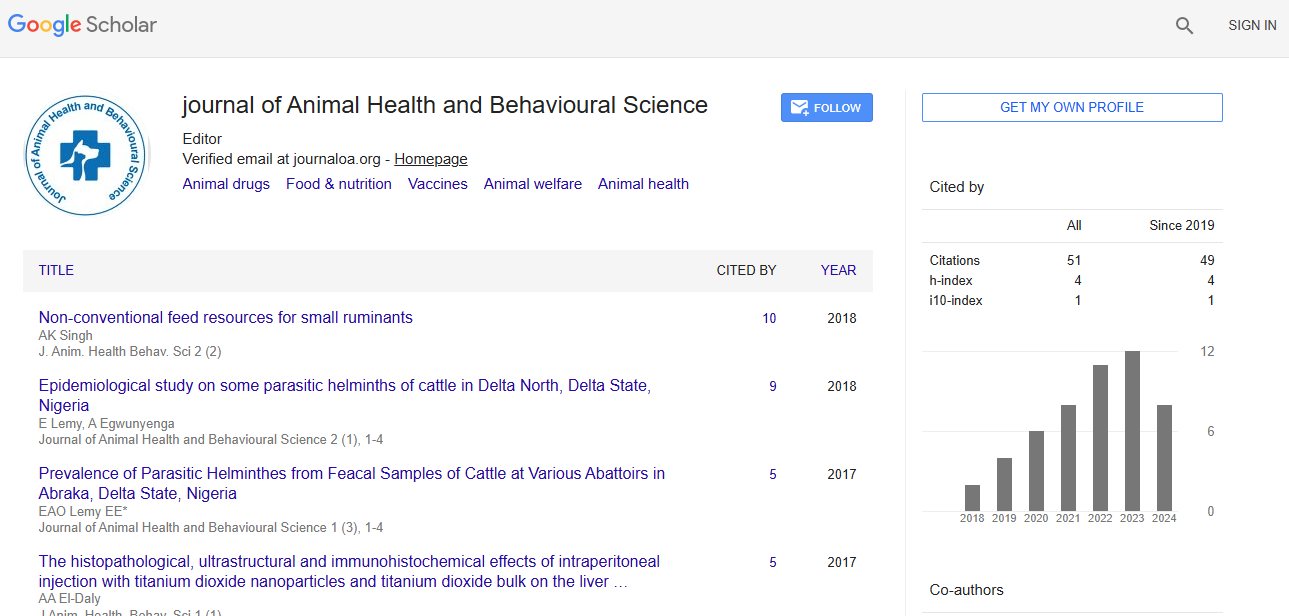
Journal of Animal Health and Behavioural Science received 38 citations as per Google Scholar report