Commentary - (2025) Volume 14, Issue 5
Received: 01-Sep-2025, Manuscript No. aim-25-177770;
Editor assigned: 03-Sep-2025, Pre QC No. P-177770;
Reviewed: 17-Sep-2025, QC No. Q-177770;
Revised: 22-Sep-2025, Manuscript No. R-177770;
Published:
29-Sep-2025
, DOI: 10.37421/2427-5162.2025.14.588
Citation: Reed, Jonathan. ”Functional Foods for Chronic Disease and Well-being.” Alt Integr Med 14 (2025):588.
Copyright: © 2025 Reed J. This is an open-access article distributed under the terms of the Creative Commons Attribution License, which permits unrestricted use, distribution and reproduction in any medium, provided the original author and source are credited.
Functional foods, rich in bioactive compounds, are a crucial strategy for preventing chronic diseases. They go beyond basic nutrition by actively reducing inflammation, supporting antioxidant defenses, and improving metabolic health, aligning perfectly with a preventive integrative medicine approach [1].
A scoping review highlights nutritional interventions in integrative oncology, showing how diet and functional foods are integrated into cancer care. They serve as supportive therapies to improve patient outcomes and quality of life, demonstrating nutrition's preventive and complementary role in complex chronic diseases [2].
Functional foods significantly impact the gut microbiome and overall health. By modulating gut bacteria, these foods can improve digestion, enhance immunity, and potentially ward off various diseases, making them central to effective preventive strategies [3].
Anti-inflammatory dietary patterns, abundant in functional food components, are crucial for disease prevention. Consistently reducing systemic inflammation through diet can significantly lower the risk of chronic conditions, aligning with an integrative, preventive health model [4].
Nutraceuticals, concentrated functional food components, play a vital role in preventing and treating cardiovascular diseases. They improve lipid profiles, reduce oxidative stress, and support heart health, showcasing their importance in preventive strategies [5].
Phytonutrients, plentiful in functional foods, are significant in preventing and treating cancer. These plant compounds exert powerful antioxidant and anti-inflammatory effects, interfering with cancer development and progression, which is crucial for an integrative preventive approach [6].
Personalized nutrition is transforming chronic disease prevention and management. Tailoring dietary recommendations, often with specific functional foods, to an individual's genetic, lifestyle, and health profile leads to more effective preventive outcomes in integrative medicine [7].
Dietary polyphenols, abundant in functional foods, are critical for human health due to their antioxidant and anti-inflammatory properties. They combat oxidative stress and chronic inflammation, recognized as root causes of many diseases, underlining their importance in preventive care [8].
Medicinal plants and their bioactive compounds are integrated into functional foods, offering significant health benefits. These natural ingredients enhance immune function and combat chronic diseases, positioning them as essential elements in preventive integrative medicine [9].
A comprehensive review examines food-based interventions and their public health impact. Incorporating functional foods and promoting healthy dietary patterns are effective strategies for population-scale disease prevention, central to the public health aspect of integrative medicine [10].
Scapagnini et al. highlight how functional foods, enriched with bioactive compounds, are a key strategy for preventing chronic diseases. These foods actively reduce inflammation, support antioxidant defenses, and improve metabolic health, fitting perfectly into a preventive integrative medicine approach [1]. Gerson et al.'s review examines nutritional interventions in integrative oncology, showing how diet and functional foods are integrated into cancer care. They act as supportive therapies to improve patient outcomes and quality of life, exemplifying nutrition's preventive role in complex chronic diseases [2]. Lee et al. explain the significant impact functional foods have on our gut microbiome and overall health. By modulating gut bacteria, these foods improve digestion, enhance immunity, and potentially ward off various diseases, making them central to preventive strategies [3]. Salehi et al. discuss how anti-inflammatory dietary patterns, rich in functional food components, are crucial for disease prevention. Consistently reducing systemic inflammation through diet significantly lowers the risk of chronic conditions, aligning with an integrative, preventive health model [4]. Ruscica et al. delve into how nutraceuticals, concentrated functional food components, play a vital role in preventing and treating cardiovascular diseases. They improve lipid profiles, reduce oxidative stress, and support heart health, showcasing their place in preventive strategies [5]. Tyagi et al.'s research points out the significant role of phytonutrients, abundant in functional foods, in preventing and treating cancer. These plant compounds exert powerful antioxidant and anti-inflammatory effects, interfering with cancer development and progression, crucial for an integrative preventive approach [6]. Astley et al. explore how personalized nutrition transforms chronic disease prevention and management. Tailoring dietary recommendations, often incorporating specific functional foods, to an individual's profile leads to more effective preventive outcomes in integrative medicine [7]. Leri et al. explain that dietary polyphenols, abundant in functional foods, are critical for human health due to their antioxidant and anti-inflammatory properties. They combat oxidative stress and chronic inflammation, root causes of many diseases, underlining their importance in preventive care [8]. Sharifi-Rad et al. review how medicinal plants and their bioactive compounds are integrated into functional foods. These natural ingredients offer significant health benefits, from enhancing immune function to combating chronic diseases, positioning them as essential in preventive integrative medicine [9]. Kalamaki et al.'s comprehensive review examines various food-based interventions and their public health impact. Incorporating functional foods and healthy dietary patterns are effective strategies for disease prevention on a population scale, central to integrative medicine's public health aspect [10].
Functional foods and nutraceuticals are increasingly recognized as pivotal components in preventing and managing chronic diseases, aligning with an integrative medicine approach. These specialized dietary elements and concentrated bioactive compounds go beyond basic nutrition, actively reducing inflammation, enhancing antioxidant defenses, and optimizing metabolic health. Research underscores their significant impact on various health aspects, including modulating the gut microbiome for improved digestion and immunity, and offering anti-inflammatory benefits crucial for lowering chronic disease risk. Specific applications include their role in cardiovascular disease prevention by improving lipid profiles and reducing oxidative stress, and their contribution to cancer prevention and treatment through powerful phytonutrients. The field is also moving towards personalized nutrition, tailoring functional food recommendations based on individual genetic and lifestyle profiles for more effective outcomes. Furthermore, the integration of medicinal plant compounds into functional foods expands their health benefits, offering enhanced immune function and disease combat capabilities. These food-based interventions are considered effective public health strategies for disease prevention on a population scale, emphasizing the profound and widespread impact of nutrition in promoting overall well-being and mitigating the burden of chronic illness.
None
None
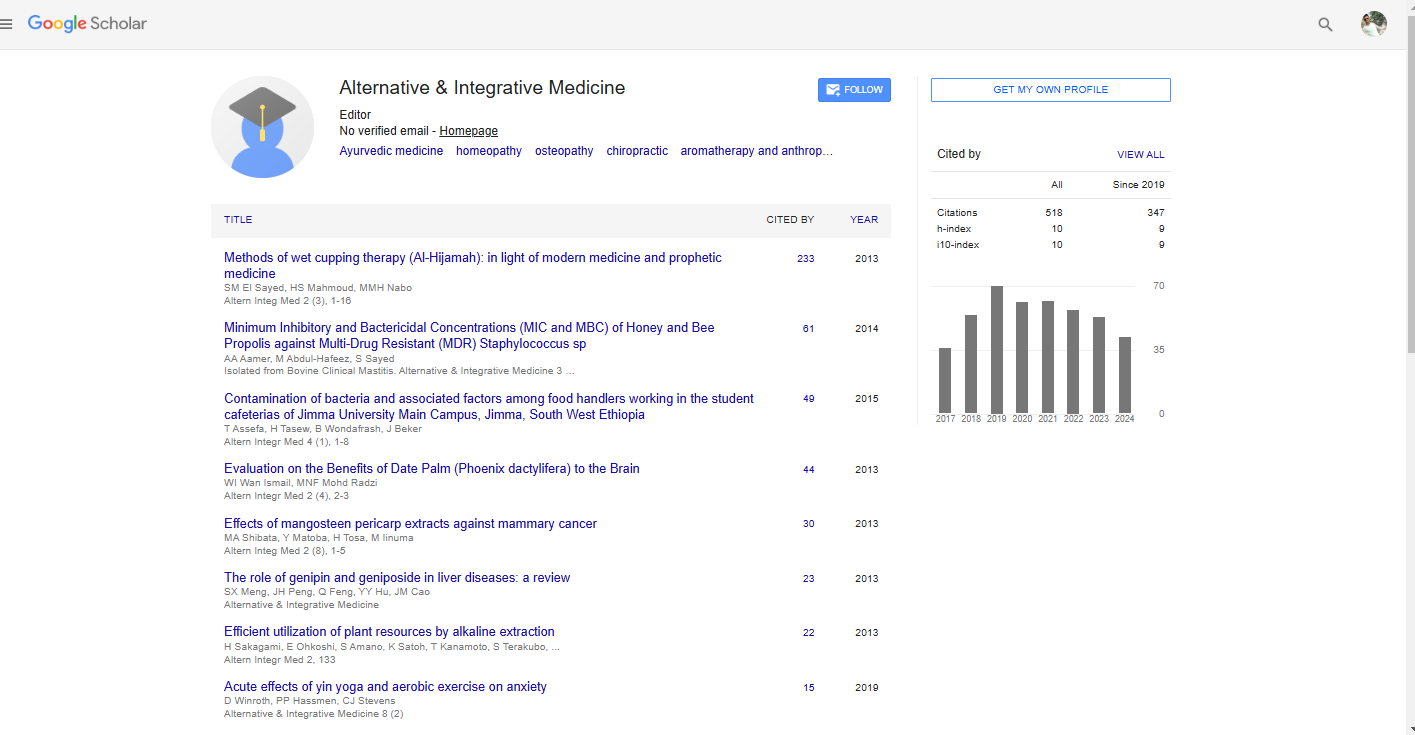
Alternative & Integrative Medicine received 476 citations as per Google Scholar report