Research Article - (2021) Volume 12, Issue 4
Received: 15-Apr-2021
Published:
30-Apr-2021
Citation: Bambang Wahyudi and Srie Muljani. “Synthesis and Characterization Edible Films from Taro Starch (Xanthosoma sagittifolium).” Chem Sci J 12 (2021). 227.
Copyright: © 2021 Wahyudi B, et al. This is an open-access article distributed under the terms of the Creative Commons Attribution License, which permits unrestricted use, distribution, and reproduction in any medium, provided the original author and source are credited.
The synthesis of edible film from taro starch has been studied as a strategy for the manufacture of biodegradable food packaging. This study aims to examine the effect of the starch: Chitosan ratio and glycerol concentration on the characteristics of the edible film and to obtain an edible film in accordance with the Japanese Industrial Standard (JIS). The research included two steps, the first stage of making taro starch (Xanthosoma sagittifolium) and the second stage of making edible films with variations of Chitosan Starch (2: 0, 1,8: 0.2, 1)., 6: 0.4, 1, 4: 0.6, and 1.8: 0.2) and glycerol variations (1; 1.5; 2; 2.5 and 3%). The edible film that fulfills JIS is found in starch concentration: Chitosan 1,2: 0.8 with glycerol concentration 2.5% has a thickness of 0.25 mm, tensile strength 0.454 MPa, elongation 71.70%, young modulus 0.216 MPa, solubility in water 64.104%, and biodegradation 86.83%. The IR Spectrum edible film shows the presence of OH- and Ester (COOH) groups which characterize hydrophilic properties.
Chitosan • Edible film • Glycerol • Starch
So far, food packaging generally still uses plastic material sourced from petroleum and undegraded by microorganisms in the environment. The alternative to biodegradable food packaging materials is to use edible film. The edible film has advantages when compared to packaging made from synthetic polymers from petroleum, caused the material is easy to obtain, and is biodegradable. Hydrocolloids both polysaccharides and proteins, are the most common group of biopolymers used in the production of edible materials. Hydrocolloid such as starch as the main material for making edible films has biodegradation properties, the process is simple and the operating costs are relatively low [1]. The type of taro used in this study has a high starch content, which is around 68.31%. Meanwhile, the most commonly used plasticizer in making edible films is glycerol because it is cheap and renewable. Glycerol content affects the solubility of the film, weight, structure and water absorption at 25°C. In general, for all starch film pressures at rest and Young's modulus decreases and elongation increases as the glycerol concentration increases. Overall, glycerol addition could enhance the water vapor pressure barrier properties of the films, but their tensile strength was reduced. To improve the physical and functional characteristics of the starch film, it is necessary to add biopolymers or other materials that are hydrophobic and have antimicrobial properties, one of which is chitosan. Edible materials may be produced by wet or dry methods [2,3]. The main difference is that films are produced by a casting method where the film-forming solution is dried over a solid surface. Coniwati reported that the biodegradable film from corn starch had a tensile strength of 3.92 MPa, an elongation of 37.92% and was positive for biodegradation tests. On the other hand, the edible film from pumpkin has a tensile strength of 4.1176 MPa, 36.5714% elongation, and 79.92% solubility. Meanwhile, edible film based on JIS standard includes a maximum thickness of 0.25 mm, a minimum tensile strength of 0.392266 MPa, and a minimum elongation of 70%. With the increasing need for edible films and the growing application of them, it is necessary to develop research on making edible films with high flexibility without changing the properties of the film and in accordance with JIS standards [4-6]. The ratio of taro starch to chitosan, as well as the concentration of glycerol, were studied with the consideration of their effect on the characteristics of edible film products. The purpose of this study was to obtain the best chitosan and glycerol concentrations for the production of edible films from taro starch according to JIS. The characteristics of edible film products include tensile strength, elongation, modulus young, water-solubility, film thickness, the biodegradability of edible films, and the main functional groups in edible films [7].
Materials
Taro tubers as a source of starch are obtained from farmers in Ponorogo, East Java, Indonesia. Sodium chloride (NaCl), acetic acid (CH3COOH), and glycerol (plasticizer) were obtained/purchased at PT. BRATACO. Shrimp shell chitosan was obtained from PT. Monodon Group.
Preparation of Taro Starch
Taro tubers (1 kg) washed with water then drained and peeled off the skin. The tubers are cut into 1 cm × 1 cm × 1 cm sizes and washed again with water. The tuber chips are soaked in 7.5% NaCl solution, 1000 ml for 1 hour to remove the calcium oxalate content in taro then drained. Blend the taro chips with an additional 2 liters of water until smooth. The blended slurry is filtered using filter paper. The filtrate obtained is left to stand for 24 hours until a precipitate (starch) is formed. Water is separated to get starch deposits. The starch precipitate was then dried in an oven at 70°C for 15 minutes. The dry starch is mashed with a mill to form a powder and then sifted to 100 mesh. Starch content was determined using proximate and spectrophotometric methods.
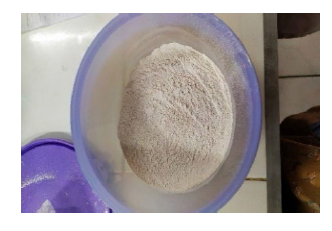
The taro starch product obtained is in accordance with the starch quality standard. The starch concentration in taro produced in this study reached 84.18%, so that taro starch can be used as a raw material in making edible films.
Preparation of edible film
Weighing each ingredient with the ratio of taro starch: chitosan = 2: 0; 1.2: 0.8; 1.4: 0.6; 1.6: 0.4; and 1.8: 0.2 (w / w) where the total weight of the mixture is 2 g each. The first solution preparation was to dissolve chitosan in 50 ml of 1% acetic acid solution. Chitosan completely dissolves in 1% acetic acid by stirring for 10 minutes. For the second solution, taro starch was added to 50 ml of demineralized water while stirring for 10 minutes and heated until the solution reached a gelatinization temperature of 70°C. The temperature must be maintained so that the starch grains do not break. Then add glycerol 1; 1.5; 2; 2.5; and 3% by volume of 100 ml starch and chitosan mixture as a plasticizer. The volume of glycerol added was 1; 1.5; 2; 2.5; and 3 cc for solution 1 and solution 2. After all the ingredients are mixed, stir at 200 rpm for 1 hours.
Characterization
The characteristic test for edible film includes: Tensile strength test, Elongation and Modulus Young Use Lloyd’s Universal Testing Instrument 50 Hz model 1000s with standard method ASTM D882-02. Biodegradability using burial methods of the soil. Solubility in water by the Gontard method in 1993. IR spectra edible film using FTIR (Fourier Transform Infrared) Spectroscopy (Table 1).
| Analysis | Indonesian industry standard (%) | The percentage obtained from the research results (%) |
|---|---|---|
| Starch content | *min 75 | 84,18 |
| Water content | *Maks 14 | 14,21 |
| Amylose content | - | 15,13 |
| Amylopectin content | - | 69,05 |
Amylose content affects the level of solubility in water. The higher the amylose content of a starch, the solubility in water will increase because amylose has polar properties. The higher the amylopectin content of a starch, the energy needed to form a gel during the cool process is not strong enough to prevent the tendency towards amylose molecules to recombine to form long amylose bonds (Table 2).
| Num | Functional groups | Wave Numbers (cm-1) | |
|---|---|---|---|
| Theoretic | FTIR Result | ||
| 1 | O–H | 3200-3600 | 3487,30 |
| 2 | C–H alkanes | 2850 – 2970 | 2895,15 |
| 3 | C=C aromatic | 1500 – 1600 | 1589,34 |
| 4 | C–O alcohol/ ether / ester | 1050 – 1300 | 1068,56; 1128,36; 1165,00 |
| 5 | C–H aromatic | 690 – 900 | 765,74; 871,82 |
| 6 | C–H alkenes | 675-995 | 933,55 |
Tensile strength of edibles film
Based on the results of the Tensile Strength Analysis, there was an effect of chitosan and glycerol concentrations on the tensile strength of the edible film (Figure 1). The results showed that the greater the addition of glycerol, the smaller the tensile strength, this is because the addition of glycerol to the edible film can result in a decrease in intermolecular forces which will decrease the tensile strength value. In accordance with Krochta in 1994 reported that the plasticizer will reduce the hydrogen bonding in the edible film thereby increasing the flexibility of the film, with increasing flexibility the tensile strength will be smaller. The greater the addition of chitosan, the tensile strength value will increase, this is because there will be more hydrogen interactions contained in the edible film so that the bonds between the chains will be stronger and harder to break because it requires a large amount of energy to break the bond. According to Septiani, that the strength value is directly proportional to the added chitosan, the greater the percentage of chitosan, the tensile strength value will tend to increase. The highest tensile strength value is 0,839 MPa in the composition of starch: chitosan (1,2: 0,8) with a glycerol concentration of 3% which meets JIS standards.
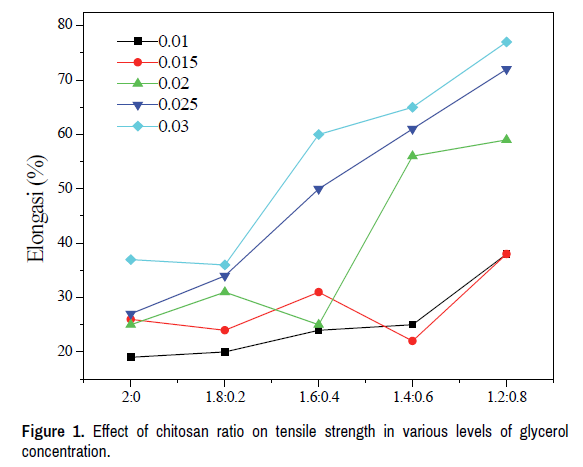
Figure 1. Effect of chitosan ratio on tensile strength in various levels of glycerol concentration.
Elongasi of edibles film
Figure 2 shows the effect of the starch and glycerol ratios on the percentage of elongation of edible film in water. The greater the addition of glycerol, the greater the percentage value of elongation. This is in accordance with Kester that as the plasticizer concentration increases, it will decrease the internal hydrogen bonds, so that the film becomes more flexible so that the elongation valued will increase. While the effect of chitosan according to Septiani that the more chitosan is added, the elongation value decreases [8]. This is not in accordance with the results of the study, which shows the relationship between the addition of chitosan to the elongation of fluctuating and relatively increasing values. This difference is due to the relatively small addition of chitosan concentration so that the elongation value tends to increase. This is because chitosan can form hydrogen bonds between polymer chains so that the edible film becomes tighter so that the resulting edible film is stiffer and the flexibility properties of the edible film decrease. The highest value of % elongation was 76.70% in the ratio of starch-chitosan 1.2: 0.8 with a glycerol concentration of 3% which met JIS standards [9].
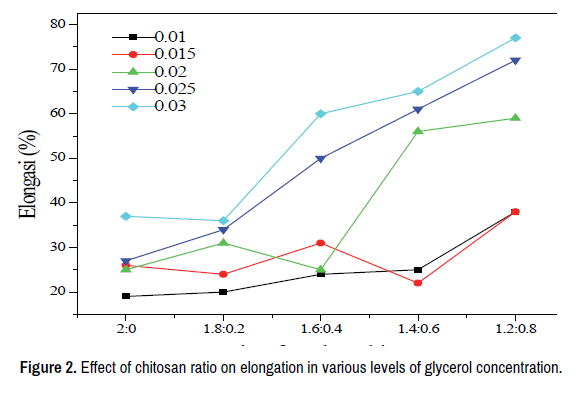
Figure 2. Effect of chitosan ratio on elongation in various levels of glycerol concentration.
Modulus young of edibles film
Modulus young can also be said as a measure of the stiffness of a material. Figure 3 shows the effect of the starch and glycerol ratios on the modulus of young edible film. The highest modulus of young edible film was in the starch-chitosan ratio of 1.2: 0.8 and the glycerol concentration of 1%, which was 2,313 MPa. In general, the greater the starch composition in the edible film, the lower the Young's Modulus. The addition of chitosan to edible film can increase Young's Modulus because chitosan can cause an increase in affinity. Affinity is a phenomenon where certain molecules have a tendency to stick together and bind. The more affinity increases, the more bonds occur to molecules [10-12]. This is inversely proportional to the addition of the glycerol composition as a plasticizer, where the Modulus Young value will be smaller as the glycerol concentration increases.
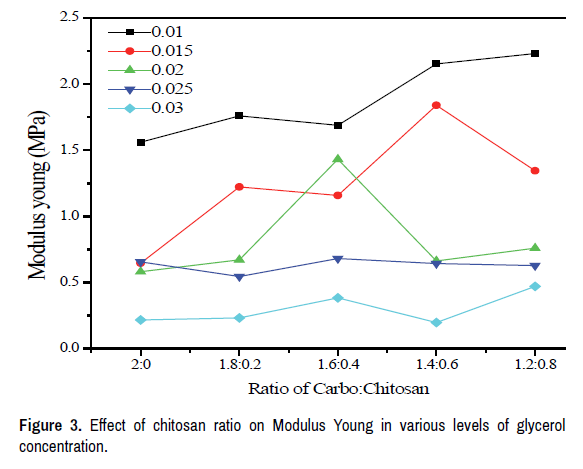
Figure 3. Effect of chitosan ratio on Modulus Young in various levels of glycerol concentration.
Solubility edibles film in water
Figure 4 shows the effect of the ratio of starch and glycerol on the solubility of edible film in water. The greater the glycerol concentration used, the greater the water absorption. Glycerol is hydrophilic so that the increasing concentration of glycerol added to the edible film will weaken the interaction between starch molecules, so that the molecular density is reduced and free space is formed into film matrix so that it can increase solubility. This is in accordance with the opinion, that the more the volume of glycerol increases, the greater the solubility of water. The addition of glycerol as a plasticizer tends to increase the solubility of water in the edible film. However, in the table above, the greater the concentration of chitosan, the water solubility tends to increase, which is contrary to the nature of chitosan, which is hydrophobic, making it more difficult to absorb water [13]. This is because the treatment without the addition of chitosan edible film produced has a good uniformity characterized by a smooth shape and even distribution of starch. The highest solubility results from the table above can be seen in the starch-chitosan ratio of 1.2: 0.8 and glycerol 2.5%, which is 64.10%. According to Krochta, that if the application of a film is desired as an edible packaging, high solubility is desired [14].
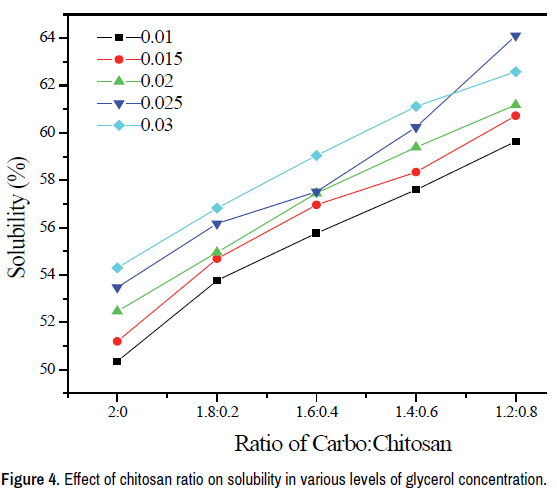
Figure 4. Effect of chitosan ratio on solubility in various levels of glycerol concentration.
Biodegradation of edibles film
Figure 5 shows the effect of the starch: chitosan and glycerol ratios on the biodegradation of edible films. Increasing the concentration of glycerol causes the degradation process to accelerate. This is due to the hydrophilic nature of glycerol. The hydrophilic nature can accelerate the absorption of water which allows microorganisms to degrade the edible film samples faster. The addition of chitosan has the effect of slowing down biodegradation, but this can also be needed. If the edible film breaks in too easily, the shelf life of the edible film itself will be fast, and will cause losses. The addition of chitosan in making edible films aims to slow down the damage to the edible film and can be degraded longer [15]. The duration of degradation (biodegradation) resulted from this study is within 30 days to be able to decompose on average almost 70% not yet in its entirety. Edible film that almost completely decomposes into 30 days, namely in the starch-chitosan ratio of 1.2: 0.8 with glycerol concentrations of 2.5% and 3%. The edible film can be completely degraded, starting from changing the film to being thin and fragmented to finally be completely degraded [16]. This shows that the edible film formed is environmentally friendly. When compared with food wrappers on the market, which have a long degradation rate.
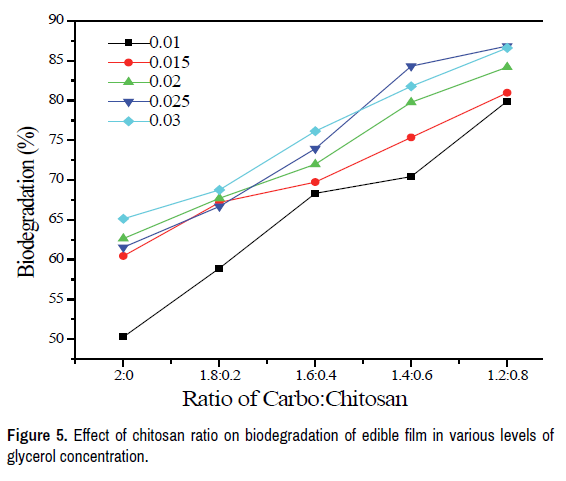
Figure 5. Effect of chitosan ratio on biodegradation of edible film in various levels of glycerol concentration.
Edible film in accordance with Japanese Industrial Standard (JIS)
Several edible film products of this study have met the JIS criteria for tensile strength and elongation simultaneously. This point is the starch-chitosan ratio of 1.2: 0.8 with a glycerol concentration of 2.5%, which is obtained a thickness of 0.25 mm, tensile strength 0.454 MPa, and elongation of 71.70%. So, it can be said that this point is the best composition in making this edible film (Figure 6).
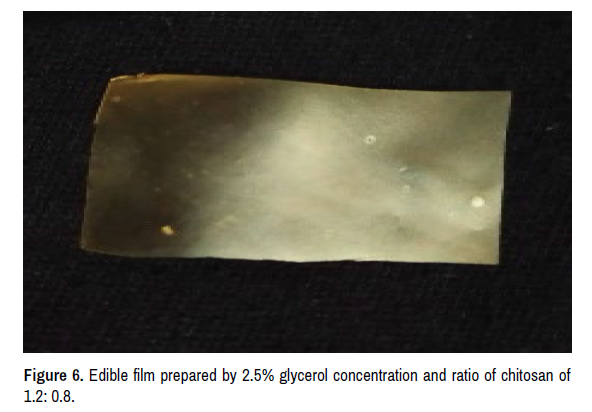
Figure 6. Edible film prepared by 2.5% glycerol concentration and ratio of chitosan of 1.2: 0.8.
IR Spectra of edible film
The results of Fourier Transform Infra-Red (FTIR) Spectrophotometer analysis are presented in Figure 7. From the graphic data above, the table below will be obtained (Table 1):
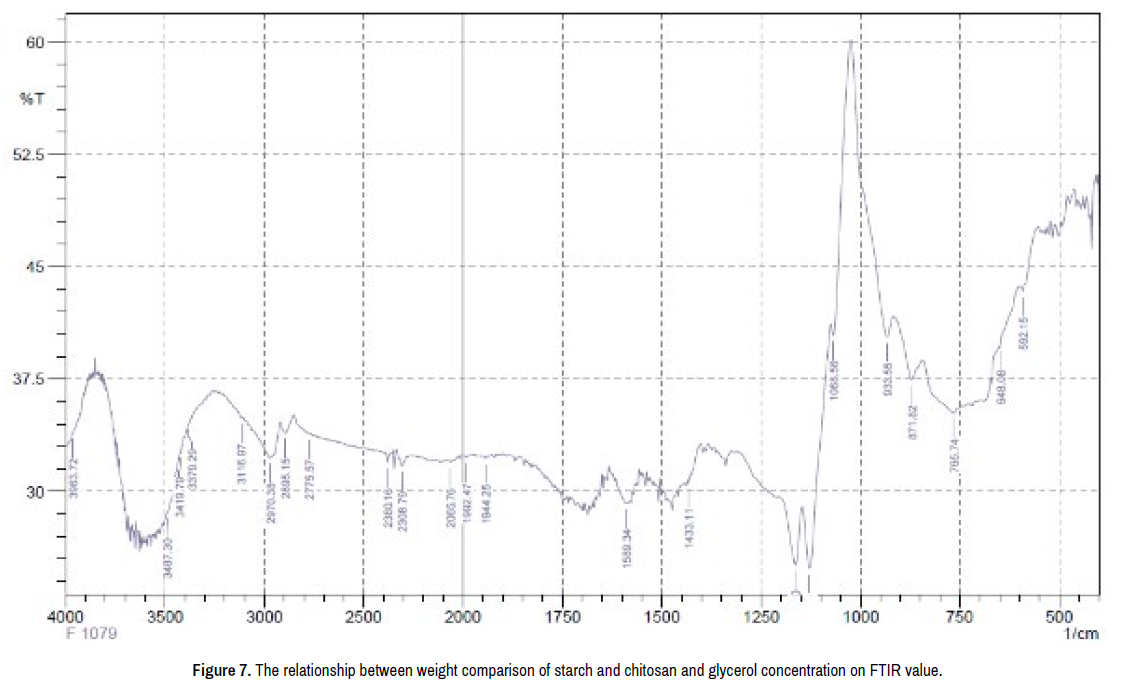
Figure 7. The relationship between weight comparison of starch and chitosan and glycerol concentration on FTIR value.
FTIR analysis was carried out for edible film samples that met the standards (JIS) with a proportion of 1.2 gr starch, 0.8 g chitosan and 2.5% glycerol. The IR spectrum shows that the edible film from taro starch has relatively the same groups as its constituent components, so it can be stated that the edible film formed still has hydrophilic properties. The hydrophilic nature of the edible film is indicated by the presence of an O-H group found at wave number 3487.30 cm-1. Apart from the Hydroxyl group (OH), there is also an Ester group (COOH). The presence of these functional groups indicates that the edible film from taro starch can degrade well in soil.
Edible film according to JIS has been successfully made. These results were obtained in the preparation of the concentration of starch: chitosan 1,2: 0.8 with a glycerol concentration of 2.5% which produced edible film with a thickness of 0.25 mm, tensile strength 0.454 MPa, elongation 71.70%, modulus young 0.216 MPa, solubility in water 64.104%, biodegradation 86.83%. The edible film product has hydrophilic properties which can be seen by the presence of OH- and ester (COOH) groups.
Chemical Sciences Journal received 912 citations as per Google Scholar report