Brief Report - (2025) Volume 15, Issue 4
Received: 02-Aug-2025, Manuscript No. jeat-26-188641;
Editor assigned: 04-Aug-2025, Pre QC No. P-188641;
Reviewed: 18-Aug-2025, QC No. Q-188641;
Revised: 25-Aug-2025, Manuscript No. R-188641;
Published:
01-Sep-2025
, DOI: 10.37421/2161-0525.2025.15.862
Citation: Ramirez, Pedro. ”Fertilizer Risks: Environmental and
Human Health Impacts.” J Environ Anal Toxicol 15 (2025):862.
Copyright: © 2025 Ramirez P. This is an open-access article distributed under the terms of the Creative Commons Attribution License, which permits unrestricted use,
distribution and reproduction in any medium, provided the original author and source are credited.
The pervasive use of chemical fertilizers has undoubtedly revolutionized agricultural productivity, enabling the sustenance of a growing global population. However, this widespread application is not without its considerable environmental drawbacks. The toxicological impacts of common fertilizer constituents, such as nitrogen and phosphorus compounds, on various ecological systems are a growing concern, necessitating a thorough examination of their effects on soil ecosystems, aquatic environments, and non-target organisms.
Nutrient runoff from agricultural fields, largely driven by fertilizer use, is a primary contributor to the phenomenon of eutrophication. This process can lead to detrimental alterations in aquatic ecosystems, significantly affecting biodiversity and the overall health of these vital environments. Beyond nutrient pollution, persistent chemicals found in some fertilizers can bioaccumulate within food chains. This accumulation poses potential risks not only to wildlife but also to human health through the consumption of contaminated food products, underscoring the interconnectedness of environmental and public health. Furthermore, the ecotoxicological effects of phosphorus fertilizers on freshwater invertebrates are a critical area of study. Elevated phosphorus levels disrupt aquatic ecosystems by promoting algal blooms, which in turn deplete dissolved oxygen, impacting the survival and reproduction of sensitive invertebrate species. Heavy metals, often present as trace impurities in chemical fertilizers, represent another significant environmental challenge. Their presence can inhibit essential microbial functions in soil, reduce biodiversity, and alter nutrient cycling, thereby compromising soil health and fertility. The intricate relationship between synthetic fertilizers and plant-pathogen dynamics is also being increasingly recognized. Imbalanced nutrient availability, often a consequence of excessive fertilization, can weaken plant defense mechanisms, rendering crops more susceptible to diseases and pests. The environmental fate and transport of nitrogen from agricultural fertilizers are of paramount importance. Nitrogen compounds can leach into groundwater and surface water, contributing to water pollution and the exacerbation of eutrophication, while also being released into the atmosphere as potent greenhouse gases. Specific nitrogenous fertilizers, such as urea, have demonstrated direct ecotoxicity to non-target soil organisms. Hydrolysis products of urea can adversely affect the survival, growth, and reproductive capacity of vital soil fauna and beneficial insects. The influence of phosphate fertilizers on the bioaccumulation of trace elements in crops is a concerning issue, particularly regarding elements like cadmium. The uptake of these toxic trace elements by plants from contaminated fertilizers poses a direct risk to human consumers through the food chain. Beyond direct chemical toxicity, chemical fertilizers can exert indirect ecotoxicological effects. These include alterations in soil pH and the promotion of weed species that may produce phytotoxins, collectively disrupting the agroecosystem balance and impacting crop health.Chemical fertilizers, while indispensable for modern agriculture, introduce a spectrum of environmental challenges, prominently including their toxicological impacts on various ecological components. The extensive use of nitrogen and phosphorus compounds, key fertilizer components, has been linked to adverse effects on soil ecosystems, aquatic environments, and a wide array of non-target organisms, necessitating a comprehensive understanding of these ramifications.
A significant consequence of fertilizer application is nutrient runoff, a primary driver of eutrophication in aquatic systems. This phenomenon leads to excessive algal growth, oxygen depletion, and a subsequent decline in biodiversity, fundamentally altering the delicate balance of freshwater and marine ecosystems. Moreover, the persistence of certain chemical components within fertilizers raises concerns about their accumulation in food chains. This bioaccumulation poses a latent threat to both wildlife and human populations, emphasizing the need for careful management and monitoring of agricultural inputs. The ecotoxicological effects of phosphorus fertilizers on freshwater invertebrates are particularly well-documented. Elevated phosphorus concentrations foster algal blooms, leading to hypoxic conditions that severely impact the survival and reproductive success of sensitive invertebrate species, crucial components of aquatic food webs. Heavy metals, often found as contaminants in chemical fertilizers, present a distinct threat to soil health. These metals can disrupt essential microbial processes, diminish soil biodiversity, and alter nutrient cycling, thereby compromising the long-term sustainability of agricultural lands. The interplay between synthetic fertilizers and plant health is complex, with research indicating that imbalanced nutrient regimes can suppress natural plant defense mechanisms. This renders crops more vulnerable to diseases and pests, potentially increasing reliance on other chemical interventions. The environmental journey of nitrogen from fertilizers is multifaceted, involving leaching into water bodies and atmospheric emissions. Nitrogen compounds contribute to water pollution and eutrophication, while the release of nitrous oxide, a potent greenhouse gas, has significant implications for climate change mitigation efforts. Specific nitrogenous fertilizers, such as urea, have been shown to exhibit direct toxicity to non-target soil organisms. The byproducts of urea hydrolysis can negatively affect the viability and developmental stages of earthworms and beneficial insects, integral to soil ecosystems. Phosphate fertilizers can also be a source of toxic trace elements, notably cadmium. The uptake of these elements by crops from contaminated fertilizers leads to their accumulation in edible plant parts, posing a direct risk to human health through dietary exposure. In addition to direct chemical toxicity, fertilizers can induce indirect ecotoxicological effects. These include alterations in soil pH, which can favor the proliferation of certain weed species, and the production of phytotoxins, collectively contributing to ecosystem imbalance and reduced agricultural productivity.Chemical fertilizers, while boosting agricultural output, pose significant environmental risks including toxicological impacts on soil, water, and wildlife. Nutrient runoff causes eutrophication, harming aquatic biodiversity. Persistent chemicals and heavy metals can accumulate in food chains, risking human health. Specific fertilizers like urea show direct toxicity to soil organisms, while others can make crops more susceptible to diseases. Nitrogen fertilizers contribute to water pollution and greenhouse gas emissions. Phosphate fertilizers may lead to cadmium accumulation in crops. Indirect effects include soil pH changes and weed proliferation. Sustainable alternatives and best practices are crucial to mitigate these adverse effects.
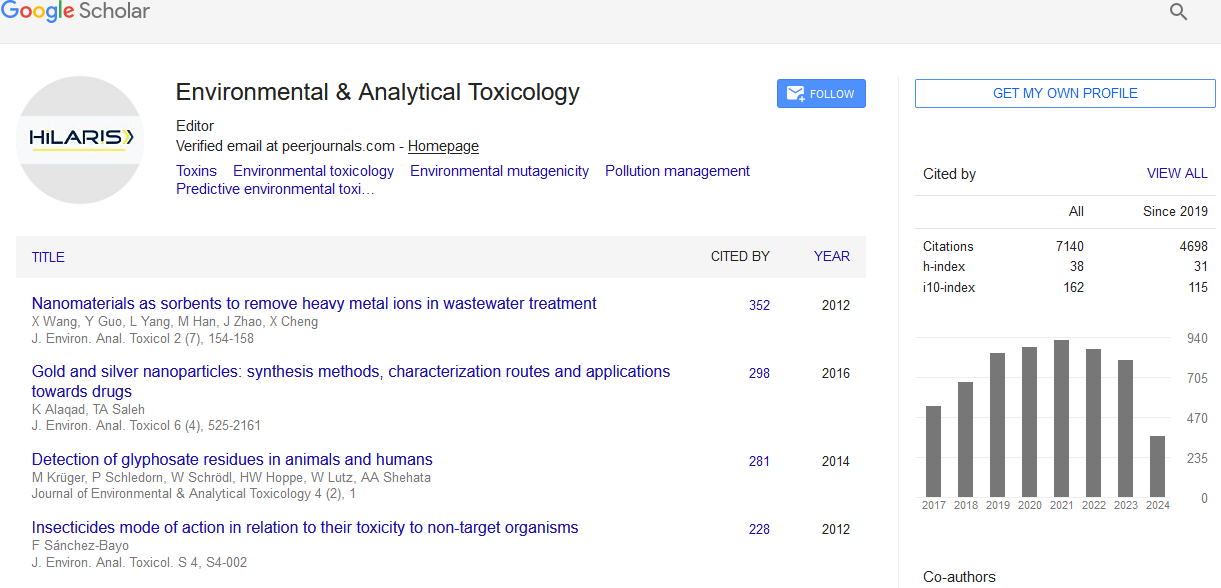
Environmental & Analytical Toxicology received 6818 citations as per Google Scholar report