Short Communication - (2025) Volume 16, Issue 6
Received: 03-Nov-2025, Manuscript No. jnmrt-26-186403;
Editor assigned: 05-Nov-2025, Pre QC No. P-186403;
Reviewed: 19-Nov-2025, QC No. Q-186403;
Revised: 24-Nov-2025, Manuscript No. R-186403;
Published:
01-Dec-2025
, DOI: 10.37421/2155-9619.2025.16.684
Citation: Williams, Jonathan. ”FDG-PET/CT: Precision Planning
For Head and Neck Cancer.” J Nucl Med Radiat Ther 16 (2025):684.
Copyright: © 2025 Williams J. This is an open-access article distributed under the terms of the Creative Commons Attribution License, which permits unrestricted use,
distribution and reproduction in any medium, provided the original author and source are credited.
The integration of positron emission tomography (PET) imaging, particularly with fluorodeoxyglucose (FDG), into the radiation therapy planning process for head and neck cancer offers significant advantages in precisely delineating tumor volumes. This metabolic information, which may extend beyond macroscopic anatomical boundaries visible on conventional imaging, allows for a more accurate definition of target volumes. Consequently, this leads to more precise dose prescription and delivery to the tumor while simultaneously reducing radiation exposure to surrounding critical organs at risk. This refined approach holds the potential to improve treatment efficacy through better tumor coverage and reduce treatment-related toxicity, ultimately enhancing patient outcomes and quality of life [1].
Beyond FDG, the exploration of novel PET tracers targeting specific molecular mechanisms like hypoxia or particular molecular targets is an evolving area in head and neck cancer radiation therapy planning. These advanced tracers offer deeper insights into tumor heterogeneity and the intrinsic radioresistance of tumor cells, paving the way for more individualized and effective treatment strategies. Incorporating such functional imaging capabilities can aid in identifying specific regions within the tumor that exhibit reduced responsiveness to standard radiation doses. This identification allows for targeted dose escalation in these identified areas or the strategic consideration of combined modality treatments. This personalized therapeutic approach, thoroughly informed by multi-parametric PET imaging data, holds significant promise for optimizing radiation delivery and thereby improving overall tumor control [2].
The technical aspects inherent in the integration of PET/CT data into sophisticated radiation therapy planning systems are of paramount importance for the successful and effective implementation of this advanced modality. This critical process necessitates accurate image registration, ensuring seamless alignment between PET, CT, and MRI data sets. Furthermore, it requires robust and meticulous contouring of the gross tumor volume (GTV), the clinical target volume (CTV), and the organs at risk (OARs) based on the fused imaging information. A thorough understanding of the inherent limitations of PET resolution and the potential for imaging artifacts is absolutely essential for achieving accurate and reliable tumor delineation. Standardization of imaging protocols and contouring guidelines across different institutions is also a vital requirement to ensure consistency and reproducibility of results, which in turn facilitates the broader adoption and implementation of this advanced planning strategy within the oncology community [3].
Clinical outcomes data are increasingly providing robust evidence for the significant value of FDG-PET/CT in the context of head and neck cancer radiation therapy. Numerous studies are now demonstrating notable improvements in local control rates and a reduction in regional failures when PET-defined tumor volumes are systematically used to guide treatment planning decisions. Furthermore, accumulating evidence suggests that the judicious incorporation of PET information can be instrumental in identifying specific patient subgroups who are likely to benefit from dose escalation or modifications in treatment fractionation schedules, ultimately leading to superior oncologic outcomes. Continued research efforts are absolutely vital to further refine these PET-guided strategies and to optimize, with even greater precision, both patient selection and the intricate details of treatment delivery [4].
The integration of PET imaging into the radiation therapy planning process can exert a significant and positive impact on the radiation dose delivered to critical organs at risk (OARs), including vital structures such as the salivary glands, spinal cord, and optic pathways. By enabling the precise identification of tumor margins, PET-based delineation can facilitate the establishment of more conservative planning target volume (PTV) margins. This, in turn, can lead to a reduction in the radiation dose delivered to these critical OARs, thereby effectively mitigating the incidence and severity of treatment-related toxicities, such as xerostomia and dysphagia. This optimization of OAR sparing represents a key and highly valuable benefit of employing functional imaging modalities in the field of radiation oncology, contributing substantially to an improved quality of life for patients during and after their treatment course [5].
The rapidly advancing frontier of radiation therapy planning for head and neck cancer involves the synergistic use of artificial intelligence (AI) and machine learning techniques in conjunction with PET imaging. AI algorithms are proving to be invaluable tools in the automated segmentation of tumors and OARs on PET/CT scans, significantly enhancing the accuracy of image registration, and potentially offering predictive capabilities for treatment response or toxicity based on observed metabolic patterns within the tumor. This transformative technology holds immense potential for streamlining clinical workflows, improving the overall precision of treatment planning, and facilitating the development of more highly personalized treatment strategies, ultimately leading to substantial improvements in both efficiency and patient outcomes [6].
There is a strong consensus among experts in the field that FDG-PET/CT has definitively become an indispensable tool in the comprehensive, multidisciplinary management of head and neck cancer, with a particular emphasis on its crucial role in radiation therapy planning. The inherent ability of PET/CT to accurately define metabolically active tumor volumes, meticulously assess the extent of nodal involvement, and reliably detect occult disease empowers clinicians to pursue a more precise and potentially far more effective treatment strategy. Reflecting its well-established clinical value, guidelines from major oncology societies are increasingly recommending the routine use of PET/CT for both staging and treatment planning purposes, underscoring its critical importance in modern oncological practice [7].
Re-irradiation for recurrent head and neck cancer presents a unique set of complex challenges, and in this specific clinical scenario, functional PET imaging assumes a critical and pivotal role. FDG-PET/CT is exceptionally adept at accurately delineating areas of metabolically active recurrence, effectively distinguishing between active tumor burden and residual post-treatment changes, and identifying any previously untreated or new disease. This detailed and precise information is absolutely crucial for the accurate definition of target volumes for re-irradiation, ensuring that areas of active tumor receive adequate radiation coverage while simultaneously sparing previously irradiated normal tissues. This careful balancing act is essential for maximizing the chances of achieving local control and minimizing the risk of treatment-related complications [8].
The precise definition of planning target volumes (PTVs) is of paramount importance in all aspects of radiation oncology, and in the context of head and neck cancer, FDG-PET/CT offers a significant and undeniable advantage over conventional CT-alone imaging. By incorporating the crucial metabolic information provided by PET, which often extends beyond visible anatomical margins, the gross tumor volume (GTV) can be defined with substantially greater accuracy. This improved accuracy in GTV definition leads directly to the establishment of more appropriate clinical target volumes (CTVs) and planning target volumes (PTVs), thereby ensuring that areas of potential microscopic disease, which might otherwise be missed on CT alone, are adequately included within the radiation field. This comprehensive inclusion of all potentially involved areas significantly improves tumor control probabilities [9].
Understanding the concept of tumor heterogeneity, as revealed through PET imaging, offers profound implications for the planning of radiation therapy in head and neck cancer. Different metabolic subtypes within a single head and neck tumor, which can be identified and characterized by FDG-PET, may exhibit varying degrees of sensitivity to radiation. The identification of aggressive or radioresistant subregions within the tumor mass allows for the potential to adapt and personalize the treatment strategy. This might involve techniques such as dose painting, where higher radiation doses are delivered to specific, more aggressive areas, or the strategic combination of radiation therapy with systemic therapies specifically designed to target identified molecular pathways. This personalized approach, driven by detailed functional imaging insights, signifies a crucial shift in radiation oncology towards a more precise and data-driven paradigm [10].
The integration of positron emission tomography (PET) imaging, specifically utilizing fluorodeoxyglucose (FDG), into the radiation therapy planning process for head and neck cancer presents substantial benefits. PET-CT facilitates a more accurate delineation of tumor volumes by precisely highlighting metabolically active regions. These metabolically active areas may often extend beyond the macroscopic anatomical boundaries typically visualized on conventional imaging modalities. This crucial metabolic information allows for a refinement in the definition of target volumes, leading to more accurate dose prescription and subsequent delivery to the tumor. Concurrently, this approach aims to minimize radiation exposure to surrounding critical organs at risk. Ultimately, this integrated strategy holds considerable potential to enhance treatment efficacy through improved tumor coverage and to reduce the incidence of treatment-related toxicities, thereby contributing to better patient outcomes and an improved quality of life [1].
The exploration of novel PET tracers, extending beyond the commonly used FDG, is a dynamic and rapidly advancing area within head and neck cancer radiation therapy planning. These novel tracers are designed to target specific biological processes, such as tumor hypoxia or distinct molecular targets unique to cancer cells. Such advanced tracers can furnish invaluable insights into the intrinsic heterogeneity of tumors and their inherent radioresistance. This knowledge empowers clinicians to devise more personalized and effective treatment strategies tailored to the individual patient's tumor biology. Incorporating these advanced functional imaging capabilities can assist in precisely identifying specific regions within the tumor that demonstrate reduced sensitivity to standard radiation doses. This identification permits the potential for dose escalation in these particular areas or the strategic consideration of combining radiation therapy with other treatment modalities. This personalized therapeutic strategy, informed by comprehensive multi-parametric PET imaging, promises to optimize radiation delivery, leading to enhanced tumor control [2].
The technical intricacies associated with the integration of PET/CT data into radiation therapy planning systems are fundamentally crucial for the successful and effective implementation of this advanced imaging technique. This process critically relies on accurate image registration, ensuring the precise overlay of PET, CT, and MRI data. It also demands robust and meticulous contouring of the gross tumor volume (GTV), the clinical target volume (CTV), and the organs at risk (OARs) based on these fused imaging datasets. A thorough understanding of the inherent limitations of PET resolution, as well as the potential for various imaging artifacts, is absolutely essential for accurate and reliable tumor delineation. Furthermore, standardization of imaging protocols and contouring guidelines across different healthcare institutions is highly important. This standardization is key to ensuring consistency and reproducibility of the results, which in turn facilitates the broader adoption and widespread implementation of this advanced planning strategy within the oncology community [3].
An increasing body of clinical outcomes data is now demonstrating the tangible value of FDG-PET/CT in the management of head and neck cancer, particularly within the realm of radiation therapy. Various studies are reporting improvements in local control rates and a reduction in regional failures when PET-defined tumor volumes are employed to guide treatment planning. Moreover, evidence suggests that the incorporation of PET information can be instrumental in identifying specific patient populations who are most likely to benefit from dose escalation or alterations in treatment fractionation. These strategic adjustments, guided by PET data, can lead to significantly better oncologic outcomes. Continued research is therefore vital to further refine these PET-guided treatment strategies and to optimize patient selection and the precise delivery of radiation therapy [4].
The integration of PET imaging into the radiation therapy planning workflow can profoundly influence the radiation dose delivered to critical organs at risk (OARs), such as the salivary glands, spinal cord, and optic structures. By enabling a more precise definition of tumor margins, PET-based delineation allows for the use of potentially more conservative planning target volume (PTV) margins. This can lead to a reduction in the radiation dose delivered to these critical OARs, thereby mitigating the risk and severity of treatment-related toxicities like xerostomia and dysphagia. This optimization of OAR sparing is a principal benefit of utilizing functional imaging in radiation oncology, significantly contributing to an improved quality of life for patients during and after their treatment course [5].
The application of artificial intelligence (AI) and machine learning techniques in conjunction with PET imaging for radiation therapy planning in head and neck cancer represents a rapidly evolving and promising frontier. AI algorithms are increasingly being utilized to assist in the automated segmentation of tumors and OARs on PET/CT scans, thereby enhancing the accuracy of image registration. These algorithms also hold the potential to predict treatment response or toxicity based on the analysis of metabolic patterns within the tumor. This advanced technology has the capacity to streamline clinical workflows, improve the precision of treatment delivery, and facilitate the development of more highly personalized treatment plans, ultimately leading to enhanced efficiency and improved patient outcomes [6].
There is a strong and widely held consensus among experts that FDG-PET/CT has firmly established itself as an indispensable tool in the multidisciplinary management of head and neck cancer, particularly concerning its critical role in radiation therapy planning. The inherent capability of PET/CT to accurately define metabolically active tumor volumes, assess the extent of nodal involvement, and detect occult disease empowers clinicians to pursue a more precise and potentially more effective treatment strategy. Major oncology societies are increasingly incorporating PET/CT into their guidelines for staging and treatment planning, reflecting its proven clinical value and its integral role in modern oncological practice [7].
Re-irradiation for recurrent head and neck cancer presents a distinct set of challenges, and in this context, functional PET imaging plays a crucial role. FDG-PET/CT is highly effective in accurately delineating areas of metabolically active recurrence. It can also reliably distinguish between active tumor and post-treatment changes, as well as identify previously untreated disease. This detailed information is vital for defining appropriate target volumes for re-irradiation, ensuring adequate coverage of active tumor while simultaneously sparing previously irradiated normal tissues. This careful approach is essential for maximizing the chances of achieving local control and minimizing the risk of complications [8].
The precise definition of planning target volumes (PTVs) is of paramount importance in radiation oncology. For head and neck cancer, FDG-PET/CT provides a significant advantage over CT-alone imaging. By incorporating the metabolic information from PET, which often delineates areas extending beyond anatomical margins, the gross tumor volume (GTV) can be defined with greater accuracy. This more accurate GTV definition leads to the appropriate expansion of the clinical target volume (CTV) and planning target volume (PTV), ensuring that areas with potential microscopic disease are adequately encompassed within the radiation field. This comprehensive coverage significantly improves tumor control probabilities [9].
Understanding tumor heterogeneity through PET imaging offers valuable insights that can directly inform radiation therapy planning. Different metabolic subtypes within a head and neck tumor, as revealed by FDG-PET, may exhibit varying sensitivities to radiation. The identification of aggressive or radioresistant subregions within the tumor allows for the potential to adapt the treatment strategy accordingly. This adaptation might involve techniques such as dose painting, where higher doses are delivered to specific areas of radioresistance, or the combination of radiation therapy with systemic therapies targeting specific molecular pathways. This personalized approach, driven by functional imaging data, marks a significant move towards a precision-based paradigm in radiation oncology [10].
FDG-PET/CT significantly enhances radiation therapy planning for head and neck cancer by providing precise tumor volume delineation that extends beyond anatomical limits. This leads to more accurate dose delivery and reduced exposure to organs at risk, potentially improving treatment efficacy and decreasing toxicity. Novel PET tracers offer deeper insights into tumor heterogeneity and radioresistance, enabling personalized treatment strategies. Technical aspects like image registration and contouring are crucial for effective integration. Clinical outcomes data increasingly support the value of PET/CT in improving local control and reducing failures. PET imaging also impacts organ at risk sparing, enhancing patient quality of life. The use of AI and machine learning with PET is advancing automated segmentation and predictive capabilities. Expert consensus and major guidelines endorse PET/CT for staging and planning. For recurrent disease, PET/CT is vital for accurate re-irradiation planning. PET/CT's ability to define GTV beyond anatomical borders improves PTV accuracy, enhancing tumor control. Understanding tumor heterogeneity via PET allows for tailored treatment approaches, moving towards precision oncology.
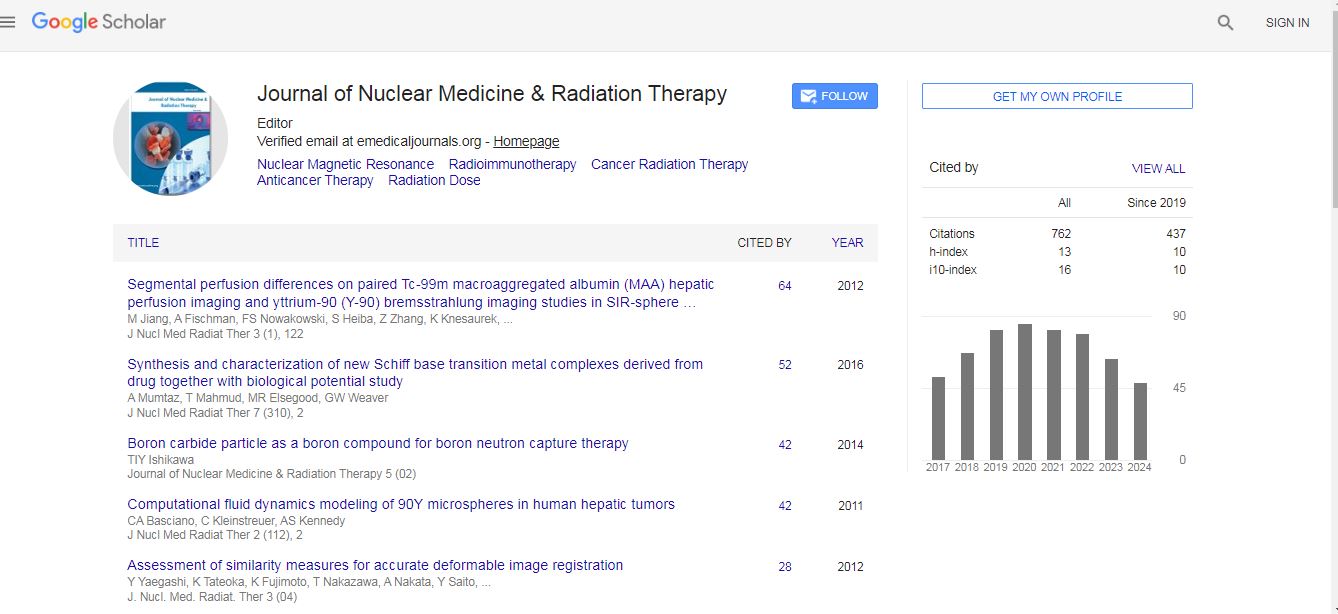
Nuclear Medicine & Radiation Therapy received 706 citations as per Google Scholar report