Short Communication - (2025) Volume 15, Issue 5
Received: 01-Sep-2025, Manuscript No. jtese-26-184253;
Editor assigned: 03-Sep-2025, Pre QC No. P-184253;
Reviewed: 17-Sep-2025, QC No. Q-184253;
Revised: 22-Sep-2025, Manuscript No. R-184253;
Published:
29-Sep-2025
, DOI: 10.37421/2165-8064.2025.15.676
Citation: Mwangi, Grace. ”Fast Fashion’s Environmental Toll: A Circular Solution.” J Textile Sci Eng 15 (2025):676.
Copyright: © 2025 Mwangi G. This is an open-access article distributed under the terms of the Creative Commons Attribution License, which permits unrestricted use, distribution and reproduction in any medium, provided the original author and source are credited.
The environmental impact of the textile and clothing industry, particularly fast fashion, is a pressing global concern demanding thorough examination. This sector's operations are intrinsically linked to significant resource depletion and pollution across various stages of its value chain. The production of raw materials, such as cotton, requires vast amounts of water and often involves intensive pesticide use, contributing to land degradation and water scarcity in agricultural regions[1].
The manufacturing processes themselves are energy-intensive, relying heavily on fossil fuels for power, which results in substantial greenhouse gas emissions and a significant carbon footprint. Furthermore, the dyeing and finishing of textiles involve the extensive use of chemicals, many of which are hazardous and can contaminate water bodies and soil if not properly managed, posing risks to ecosystems and human health[5].
A critical issue emerging from the prevalence of synthetic fabrics in fast fashion is microplastic pollution. During the washing of garments made from materials like polyester and nylon, countless microfibers are shed, eventually making their way into rivers and oceans. These microplastics accumulate in aquatic environments, threatening marine life and potentially entering the human food chain[2].
The industry's dominant linear model, characterized by rapid production, consumption, and disposal, leads to an overwhelming volume of textile waste. A significant portion of discarded clothing ends up in landfills, where it can take hundreds of years to decompose, releasing harmful chemicals and greenhouse gases into the atmosphere. This unsustainable cycle highlights the urgent need for alternative waste management strategies[6].
Addressing the environmental burden necessitates a fundamental shift towards more sustainable practices. Research and development are increasingly focused on implementing circular economy principles within the textile industry. This involves designing products for longevity, repairability, and recyclability, aiming to keep materials in use for as long as possible and minimize waste[8].
Water consumption remains a major environmental challenge. The cultivation of cotton, a staple fiber in many fast fashion garments, is notoriously water-intensive. Similarly, the dyeing and finishing processes often require large volumes of water, placing considerable strain on local water resources, especially in water-stressed regions[4].
Efforts to mitigate the environmental impact also extend to the carbon footprint associated with the entire textile lifecycle. From raw material extraction and processing to manufacturing, transportation, and disposal, each stage contributes to greenhouse gas emissions. Transitioning to renewable energy sources and optimizing supply chains are essential steps in decarbonizing the industry[3].
Chemical pollution from textile manufacturing, particularly from dyes and finishing agents, represents another significant environmental threat. These substances can have detrimental effects on aquatic ecosystems and human health when discharged into the environment. The development and adoption of eco-friendly dyes and advanced chemical management systems are crucial for reducing this pollution[5].
The socio-economic dimensions of fast fashion cannot be ignored, as the drive for low costs often leads to exploitative labor practices and unsustainable production in developing countries. This creates a dual burden of environmental degradation and social injustice, underscoring the importance of ethical sourcing and supply chain transparency[7].
Ultimately, transforming the fast fashion industry requires a multi-faceted approach involving technological innovation, policy changes, and a fundamental shift in consumer behavior. Promoting conscious consumption, supporting sustainable brands, and embracing alternatives like second-hand clothing are vital for driving positive change[10].
The environmental footprint of fast fashion is undeniably substantial, stemming from resource-intensive production methods that strain ecosystems. The cultivation of raw materials, especially cotton, demands immense water resources and often relies on intensive agricultural practices that can lead to soil degradation and water contamination, impacting local environments and communities[4].
Furthermore, the manufacturing processes within the fast fashion industry are characterized by high energy consumption. This reliance on energy, frequently derived from fossil fuels, contributes significantly to greenhouse gas emissions and exacerbates the global climate crisis. The carbon footprint extends throughout the product lifecycle, from raw material sourcing to the final disposal of garments[3].
A critical and increasingly recognized environmental hazard associated with fast fashion is microplastic pollution. Synthetic textiles, widely used due to their affordability and versatility, shed microfibers during washing. These minuscule plastic particles enter wastewater systems and ultimately find their way into aquatic environments, posing a severe threat to marine ecosystems and potentially human health through the food chain[2].
The pervasive 'take-make-dispose' model inherent in fast fashion's business strategy generates colossal amounts of textile waste. Garments are often produced with a short lifespan, leading to rapid obsolescence and a significant volume of clothing ending up in landfills. This waste contributes to land pollution and the release of harmful substances as materials decompose over extended periods[6].
In response to these environmental challenges, the industry is exploring and adopting circular economy principles. This paradigm shift focuses on designing products for durability, repairability, and recyclability, aiming to minimize waste and maximize the lifespan of materials. Business models are evolving to prioritize resource longevity over a disposable culture[8].
Chemical pollution is another critical concern. The extensive use of dyes and finishing chemicals in textile manufacturing can lead to the contamination of water bodies and soil. These chemicals can be toxic to aquatic life and may pose health risks to humans. Research into eco-friendly dyes and closed-loop chemical management systems is essential for mitigating these impacts[5].
The global textile industry's carbon emissions are a significant contributor to climate change. Addressing this requires a concerted effort to transition towards renewable energy sources in manufacturing facilities and to optimize logistics and supply chains to reduce transportation-related emissions. These measures are vital for decarbonizing the sector[3].
Water usage in the textile industry is immense, particularly in cotton cultivation and during the dyeing and finishing processes. Implementing water-efficient agricultural techniques and adopting advanced dyeing technologies that minimize water consumption are crucial steps in reducing the industry's strain on global freshwater resources[4].
Beyond environmental concerns, the pursuit of low production costs in fast fashion often leads to social inequities, including the exploitation of labor in developing countries. This creates a dual burden of environmental degradation and social injustice, highlighting the growing importance of ethical sourcing and enhanced transparency within supply chains[7].
Ultimately, fostering a more sustainable fashion industry necessitates a shift in consumer consciousness and behavior. Educating consumers about the environmental and social consequences of their purchasing decisions, encouraging the purchase of fewer, higher-quality items, and promoting the adoption of second-hand clothing are key strategies for mitigating the negative impacts of fast fashion[10].
Fast fashion's significant environmental footprint is driven by resource-intensive production, including high water consumption and chemical pollution. The industry's linear 'take-make-dispose' model generates vast textile waste. Microplastic pollution from synthetic fabrics is a growing concern, impacting aquatic ecosystems. Addressing these issues requires a transition to circular economy models, utilizing recycled materials, and promoting ethical manufacturing. Key solutions involve developing eco-friendly dyes, improving waste management, optimizing supply chains for reduced carbon emissions, and fostering consumer awareness for conscious consumption.
None
None
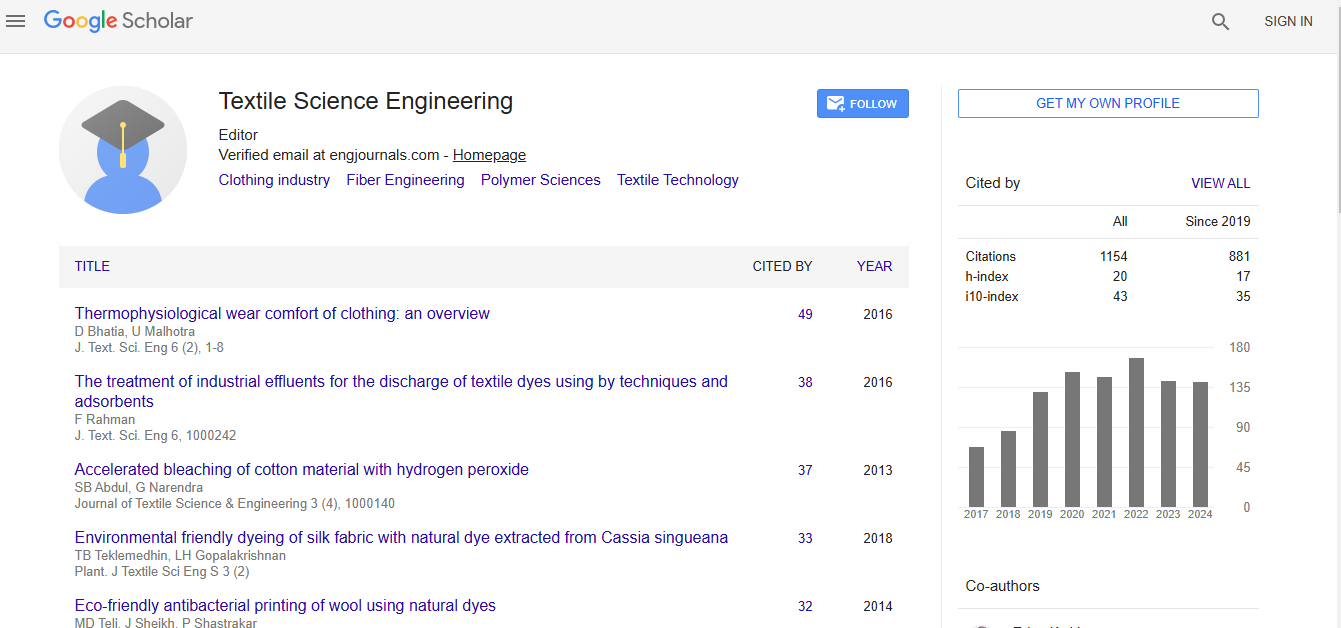
Journal of Textile Science & Engineering received 1008 citations as per Google Scholar report