Brief Report - (2025) Volume 11, Issue 2
Received: 01-Apr-2025, Manuscript No. jpnp-25-166016;
Editor assigned: 03-Apr-2025, Pre QC No. P-166016;
Reviewed: 15-Apr-2025, QC No. Q-166016;
Revised: 22-Apr-2025, Manuscript No. R-166016;
Published:
29-Apr-2025
, DOI: 10.37421/2472-0992.2025.11.354
Citation: Chagas, Dounavi. “Exploring the Antioxidant Activity of Natural Products: Implications for Aging and Disease Prevention.” J Pharmacogn Nat Prod 11 (2025): 354.
Copyright: © 2025 Chagas D. This is an open-access article distributed under the terms of the Creative Commons Attribution License, which permits unrestricted use, distribution and reproduction in any medium, provided the original author and source are credited
The search for effective ways to combat aging and prevent age-related diseases has led scientists to explore the potential of natural products, particularly for their antioxidant properties. Antioxidants are molecules that help neutralize harmful free radicalsâ??unstable molecules that can damage cells, tissues, and DNA, contributing to the aging process and the development of various chronic diseases, including cancer, cardiovascular disorders, and neurodegenerative conditions. The human body naturally produces antioxidants to counteract free radicals, but as we age, the ability to effectively neutralize these damaging molecules diminishes, leaving the body more vulnerable to oxidative stress. This has sparked interest in the use of natural products, such as fruits, vegetables, herbs, and even marine organisms, as rich sources of antioxidants that may help mitigate oxidative damage, improve health, and slow the aging process. Natural products have long been recognized in traditional medicine for their therapeutic benefits, and modern science has increasingly supported these claims with evidence of their antioxidant activity. Many natural compounds, including polyphenols, flavonoids, carotenoids, and vitamins, are known for their ability to scavenge free radicals and enhance the bodyâ??s antioxidant defense systems. These compounds not only protect against cellular damage but also support various biochemical processes essential for maintaining health. Understanding how these natural antioxidants work at the molecular level and their broader impact on health could lead to new strategies for promoting longevity, preventing disease, and improving overall well-being [1].
The concept of oxidative stress, which arises when there is an imbalance between the production of reactive oxygen species (ROS) and the bodyâ??s ability to neutralize them with antioxidants, is central to understanding the aging process and the development of numerous diseases. Free radicals, which are highly reactive molecules produced as byproducts of normal cellular metabolism, can damage vital components of cells, such as lipids, proteins, and DNA. Over time, this oxidative damage accumulates, contributing to the deterioration of cellular function and leading to various age-related conditions, including heart disease, diabetes, cancer, and neurodegenerative diseases like Alzheimer's and Parkinson's. This accumulation of oxidative stress has been linked to the aging process itself, as it accelerates cellular senescence and impairs the body's ability to regenerate and repair damaged tissues. Antioxidants, substances that neutralize free radicals, play a crucial role in protecting cells from this oxidative damage. The body naturally produces a variety of antioxidants, such as superoxide dismutase, catalase, and glutathione, but their effectiveness tends to decline with age or in response to environmental factors like pollution, radiation, and unhealthy diet. This is where natural products, such as fruits, vegetables, herbs, and other plant-based sources, become particularly relevant [2].
Rich in bioactive compounds, these natural products have long been recognized for their ability to scavenge free radicals and bolster the body's antioxidant defenses. For example, polyphenols, found in foods like berries, tea, and grapes, and flavonoids, abundant in citrus fruits, have demonstrated significant antioxidant activity. Carotenoids, such as beta-carotene found in carrots and leafy greens, are also known for their ability to protect against oxidative stress. These natural compounds are not only effective in reducing oxidative damage but also support other key functions, such as reducing inflammation, enhancing immune function, and improving cardiovascular health. A growing body of scientific research has explored the antioxidant properties of various natural products, and many studies suggest that incorporating these foods and compounds into the diet may help delay the onset of age-related diseases and slow the aging process. For instance, regular consumption of fruits and vegetables rich in antioxidants has been associated with a reduced risk of developing chronic diseases like cardiovascular disease and cancer. Furthermore, antioxidants may play a role in maintaining cognitive function, as they can reduce the damage caused by oxidative stress in the brain, thus lowering the risk of neurodegenerative conditions. While antioxidants from synthetic sources have been explored for use in supplements and medications, natural products offer a more holistic approach, combining antioxidants with other bioactive compounds that work synergistically to promote health [3].
Beyond their potential to combat oxidative stress, natural products also hold promise for enhancing the bodyâ??s endogenous antioxidant systems. Some compounds found in plants, such as curcumin from turmeric and resveratrol from grapes, are known to activate specific antioxidant enzymes and signaling pathways within the body, thereby boosting the bodyâ??s own ability to fight oxidative damage. This dual approach directly scavenging free radicals while enhancing the bodyâ??s antioxidant defense mechanisms makes natural products an attractive avenue for preventing aging and disease. Furthermore, many of these natural antioxidants are safe and well-tolerated, with few side effects, making them an appealing option for long-term use as preventive health strategies. Despite the promising potential of natural antioxidants, there are challenges to fully understanding and harnessing their effects. The bioavailability of antioxidants the extent to which they are absorbed and utilized by the body varies significantly depending on the source and form of the compound. For instance, some antioxidants may be poorly absorbed when consumed as part of whole foods, while others, like vitamin C, may be more readily bioavailable. Additionally, the effectiveness of antioxidants may vary depending on an individual's age, health status, and dietary habits, complicating the development of universal recommendations [4].
Furthermore, while antioxidants can play an important role in protecting against oxidative stress, they are not a panacea. Other factors, such as genetics, lifestyle, and environmental exposures, also contribute to aging and disease development, meaning that antioxidants should be viewed as part of a broader strategy for health promotion. In recent years, there has been an increasing focus on developing functional foods and nutraceuticals, which combine the health benefits of antioxidants with other bioactive compounds found in natural products. These foods and supplements are designed to promote health, prevent disease, and slow aging through the synergistic effects of various compounds, including antioxidants, vitamins, minerals, and phytochemicals. The rise of personalized nutrition, which tailors dietary recommendations based on an individual's genetic makeup and health profile, may also pave the way for more targeted and effective use of natural antioxidants. As research progresses, we may see greater advancements in the ability to quantify the antioxidant capacity of various natural products and develop standardized methods for harnessing their benefits [5].
In conclusion, the antioxidant activity of natural products offers significant promise for aging and disease prevention. With their ability to scavenge free radicals, reduce oxidative damage, and support the bodyâ??s innate defense systems, antioxidants from natural sources represent an effective and accessible means to combat oxidative stress and promote long-term health. As science continues to uncover the vast potential of these bioactive compounds, the role of natural products in preventing aging-related diseases, improving overall wellness, and enhancing longevity will likely expand. By incorporating antioxidant-rich foods into our daily diets, we can take proactive steps toward better health and potentially slow the aging process, thereby reducing the burden of age-related diseases.
Google Scholar Cross Ref Indexed at
Google Scholar Cross Ref Indexed at
Google Scholar Cross Ref Indexed at
Google Scholar Cross Ref Indexed at
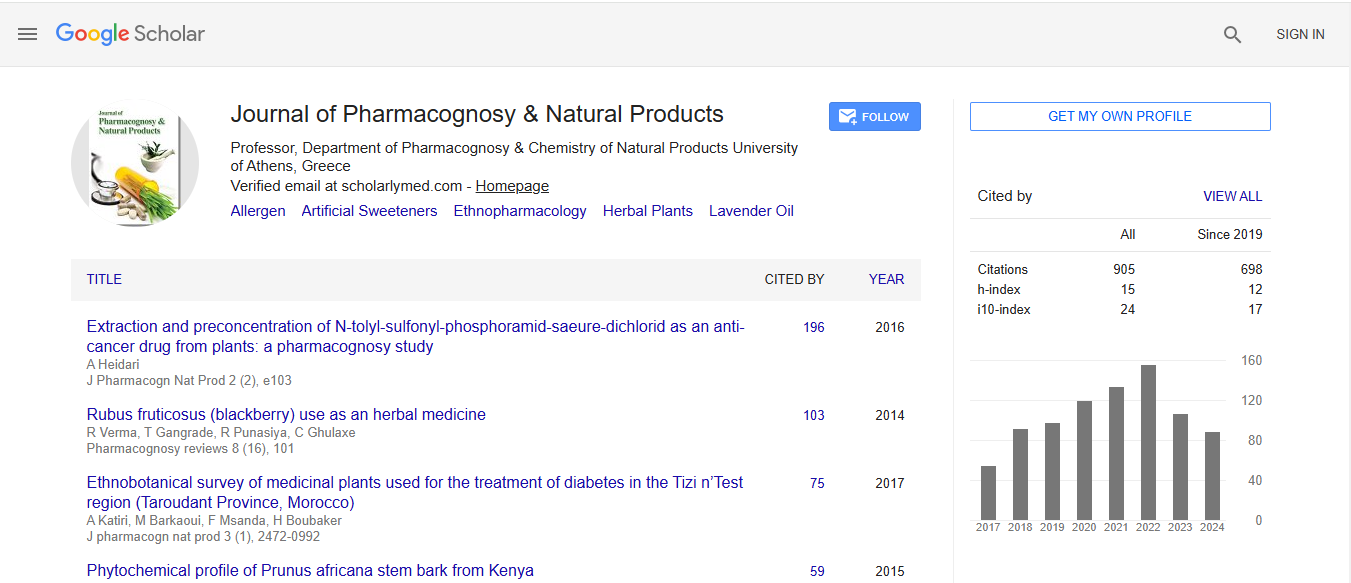
Journal of Pharmacognosy & Natural Products received 606 citations as per Google Scholar report