Perspective - (2025) Volume 16, Issue 3
Received: 01-May-2025, Manuscript No. bej-26-182433;
Editor assigned: 05-May-2025, Pre QC No. P-182433;
Reviewed: 19-May-2025, QC No. Q-182433;
Revised: 22-May-2025, Manuscript No. R-182433;
Published:
29-May-2025
, DOI: 10.37421/2161-6219.2025.16.559
Citation: Li, Cheng. ”Economic Factors Drive Business Strategy
and Resilience.” Bus Econ J 16 (2025):559.
Copyright: © 2025 Li C. This is an open-access article distributed under the terms of the Creative Commons Attribution License, which permits unrestricted use, distribution
and reproduction in any medium, provided the original author and source are credited.
Economic factors serve as foundational pillars that fundamentally shape business planning and strategy across all sectors. These forces dictate market dynamics, influence the availability of crucial resources, and significantly impact consumer behavior, necessitating a deep understanding for effective strategic formulation [1].
International commerce is particularly susceptible to exchange rate volatility, which can introduce substantial risks and opportunities for businesses operating across borders. Strategic planning must therefore incorporate robust hedging mechanisms and adaptable pricing models to navigate these fluctuations and maintain profitability [2].
Interest rate shifts are another critical economic determinant, directly affecting a firm's cost of capital and consequently, its investment decisions. Changes in these rates can either stimulate or deter significant capital expenditures, requiring careful consideration of debt structures and project financial viability [3].
Inflation exerts a profound influence on purchasing power and operational expenditures, compelling businesses to continuously re-evaluate their pricing and cost management strategies. The ability to effectively pass on increased costs to consumers is paramount to protecting profit margins [4].
Labor market conditions, including unemployment rates, play a vital role in human resource planning and talent acquisition. The availability and cost of labor directly impact a company's ability to recruit and retain skilled personnel, influencing operational capacity [5].
Government fiscal and monetary policies establish the overarching economic framework within which businesses operate. Strategic planning must proactively account for the potential impacts of policy changes on market conditions, industry competitiveness, and the overall cost of doing business [6].
Consumer confidence and evolving spending patterns are direct indicators of economic health and are crucial for understanding market demand. Businesses must align their strategic planning with these sentiments, adapting product development and marketing efforts accordingly [7].
Global economic integration offers expanded market opportunities but also heightens competitive pressures. Businesses aiming for international reach must develop strategies that effectively leverage trade agreements and manage complex cross-border logistics [8].
Technological advancements are intrinsically linked to economic factors, influencing both the pace of innovation and investment in research and development. Strategic allocation of resources towards economically viable technologies is essential for competitive advantage [9].
Economic shocks, such as financial crises or natural disasters, underscore the importance of agile and adaptive business planning. Developing robust contingency plans and crisis management strategies is crucial for navigating unforeseen economic downturns and maintaining operational resilience [10].
Economic factors profoundly influence business planning and strategic decision-making by shaping market dynamics, resource availability, and consumer behavior. Businesses must diligently analyze macroeconomic trends like inflation, interest rates, and exchange rates to accurately forecast demand, optimize cost structures, and make sound investment choices. Furthermore, microeconomic considerations such as competitive landscapes, supply chain complexities, and regulatory environments demand continuous strategic adjustments to ensure sustained profitability and growth. A comprehensive understanding of these economic underpinnings is indispensable for crafting resilient and adaptable business plans [1].
Exchange rate volatility presents a dual-edged sword for international businesses, directly impacting revenues, expenditures, and profit margins. Consequently, strategic planning must integrate proactive hedging strategies and flexible pricing models to effectively mitigate the adverse effects of currency fluctuations and to capitalize on favorable movements, necessitating constant monitoring of global economic indicators [2].
Fluctuations in interest rates represent a significant economic factor that directly influences a firm's cost of capital and its approach to investment decisions. Elevated interest rates increase the expenses associated with borrowing, which can potentially stifle capital expenditures and affect long-term strategic investments. Conversely, a reduction in interest rates can serve as a catalyst for increased investment. Therefore, businesses are compelled to strategically manage their debt structures and rigorously assess the financial feasibility of projects under diverse interest rate scenarios [3].
Inflation, characterized by its direct impact on purchasing power and operational costs, necessitates that businesses meticulously re-evaluate their pricing strategies and cost management protocols. High inflation rates can significantly erode profit margins if they cannot be effectively passed on to consumers, underscoring the need for careful analysis of market elasticity and competitive pricing dynamics. Strategic responses often involve optimizing supply chain efficiencies, exploring cost-saving technological solutions, and diversifying revenue streams to counteract inflationary pressures [4].
The prevailing unemployment rates and the broader conditions within the labor market exert a considerable influence on human resource planning and the formulation of talent acquisition strategies. Periods of high unemployment may present a larger pool of potential workers but can also signal economic downturns, thereby affecting consumer demand. Conversely, low unemployment can lead to escalating labor costs and heightened challenges in recruiting specialized personnel, prompting a strategic shift towards enhanced employee retention and development initiatives [5].
Government fiscal and monetary policies, encompassing taxation schemes, subsidy programs, and interest rate controls, collectively establish the operational framework for businesses. Strategic planning efforts must actively consider the potential ramifications of policy alterations on market conditions, the competitiveness of various industries, and the overall cost associated with conducting business. Proactive engagement in policy discourse and the implementation of scenario planning are vital for effectively navigating evolving regulatory landscapes [6].
Consumer confidence levels and prevailing spending patterns serve as direct barometers of economic health, significantly influencing the demand for goods and services. Businesses are therefore obligated to align their strategic planning initiatives with shifts in consumer sentiment, adapting product development, marketing campaigns, and sales strategies to effectively meet evolving consumer needs and purchasing power. The accurate economic forecasting of consumer behavior is a fundamental component of efficacious business planning [7].
Global economic integration and the dynamics of international trade offer both expanded market opportunities and intensified competitive pressures for businesses. Enterprises must formulate strategies that adeptly leverage international trade agreements, efficiently manage cross-border logistics, and demonstrate adaptability to diverse economic environments. A thorough understanding of global supply chains and the economic interconnectedness of nations is paramount for successful international strategic planning [8].
Technological advancements are frequently spurred or constrained by economic considerations, thereby influencing the pace of innovation and the allocation of capital towards research and development. Businesses must strategically allocate their resources towards technologies that promise the greatest economic return and offer a distinct competitive advantage, carefully weighing factors such as R&D costs, market adoption rates, and the overall economic viability of novel products or services [9].
Economic shocks, whether stemming from financial crises or unforeseen natural disasters, mandate the adoption of agile and adaptive business planning methodologies. Companies must meticulously develop contingency plans and robust crisis management strategies that account for potential economic downturns, disruptions in supply chains, and significant shifts in market demand. Cultivating financial resilience and operational flexibility are imperative for ensuring survival and fostering prosperity amidst economic volatility [10].
Economic factors fundamentally shape business strategy by influencing market dynamics, resource availability, and consumer behavior. Macroeconomic trends like inflation, interest rates, and exchange rates, alongside microeconomic considerations, require strategic adjustments for profitability and growth. Exchange rate volatility necessitates hedging and flexible pricing. Interest rate changes impact the cost of capital and investment decisions. Inflation affects purchasing power and operational costs, requiring pricing and cost management strategies. Labor market conditions influence human resource planning. Government policies create the operational framework. Consumer confidence drives demand. Global integration offers opportunities and competition. Technological advancements are linked to economic drivers. Economic shocks demand agile planning and resilience.
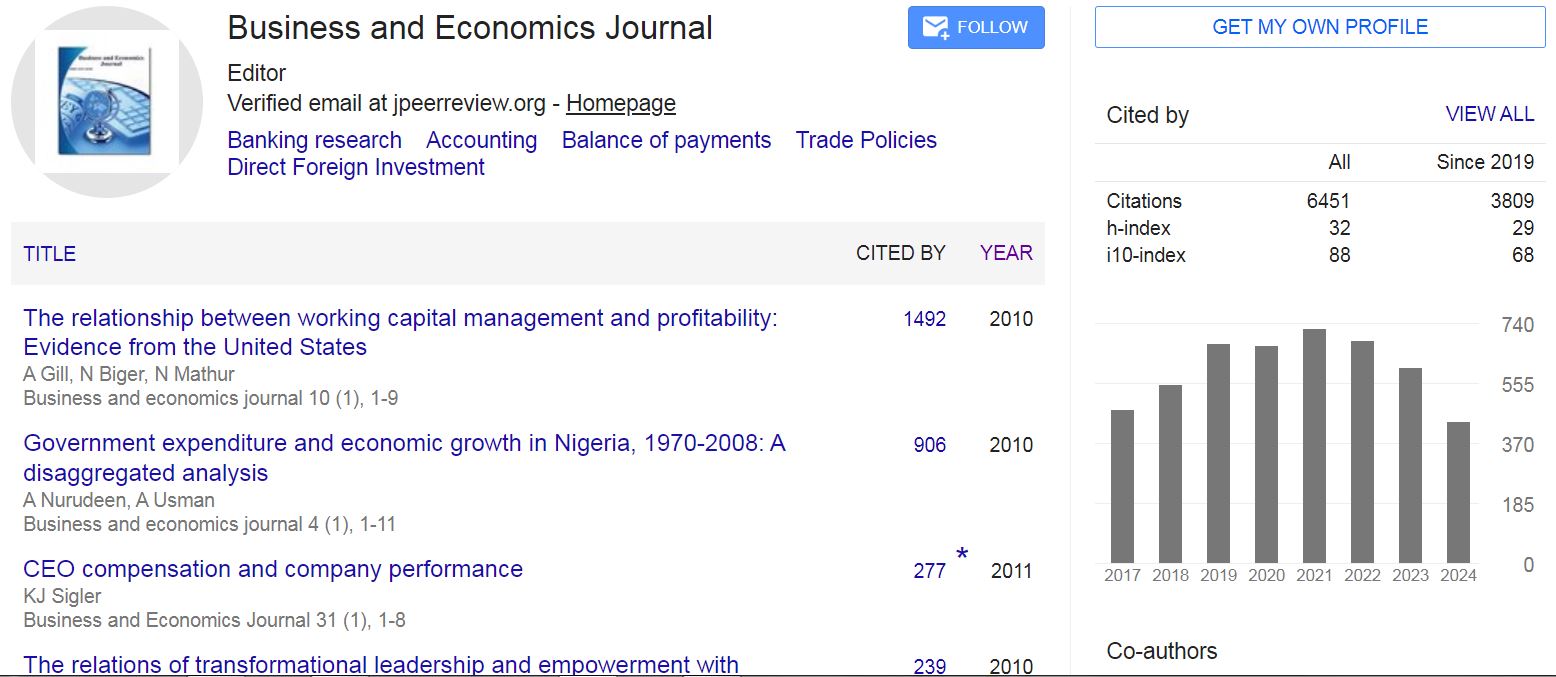
Business and Economics Journal received 6451 citations as per Google Scholar report