Short Communication - (2025) Volume 16, Issue 6
Received: 01-Nov-2025, Manuscript No. jpm-26-179494;
Editor assigned: 03-Nov-2025, Pre QC No. P-179494;
Reviewed: 17-Nov-2025, QC No. Q-179494;
Revised: 24-Nov-2025, Manuscript No. R-179494;
Published:
29-Nov-2025
, DOI: 10.37421/2090-0902.2025.16.570
Citation: Kowalska, Renata. ”Energy Transfer and Dissipation: Modeling and Computation.” J Phys Math 16 (2025):570.
Copyright: © 2025 Kowalska R. This is an open-access article distributed under the terms of the Creative Commons Attribution License, which permits unrestricted use, distribution and reproduction in any medium, provided the original author and source are credited.
The accurate modeling of energy transfer and dissipation is a cornerstone of modern scientific and engineering disciplines, underpinning our ability to predict system behavior and optimize performance across a vast array of applications. Recent advancements have significantly deepened our understanding of these fundamental processes, moving beyond simplified representations to capture complex, real-world phenomena. The mathematical framework for understanding energy dynamics has seen considerable refinement, with a focus on how energy losses dictate stability and predictive power in various models [1].
The numerical simulation of intricate energy transfer mechanisms, particularly in systems characterized by nonlinear behavior, has become increasingly sophisticated. Novel computational approaches, such as advanced finite element methods, are being developed to precisely model transient heat conduction coupled with phase change, offering a framework for energy efficiency analysis in advanced materials [2].
Furthermore, the statistical mechanics approach is proving invaluable for elucidating energy dissipation in mesoscopic systems. Theoretical derivations are yielding expressions for energy transfer rates, taking into account quantum effects and stochastic fluctuations, which are critical for understanding nanoscale energy flow and its impact on device functionality [3].
In the realm of fluid dynamics, the investigation of energy dissipation within turbulence modeling continues to be a critical area of research. New eddy viscosity models are being proposed to more accurately represent energy transfer across different scales, leading to improved predictions in aerodynamic and hydrodynamic simulations [4].
The development of unified mathematical models for analyzing energy transfer and dissipation in electromechanical systems is also a significant area of progress. These models can comprehensively account for diverse loss mechanisms, thereby enabling more rigorous approaches to understanding energy conversion efficiencies in actuators and other electromechanical devices [5].
Beyond traditional engineering domains, the exploration of energy transfer and dissipation in biological systems, particularly at the molecular level, is revealing fundamental insights. Computational modeling is shedding light on energy conversion and loss during processes like protein folding and enzymatic reactions, with direct implications for biophysics and drug design [6].
The study of energy dissipation in materials subjected to extreme conditions, such as high strain rates and temperatures, requires specialized models. Continuum damage mechanics models incorporating rate-dependent energy absorption mechanisms are essential for designing robust protective structures and comprehending material failure [7].
In the quantum domain, theoretical investigations into energy transfer and dissipation are crucial for advancing fields like quantum computing and optoelectronics. The derivation of master equations that describe coherent and dissipative dynamics in quantum systems, such as quantum dots, provides a deeper understanding of energy relaxation processes [8].
The analysis of energy dissipation in composite materials, particularly those exhibiting viscoelastic behavior, benefits from sophisticated mathematical approaches. Models employing fractional derivatives are proving effective in capturing energy loss mechanisms related to internal friction, leading to more accurate predictions of structural dynamic responses [9].
Finally, at the nanoscale, understanding energy transfer and dissipation in thermal transport is paramount for advancements in microelectronics. Molecular dynamics simulations are being employed to scrutinize phonon scattering and energy loss at interfaces, emphasizing the importance of interface engineering for effective thermal management [10].
The increasing complexity and miniaturization of technological systems necessitate a profound understanding of energy dynamics. From macroscopic engineering structures to microscopic quantum phenomena, the principles of energy transfer and dissipation are universally at play. The ability to accurately model and predict these processes is directly correlated with the efficiency, reliability, and performance of the systems we design and utilize. This multidisciplinary pursuit involves the integration of theoretical frameworks, advanced computational techniques, and empirical validation across diverse scientific fields. The following sections will delve into the specifics of recent research, highlighting the methodologies and findings that are pushing the boundaries of our knowledge in this critical area of study. Mathematical modeling provides the foundational language for describing energy transfer and dissipation. By abstracting complex physical realities into quantifiable relationships, researchers can explore the consequences of various parameters and design choices without the need for costly and time-consuming physical experimentation. These models, ranging from differential equations to statistical formulations, serve as powerful tools for analysis and prediction [1].
The advent of advanced computational methods has revolutionized the application of these mathematical models. Numerical simulations, in particular, allow for the investigation of phenomena that are intractable through purely analytical means, such as nonlinear dynamics and complex geometries [2].
The validation of these computational models against experimental data is crucial for ensuring their accuracy and reliability, forming a feedback loop that continuously refines our understanding. The statistical mechanics approach offers a unique perspective on energy dissipation, particularly in systems where microscopic interactions and fluctuations play a dominant role. By considering the ensemble behavior of a large number of particles, this framework can provide insights into emergent macroscopic properties from microscopic fundamental principles [3].
This perspective is especially valuable when dealing with systems at the mesoscopic and nanoscale, where quantum effects can become significant. In fluid dynamics, turbulence represents a highly complex regime characterized by chaotic motion and significant energy dissipation. The development of accurate turbulence models is essential for a wide range of engineering applications, from aircraft design to weather forecasting. Recent efforts focus on capturing the multi-scale nature of turbulent energy transfer, aiming to improve the predictive capabilities of simulations [4].
The interplay between electrical and mechanical energy is central to many modern technologies. Understanding and controlling energy transfer and dissipation in electromechanical systems are key to improving their efficiency and functionality. Unified models that encompass various loss mechanisms, such as resistive losses and frictional dissipation, are vital for optimizing the design of actuators, motors, and sensors [5].
Biological systems are inherently energy-driven, with complex pathways for energy conversion and utilization. The study of energy transfer and dissipation at the molecular level, particularly within biomolecules, provides crucial insights into the efficiency and mechanisms of life processes. Computational approaches are instrumental in dissecting these intricate pathways [6].
Materials science is continually seeking to develop materials with enhanced properties, often related to their ability to withstand extreme conditions and manage energy. Models that accurately describe energy dissipation under such conditions are critical for designing materials that are both strong and energy-absorbent, ensuring safety and performance in demanding applications [7].
The unique properties of quantum systems present both opportunities and challenges for energy transfer and dissipation. Understanding coherent and dissipative energy transfer is fundamental for developing next-generation quantum technologies, such as quantum computers and quantum sensors. Theoretical frameworks, like master equations, are essential for characterizing these delicate quantum processes [8].
Composite materials, with their tunable properties, offer a versatile platform for structural design. However, understanding and controlling energy dissipation within these materials, especially those exhibiting viscoelastic behavior, is crucial for predicting their long-term performance and durability. Advanced mathematical tools, such as fractional calculus, are being employed to capture the complex energy loss mechanisms present in these materials [9].
At the forefront of thermal management, nanoscale heat transport presents unique challenges and opportunities. The precise control of energy flow at this scale is vital for the miniaturization of electronic devices. Molecular dynamics simulations are providing atomistic insights into phonon scattering and energy dissipation at interfaces, guiding the development of more efficient thermal management strategies [10].
The continuous pursuit of more efficient and resilient systems across diverse scientific and engineering domains drives ongoing research into the fundamental principles of energy transfer and dissipation. As our technological capabilities advance, so too does our need for sophisticated models that can accurately capture the nuances of energy dynamics. The integration of theoretical advancements with computational power is enabling researchers to tackle increasingly complex problems, from the quantum realm to macroscopic structures. The collective insights from these studies promise to unlock new possibilities in material design, energy technologies, and our fundamental understanding of the physical world. Each research area, from mathematical modeling to molecular dynamics, contributes a vital piece to the intricate puzzle of how energy moves and is lost within systems, ultimately guiding innovation and progress. This research explores the multifaceted nature of energy transfer and dissipation across various scientific and engineering disciplines. It highlights the critical role of mathematical modeling and computational simulation in understanding and predicting system behavior. From fundamental physical principles to intricate biological processes and advanced material science, the accurate representation of energy losses is paramount for achieving system stability, efficiency, and robust predictive power. The studies presented offer novel methodologies and insights into phenomena such as heat transfer, turbulence, quantum dynamics, and molecular interactions, collectively advancing our ability to design and optimize complex systems. The presented body of research underscores the critical importance of understanding energy transfer and dissipation across a wide spectrum of scientific and engineering fields. The development of advanced mathematical models and sophisticated computational techniques is enabling researchers to gain deeper insights into phenomena ranging from nanoscale thermal transport to turbulent fluid dynamics and quantum systems. These advancements are crucial for improving the efficiency, stability, and predictive capabilities of diverse technologies, including microelectronic devices, electromechanical systems, and biomolecular processes. The findings collectively emphasize the need for continued interdisciplinary collaboration to address the complex challenges associated with energy dynamics and to pave the way for future innovations. Energy Transfer; Energy Dissipation; Mathematical Modeling; Numerical Simulation; Statistical Mechanics; Fluid Dynamics; Electromechanical Systems; Biological Systems; Materials Science; Quantum Systems
The foundational principles of energy transfer and dissipation within mathematical models are thoroughly examined, with a specific focus on how these mechanisms govern system behavior and stability. The review encompasses a variety of analytical and numerical techniques employed to capture diverse phenomena, from heat diffusion to mechanical damping, emphasizing the critical role of accurately representing energy losses for enhanced predictive capabilities. The authors highlight the significance of conserved quantities and the application of variational principles in the development of robust models that faithfully represent real-world energy dynamics [1].
Research into the numerical simulation of complex energy transfer mechanisms, particularly within systems exhibiting nonlinear behavior, has led to the presentation of a novel finite element approach. This method is specifically designed for modeling transient heat conduction coupled with phase change, demonstrating its efficacy in managing substantial temperature gradients and energy dissipation attributed to latent heat. The work establishes a comprehensive framework for simulating energy efficiency in advanced materials [2].
A statistical mechanics perspective is employed to investigate energy dissipation in mesoscopic systems. This approach facilitates the derivation of theoretical expressions that quantify energy transfer rates between different degrees of freedom, while also accounting for quantum effects and stochastic fluctuations. The insights gained are crucial for comprehending energy flow at the nanoscale and its subsequent impact on device performance [3].
The field of fluid dynamics is explored through an investigation into energy dissipation, with a particular emphasis on turbulence modeling. A novel eddy viscosity model is proposed, designed to more accurately capture the transfer of energy from larger to smaller scales, thereby improving the precision of predictions related to drag and mixing. This research holds significant importance for both aerodynamic and hydrodynamic simulations [4].
A mathematical framework is developed for the analysis of energy transfer and dissipation within electromechanical systems. This framework unifies the representation of various loss mechanisms, including resistive heating and mechanical friction, and its application to the design of efficient actuators is demonstrated. The work offers a rigorous methodology for understanding energy conversion efficiencies [5].
Energy transfer and dissipation within biological systems, specifically at the molecular level, are explored through computational modeling. The research investigates how energy is converted and lost during crucial processes such as protein folding and enzymatic reactions, providing valuable insights into the efficiency of biological mechanisms. This area of study has significant implications for biophysics and the field of drug design [6].
A rate-dependent continuum damage model is introduced for the purpose of simulating energy dissipation in materials subjected to extreme conditions, characterized by high strain rates and temperatures. This model incorporates mechanisms for energy absorption that are contingent on the rate of deformation, making it indispensable for the design of protective structures and for gaining a deeper understanding of material failure phenomena [7].
Energy transfer and dissipation in quantum systems are theoretically investigated, with a specific focus on energy transport within quantum dots. A master equation is derived to meticulously describe both the coherent and dissipative dynamics of these systems, thereby fostering a more profound understanding of energy relaxation processes that are pertinent to the development of quantum computing and optoelectronics [8].
The mathematical modeling of energy dissipation in composite materials, with a particular emphasis on their viscoelastic behavior, is addressed. A fractional derivative model is proposed, which effectively captures the energy loss mechanisms associated with internal friction. This approach yields improved predictions for the dynamic response of structures fabricated from these advanced materials [9].
Nanoscale thermal transport is examined through the lens of energy transfer and dissipation. Molecular dynamics simulations are utilized to investigate phonon scattering and energy loss at interfaces. This research contributes to a better understanding of thermal management strategies in microelectronic devices, underscoring the critical role of interface engineering in controlling heat flow [10].
The continuous advancement in scientific and engineering fields necessitates a sophisticated understanding of energy transfer and dissipation. As systems become more complex and miniaturized, the accurate modeling of these processes is paramount for predicting performance, ensuring stability, and optimizing efficiency. The methodologies presented in these studies, ranging from advanced numerical simulations to theoretical derivations in statistical mechanics and quantum physics, collectively represent a significant step forward in our ability to harness and control energy. The investigation into energy transfer and dissipation spans a broad range of scientific and engineering disciplines, highlighting the universal importance of these phenomena. From macroscopic engineering applications to microscopic quantum interactions, the ability to precisely model and manage energy flow is critical. The development of novel computational techniques and theoretical frameworks, as demonstrated in these studies, is enabling researchers to tackle increasingly complex challenges, driving innovation in fields such as advanced materials, renewable energy, and quantum technologies. The collaborative efforts across these diverse areas are essential for unlocking new potentials and addressing pressing global needs. The accurate representation of energy transfer and dissipation remains a critical challenge across numerous scientific and engineering disciplines. The ongoing development of advanced mathematical models and sophisticated computational techniques, as evidenced by the research presented, is crucial for enhancing our predictive capabilities and optimizing system performance. From the complex dynamics of turbulent flows to the delicate interactions within quantum systems, a deep understanding of how energy is exchanged and lost is fundamental to innovation and technological progress. The insights gained from these diverse investigations are vital for the design of more efficient, reliable, and sustainable systems in the future. The exploration of energy transfer and dissipation is a fundamental undertaking with far-reaching implications across science and engineering. The diverse approaches presented, from detailed mathematical modeling and numerical simulations to statistical mechanics and molecular dynamics, illustrate the multidisciplinary nature of this field. Understanding these processes is essential for advancing technologies in areas such as energy efficiency, material science, quantum computing, and biomedical applications. The continuous refinement of our modeling capabilities and theoretical frameworks is key to unlocking novel solutions and ensuring the robust performance of complex systems. The current research landscape demonstrates a significant and ongoing commitment to understanding the intricate mechanisms of energy transfer and dissipation. The diverse methodologies employed, spanning theoretical physics, computational science, and material engineering, highlight the pervasive importance of these phenomena. As systems become increasingly complex and operate under more demanding conditions, the development of accurate and predictive models for energy dynamics is not merely academic but essential for technological advancement, safety, and efficiency across a multitude of applications. The findings presented serve as a testament to the progress made and the continued potential for future breakthroughs in this vital area of study. Energy Transfer; Energy Dissipation; Mathematical Modeling; Numerical Simulation; Statistical Mechanics; Fluid Dynamics; Electromechanical Systems; Biomolecular Processes; Materials Science; Quantum Systems
This compilation of research delves into the critical aspects of energy transfer and dissipation across diverse scientific and engineering fields. It highlights the indispensable role of mathematical modeling and advanced computational techniques in understanding and predicting system behavior, from fundamental physical principles to complex biological processes and advanced material science. The studies emphasize the significance of accurately representing energy losses for system stability, efficiency, and predictive power. Novel methodologies are presented for phenomena including heat transfer, turbulence, quantum dynamics, and molecular interactions, collectively advancing the design and optimization of complex systems. This body of work underscores the need for interdisciplinary collaboration to address the challenges of energy dynamics and foster future innovations.
None
None
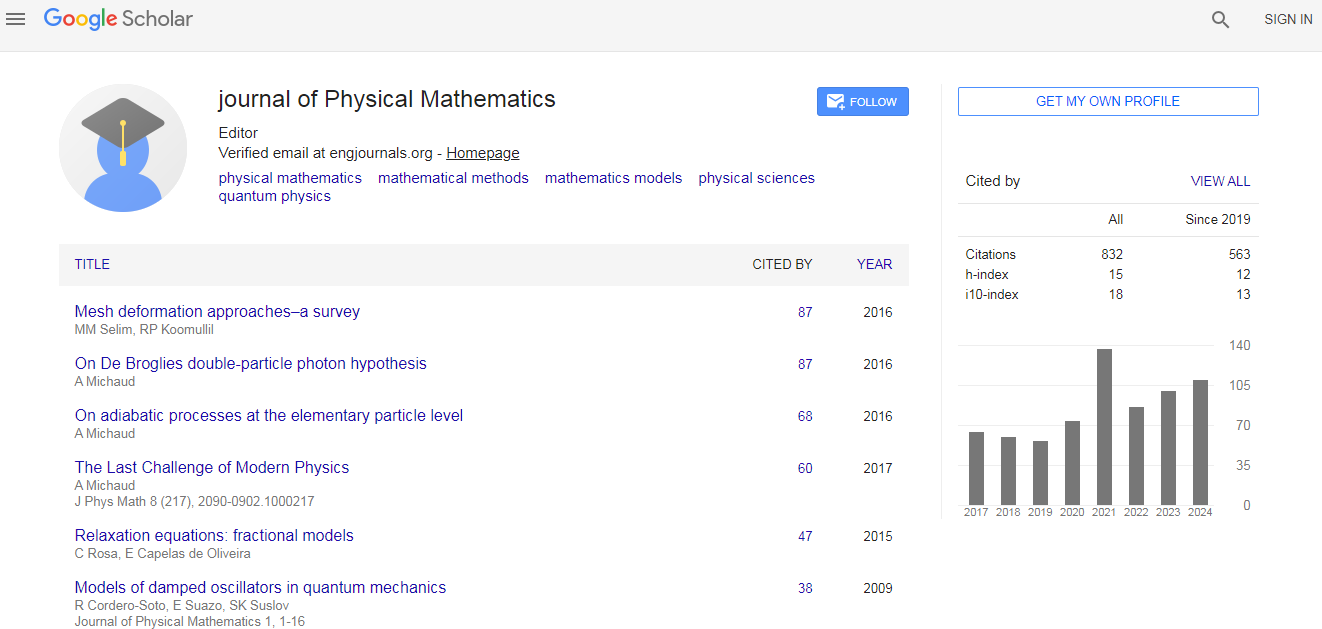
Physical Mathematics received 686 citations as per Google Scholar report