Commentary - (2025) Volume 10, Issue 4
Received: 01-Aug-2025, Manuscript No. jidm-26-188079;
Editor assigned: 04-Aug-2025, Pre QC No. P-188079;
Reviewed: 18-Aug-2025, QC No. Q-188079;
Revised: 22-Aug-2025, Manuscript No. R-188079;
Published:
29-Aug-2025
, DOI: 10.37421/2576-1420.2025.10.416
Citation: Nagy, Laszlo. ”Emerging Fungal Threats: Resistance,
Diagnostics, and Control.” J Infect Dis Med 10 (2025):416.
Copyright: © 2025 Nagy L. This is an open-access article distributed under the terms of the Creative Commons Attribution License, which permits unrestricted use, distribution
and reproduction in any medium, provided the original author and source are credited.
Emerging fungal infections represent a substantial global health challenge, exacerbated by several contributing factors. The extensive use of antifungal medications, a growing population of immunocompromised individuals, and the pervasive effects of climate change collectively fuel this escalating threat. Among the most concerning pathogens are Candida auris, various Aspergillus species, and mucormycetes, distinguished by their intrinsic resistance and their propensity for rapid dissemination, particularly within healthcare environments. The accurate and timely diagnosis of these infections is frequently hindered by delays in obtaining culture results or a deficiency in specific biomarkers, presenting a persistent critical hurdle in patient care. Compounding these diagnostic difficulties, treatment options are notably limited, with an increasing incidence of multidrug resistance significantly complicating management strategies. Consequently, a comprehensive and multifaceted approach is imperative, encompassing enhanced surveillance systems, the development of innovative diagnostic tools, the creation of novel antifungal agents, and the implementation of stringent infection control measures.
Candida auris has distinguished itself as a particularly formidable fungal pathogen due to its widespread multidrug resistance, its capacity to endure in diverse environmental settings, and its association with elevated mortality rates, especially among patients in intensive care units. Early detection and precise identification are paramount for the effective management of individual patients and for controlling outbreaks. Existing diagnostic methods, including conventional culture-based techniques, often suffer from limitations in speed and sensitivity, thereby highlighting the urgent need for the development and adoption of rapid molecular and antigen-based assays. The clinical challenges associated with Candida auris extend to therapeutic interventions, where the scarcity of effective treatment options and the emergence of resistance necessitate judicious antimicrobial stewardship and vigorous exploration of new antifungal agents. Invasive aspergillosis continues to be a primary cause of fungal-related mortality, particularly affecting immunocompromised individuals. This includes patients undergoing hematopoietic stem cell transplantation or solid organ transplantation, as well as those experiencing prolonged periods of neutropenia. The diagnosis of invasive aspergillosis is inherently challenging due to its often nonspecific clinical manifestations and the inherent limitations of current diagnostic modalities, such as radiology and culture-based methods. While the development and application of galactomannan antigen testing and PCR-based assays have demonstrably improved early detection capabilities, their integration with comprehensive clinical and radiological findings remains crucial for accurate diagnosis and timely intervention. Mucormycosis, a rare but frequently fulminant fungal infection, has exhibited a concerning global resurgence. This increase has been particularly notable in the context of the COVID-19 pandemic, with conditions such as diabetic ketoacidosis, iron overload, and corticosteroid use identified as significant risk factors. The rapid progression and high mortality rates associated with mucormycosis underscore the critical need for prompt diagnosis and aggressive management strategies, which often involve surgical debridement and high-dose amphotericin B therapy. Diagnostic hurdles are frequently encountered due to the often-delayed presentation of symptoms and the necessity for tissue biopsy to achieve a definitive diagnosis. The rising incidence of mucormycosis emphasizes the importance of vigilant screening and early intervention in at-risk populations. Antifungal resistance poses a major impediment to successful treatment and contributes to increased mortality rates in patients suffering from invasive fungal infections. The diverse mechanisms underlying this resistance include alterations in drug targets, the action of efflux pumps that remove antifungals from fungal cells, and modifications in metabolic pathways crucial for drug efficacy. The extensive and widespread use of azole antifungals, both in agricultural practices and in clinical settings, has significantly contributed to the selection and proliferation of resistant fungal strains, particularly among Candida species. Therefore, robust surveillance programs designed to monitor antifungal resistance patterns are essential for guiding empirical therapeutic decisions and for evaluating the outcomes of ongoing treatments. The diagnostic challenges encountered in the management of emerging fungal infections are multifaceted. These include the often subtle and overlapping clinical presentations that can mimic other conditions, the inherently slow growth of many fungi in conventional laboratory cultures, and the general lack of readily available, rapid diagnostic tests. Molecular diagnostic techniques, such as polymerase chain reaction (PCR) and DNA sequencing, offer considerable potential for faster and more sensitive detection of fungal pathogens directly from clinical specimens. The effective integration of these advanced diagnostic tools into routine clinical practice, in conjunction with the development of improved biomarkers, is paramount for enabling the timely initiation of appropriate antifungal therapy and ultimately improving patient outcomes. The increasing prevalence of invasive fungal infections within the transplant recipient population represents a significant and persistent clinical challenge. Patients who have undergone solid organ transplantation or hematopoietic stem cell transplantation are particularly susceptible to these infections due to the profound levels of immunosuppression they experience post-transplant. Common fungal pathogens identified in this cohort include various Candida species, Aspergillus species, and Pneumocystis jirovecii. Prophylactic antifungal strategies, carefully tailored to the specific type of transplant and the individual patient's risk factors, are absolutely essential for preventing the onset of these infections. Environmental factors, including the overarching phenomenon of climate change and the increasing patterns of global travel, are undeniably playing a more prominent role in the emergence and subsequent spread of fungal pathogens worldwide. Warmer ambient temperatures can create more favorable conditions for the growth and dissemination of certain fungal species, while international travel facilitates the introduction of novel or already resistant fungal strains into new geographical regions, which may previously have been unaffected. The pipeline for the development of novel antifungal agents remains critically limited, presenting a significant and growing threat in the context of escalating antifungal resistance. The existing classes of antifungal drugs, primarily the azoles, polyenes, and echinocandins, are frequently associated with adverse toxicities or are subject to the development of resistance by fungal pathogens. Current research efforts are strategically focused on identifying entirely new drug targets and developing compounds that exhibit distinct mechanisms of action against fungi. Healthcare-associated fungal infections (HAFIs) impose a considerable burden on healthcare systems, with invasive candidiasis and aspergillosis being particularly prominent examples. The growing number of critically ill patients requiring prolonged hospitalization, coupled with the increased utilization of invasive medical procedures, collectively contributes to the elevated risk of HAFIs. Effective infection prevention and control strategies are therefore absolutely essential, encompassing meticulous hand hygiene practices, thorough environmental cleaning protocols, and the prompt recognition and isolation of patients who are colonized or infected with pathogenic fungi.Emerging fungal infections pose a substantial and growing global health threat, driven by a confluence of factors including extensive antifungal use, an increasing population of immunocompromised individuals, and the impacts of climate change. Key challenging pathogens like Candida auris, Aspergillus species, and mucormycetes are characterized by their inherent resistance and their propensity for rapid spread, especially within healthcare settings. Accurate and timely diagnosis remains a critical hurdle, often complicated by delayed culture results or the absence of specific biomarkers. Treatment options are constrained, with rising rates of multidrug resistance further complicating patient management. Addressing this requires a multifaceted approach involving enhanced surveillance, the development of novel diagnostics and antifungals, and stricter infection control measures [1].
Candida auris has emerged as a particularly formidable pathogen, distinguished by its frequent multidrug resistance, its ability to persist in the environment, and its association with high mortality rates, particularly in intensive care units. Early detection and accurate identification are paramount for effective patient management and for controlling outbreaks. Current diagnostic tools, such as culture-based methods, often face limitations in speed and sensitivity, underscoring the need for rapid molecular and antigen-based assays. The clinical challenges extend to treatment, where limited therapeutic options and emerging resistance demand careful antimicrobial stewardship and exploration of new antifungal agents [2].
Invasive aspergillosis continues to be a leading cause of fungal mortality in immunocompromised patients, especially those undergoing hematopoietic stem cell transplantation or solid organ transplantation, and individuals with prolonged neutropenia. The diagnosis of invasive aspergillosis is challenging due to its nonspecific clinical presentation and the limitations of current diagnostic methods, including radiology and culture. The development and application of galactomannan antigen testing and PCR-based assays have improved early detection, but integrating these with clinical and radiological findings remains crucial for optimal patient care.
Mucormycosis, a rare but often fulminant fungal infection, has seen a concerning resurgence globally, particularly in the context of the COVID-19 pandemic. Diabetic ketoacidosis, iron overload, and corticosteroid use are identified as significant risk factors. The rapid progression and high mortality associated with mucormycosis necessitate prompt diagnosis and aggressive management, including surgical debridement and high-dose amphotericin B therapy. Diagnostic challenges include the often-delayed presentation and the need for tissue biopsy for definitive diagnosis. Antifungal resistance represents a major driver of treatment failure and increased mortality in patients with invasive fungal infections. The mechanisms of resistance are diverse, involving alterations in drug targets, efflux pumps, and metabolic pathways. The widespread use of azoles in agriculture and medicine has contributed to the selection of resistant strains, particularly among Candida species. Surveillance for antifungal resistance is essential for guiding empirical therapy and monitoring treatment outcomes, highlighting the critical need for new antifungal agents with novel mechanisms of action. Diagnostic challenges in emerging fungal infections stem from the often subtle and overlapping clinical presentations, the slow growth of fungi in conventional cultures, and the lack of readily available, rapid diagnostic tests. Molecular diagnostics, such as PCR and sequencing, offer the potential for faster and more sensitive detection of fungal pathogens directly from clinical specimens. The integration of these advanced diagnostic tools into routine clinical practice, alongside improved biomarker development, is crucial for timely initiation of appropriate antifungal therapy and improved patient outcomes. The increasing prevalence of invasive fungal infections in transplant recipients presents a significant clinical challenge. Patients undergoing solid organ and hematopoietic stem cell transplantation are highly susceptible due to profound immunosuppression. Common pathogens include Candida species, Aspergillus species, and Pneumocystis jirovecii. Prophylactic antifungal strategies, tailored to the specific transplant type and patient risk factors, are essential for preventing infection in this vulnerable group. Environmental factors, including climate change and increased global travel, are playing an increasingly important role in the emergence and spread of fungal pathogens. Warmer temperatures can favor the growth and dissemination of certain fungi, while international travel facilitates the introduction of novel or resistant strains to new geographical regions. This necessitates enhanced global surveillance networks and rapid communication of epidemiological data to inform public health responses and clinical preparedness. The pipeline for novel antifungal agents remains critically limited, posing a significant threat in the face of rising resistance. Existing antifungal classes, primarily azoles, polyenes, and echinocandins, are often associated with toxicity or resistance development. Research is focused on identifying new drug targets and developing compounds with distinct mechanisms of action, including agents that target fungal cell wall integrity or ergosterol biosynthesis. Healthcare-associated fungal infections (HAFIs) represent a significant burden, with invasive candidiasis and aspergillosis being prominent examples. The increasing number of critically ill patients, prolonged hospital stays, and invasive procedures contribute to the risk of HAFIs. Effective infection prevention and control strategies are essential, including hand hygiene, environmental cleaning, and prompt recognition and isolation of colonized or infected patients.Emerging fungal infections are a growing global health concern, driven by factors like antifungal use, immunocompromised populations, and climate change. Pathogens such as Candida auris, Aspergillus, and mucormycetes are challenging due to resistance and rapid spread. Diagnosis is often delayed by slow culture results or lack of biomarkers, and limited treatment options are further complicated by multidrug resistance. Addressing this requires enhanced surveillance, novel diagnostics and antifungals, and strict infection control. Candida auris, in particular, is a formidable pathogen with high mortality. Invasive aspergillosis remains a leading cause of fungal death in immunocompromised individuals, while mucormycosis is experiencing a resurgence. Antifungal resistance mechanisms are diverse and linked to widespread drug use. Diagnostic challenges persist due to subtle symptoms and slow culture growth, emphasizing the need for molecular methods. Fungal infections are also prevalent in transplant recipients, necessitating prophylactic strategies. Environmental factors and global travel contribute to pathogen spread. The pipeline for new antifungal agents is critically limited, and healthcare-associated fungal infections require robust prevention and control measures. Interdisciplinary collaboration is vital for improved patient outcomes.
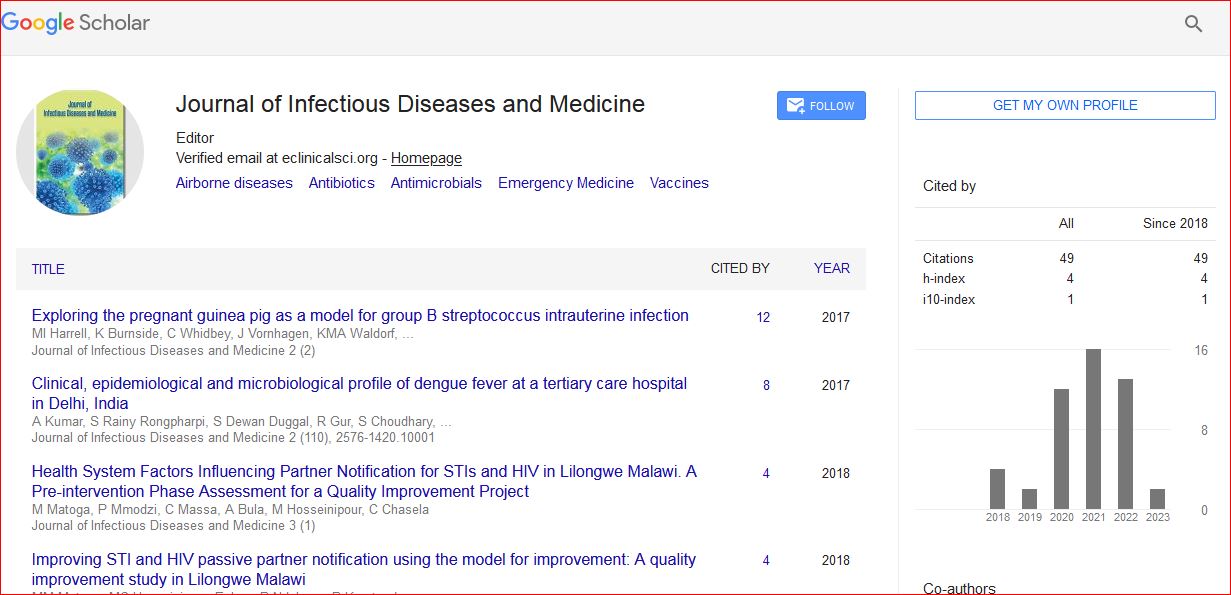
Journal of Infectious Diseases and Medicine received 1059 citations as per Google Scholar report