Perspective - (2025) Volume 14, Issue 2
Received: 02-Apr-2025, Manuscript No. jnc-25-166197;
Editor assigned: 04-Apr-2025, Pre QC No. P-166197;
Reviewed: 16-Apr-2025, QC No. Q-166197;
Revised: 23-Apr-2025, Manuscript No. R-166197;
Published:
30-Apr-2025
, DOI: 10.37421/2167-1168.2025.14.705
Citation: Otite, Isaac. “Effective Nursing Strategies for Caring for Patients with Diabetes.” J Nurs Care 14 (2025): 705.
Copyright: © 2025 Otite I. This is an open-access article distributed under the terms of the Creative Commons Attribution License, which permits unrestricted use, distribution and reproduction in any medium, provided the original author and source are credited.
Nurses serve as the cornerstone of diabetes care, playing a pivotal role in the day-to-day management and education of patients. Their responsibilities extend beyond administering treatments to encompass patient education, emotional support, lifestyle counseling and coordination of multidisciplinary care. Effective nursing strategies are essential to empower patients to self-manage their condition, enhance adherence to therapeutic regimens and improve overall health outcomes. One of the foundational nursing strategies in diabetes care is comprehensive patient education. Because diabetes management requires patients to be actively involved in monitoring blood glucose, administering medications, adhering to dietary guidelines and maintaining physical activity, nurses must equip patients with the knowledge and skills necessary to perform these tasks confidently and accurately. Education should be individualized to accommodate patients' literacy levels, cultural backgrounds and personal preferences. For instance, teaching a patient how to use a glucometer involves demonstrating the correct technique, explaining target glucose ranges and interpreting the results. Moreover, patients need to understand the importance of recognizing symptoms of hypo- and hyperglycemia and appropriate responses to these emergencies. Dietary management is another critical aspect where nursing intervention can make a substantial difference [2].
Nurses provide guidance on nutritional choices that help stabilize blood glucose levels and reduce cardiovascular risk factors. They often collaborate with dietitians to create tailored meal plans that align with patientsâ?? cultural food preferences and socioeconomic circumstances. Teaching patients about carbohydrate counting, portion control and the impact of different foods on blood sugar helps promote better glycemic control. Nurses also encourage consistency in meal timing and the avoidance of sugary drinks and processed foods, fostering sustainable dietary habits. Physical activity is equally important in diabetes management and nurses play an active role in motivating and counseling patients to incorporate regular exercise into their routines. Exercise improves insulin sensitivity and aids in weight management, which is particularly beneficial for individuals with type 2 diabetes. Nurses assess patients' physical abilities, recommend suitable activities and address barriers such as fear of hypoglycemia, joint pain, or lack of motivation. Encouraging patients to set realistic goals and gradually increase activity levels helps enhance adherence and long-term commitment. Medication management requires vigilant nursing oversight. Many patients with diabetes rely on oral hypoglycemic agents, insulin injections, or a combination of both to maintain glycemic control. Nurses are responsible for educating patients about the purpose, proper administration, dosing schedules and potential side effects of these medications [3].
For insulin-dependent patients, teaching injection techniques, rotation of injection sites and storage is vital to ensure effectiveness and prevent complications such as lipodystrophy. Monitoring adherence is crucial because poor compliance can lead to inadequate glycemic control and increased risk of complications. Nurses also play a role in identifying drug interactions, adjusting doses in collaboration with physicians and managing acute complications such as hypoglycemia by providing timely interventions and patient education on prevention. Regular monitoring and assessment are essential nursing functions in diabetes care. This includes routine blood glucose testing, blood pressure measurement, foot examinations and screening for complications such as neuropathy, nephropathy and retinopathy. Nurses educate patients on the importance of routine check-ups and self-monitoring practices, emphasizing that early detection and management of complications can prevent deterioration and improve quality of life. Foot care education is particularly important as diabetic patients are at high risk of foot ulcers and infections that can lead to amputation. Nurses teach proper hygiene, nail care, inspection for cuts or sores and the need to wear appropriate footwear. Psychosocial support is a vital but sometimes overlooked component of diabetes nursing care. Managing a chronic illness like diabetes can be emotionally taxing, leading to anxiety, depression and diabetes-related distress [4].
Nurses provide empathetic listening and counseling, helping patients cope with the psychological burden of their disease. They assess for signs of mental health disorders and facilitate referrals to mental health professionals when needed. Supporting patients in building resilience, developing problem-solving skills and fostering a positive attitude toward self-care significantly enhances adherence and overall well-being. The integration of technology into diabetes management offers new opportunities for nursing practice. Telehealth platforms, mobile apps, continuous glucose monitoring devices and insulin pumps enable more precise and convenient monitoring. Nurses assist patients in using these technologies effectively, interpret data trends and adjust care plans accordingly. Technology also facilitates remote education and follow-up, improving access to care for patients in rural or underserved areas. However, nurses must be mindful of potential barriers such as cost, digital literacy and privacy concerns, ensuring equitable access and support. Effective communication is a fundamental nursing strategy that underpins all aspects of diabetes care. Establishing a trusting nurse-patient relationship encourages open dialogue about challenges and successes. Nurses employ motivational interviewing techniques to explore patientsâ?? readiness for change, address ambivalence and enhance motivation. Clear, jargon-free explanations and the use of visual aids can improve patient understanding and engagement [5].
Google Scholar Cross Ref Indexed at
Google Scholar Cross Ref Indexed at
Google Scholar Cross Ref Indexed at
Google Scholar Cross Ref Indexed at
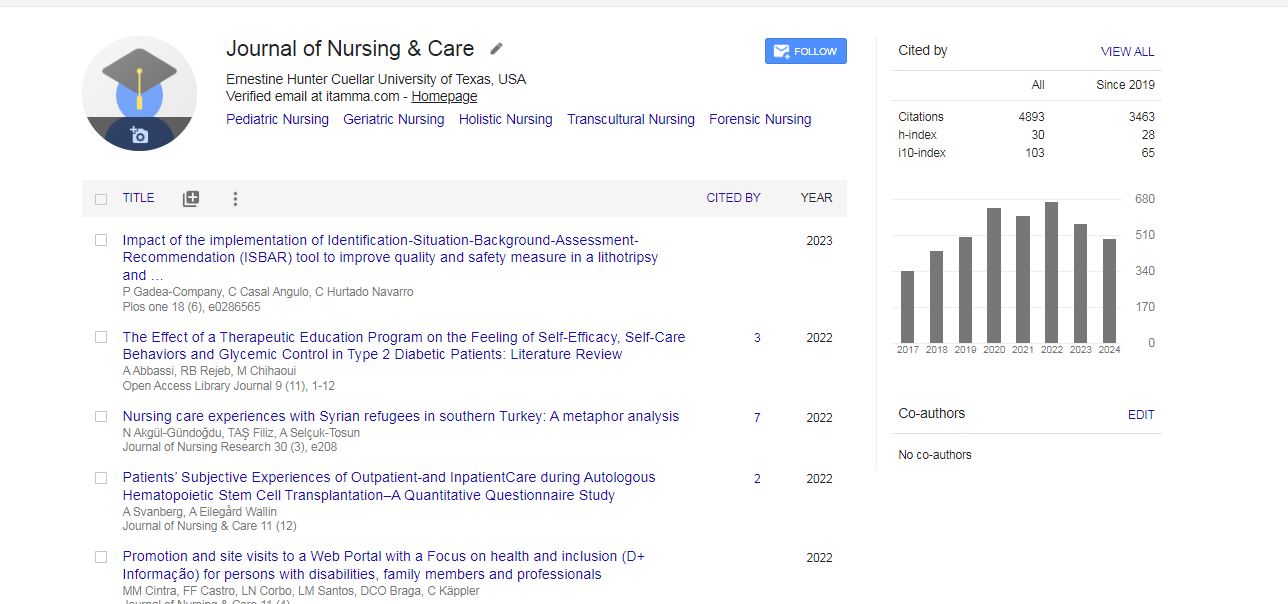
Journal of Nursing & Care received 4230 citations as per Google Scholar report