Opinion - (2025) Volume 10, Issue 3
Received: 01-May-2025, Manuscript No. PE-26-179277;
Editor assigned: 05-May-2025, Pre QC No. P-179277;
Reviewed: 19-May-2025, QC No. R-179277;
Revised: 22-May-2025, Manuscript No. Q-179277;
Published:
29-May-2025
, DOI: 10.37421/2472-1042.2025.10.283
Citation: Hartley, Benjamin. ”Economic Rationale for Preventive Pharmacotherapy: A Comprehensive Review.” Pharmacoeconomics 10 (2025):283.
Copyright: © 2025 Hartley B. This is an open-access article distributed under the terms of the Creative Commons Attribution License, which permits unrestricted use, distribution and reproduction in any medium, provided the original author and source are credited.
The economic rationale behind utilizing pharmacotherapy for disease prevention is a critical area of modern healthcare economics, demanding rigorous analysis to justify resource allocation. Understanding the methodologies and inherent challenges in conducting cost-benefit analyses for preventive pharmacological interventions is essential for policy makers and healthcare providers alike. These strategies, while requiring initial investment, hold the promise of substantial long-term financial savings by diminishing the incidence of diseases and subsequently reducing healthcare utilization and productivity losses associated with illness. This approach shifts the focus from treating established conditions to proactively averting them, thereby optimizing health outcomes and economic efficiency [1].
A significant focus in this field is the development of frameworks for evaluating the economic value of pharmacotherapy aimed at preventing conditions like type 2 diabetes. Such evaluations must meticulously consider a spectrum of costs, including direct medical expenditures and indirect costs stemming from disease complications. Furthermore, the quantification of potential gains in quality-adjusted life-years (QALYs) is crucial for a comprehensive assessment. Emphasis is placed on the importance of personalized risk assessment to ensure that resources are allocated most effectively, targeting interventions where they will yield the greatest benefit [2].
Cardiovascular disease remains a leading cause of morbidity and mortality globally, making the economic evaluation of preventive strategies particularly vital. The use of statins for the primary prevention of cardiovascular events is a well-studied area where cost-benefit analyses are frequently conducted. These analyses meticulously factor in the costs associated with drug acquisition, the crucial aspect of patient adherence to treatment regimens, and the significant averted burden of costly events such as heart attacks and strokes. The consistent finding of a favorable economic return underscores the value of statin therapy in this preventive context [3].
Osteoporosis poses a substantial public health challenge, especially among postmenopausal women, with fractures leading to significant morbidity, mortality, and healthcare costs. The cost-effectiveness of pharmacological interventions like bisphosphonates for preventing these fractures is a key area of research. Analyses in this domain consider the direct impact of fracture reduction, the associated healthcare expenditures for managing fractures, and the broader long-term implications for patients' quality of life. The findings consistently underscore the economic advantages of implementing early preventive interventions to mitigate the severe consequences of osteoporosis [4].
Viral hepatitis, particularly hepatitis B and C, can lead to severe chronic liver disease, cirrhosis, and hepatocellular carcinoma, imposing immense healthcare burdens. Comprehensive cost-benefit analyses are essential to guide the implementation of pharmacotherapy for preventing viral hepatitis in high-risk populations. These evaluations meticulously weigh the costs of treatment against the substantially averted costs of managing these debilitating and often fatal chronic conditions, thereby presenting a strong economic case for widespread preventive measures [5].
Asthma exacerbations represent a significant cause of emergency room visits, hospitalizations, and lost productivity, creating a substantial economic burden. Pharmacological strategies for preventing these exacerbations and improving asthma control are subject to economic scrutiny. Analyses typically compare the costs of controller medications with the avoided costs of acute exacerbations, hospitalizations, and the indirect economic impact of lost workdays. The consensus generally points towards preventive treatment being a cost-beneficial approach for managing asthma [6].
Venous thromboembolism (VTE), encompassing deep vein thrombosis and pulmonary embolism, is a serious complication that can arise in specific high-risk populations, particularly after surgery. The economic value of pharmacological prophylaxis for VTE is assessed by quantifying the costs of preventive measures against the incidence and associated healthcare costs of these potentially life-threatening events. Studies in this area, for instance, in elective hip and knee arthroplasty, consistently demonstrate a positive economic impact from implementing appropriate prophylactic regimens [7].
Rheumatoid arthritis (RA) is a chronic inflammatory disease that can lead to progressive joint damage and severe disability, with profound long-term economic consequences. The economic value of early pharmacological intervention, particularly the use of disease-modifying antirheumatic drugs (DMARDs), is a critical consideration. Cost-benefit analyses in this context account for drug acquisition costs, ongoing monitoring requirements, and the substantial long-term economic fallout of severe disability. These analyses consistently favor early, aggressive treatment to preserve joint function and minimize economic losses [8].
Alzheimer's disease and other dementias represent a growing public health crisis with escalating long-term care costs and immense societal impact. The cost-benefit of pharmacotherapy for preventing these conditions is an area of active investigation, though fraught with challenges. Predicting treatment efficacy and accurately estimating the long-term costs associated with managing these progressive neurological disorders are complex tasks. This highlights the urgent need for continued research and development in this critical area to identify effective preventive strategies [9].
Myopia progression in children is a growing concern, as high myopia is associated with an increased risk of serious ocular complications later in life, such as retinal detachment, glaucoma, and myopic maculopathy. Pharmacological interventions, such as low-dose atropine eye drops, are being investigated for their efficacy in controlling myopia progression. The cost-effectiveness of these treatments is evaluated by comparing the costs of interventions with the long-term benefits of reducing the risk and associated healthcare costs of these sight-threatening complications, offering a promising economic outlook for early intervention [10].
The exploration of pharmacotherapy for disease prevention is underpinned by a robust economic framework, scrutinizing the cost-effectiveness and budget impact of various interventions. Methodologies employed in cost-benefit analyses within this domain are designed to assess the long-term financial implications of proactive healthcare strategies. These analyses meticulously examine how upfront investments in preventive medications can translate into significant downstream savings by reducing the incidence of diseases. This reduction in disease burden directly impacts healthcare utilization, decreasing the need for expensive treatments and hospitalizations, and consequently alleviating productivity losses that arise from individuals being unable to work due to illness. The core economic argument for preventive pharmacotherapy rests on its ability to generate a positive return on investment over time by fostering a healthier population [1].
A crucial aspect of evaluating preventive pharmacotherapy involves establishing comprehensive frameworks for assessing economic value. For instance, the prevention of type 2 diabetes through pharmacological means requires a multifaceted analysis that accounts for all relevant costs. This includes direct medical costs associated with prescribing and administering medications, as well as indirect costs that arise from managing the complications of diabetes, such as cardiovascular disease, nephropathy, and neuropathy. The framework also incorporates the gains in health-related quality of life, often measured through QALYs, to provide a holistic economic picture. A key tenet of this approach is the emphasis on personalized risk assessment, enabling healthcare systems to allocate resources efficiently by identifying individuals who stand to benefit most from preventive interventions [2].
In the context of cardiovascular disease, the economic evaluation of statin therapy for primary prevention exemplifies the application of cost-benefit analysis. This involves a detailed consideration of the drug acquisition costs, which can be substantial, alongside factors that influence real-world effectiveness, such as patient adherence. Non-adherence can significantly diminish the cost-effectiveness of any pharmacological intervention. The analyses critically quantify the averted burden of cardiovascular events, including heart attacks and strokes, which are associated with high direct medical costs and long-term consequences. The consistent findings of a favorable economic return for statins in primary prevention reinforce their value as a cost-effective public health strategy [3].
The economic implications of preventing osteoporosis, particularly in postmenopausal women, are substantial due to the high incidence and associated costs of fragility fractures. Cost-benefit analyses for interventions like bisphosphonates focus on their ability to reduce fracture rates. These analyses quantify the direct healthcare costs associated with treating fractures, including emergency care, hospitalization, rehabilitation, and long-term care. Furthermore, they consider the indirect costs related to loss of independence, reduced quality of life, and the impact on caregivers. The evidence consistently supports the economic advantages of early pharmacological intervention to prevent debilitating fractures and their associated financial burdens [4].
Preventing viral hepatitis, specifically hepatitis B virus (HBV) infection, through antiviral prophylaxis offers a compelling economic case. Such interventions are particularly relevant in high-risk populations where the prevalence of infection and subsequent chronic liver disease is elevated. Cost-benefit analyses in this area meticulously compare the costs of implementing prophylactic antiviral treatments with the projected costs of managing the long-term sequelae of untreated HBV infection. These sequelae include chronic liver disease, liver cirrhosis, and the development of hepatocellular carcinoma, all of which incur substantial and prolonged healthcare expenditures. The analyses demonstrate that preventive measures yield significant economic benefits by averting these costly downstream health outcomes [5].
Asthma management presents a continuous economic challenge due to the recurring costs associated with acute exacerbations and the need for ongoing treatment. Pharmacological strategies aimed at preventing asthma exacerbations are evaluated for their cost-effectiveness by contrasting the expenses of controller medications with the potential savings from avoiding emergency department visits, hospitalizations, and lost productivity. Uncontrolled asthma leads to significant economic losses beyond direct medical costs, impacting individuals' ability to work and participate in daily activities. The findings from these economic evaluations generally indicate that proactive, preventive treatment for asthma is a cost-beneficial approach, leading to better health outcomes and reduced overall economic burden [6].
Venous thromboembolism (VTE) prophylaxis is a critical component of care for patients undergoing specific surgical procedures, particularly orthopedic surgery. The economic evaluation of pharmacological prophylaxis for VTE in populations like those undergoing elective hip and knee arthroplasty involves a direct comparison of the costs associated with preventive anticoagulant therapies against the incidence and economic consequences of VTE events. Deep vein thrombosis and pulmonary embolism can necessitate prolonged hospital stays, intensive medical treatment, and rehabilitation, all of which incur significant direct healthcare costs. Studies in this area consistently show a positive economic impact, with the costs of prophylaxis being outweighed by the averted costs of managing VTE [7].
In the realm of inflammatory arthritis, the early use of disease-modifying antirheumatic drugs (DMARDs) for rheumatoid arthritis (RA) is advocated not only for clinical benefits but also for its economic advantages in preventing long-term joint damage. Cost-benefit analyses for these interventions consider the costs of the medications themselves, alongside the expenses related to regular patient monitoring and the management of side effects. Crucially, these analyses also account for the long-term economic ramifications of severe RA-related disability, including lost income, increased need for assistive devices, and dependence on care services. The evidence strongly favors early, aggressive pharmacological treatment to preserve joint function and minimize these debilitating long-term economic consequences [8].
The prevention of Alzheimer's disease and other dementias is a particularly challenging area for cost-benefit analysis due to the complex nature of these progressive neurological conditions. While pharmacotherapy holds potential, predicting its efficacy and the long-term costs associated with managing dementia are significant hurdles. The economic implications of investing in preventive treatments must be weighed against the escalating societal costs of long-term care, lost productivity, and the emotional toll on families. This complexity underscores the critical need for ongoing research and development to identify and validate effective preventive interventions for these devastating diseases [9].
Myopia control in children through pharmacological means, such as the use of low-dose atropine eye drops, is an emerging area with significant economic considerations. The cost-effectiveness of these interventions is assessed by comparing the expenditures for treatment against the long-term benefits derived from reducing the risk of high myopia-related complications. These complications, including retinal detachment, glaucoma, and myopic maculopathy, can lead to severe vision impairment or blindness, incurring substantial lifetime healthcare costs and impacting quality of life. The analysis aims to demonstrate the economic advantage of early intervention in preventing these severe visual outcomes [10].
This collection of research evaluates the economic rationale for using pharmacotherapy in disease prevention across various medical fields. Studies examine cost-benefit analyses for interventions targeting cardiovascular disease, type 2 diabetes, osteoporosis, viral hepatitis, asthma, venous thromboembolism, rheumatoid arthritis, Alzheimer's disease, and myopia. The findings consistently demonstrate that preventive pharmacological strategies, despite initial costs, yield significant long-term economic benefits by reducing disease incidence, healthcare utilization, and productivity losses. Methodologies often involve assessing direct and indirect costs, quality-adjusted life-years, and personalized risk factors. While some areas, like dementia prevention, face prediction challenges, the overall economic case for proactive pharmacotherapy is strong.
None
None
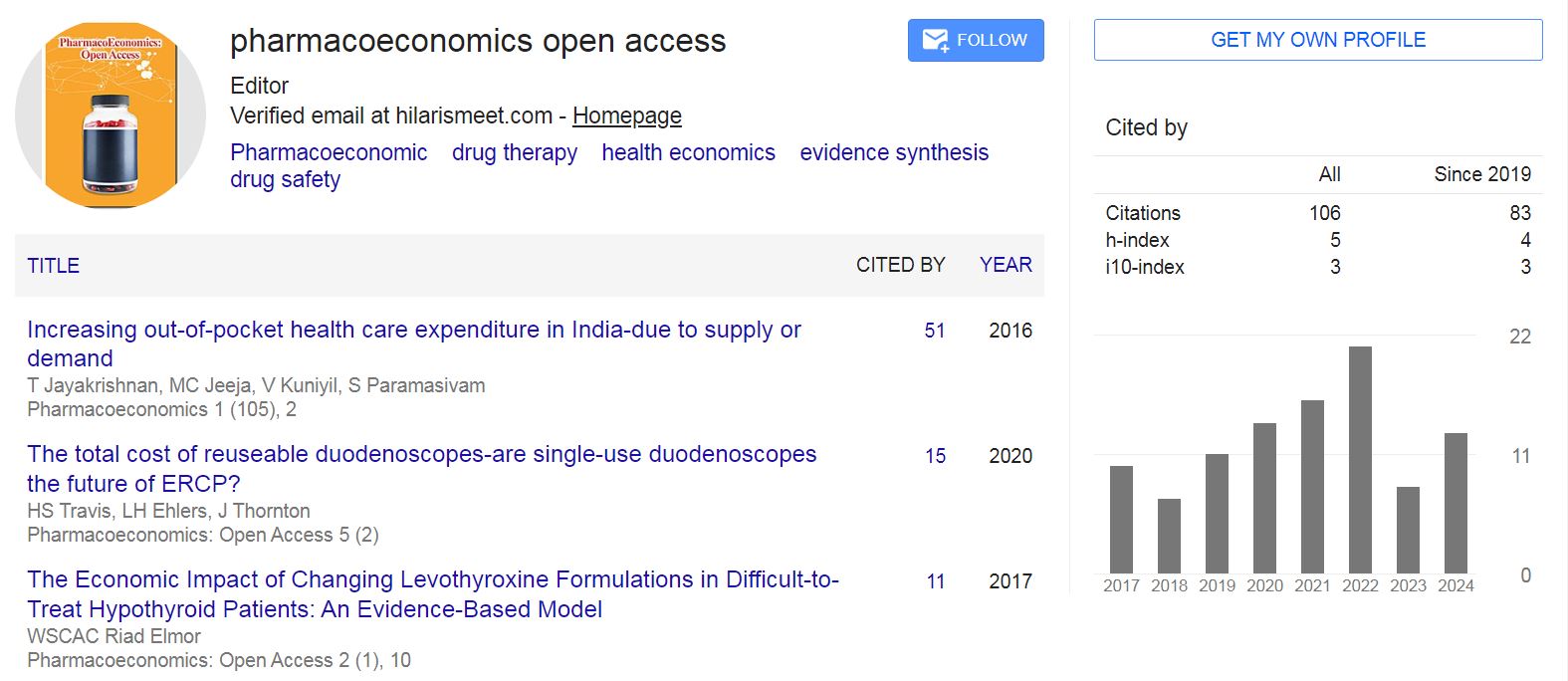
Pharmacoeconomics: Open Access received 106 citations as per Google Scholar report