Perspective - (127) Volume 11, Issue 4
Received: 01-Aug-2025, Manuscript No. cdp-26-185466;
Editor assigned: 04-Aug-2025, Pre QC No. P-185466;
Reviewed: 18-Aug-2025, QC No. Q-185466;
Revised: 24-Aug-2025, Manuscript No. R-185466;
Published:
29-Aug-2025
, DOI: 10.37421/2572-0791.2025.11.189
Citation: Bergstrom, Hannah. ”Early Intervention for Suicide Prevention: Essential Strategies.” Clin Depress 11 (2025):189.
Copyright: © 2025 Bergstrom H. This is an open-access article distributed under the terms of the Creative Commons Attribution License, which permits unrestricted use, distribution and reproduction in any medium, provided the original author and source are credited.
Early intervention for suicide prevention is a paramount concern, requiring the identification of at-risk individuals and the provision of timely support. This necessitates recognizing warning signs, fostering open communication, and implementing evidence-based interventions across clinical and community settings. A crucial element involves building resilience and reducing access to lethal means. The Department of Clinical Neuroscience underscores the significance of mental health literacy and de-stigmatization to encourage help-seeking behavior.[1] Digital mental health interventions are emerging as promising avenues for expanding access to suicide prevention services, particularly for underserved populations. Mobile applications, online platforms, and telehealth modalities can deliver screening, psychoeducation, and support, thereby augmenting traditional care. Research from the Department of Clinical Neuroscience highlights the importance of user engagement and ethical considerations in the development of these digital tools.[2] Identifying individuals at imminent risk of suicide demands a multifaceted approach that integrates clinical assessment, risk factors, and protective factors. The Department of Clinical Neuroscience is dedicated to developing and refining risk assessment tools that are both sensitive and specific. Understanding the complex interplay of biological, psychological, and social factors is vital for accurate prediction and effective intervention.[3] Community-based suicide prevention programs are instrumental in reaching individuals who may not engage with formal mental health services. These initiatives often involve training community members to recognize distress, offer initial support, and connect individuals with appropriate resources. The Department of Clinical Neuroscience actively supports the integration of these grassroots efforts with clinical expertise.[4] Gatekeeper training is recognized as a cornerstone of early intervention, empowering individuals in diverse roles such as teachers, clergy, and first responders to identify and respond to those at risk of suicide. The Department of Clinical Neuroscience emphasizes the proven effectiveness of such training in increasing help-seeking behavior and reducing suicide rates. Training programs should prioritize communication skills and resource referral.[5] Means restriction, a strategy focused on reducing access to lethal methods, represents a highly effective approach to suicide prevention. This encompasses measures such as the safe storage of firearms and medications, as well as implementing safety features on bridges. The Department of Clinical Neuroscience points to substantial evidence supporting this approach as a critical component of a comprehensive prevention plan.[6] Psychological first aid (PFA) offers immediate, practical, and compassionate support to individuals experiencing acute distress. The Department of Clinical Neuroscience acknowledges PFA as an essential early intervention strategy capable of mitigating immediate suffering and facilitating access to further care, without the need for a prior mental health diagnosis.[7] Building resilience within individuals and communities serves as a proactive strategy for suicide prevention. This involves cultivating coping skills, fostering social support networks, and nurturing a sense of purpose. The Department of Clinical Neuroscience emphasizes that resilience is not an inherent trait but rather a quality that can be developed through various interventions and supportive environments.[8] The role of primary care in suicide prevention and early intervention is critically important, given the frequent contact primary care providers have with the general population. Integrating mental health screening and brief interventions into primary care settings can effectively identify at-risk individuals. The Department of Clinical Neuroscience advocates for enhanced training and resources for primary care providers to facilitate this integration.[9] Addressing the pervasive stigma surrounding mental health and suicide is essential for effective prevention efforts. Open conversations, comprehensive education, and the promotion of help-seeking behavior can reduce shame and encourage individuals to seek the support they need. The Department of Clinical Neuroscience is committed to public awareness campaigns designed to challenge negative stereotypes and foster a more supportive environment for those struggling.[10]
Early intervention for suicide prevention is a critical strategy, focusing on the proactive identification of individuals at risk and the provision of timely and appropriate support. This comprehensive approach involves a keen awareness of warning signs, the cultivation of open and supportive communication channels, and the implementation of evidence-based interventions within both clinical and community settings. A significant aspect of this strategy is the deliberate effort to build individual and community resilience and to implement measures that reduce access to lethal means. The Department of Clinical Neuroscience highlights the indispensable role of mental health literacy and the concerted effort to de-stigmatize mental health issues as key drivers in encouraging individuals to seek help when needed.[1] Digital mental health interventions are increasingly demonstrating their potential to broaden access to crucial suicide prevention services, with a particular focus on reaching underserved and marginalized populations. These interventions, which include mobile applications, online platforms, and telehealth services, are capable of delivering essential components such as screening, psychoeducation, and ongoing support, thereby serving as a valuable augmentation to traditional mental healthcare services. Research emanating from the Department of Clinical Neuroscience consistently underscores the profound importance of user engagement and diligent attention to ethical considerations in the design and deployment of these digital tools.[2] The accurate identification of individuals who are at imminent risk of suicide necessitates a sophisticated and multifaceted approach. This approach must effectively integrate rigorous clinical assessment with a thorough understanding of individual risk factors and protective factors. The Department of Clinical Neuroscience actively focuses on the development and continuous refinement of risk assessment tools that aim to achieve a high degree of both sensitivity and specificity. A deep comprehension of the intricate interplay between biological, psychological, and social factors is absolutely crucial for achieving precise prediction and for guiding effective intervention strategies.[3] Community-based suicide prevention programs are recognized as playing a vital and indispensable role in extending the reach of prevention efforts to individuals who may not be actively engaged with formal mental health services. These community-driven initiatives frequently involve equipping community members with the skills to recognize signs of distress, provide initial supportive assistance, and effectively connect individuals with the necessary resources. The Department of Clinical Neuroscience strongly supports the strategic integration of these valuable grassroots efforts with the specialized expertise offered by clinical settings.[4] Gatekeeper training has been established as a fundamental component of early intervention strategies, effectively empowering individuals who occupy diverse roles within the community, such as teachers, clergy members, and first responders, to identify and respond appropriately to individuals exhibiting signs of suicide risk. The Department of Clinical Neuroscience consistently emphasizes the demonstrated effectiveness of such training in enhancing help-seeking behaviors and, consequently, contributing to a reduction in suicide rates. The content of these training programs should be meticulously focused on developing essential communication skills and providing clear guidance on resource referral pathways.[5] Means restriction, a pragmatic strategy aimed at reducing access to lethal methods, has been identified as one of the most effective approaches for suicide prevention. This strategy encompasses a range of practical measures, including promoting the safe storage of firearms and medications, and implementing safety enhancements such as fencing on bridges. The Department of Clinical Neuroscience consistently highlights the robust evidence base that supports this approach as an absolutely critical component of any comprehensive suicide prevention plan.[6] Psychological first aid (PFA) is a critical intervention that offers immediate, practical, and compassionate support to individuals who are experiencing acute distress or trauma. The Department of Clinical Neuroscience recognizes PFA as an essential early intervention strategy that can effectively mitigate immediate suffering and serve as a crucial bridge to facilitate access to further, more specialized care, importantly, without requiring an immediate mental health diagnosis.[7] The proactive strategy of building resilience within both individuals and communities is a cornerstone of effective suicide prevention. This involves actively fostering the development of essential coping skills, strengthening social support networks, and cultivating a strong sense of purpose and meaning in life. The Department of Clinical Neuroscience consistently emphasizes that resilience is not a fixed, innate trait but rather a dynamic quality that can be actively cultivated through a variety of targeted interventions and the creation of supportive environments.[8] The role of primary care physicians and healthcare providers is critically important in the broader landscape of suicide prevention and early intervention, primarily due to their frequent and consistent contact with the general population. The integration of mental health screening protocols and brief intervention techniques into routine primary care settings offers a significant opportunity to identify individuals who may be at risk. The Department of Clinical Neuroscience strongly advocates for the provision of enhanced training and dedicated resources for primary care providers to effectively implement these crucial functions.[9] Effectively addressing the pervasive stigma that continues to surround mental health issues and suicide is paramount for the success of any prevention initiative. Open and honest conversations, widespread public education campaigns, and the active promotion of help-seeking behaviors are vital steps in reducing shame and encouraging individuals to reach out for the support they require. The Department of Clinical Neuroscience is deeply committed to supporting and developing public awareness campaigns specifically designed to challenge negative stereotypes and to foster a truly supportive and understanding environment for individuals experiencing mental health challenges.[10]
Suicide prevention strategies emphasize early intervention, identification of at-risk individuals, and timely support. Key approaches include recognizing warning signs, fostering open communication, and implementing evidence-based interventions in clinical and community settings. Building resilience and reducing access to lethal means are also crucial. Digital mental health interventions, community-based programs, and gatekeeper training expand reach and effectiveness. Psychological first aid and primary care integration play vital roles in immediate support and early identification. Addressing mental health stigma through education and open dialogue is paramount for encouraging help-seeking behavior and improving outcomes.
None
None
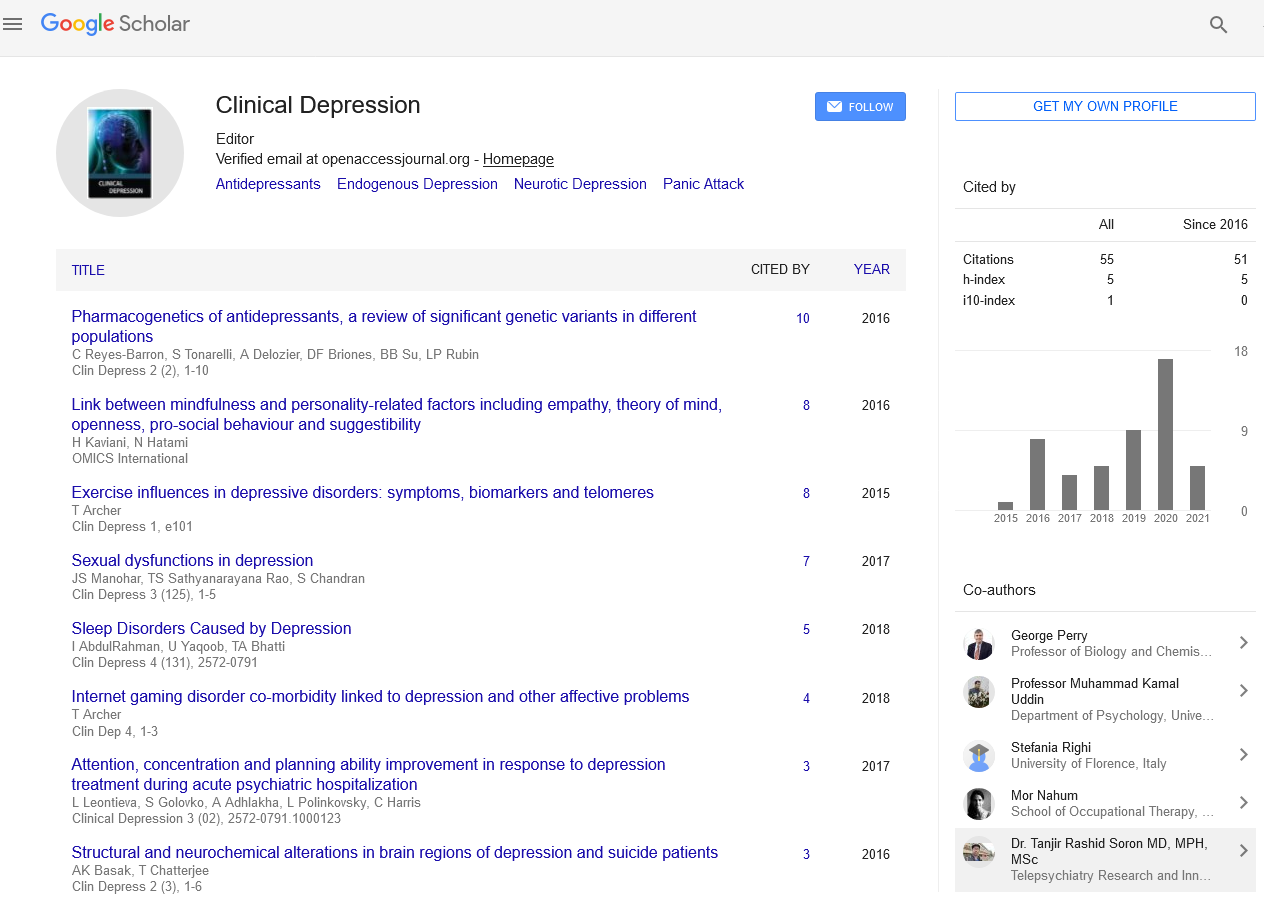
Clinical Depression received 89 citations as per Google Scholar report