Short Communication - (2025) Volume 9, Issue 6
Received: 03-Nov-2025, Manuscript No. jchd-26-185722;
Editor assigned: 05-Nov-2025, Pre QC No. P-185722;
Reviewed: 19-Nov-2025, QC No. Q-185722;
Revised: 24-Nov-2025, Manuscript No. R-185722;
Published:
01-Dec-2025
, DOI: 10.37421/2684-6020.2024.9.278
Citation: Ali, Tarek. ”Debunking Coronary Heart Disease Myths:
Lifestyle is Key.” J Coron Heart Dis 09 (2025):278.
Copyright: © 2025 Ali T. This is an open-access article distributed under the terms of the Creative Commons Attribution License, which permits unrestricted use, distribution
and reproduction in any medium, provided the original author and source are credited.
Coronary heart disease (CHD) remains a leading global health concern, and understanding its prevention is paramount. While genetic predispositions exist, the overwhelming influence of modifiable lifestyle factors underscores the potential for significant risk reduction through informed choices [1].
Debunking common misconceptions is crucial for effective public health messaging and individual action. One persistent myth is that CHD primarily affects men, overlooking the substantial burden of the disease in women, who may experience different symptoms and delayed diagnoses [2].
Furthermore, the notion of a singular "superfood" capable of preventing heart disease is misleading; instead, heart health is cultivated through consistent, healthy dietary patterns comprising a variety of nutrient-rich foods [3].
It is also important to challenge the assumption that only individuals with a high body mass index are at risk, as normal weight individuals can also harbor significant cardiovascular risk factors due to other lifestyle elements [4].
While stress can contribute to CHD risk by influencing behaviors and physiological responses, it is rarely the sole causative agent, highlighting the multifactorial nature of the disease [5].
Another prevalent myth is that CHD is an ailment exclusively affecting older populations; however, there is a concerning rise in early-onset CHD among younger demographics, frequently linked to adverse lifestyle habits [6].
The belief that genetic predisposition is an insurmountable barrier to prevention is also inaccurate; robust evidence indicates that lifestyle interventions can substantially mitigate inherited susceptibility [7].
Contrary to the idea that heart disease strikes suddenly without warning, it is a gradual process of atherosclerosis that develops over many years, emphasizing the need for ongoing monitoring and early detection [8].
For those already diagnosed with CHD, the misconception that their health trajectory is fixed is incorrect; comprehensive cardiac rehabilitation and diligent lifestyle management can significantly improve outcomes and enhance quality of life [9].
Finally, the perception of statins as a standalone solution for heart disease prevention is also a myth; their greatest efficacy is realized when integrated with lifestyle modifications like diet, exercise, and smoking cessation [10].
The prevention of coronary heart disease (CHD) is a complex endeavor often clouded by misconceptions that hinder effective public health strategies and individual decision-making. A primary focus in understanding CHD prevention involves recognizing that while genetic factors play a role, the vast majority of risk stems from modifiable lifestyle choices, including diet, physical activity, weight management, and smoking cessation [1].
Dispelling the myth that coronary heart disease is exclusively a male condition is vital, as it significantly impacts women, often presenting with distinct symptoms and leading to later diagnoses, thus requiring tailored awareness and screening [2].
The concept of a single "superfood" as a preventative measure is a fallacy; rather, heart health is best achieved through a consistent pattern of wholesome eating that incorporates a wide array of fruits, vegetables, whole grains, lean proteins, and healthy fats, supported by scientific evidence on the cumulative impact of dietary habits [3].
It is also critical to address the fallacy that cardiovascular risk is confined to individuals who are overweight, as normal BMI individuals can still be at elevated risk due to factors such as poor dietary habits, inactivity, and underlying metabolic issues, necessitating a comprehensive risk assessment beyond BMI alone [4].
While chronic stress can exacerbate CHD risk by fostering unhealthy behaviors and contributing to physiological changes, it is seldom the sole determinant of the disease, underscoring the multifactorial etiology of CHD that involves a confluence of genetic, lifestyle, and environmental factors [5].
The myth that coronary heart disease is solely a concern for older adults is being challenged by emerging trends of early-onset CHD in younger populations, often attributable to modern lifestyle factors such as poor nutrition, sedentary behaviors, and increasing rates of obesity, highlighting the importance of early education and intervention [6].
Furthermore, the notion that a genetic predisposition to CHD dictates an unavoidable fate is a misconception; scientific understanding emphasizes that lifestyle modifications can significantly counteract and mitigate inherited susceptibilities, empowering individuals to take proactive steps in prevention regardless of family history [7].
The progression of atherosclerosis, the underlying mechanism of most CHD, is typically a slow, decades-long process rather than a sudden event, making regular health screenings and monitoring of key risk factors like blood pressure, cholesterol, and blood sugar essential for early detection and intervention [8].
For individuals who have already developed CHD, the belief that their health outcomes are irreversible is unfounded; robust evidence supports the efficacy of cardiac rehabilitation programs and sustained lifestyle management in improving prognoses, reducing the risk of subsequent cardiovascular events, and enhancing overall quality of life [9].
Lastly, the oversimplification of statin therapy as a standalone cure for heart disease prevention is inaccurate; these medications are most effective when used in conjunction with comprehensive lifestyle interventions, including dietary changes, regular exercise, and smoking cessation, to achieve optimal cardiovascular protection [10].
This collection of articles debunks prevalent myths surrounding coronary heart disease (CHD). It clarifies that while genetics play a role, lifestyle factors like diet, exercise, weight, and smoking are paramount for prevention. The pieces emphasize that CHD affects women significantly, that heart health relies on dietary patterns rather than single foods, and that individuals of normal weight can also be at risk. Stress is a contributing factor but rarely the sole cause, and CHD is increasingly seen in younger populations due to lifestyle changes. Genetic predisposition can be mitigated by lifestyle, and heart disease develops gradually, highlighting the importance of early detection. For those with CHD, rehabilitation and lifestyle management improve outcomes. Statins are effective but best when combined with healthy habits.
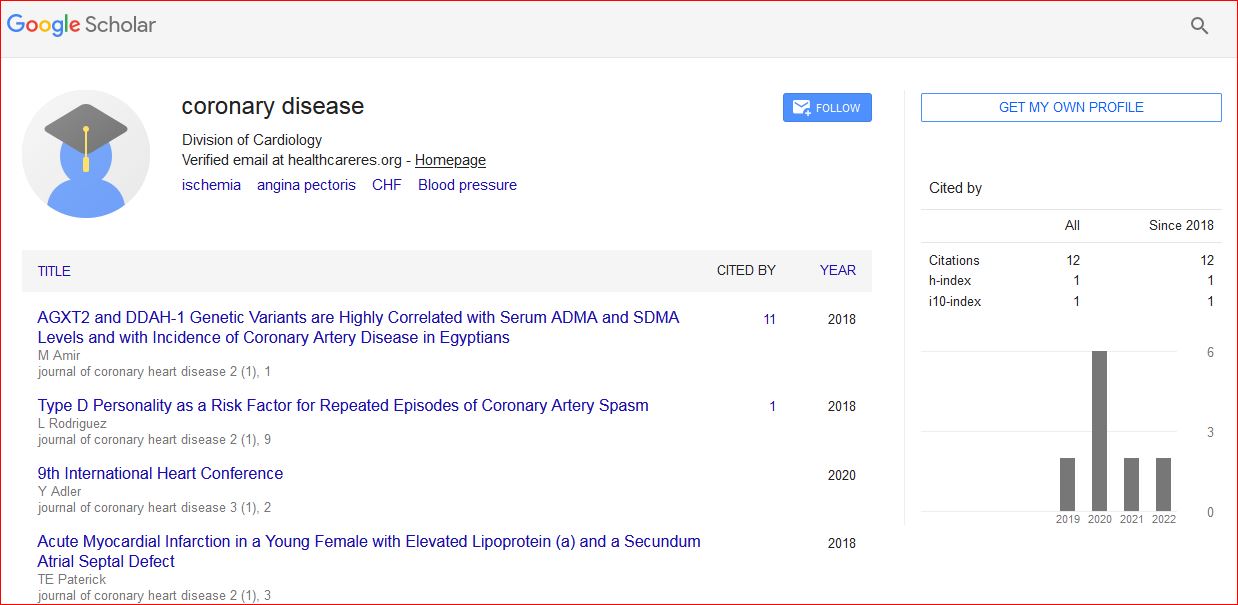
Journal of Coronary Heart Diseases received 15 citations as per Google Scholar report