Commentary - (2025) Volume 11, Issue 6
Received: 02-Nov-2025, Manuscript No. aso-26-184668;
Editor assigned: 04-Nov-2025, Pre QC No. P-184668;
Reviewed: 18-Nov-2025, QC No. Q-184668;
Revised: 24-Nov-2025, Manuscript No. R-184668;
Published:
01-Dec-2025
, DOI: 10.37421/2471-2671.2025.11.198
Citation: Yamamoto, Takashi. ”Cytoreductive Surgery with
HIPEC: Advanced Cancer Treatment.” Arch Surg Oncol 11 (2025):198.
Copyright: © 2025 Yamamoto T. This is an open-access article distributed under the terms of the Creative Commons Attribution License, which permits unrestricted use,
distribution and reproduction in any medium, provided the original author and source are credited.
Cytoreductive surgery (CRS) in conjunction with hyperthermic intraperitoneal chemotherapy (HIPEC) stands as a fundamental treatment modality for select patients afflicted with advanced malignancies, particularly those presenting with peritoneal carcinomatosis [1].
The primary objective of this aggressive therapeutic strategy is to achieve complete cytoreduction, which entails the meticulous removal of all discernible tumor implants from the peritoneal cavity [1].
This is subsequently followed by HIPEC, a process designed to eradicate any microscopic residual disease that may persist after surgery [1].
This comprehensive approach holds the potential to significantly extend survival and provide substantial palliation for individuals who might otherwise have limited therapeutic options [1].
However, the judicious selection of patients is paramount and relies heavily on a careful assessment of several critical factors, including the specific type of tumor, the extent of peritoneal involvement, the patient's overall performance status, and the absence of disease beyond the peritoneal cavity [1].
Salvage surgery, in this context, encompasses repeated CRS/HIPEC procedures or palliative interventions when initial treatments prove unsuccessful or when the disease recurs, presenting unique and complex challenges such as extensive adhesions and potentially more advanced disease [1].
The application of CRS and HIPEC in advanced gastric cancer with peritoneal metastasis represents a complex clinical decision [2].
While this combined approach can indeed offer survival benefits for carefully selected patients, it is concurrently associated with a significant burden of morbidity [2].
Consequently, exploring the outcomes and identifying factors that positively influence success in this challenging patient subset is crucial, strongly emphasizing the indispensable role of a multidisciplinary team and highly experienced surgical teams [2].
For patients diagnosed with ovarian cancer who experience recurrent disease, salvage surgery assumes a pivotal role in their management [3].
This particular area of research actively investigates the efficacy of secondary cytoreductive surgery, with a specific focus on cases where complete resection of the tumor is achievable [3].
The findings derived from such investigations often suggest that selected patients can indeed derive substantial benefits from repeat aggressive surgical intervention, potentially leading to improvements in both progression-free survival and overall survival rates [3].
The management of appendiceal cancer that has metastasized to the peritoneum poses a significant clinical challenge, and in this context, CRS combined with HIPEC has emerged as a particularly promising therapeutic modality [4].
This area of study systematically examines the outcomes observed in patients who undergo CRS and HIPEC for this specific indication, underscoring the critical importance of achieving complete cytoreduction and highlighting the substantial role of HIPEC in enhancing overall survival rates [4].
In the intricate landscape of colorectal cancer with peritoneal metastasis, the role and effectiveness of CRS and HIPEC are subjects of continuous investigation and evolution [5].
This particular line of research undertakes a comprehensive review of the current evidence base, with a strong emphasis on meticulously defining patient selection criteria, refining surgical techniques, and evaluating the overall impact on patient survival [5].
It simultaneously underscores the pressing need for more robust and extensive data to further refine and establish definitive treatment guidelines for this complex condition [5].
The incorporation of neoadjuvant chemotherapy administered prior to CRS and HIPEC for patients with advanced malignancies has demonstrated considerable promise in downstaging the disease and thereby enhancing the resectability of tumors [6].
This specific line of inquiry systematically investigates the intricate interplay between neoadjuvant therapeutic interventions and subsequent surgical outcomes, offering valuable insights that can contribute to the optimization of treatment strategies for patients diagnosed with peritoneal surface disease [6].
Palliative cytoreductive surgery represents a viable therapeutic option for patients who have advanced malignancies and extensive peritoneal disease, particularly those who are not considered suitable candidates for curative-intent CRS/HIPEC procedures [7].
This area of study meticulously explores the specific role of palliative surgery in achieving effective symptom management and improving the overall quality of life for these patients, with a clear acknowledgment that the primary goal is not curative but rather focused on symptom relief and functional enhancement [7].
Recurrence of disease following an initial cytoreductive surgery and HIPEC procedure for peritoneal carcinomatosis represents a significant and formidable clinical challenge [8].
This particular research endeavor undertakes an in-depth examination of the factors that can predict recurrence and evaluates the outcomes associated with various salvage therapies, including repeat CRS/HIPEC interventions, thereby emphasizing the critical necessity for careful re-evaluation and precise patient selection for any subsequent therapeutic interventions [8].
The ongoing development of novel agents specifically designed for HIPEC constitutes a dynamic and critical area of ongoing research, primarily aimed at augmenting the efficacy of the treatment and simultaneously mitigating its associated toxicity in the context of cytoreductive surgery [9].
This particular study focuses on evaluating the potential therapeutic benefits of new chemotherapeutic agents in enhancing the overall effectiveness of HIPEC in the comprehensive management of peritoneal surface malignancies [9].
Quality of life (QoL) is an undeniably critical consideration for patients who are undergoing or have undergone aggressive treatment regimens such as cytoreductive surgery and HIPEC [10].
This specific study undertakes a thorough assessment of the health-related QoL outcomes experienced by patients who have undergone CRS/HIPEC, thereby providing valuable and essential data regarding the long-term impact of this intensive treatment modality on the overall well-being of patients [10].
Cytoreductive surgery (CRS) combined with hyperthermic intraperitoneal chemotherapy (HIPEC) is a cornerstone treatment for select patients with advanced malignancies, particularly peritoneal carcinomatosis [1].
The primary goal is to achieve complete cytoreduction, meaning the complete removal of all visible tumor implants, followed by HIPEC to eliminate any microscopic residual disease [1].
This aggressive approach can lead to long-term survival and palliation for patients who might otherwise have limited treatment alternatives [1].
However, careful patient selection is crucial, considering factors such as tumor type, extent of peritoneal involvement, patient performance status, and the absence of extra-peritoneal disease [1].
Salvage surgery in this setting refers to repeat CRS/HIPEC or palliative procedures when initial treatment fails or the disease recurs, which presents distinct challenges due to adhesions and potentially more extensive disease [1].
The implementation of CRS and HIPEC in advanced gastric cancer with peritoneal metastasis is a complex decision-making process [2].
While it can offer survival advantages for carefully chosen patients, it is associated with significant morbidity [2].
Therefore, exploring the outcomes and the factors that influence success in this challenging subset of patients is essential, highlighting the importance of a multidisciplinary approach and experienced surgical teams [2].
For ovarian cancer patients experiencing recurrent disease, salvage surgery plays a critical role in their management [3].
This research investigates the effectiveness of secondary cytoreductive surgery, especially in instances where complete tumor resection is achievable [3].
The findings suggest that selected patients can benefit from repeated aggressive surgical intervention, potentially improving both progression-free and overall survival [3].
Managing appendiceal cancer with peritoneal carcinomatosis is a substantial challenge, and CRS with HIPEC has emerged as a promising therapeutic option [4].
This paper scrutinizes the outcomes of patients undergoing CRS and HIPEC for this specific condition, emphasizing the importance of achieving complete cytoreduction and the role of HIPEC in enhancing survival rates [4].
In the context of colorectal cancer with peritoneal metastasis, the role of CRS and HIPEC is continuously being redefined and investigated [5].
This review assesses the current evidence, focusing on patient selection criteria, surgical techniques, and the impact on survival [5].
It also stresses the necessity for robust data to further refine treatment guidelines [5].
The administration of neoadjuvant chemotherapy before CRS and HIPEC for advanced malignancies has shown potential in downstaging the disease and improving resectability [6].
This study examines the relationship between neoadjuvant therapy and surgical outcomes, providing insights into optimizing treatment strategies for patients with peritoneal surface disease [6].
Palliative cytoreductive surgery is an option for patients with advanced malignancies and extensive peritoneal disease who are not candidates for curative-intent CRS/HIPEC [7].
This study investigates the role of palliative surgery in symptom management and improving quality of life, acknowledging that the objective is not cure but symptom relief and functional improvement [7].
Recurrence after initial CRS and HIPEC for peritoneal carcinomatosis is a significant clinical issue [8].
This research analyzes factors predicting recurrence and the outcomes of salvage therapies, including repeat CRS/HIPEC, underscoring the need for careful re-evaluation and patient selection for subsequent interventions [8].
The development of novel HIPEC agents is an active area of research aimed at improving efficacy and reducing toxicity in CRS [9].
This study evaluates the potential of new chemotherapeutic agents to enhance HIPEC effectiveness in managing peritoneal surface malignancies [9].
Quality of life (QoL) is a critical aspect for patients undergoing aggressive treatments like CRS and HIPEC [10].
This study assesses QoL outcomes in patients who have undergone CRS/HIPEC, offering valuable data on the long-term effects of this treatment on patient well-being [10].
Cytoreductive surgery (CRS) with hyperthermic intraperitoneal chemotherapy (HIPEC) is a vital treatment for advanced cancers with peritoneal carcinomatosis, aiming for complete tumor removal and eradication of microscopic disease to improve survival and palliation. Patient selection is critical, considering tumor type, extent of disease, and performance status. Salvage surgery, including repeat CRS/HIPEC, addresses recurrence and failure. The approach is being investigated for various cancers like gastric, ovarian, appendiceal, and colorectal, with ongoing research into neoadjuvant chemotherapy, novel HIPEC agents, and palliative options. Quality of life is a key consideration, and studies are assessing its long-term impact. Recurrence patterns and salvage therapy outcomes are also areas of active research.
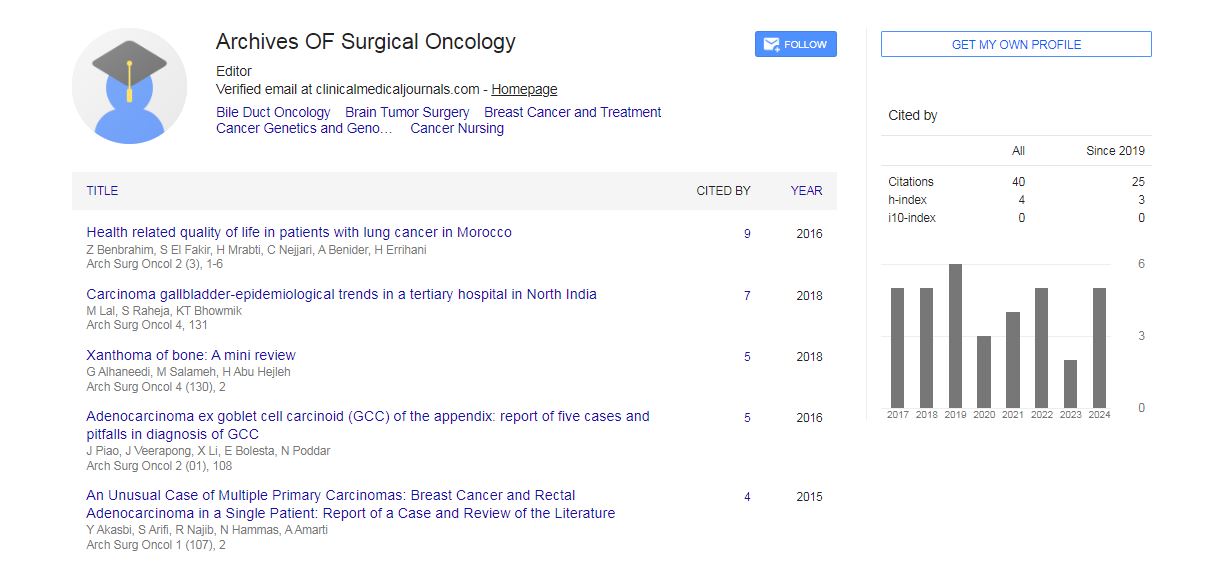
Archives of Surgical Oncology received 37 citations as per Google Scholar report