Commentary - (2025) Volume 9, Issue 4
Received: 01-Jul-2025, Manuscript No. jchd-26-185696;
Editor assigned: 03-Jul-2025, Pre QC No. P-185696;
Reviewed: 17-Jul-2025, QC No. Q-185696;
Revised: 22-Jul-2025, Manuscript No. R-185696;
Published:
29-Jul-2025
, DOI: 10.37421/2684-6020.2024.9.252
Citation: Alvarado, Victor. ”Coronary Heart Disease: Prevention,
Treatment, and Global Challenges.” J Coron Heart Dis 09 (2025):252.
Copyright: © 2025 Alvarado V. This is an open-access article distributed under the terms of the Creative Commons Attribution License, which permits unrestricted use,
distribution and reproduction in any medium, provided the original author and source are credited.
Coronary heart disease (CHD) presents a significant global health challenge, escalating in burden and impact, particularly in low- and middle-income countries, demanding responses akin to pandemic-level efforts [1].
Factors such as an aging demographic, increasing obesity rates, sedentary lifestyles, and the pervasive adoption of Westernized diets are collectively fueling a concerning surge in CHD incidence and mortality worldwide [1].
The recent COVID-19 pandemic has further complicated this issue, leading to disruptions in preventative care, delays in diagnoses, and an exacerbation of cardiovascular risk in infected individuals [1].
Effectively addressing CHD necessitates a comprehensive, multi-pronged strategy that prioritizes primary prevention, early detection of the disease, and enhanced access to affordable and effective treatments [1].
Robust public health initiatives are also crucial, focusing on modifiable risk factors to mitigate the growing epidemic [1].
A persistent challenge lies in the consistent and equitable implementation of these vital strategies across the diverse populations that comprise our global community [1].
The long-term cardiovascular implications of COVID-19 infection are emerging as a substantial concern, potentially contributing to a future increase in CHD cases on a global scale [2].
Viral infections, including SARS-CoV-2, are known to trigger systemic inflammation, endothelial dysfunction, and prothrombotic states, all of which are well-established risk factors for the development of atherosclerotic cardiovascular disease [2].
Emerging research increasingly demonstrates elevated risks for myocardial infarction, stroke, and other cardiovascular events in the months following SARS-CoV-2 infection, even in individuals previously without pre-existing heart conditions [2].
This underscores the critical need for vigilant cardiovascular monitoring of individuals who have recovered from COVID-19 and for continued in-depth research into the precise biological mechanisms that drive these post-infectious cardiovascular sequelae [2].
Lifestyle modifications are universally recognized as the cornerstone of effective CHD prevention strategies, yet their widespread and successful implementation is often hampered by considerable practical barriers [3].
Factors intrinsically linked to socioeconomic status, such as consistent access to healthy and affordable food options, the availability of safe environments conducive to physical activity, and varying levels of health literacy, all play crucial and often underestimated roles [3].
Consequently, public health strategies must extend their scope beyond merely offering individual-level advice to actively addressing these fundamental upstream determinants of health [3].
Comprehensive programs that effectively integrate nutrition education, actively promote regular physical activity, provide robust support for smoking cessation efforts, and offer effective stress management techniques are absolutely essential for meaningful impact [3].
Translating evidence-based interventions from the research setting into real-world, impactful applications requires substantial collaboration between healthcare providers, policymakers, dedicated community organizations, and the individuals themselves [3].
The escalating prevalence of obesity, with a particular emphasis on abdominal obesity, stands out as a primary and significant driver of increased cardiovascular risk [4].
This pervasive condition is intrinsically and closely linked to a constellation of other critical CHD risk factors, including hypertension, dyslipidemia, and the development of type 2 diabetes, collectively creating a complex metabolic milieu that strongly promotes the pathological process of atherosclerosis [4].
Consequently, effective weight management strategies, which encompass dietary modifications, increased physical activity, and, in select cases, pharmacotherapy or bariatric surgery, are critically important for reducing both cardiovascular morbidity and overall mortality [4].
However, achieving and maintaining sustainable weight loss remains a profound and significant challenge for a large number of individuals, starkly underscoring the critical need for personalized and long-term supportive care approaches [4].
Access to affordable and effective treatments for CHD continues to represent a significant global challenge, particularly within resource-limited settings where disparities are most pronounced [5].
While substantial advancements have been made in pharmacotherapy, revascularization procedures, and cardiac rehabilitation, which have demonstrably improved patient outcomes, their widespread availability and consistent uptake remain unevenly distributed [5].
Addressing these pervasive disparities in access necessitates the development and implementation of innovative healthcare delivery models, including the strategic utilization of task-shifting, the expansion of telemedicine services, and the establishment of accessible community-based programs [5].
Furthermore, the substantial cost associated with essential cardiovascular medications and critical interventions continues to pose a significant barrier for a considerable number of patients, compelling the need for proactive policy interventions to ensure equitable access to life-saving cardiovascular care [5].
The profound interplay between an individual's socioeconomic status and their risk of developing CHD cannot be overstated [6].
Lower socioeconomic status is frequently associated with a greater exposure to a multitude of risk factors, including poor nutrition, a lack of opportunities for physical activity, elevated stress levels, and severely limited access to essential healthcare services [6].
These deeply entrenched social determinants of health contribute significantly to the observed disparities in both the prevalence of CHD and its subsequent outcomes among different population groups [6].
Therefore, any effective interventions specifically aimed at reducing the burden of CHD must inherently incorporate robust strategies designed to actively address social inequalities and improve the overall living conditions for vulnerable populations [6].
The intricate role of inflammation in the pathogenesis of atherosclerosis and the subsequent development of CHD is gaining increasing recognition within the scientific community [7].
Chronic, low-grade inflammation, often instigated by lifestyle factors such as an unhealthy diet and obesity, demonstrably contributes to the formation and progression of atherosclerotic plaques, increasing the likelihood of plaque rupture and subsequent thrombotic events [7].
Targeting these inflammatory pathways, whether through comprehensive lifestyle modifications or the development of novel pharmacological agents, represents a dynamic and promising area of active research with the potential to offer groundbreaking new therapeutic strategies for both CHD prevention and its effective management [7].
The global aging population presents a continually growing and complex challenge for the effective management of CHD [8].
As individuals advance in age, they become more susceptible to developing multiple comorbidities, including hypertension, diabetes, and dyslipidemia, all of which are recognized as major risk factors for CHD [8].
Furthermore, the physiological changes intrinsically associated with aging can significantly impact an individual's response to various treatments and, unfortunately, can increase the risk of experiencing adverse cardiovascular events [8].
Consequently, the implementation of comprehensive geriatric assessments and the development of highly personalized treatment strategies are absolutely crucial for optimizing cardiovascular health outcomes in older adult populations [8].
Advancements in the field of precision medicine are progressively beginning to offer promising new avenues for both the prevention and the effective treatment of CHD [9].
By meticulously tailoring interventions based on an individual's unique genetic makeup, specific lifestyle patterns, and relevant environmental factors, it may become possible to achieve significantly more effective and highly personalized cardiovascular care [9].
This innovative approach includes the utilization of genetic screening to identify predispositions, the application of pharmacogenomics to optimize drug selection, and the provision of lifestyle recommendations that are precisely tailored to an individual's specific risk profile [9].
The alarming global rise in the prevalence of type 2 diabetes mellitus (T2DM) is unequivocally identified as a major contributor to the escalating global burden of CHD [10].
T2DM is recognized as a potent and independent risk factor for the development of cardiovascular disease, demonstrably accelerating the pathological process of atherosclerosis through various complex mechanisms, including endothelial dysfunction, chronic inflammation, and oxidative stress [10].
Therefore, the effective and diligent management of hyperglycemia, blood pressure, and lipid levels in individuals diagnosed with diabetes is critically important for substantially reducing their inherently elevated cardiovascular risk [10].
Coronary heart disease (CHD) is not a novel pandemic in the conventional sense, but its escalating global burden and disproportionate impact, especially in low- and middle-income countries, necessitate urgent attention and pandemic-level responses [1].
Contributing factors include aging populations, rising obesity rates, sedentary lifestyles, and widespread adoption of Westernized diets, all fueling a surge in CHD incidence and mortality [1].
The COVID-19 pandemic further compounded these issues by disrupting preventative care, delaying diagnoses, and increasing cardiovascular risk in infected individuals [1].
Effective management of CHD requires a multi-pronged approach focusing on primary prevention, early detection, improved access to affordable treatments, and robust public health initiatives targeting modifiable risk factors [1].
The primary challenge remains the consistent and equitable implementation of these strategies across diverse populations [1].
The long-term cardiovascular consequences stemming from COVID-19 infection are a significant concern, potentially contributing to a future rise in CHD cases [2].
Viral infections are known to induce systemic inflammation, endothelial dysfunction, and prothrombotic states, all recognized risk factors for atherosclerotic cardiovascular disease [2].
Studies are increasingly demonstrating elevated risks of myocardial infarction, stroke, and other cardiovascular events in the months following SARS-CoV-2 infection, even in individuals without pre-existing heart conditions [2].
This highlights the imperative for vigilant cardiovascular monitoring of individuals who have recovered from COVID-19 and for continued research into the precise mechanisms driving these post-infectious cardiovascular sequelae [2].
Lifestyle modifications are considered the cornerstone of CHD prevention, yet their broad implementation faces substantial barriers [3].
Factors such as socioeconomic status, access to healthy food, safe environments for physical activity, and health literacy play critical roles [3].
Public health strategies must therefore extend beyond individual-level advice to address these upstream determinants of health [3].
Comprehensive programs integrating nutrition education, promoting physical activity, supporting smoking cessation, and managing stress are essential [3].
Translating evidence-based interventions into real-world settings necessitates collaboration between healthcare providers, policymakers, community organizations, and individuals [3].
The increasing prevalence of obesity, particularly abdominal obesity, is a major driver of cardiovascular risk [4].
Obesity is closely linked to other CHD risk factors like hypertension, dyslipidemia, and type 2 diabetes, creating a complex metabolic environment that promotes atherosclerosis [4].
Weight management strategies, including dietary changes, increased physical activity, and pharmacotherapy or bariatric surgery in select cases, are critical for reducing cardiovascular morbidity and mortality [4].
However, sustainable weight loss remains a significant challenge for many, underscoring the need for personalized and long-term supportive care [4].
Access to affordable and effective CHD treatments is a global challenge, especially in resource-limited settings [5].
While advancements in pharmacotherapy, revascularization, and cardiac rehabilitation have improved outcomes, their availability and uptake are uneven [5].
Addressing disparities in access requires innovative healthcare delivery models, including task-shifting, telemedicine, and community-based programs [5].
The cost of essential cardiovascular medications and interventions also remains a barrier, necessitating policy interventions for equitable access to life-saving care [5].
The profound interplay between socioeconomic status and CHD risk is evident [6].
Lower socioeconomic status is often associated with greater exposure to risk factors such as poor nutrition, lack of physical activity opportunities, higher stress levels, and limited healthcare access [6].
These social determinants of health significantly contribute to disparities in CHD prevalence and outcomes [6].
Interventions to reduce CHD must incorporate strategies to address social inequalities and improve living conditions for vulnerable populations [6].
The role of inflammation in the pathogenesis of atherosclerosis and CHD is increasingly recognized [7].
Chronic low-grade inflammation, often driven by lifestyle factors like poor diet and obesity, contributes to plaque formation, rupture, and subsequent thrombotic events [7].
Targeting inflammatory pathways through lifestyle modification or pharmacological agents is an active research area with potential for new therapeutic strategies in CHD prevention and management [7].
The aging global population presents a growing challenge for CHD management [8].
As individuals age, they are more likely to develop comorbidities like hypertension, diabetes, and dyslipidemia, which are major CHD risk factors [8].
Physiological changes associated with aging can impact treatment responses and increase the risk of adverse events [8].
Comprehensive geriatric assessment and personalized treatment strategies are crucial for optimizing cardiovascular health in older adults [8].
Advancements in precision medicine offer new avenues for CHD prevention and treatment [9].
By tailoring interventions based on an individual's genetic makeup, lifestyle, and environmental factors, more effective and personalized cardiovascular care may be achieved [9].
This includes genetic screening, pharmacogenomics for optimized drug selection, and lifestyle recommendations tailored to individual risk profiles [9].
The global rise in type 2 diabetes mellitus (T2DM) is a major contributor to the increasing burden of CHD [10].
T2DM is a potent independent risk factor for cardiovascular disease, accelerating atherosclerosis through mechanisms like endothelial dysfunction, inflammation, and oxidative stress [10].
Effective management of hyperglycemia, blood pressure, and lipids in individuals with diabetes is critical for reducing their elevated cardiovascular risk [10].
Coronary heart disease (CHD) is a growing global health concern, exacerbated by lifestyle factors, aging populations, and the lingering effects of the COVID-19 pandemic. Addressing this requires a multi-faceted approach encompassing primary prevention, early detection, and improved access to affordable treatments, alongside robust public health initiatives. Lifestyle modifications, though foundational, face significant barriers related to socioeconomic status and environmental factors. Obesity, inflammation, and type 2 diabetes are key drivers of CHD, necessitating targeted interventions. Furthermore, disparities in treatment access, particularly in low- and middle-income countries, and the specific challenges posed by aging populations demand innovative solutions. Precision medicine holds promise for personalized prevention and treatment strategies, while effectively managing comorbidities like diabetes is crucial for mitigating cardiovascular risk.
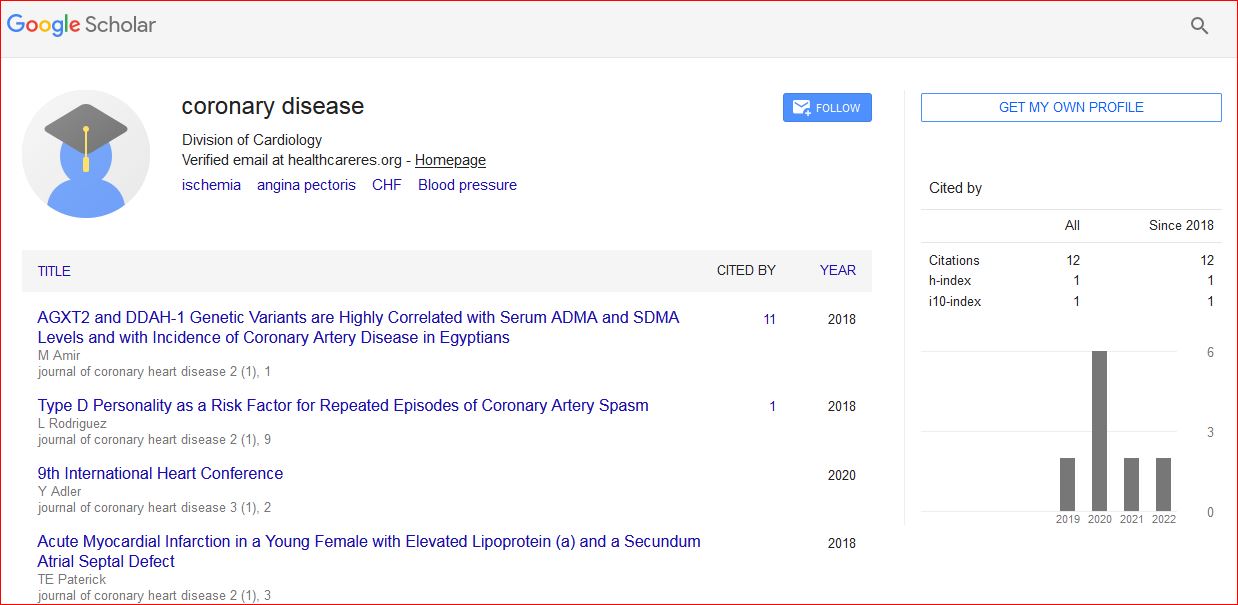
Journal of Coronary Heart Diseases received 15 citations as per Google Scholar report