Brief Report - (2025) Volume 9, Issue 3
Received: 02-Jun-2025, Manuscript No. jid-26-186951;
Editor assigned: 04-Jun-2025, Pre QC No. P-186951;
Reviewed: 18-Jun-2025, QC No. Q-186951;
Revised: 23-Jun-2025, Manuscript No. R-186951;
Published:
30-Jun-2025
, DOI: 10.37421/2684-4559.2025.9.325
Citation: Nakamura, Yuki. "Pseudomonas Aeruginosa and Host Immune Interactions." Clin Infect Dis 13 (2025):325.
Copyright: © 2025 Nakamura Y. This is an open-access article distributed under the terms of the Creative Commons Attribution License, which permits unrestricted use, distribution and reproduction in any medium, provided the original author and source are credited.
Persistent *Pseudomonas aeruginosa* bloodstream infections represent a significant clinical challenge, often characterized by the pathogen's remarkable ability to evade host immune defenses and establish chronic colonization [1].
The intricate interplay between the host immune system and this opportunistic pathogen is a key determinant of clinical outcomes. Understanding these dynamics is crucial for developing effective therapeutic strategies [1].
Severe sepsis and septic shock, frequently triggered by Gram-negative bacterial infections such as those caused by *Pseudomonas aeruginosa*, can be exacerbated by a phenomenon known as cytokine storm syndrome [2].
This involves a dysregulated and excessive production of pro-inflammatory cytokines, leading to widespread tissue damage and organ failure [2].
Neutrophil extracellular traps (NETs) play a dual role in bacterial infections. While intended to ensnare and neutralize pathogens, their aberrant formation or impaired clearance in the context of *Pseudomonas aeruginosa* sepsis can paradoxically contribute to inflammation and tissue injury, suggesting a complex relationship between NETs and disease pathogenesis [3].
*Pseudomonas aeruginosa* has evolved sophisticated mechanisms to evade the host's innate immune system during bloodstream infections [4].
These evasion tactics include interfering with complement activation, hindering phagocytosis by immune cells, and subverting the production of crucial antimicrobial peptides, thereby facilitating its survival and proliferation [4].
The adaptive immune system, particularly T cell responses, is critical for controlling persistent *Pseudomonas aeruginosa* bloodstream infections [5].
However, hallmarks of immune exhaustion, such as dysfunctional CD8+ T cells and impaired regulatory T cells, contribute to the chronicity of these infections, necessitating strategies to reinvigorate T cell immunity [5].
Antibiotic resistance in *Pseudomonas aeruginosa* poses a substantial threat, not only by limiting treatment options but also by profoundly altering the host immune response [6].
The selection of resistant strains can prolong infection duration and complicate the host's ability to mount an effective defense, underscoring the need for immunomodulatory approaches alongside antibiotics [6].
The composition of the host microbiome, particularly the gut microbiota, can significantly influence the immune response to *Pseudomonas aeruginosa* bloodstream infections [7].
Dysbiosis, or an imbalance in microbial communities, may impair systemic immunity and promote the persistence of the pathogen, suggesting that microbiome manipulation could be a therapeutic avenue [7].
Accurate diagnosis and the identification of reliable host immune biomarkers are essential for managing persistent *Pseudomonas aeruginosa* bloodstream infections [8].
Distinguishing between acute and chronic infections and identifying patients at risk for colonization are critical for guiding appropriate treatment and improving prognoses, necessitating the development of novel diagnostic tools and biomarkers [8].
In critical care settings, *Pseudomonas aeruginosa* sepsis presents a severe threat, with inflammatory mediators and immune cell dysfunction playing pivotal roles in the development of organ failure [9].
Understanding these immune responses in critically ill patients is vital for developing immunomodulatory therapies that can improve survival rates in this vulnerable population [9].
*Pseudomonas aeruginosa* biofilms represent a formidable challenge, particularly in chronic wound infections and related to indwelling medical devices [10].
These biofilms create a protected microenvironment that facilitates immune evasion and promotes a chronic inflammatory state, contributing to treatment failure and persistent infections. Novel strategies targeting biofilm matrix and host-pathogen interactions are actively being explored [10].
The host immune system engages in a dynamic and complex battle against persistent *Pseudomonas aeruginosa* bloodstream infections, with the pathogen employing a repertoire of sophisticated evasion strategies [1].
These include the formation of biofilms, which create a physical barrier and alter the local microenvironment, and quorum sensing, a communication system that allows bacteria to coordinate virulence factor production and immune evasion [1].
Specific immune cell populations, such as neutrophils and macrophages, are critical for controlling such infections, but their functional states can be significantly altered during prolonged encounters with *P. aeruginosa*, leading to impaired bacterial clearance and chronic inflammation [1].
The study of immunomodulatory products released by *P. aeruginosa* is also vital for identifying potential therapeutic targets that aim to restore effective immune responses and improve clinical outcomes [1].
Cytokine storm syndromes are a critical manifestation of severe sepsis and septic shock, particularly in the context of Gram-negative bacterial infections like those caused by *Pseudomonas aeruginosa* [2].
This pathological process is characterized by a dysregulated production of both pro-inflammatory and anti-inflammatory cytokines, creating a feedback loop that amplifies inflammation and ultimately leads to widespread organ damage [2].
The downstream effects of this cytokine dysregulation can be devastating, contributing significantly to the high mortality rates associated with severe sepsis [2].
Emerging therapeutic strategies are being investigated to modulate this excessive inflammatory response, aiming to dampen its harmful effects without compromising the essential immune functions required to combat the bacterial infection [2].
Neutrophil extracellular traps (NETs) are dynamic structures released by neutrophils that play a multifaceted role in host defense against bacterial pathogens [3].
In *Pseudomonas aeruginosa* bloodstream infections, NETs are deployed to trap and eliminate bacteria. However, in persistent infections, the overproduction or inefficient clearance of NETs can lead to excessive inflammation and contribute to host tissue damage, suggesting that NETs can act as both a defense mechanism and a contributor to pathology [3].
Evidence indicates a correlation between the dysregulation of NET formation and impaired clearance with poorer clinical outcomes in patients suffering from *P. aeruginosa* sepsis, highlighting their complex role [3].
*Pseudomonas aeruginosa* exhibits a remarkable ability to evade the host's innate immune system during bloodstream infections through various mechanisms [4].
These include interfering with the complement system, a critical arm of innate immunity that tags pathogens for destruction, and evading phagocytosis by professional phagocytic cells like macrophages and neutrophils [4].
Furthermore, the pathogen can disrupt the production of antimicrobial peptides, which are essential molecules for direct bacterial killing [4].
The identification of key virulence factors responsible for these immune-evasive tactics is of paramount importance for the development of novel therapeutic strategies aimed at overcoming these defenses [4].
The adaptive immune system, particularly T cell responses, plays a crucial role in controlling persistent *Pseudomonas aeruginosa* bloodstream infections [5].
However, chronic infections often lead to T cell exhaustion, characterized by a loss of effector functions in CD8+ T cells and impaired regulation by regulatory T cells [5].
This state of immune dysfunction contributes to the inability of the host to clear the pathogen, leading to persistent bacteremia and increased morbidity [5].
The findings suggest that strategies aimed at revitalizing exhausted T cells and restoring their functional capacity could be beneficial in treating these difficult-to-eradicate infections [5].
Antibiotic resistance in *Pseudomonas aeruginosa* infections complicates treatment and significantly impacts the host immune response [6].
The emergence and selection of multidrug-resistant strains often lead to prolonged infections, which in turn can alter the dynamics of the host's immune defenses, making them less effective [6].
The challenges associated with treating such infections are compounded by the altered immune landscape, necessitating a shift towards comprehensive management strategies that include immunomodulatory approaches to complement antimicrobial therapy [6].
The gut microbiome plays a significant role in modulating the host's systemic immune response, and its influence extends to *Pseudomonas aeruginosa* bloodstream infections [7].
Dysbiosis, characterized by an imbalance in the gut microbial community, can compromise the integrity of the intestinal barrier and lead to systemic immune dysregulation [7].
This impairment of immune surveillance can promote the persistence of *P. aeruginosa* in the bloodstream and hinder its clearance [7].
Consequently, exploring therapeutic interventions that involve manipulating the gut microbiota to enhance host immune defenses is a promising area of research [7].
Diagnosing persistent *Pseudomonas aeruginosa* bloodstream infections and identifying reliable host immune biomarkers are critical for effective management [8].
Current diagnostic tools may struggle to differentiate between acute and chronic infections, and there is a need for better methods to identify patients at risk of developing prolonged colonization [8].
Promising immune markers are being investigated that could serve as indicators of infection persistence and aid in guiding treatment decisions, ultimately predicting patient outcomes more accurately [8].
In critical care settings, *Pseudomonas aeruginosa* sepsis is a life-threatening condition where the host immune response plays a pivotal role in the development of organ failure [9].
Excessive or inadequately controlled inflammatory mediators, coupled with immune cell dysfunction, contribute to the widespread damage observed in sepsis [9].
Understanding the intricate immune mechanisms at play in these critically ill patients is essential for the development and application of immunomodulatory therapies aimed at improving survival and reducing the severity of organ dysfunction [9].
*Pseudomonas aeruginosa* infections involving biofilms present unique challenges, particularly in chronic wound settings and associated with indwelling medical devices [10].
Biofilms provide a protective niche for the bacteria, shielding them from host immune cells and antibiotic treatments, while also promoting a persistent pro-inflammatory microenvironment [10].
This chronic inflammation can lead to significant tissue damage and ultimately treatment failure [10].
The authors discuss novel strategies that target the biofilm matrix itself and the complex interactions between the host and the pathogen within the biofilm, offering potential new avenues for therapeutic intervention [10].
This collection of research explores the multifaceted interactions between *Pseudomonas aeruginosa* bloodstream infections and the host immune system. Studies highlight the pathogen's sophisticated evasion tactics, including biofilm formation and interference with innate immune mechanisms. The role of specific immune cells like neutrophils and T cells is examined, with a focus on their altered states during persistent infections, such as exhaustion and the complex role of neutrophil extracellular traps. Cytokine storm syndromes are discussed as a critical factor in sepsis severity, alongside the impact of antibiotic resistance on immune responses. Furthermore, the influence of the gut microbiome on immunity and the diagnostic challenges presented by persistent infections are addressed. Research also delves into the immune response in critical care settings and the unique challenges posed by *P. aeruginosa* biofilms in chronic infections.
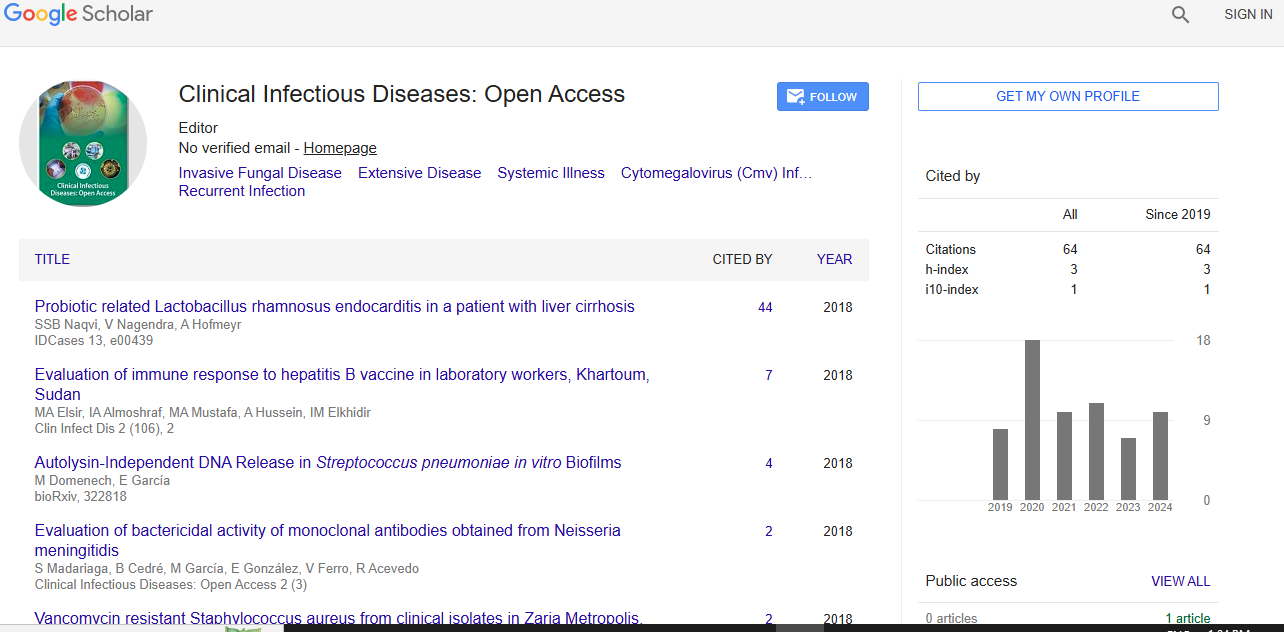
Clinical Infectious Diseases: Open Access received 1149 citations as per Google Scholar report