Opinion - (2025) Volume 11, Issue 5
Received: 01-Oct-2025, Manuscript No. cdp-26-185488;
Editor assigned: 03-Oct-2025, Pre QC No. P-185488;
Reviewed: 17-Oct-2025, QC No. Q-185488;
Revised: 22-Oct-2025, Manuscript No. R-185488;
Published:
30-Oct-2025
, DOI: 10.37421/2572-0791.2025.11.202
Citation: Youssef, Ahmed Ben. ”Childhood Trauma’s Lasting Impact on Chronic Depression.” Clin Depress 11 (2025):202.
Copyright: © 2025 Youssef B. Ahmed This is an open-access article distributed under the terms of the Creative Commons Attribution License, which permits unrestricted use, distribution and reproduction in any medium, provided the original author and source are credited.
Trauma, particularly early life adversity, significantly increases the risk of developing chronic depression. This link is mediated by complex neurobiological changes, including alterations in stress response systems like the HPA axis, neurotransmitter imbalances, and structural modifications in brain regions involved in mood regulation and emotional processing, such as the amygdala, hippocampus, and prefrontal cortex. Psychological factors such as impaired emotion regulation, negative self-appraisal, and difficulties in interpersonal relationships also perpetuate depressive symptoms in trauma survivors. Effective treatment often requires a multifaceted approach that addresses both the psychological impact of trauma and the core depressive symptoms [1].
Chronic exposure to traumatic stress can lead to persistent alterations in brain function, particularly within the limbic system and prefrontal cortex, predisposing individuals to an increased vulnerability to major depressive disorder. These neurobiological changes can manifest as difficulties with emotional regulation, heightened threat perception, and impaired cognitive functions, all of which are core features of depression. Understanding these underlying mechanisms is crucial for the development of targeted and effective interventions [2].
The long-term effects of childhood trauma, including neglect and abuse, are strongly associated with the development of treatment-resistant depression in adulthood. This resistance may stem from profound and enduring disruptions in the hypothalamic-pituitary-adrenal (HPA) axis, leading to a dysregulated stress response and heightened inflammatory processes that contribute to the chronicity and intractability of depressive symptoms [3].
Trauma-related symptoms, such as intrusive memories, avoidance behaviors, and hyperarousal, frequently co-occur with and exacerbate chronic depression. These overlapping symptom profiles can present significant challenges for accurate diagnosis and effective treatment, as interventions must comprehensively address both the post-traumatic stress symptoms and the depressive phenomenology. Psychotherapy approaches like trauma-informed cognitive behavioral therapy (TF-CBT) have shown promise in managing these co-occurring conditions [4].
Epigenetic modifications induced by early trauma can contribute to a lasting vulnerability to depression. Stress-induced changes in gene expression, particularly within the neuroendocrine and immune systems, can alter brain circuitry and neurotransmitter function, thereby making individuals more susceptible to mood disorders later in life. This underscores the biological embedding of early adversity and its long-term psychological consequences [5].
Interpersonal trauma, such as that experienced in intimate partner violence, serves as a significant risk factor for the development of chronic and recurrent depression. The constant threat, emotional distress, and social isolation inherent in these experiences can disrupt attachment patterns and social functioning, thereby creating a cycle of negative affect and withdrawal that underpins persistent depressive states [6].
The development of chronic depression in individuals with a history of trauma is often closely linked to profound difficulties in emotion regulation. Trauma can impair an individual's ability to modulate emotional responses, leading to heightened negative affect, increased rumination, and a reduced capacity to experience positive emotions, all of which are central to the maintenance and perpetuation of depressive disorders [7].
Neuroinflammation plays a critical role in the perpetuation of depression among individuals who have experienced trauma. Chronic stress associated with trauma can activate and perpetuate inflammatory pathways, leading to an increase in pro-inflammatory cytokines that adversely affect brain function and contribute to anhedonia, fatigue, and other debilitating depressive symptoms. Targeting neuroinflammation is emerging as a promising therapeutic strategy [8].
The impact of trauma on social cognition and attachment processes can significantly contribute to the development and maintenance of chronic depression. Difficulties in forming secure attachments, accurately interpreting social cues, and sustaining healthy relationships can lead to social withdrawal, isolation, and a pervasive sense of loneliness, all of which are frequently central to prolonged depressive episodes [9].
Psychodynamic perspectives offer valuable insights into how unresolved trauma and associated defense mechanisms can manifest as chronic depression. Early traumatic experiences may lead to the internalization of deeply negative self-perceptions and the adoption of maladaptive coping strategies that continue to impact mood and interpersonal relationships throughout an individual's life, necessitating in-depth therapeutic exploration to achieve healing [10].
Trauma, especially from early life adversity, substantially elevates the risk of developing chronic depression. This connection is facilitated by intricate neurobiological shifts, encompassing modifications in stress response systems like the HPA axis, imbalances in neurotransmitters, and structural changes in brain regions vital for mood and emotional processing, including the amygdala, hippocampus, and prefrontal cortex. Psychological elements such as impaired emotion regulation, negative self-assessment, and interpersonal relationship difficulties further sustain depressive symptoms in trauma survivors. Consequently, effective interventions often necessitate a comprehensive approach targeting both the psychological aftermath of trauma and the core depressive symptoms [1].
Prolonged exposure to traumatic stress can induce lasting alterations in brain functionality, predominantly in the limbic system and prefrontal cortex, thereby heightening an individual's susceptibility to major depressive disorder. These neurobiological alterations can result in challenges with emotional control, an amplified perception of threats, and compromised cognitive abilities, all of which are fundamental characteristics of depression. A thorough understanding of these underlying mechanisms is paramount for designing precise and effective therapeutic interventions [2].
The enduring consequences of childhood trauma, such as neglect and abuse, are significantly correlated with the onset of treatment-resistant depression in adulthood. This therapeutic resistance might originate from profound and persistent dysregulations within the hypothalamic-pituitary-adrenal (HPA) axis, leading to an imbalanced stress response and exacerbated inflammatory processes that contribute to the chronicity and difficulty in treating depressive symptoms [3].
Symptoms associated with trauma, including intrusive recollections, avoidance of trauma-related stimuli, and hyperarousal, frequently coexist with and intensify chronic depression. The overlap in symptom profiles complicates diagnosis and treatment, as therapeutic strategies must concurrently address both post-traumatic stress symptoms and the broader depressive experience. Trauma-informed cognitive behavioral therapy (TF-CBT) is one such approach showing promise in managing these intertwined conditions [4].
Epigenetic changes triggered by early trauma can foster a persistent vulnerability to depression. Stress-induced alterations in gene expression, particularly affecting the neuroendocrine and immune systems, can modify brain circuits and neurotransmitter functions, increasing susceptibility to mood disorders later in life. This highlights the profound biological impact of early adversity on long-term mental health [5].
Interpersonal trauma, exemplified by experiences like intimate partner violence, represents a significant risk factor for the development of chronic and recurring depression. The perpetual state of threat, emotional anguish, and social isolation inherent in such circumstances can disrupt established attachment styles and social engagement, fostering a cycle of negative affect and withdrawal that sustains prolonged depressive states [6].
The emergence of chronic depression in individuals with a history of trauma is often associated with considerable difficulties in regulating emotions. Trauma can diminish an individual's capacity to effectively manage emotional responses, resulting in intensified negative feelings, increased rumination, and a reduced ability to experience positive emotions, all of which are critical factors in the perpetuation of depressive disorders [7].
Neuroinflammation plays a pivotal role in the ongoing experience of depression among individuals who have endured trauma. The chronic stress associated with traumatic experiences can activate inflammatory pathways, leading to elevated levels of pro-inflammatory cytokines that negatively impact brain function and contribute to symptoms like anhedonia and fatigue, characteristic of depression. Interventions aimed at reducing neuroinflammation are an emerging area of therapeutic development [8].
Trauma's detrimental effects on social cognition and the ability to form attachments can significantly contribute to the development and persistence of chronic depression. Impairments in establishing secure attachments, interpreting social cues, and maintaining relationships can lead to social isolation, withdrawal, and a pervasive sense of loneliness, which are often integral to protracted depressive episodes [9].
From a psychodynamic viewpoint, unresolved trauma and the defense mechanisms employed to cope with it can manifest as chronic depression. Early traumatic experiences may lead to the internalization of negative self-perceptions and the development of maladaptive coping strategies that persistently influence mood and relationships throughout life, requiring deep therapeutic exploration to facilitate resolution [10].
Trauma, especially early life adversity, significantly increases the risk of chronic depression through complex neurobiological changes affecting stress response systems, neurotransmitters, and brain structures. Psychological factors like poor emotion regulation and negative self-appraisal also contribute. Chronic stress alters brain function, particularly in the limbic system and prefrontal cortex, leading to difficulties in emotional regulation, increased threat perception, and cognitive impairments. Childhood trauma is linked to treatment-resistant depression due to disruptions in the HPA axis and heightened inflammation. Trauma-related symptoms often co-occur with depression, complicating diagnosis and treatment. Epigenetic modifications and neuroinflammation play roles in the long-term vulnerability to depression. Interpersonal trauma and difficulties in social cognition and attachment further contribute to persistent depressive states. Psychodynamic perspectives highlight how unresolved trauma and defense mechanisms manifest as chronic depression.
None
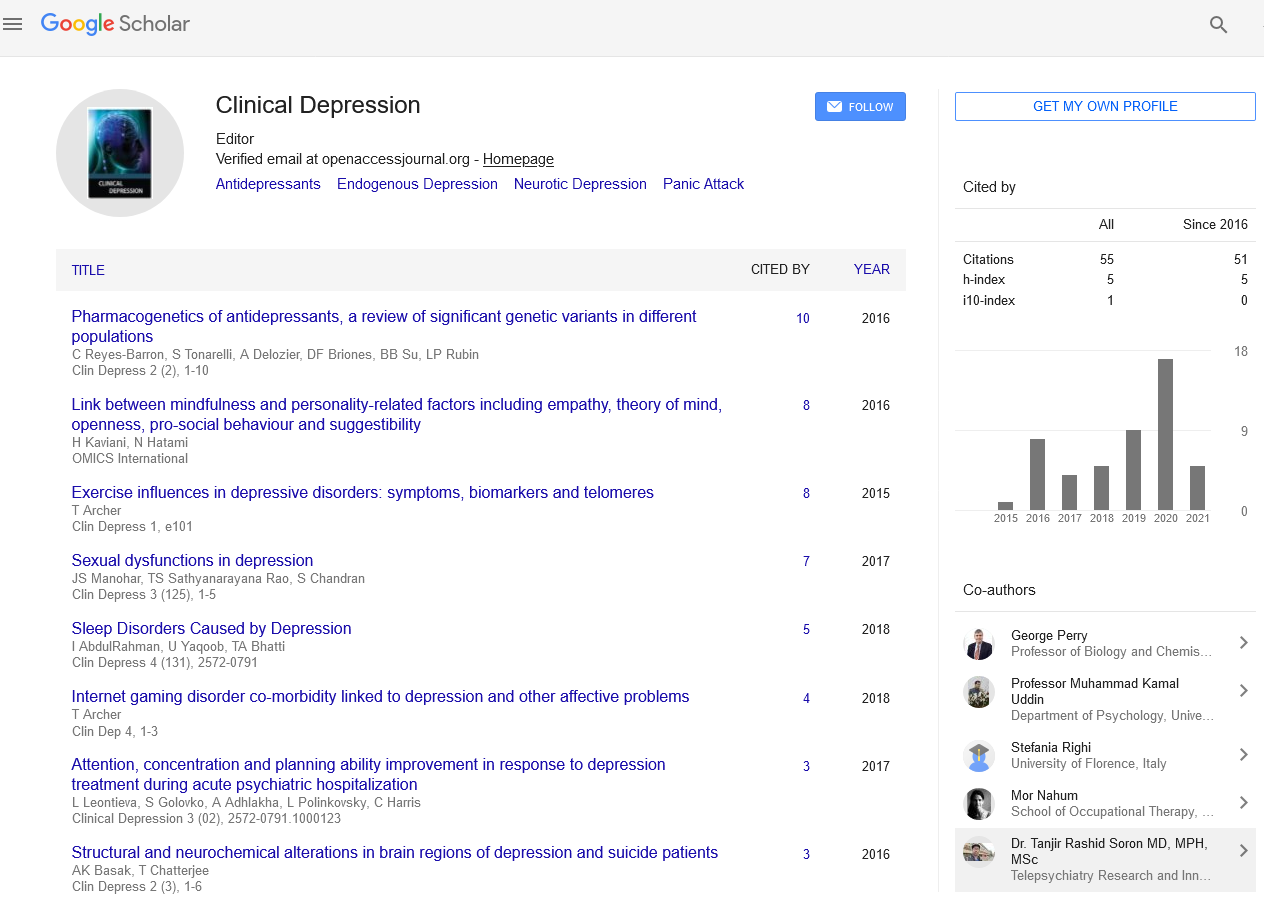
Clinical Depression received 89 citations as per Google Scholar report