Commentary - (2025) Volume 16, Issue 3
Received: 01-May-2025, Manuscript No. bej-26-182418;
Editor assigned: 05-May-2025, Pre QC No. P-182418;
Reviewed: 19-May-2025, QC No. Q-182418;
Revised: 22-May-2025, Manuscript No. R-182418;
Published:
29-May-2025
, DOI: 10.37421/2161-6219.2025.16.554
Citation: Martínez, Sophia. ”Businesses: Shaping Economies
Through Strategic Influence.” Bus Econ J 16 (2025):554.
Copyright: © 2025 Martínez S. This is an open-access article distributed under the terms of the Creative Commons Attribution License, which permits unrestricted use,
distribution and reproduction in any medium, provided the original author and source are credited.
Businesses are recognized as fundamental architects of modern economic systems, extending their influence beyond simple profit generation to actively shape market structures, drive innovation, and inform policy decisions. Their strategic choices concerning investment, employment, lobbying, and corporate social responsibility profoundly impact the flow of capital, the distribution of wealth, and the adoption of new technologies, necessitating a comprehensive understanding of their role in broader economic outcomes, including sustainability and equity [1].
The emergence of platform economies, predominantly orchestrated by technology-centric businesses, has fundamentally transformed the exchange of goods and services and the very creation of value. These digital intermediaries facilitate connections between buyers and sellers, thereby creating new markets and disrupting established industries. An in-depth analysis of the economic implications of these platforms, including their market power, data governance, and labor market effects, is essential for evaluating their impact on contemporary economic landscapes [2].
Corporate social responsibility (CSR) has evolved from a marginal consideration to a core component of how businesses interact with and influence modern economies. Progressive companies now understand that sustainable practices and ethical conduct are not merely beneficial for society but are increasingly critical for long-term business viability and for cultivating trust within economic frameworks. This integration of social and environmental factors into corporate strategy serves as a potent catalyst for driving more responsible economic development [3].
Multinational corporations (MNCs) exert a substantial influence on global economic systems, shaping international trade dynamics, investment flows, and labor standards across national borders. The strategic decisions made by these entities can either promote inclusive growth or exacerbate existing inequalities, contingent on their operational models and their engagement with diverse regulatory environments. A thorough examination of MNC behavior is therefore crucial for comprehending the intricate complexities of the current global economic architecture [4].
Innovation, a defining characteristic of business dynamism, stands as a primary driver in the evolution of modern economic systems. Businesses that strategically invest in research and development and readily adopt disruptive technologies not only achieve a competitive edge but also fundamentally redefine entire industries and establish new economic paradigms. The trajectory and velocity of technological change, guided by corporate innovation strategies, significantly influence productivity levels, employment figures, and overall economic expansion [5].
The financial sector, heavily influenced and driven by business entities, assumes a critical role in the allocation of resources and the management of risks, thereby shaping economic systems. Innovations within finance, coupled with regulatory frameworks and investment strategies devised by financial businesses, directly affect market stability, the formation of capital, and the accessibility of financial resources for various economic agents. Its profound influence on economic cycles and its capacity to either foster or mitigate crises underscore its inherent systemic importance [6].
Businesses actively participate in defining the prevailing regulatory landscape through their lobbying efforts and advocacy initiatives. Their interactions with policymakers significantly influence the enactment of laws and regulations that govern market competition, environmental stewardship, labor practices, and international commerce, thereby profoundly impacting the structure and functioning of contemporary economic systems. This intricate relationship between commercial interests and governance mechanisms represents a vital aspect of economic system design [7].
The increasing emphasis on sustainability and the adoption of circular economy models within the corporate world signals a significant shift in the conceptualization and management of economic systems. Companies are actively engaged in redesigning their products, processes, and supply chains to minimize their environmental footprint and maximize resource efficiency. This business-led transition towards environmentally sustainable practices is a key determinant in shaping more resilient and responsible future economies [8].
Entrepreneurship serves as a foundational element in the progressive evolution of economic systems. Emerging ventures not only introduce novel products and services to the market but also actively challenge established market structures, foster a competitive environment, and generate new employment opportunities. The supportive ecosystem for entrepreneurship, often cultivated through the efforts of business communities and supportive policy frameworks, is indispensable for dynamic economic development and sustained innovation [9].
The concentration of economic power within large corporations represents a significant factor that shapes the dynamics of modern economic systems. Their substantial market dominance can exert considerable influence over pricing strategies, the pace of innovation, and the conditions within labor markets. A thorough understanding of the dynamics surrounding market concentration and the specific strategies employed by dominant firms is indispensable for a proper evaluation of issues pertaining to competition, market fairness, and the overall health and robustness of the economy [10].
Businesses are fundamental to the architecture of modern economic systems, moving beyond mere profit motives to actively shape market dynamics, foster innovation, and influence policy. Their strategic decisions regarding investments, employment, and corporate responsibility directly affect capital flow, wealth distribution, and technological adoption, highlighting the need for a nuanced view of their impact on sustainability and equity [1].
The rise of platform economies, largely facilitated by technology businesses, has fundamentally altered how goods and services are exchanged and value is created. These digital platforms connect consumers and providers, often creating new markets and disrupting traditional industries. Understanding the economic consequences of these platforms, including their market power, data management, and impact on labor, is crucial for assessing their role in shaping current economic landscapes [2].
Corporate social responsibility (CSR) has transitioned from a peripheral concern to a central aspect of business engagement with modern economies. Forward-thinking companies recognize that sustainable and ethical practices are not only beneficial for society but are increasingly vital for long-term business success and for building trust within economic systems. This integration of social and environmental considerations into business strategy is a powerful force for driving responsible economic development [3].
Multinational corporations (MNCs) play an immense role in shaping global economic systems by influencing trade patterns, investment flows, and labor standards across borders. Their strategic decisions can either promote inclusive growth or worsen inequalities, depending on their operational models and interactions with diverse regulatory environments. Examining MNC behavior is key to understanding the complexities of contemporary global economic architecture [4].
Innovation, a key characteristic of business dynamism, is a primary driver in shaping modern economic systems. Companies that invest in research and development and embrace disruptive technologies gain a competitive advantage and redefine industries. The direction and pace of technological change, steered by corporate innovation strategies, significantly impact productivity, employment, and overall economic growth [5].
The financial sector, driven by business entities, is pivotal in resource allocation and risk management, thereby shaping economic systems. Financial innovations, regulatory practices, and investment strategies orchestrated by financial businesses directly influence market stability, capital formation, and access to finance for other economic actors. Its impact on economic cycles and its capacity to create or mitigate crises highlight its systemic importance [6].
Businesses significantly contribute to defining the regulatory landscape through lobbying and advocacy efforts. Their engagement with policymakers shapes laws and regulations governing market competition, environmental standards, labor practices, and international trade, profoundly influencing the structure and operation of modern economic systems. This interplay between business interests and governance is critical to economic system design [7].
The increasing focus on sustainability and circular economy models within businesses indicates a shift in how economic systems are conceived and managed. Companies are redesigning products, processes, and supply chains to minimize environmental impact and maximize resource efficiency. This business-led transition towards sustainable practices is a key factor in shaping more resilient and responsible future economies [8].
Entrepreneurship is a foundational element in the evolution of economic systems. New ventures introduce novel products and services, challenge existing market structures, foster competition, and create employment. The ecosystem supporting entrepreneurship, often nurtured by business communities and policy frameworks, is vital for dynamic economic development and innovation [9].
The concentration of economic power within large corporations is a significant factor shaping modern economic systems. Their market dominance can influence pricing, innovation, and labor markets. Understanding market concentration dynamics and the strategies of dominant firms is crucial for evaluating competition, fairness, and the overall health of the economy [10].
Businesses are central to shaping modern economies through strategic decisions in areas like investment, innovation, and policy influence. The rise of platform economies and the global reach of multinational corporations significantly alter market dynamics and economic structures. Corporate social responsibility and sustainability initiatives are increasingly integrated into business strategies, reflecting a shift towards more responsible economic development. Innovation driven by businesses is a key factor in economic growth and the creation of new paradigms. The financial sector, orchestrated by businesses, plays a crucial role in resource allocation and market stability. Businesses also influence regulatory landscapes through lobbying. Entrepreneurship fuels economic evolution by introducing new ventures and fostering competition. Finally, the concentration of economic power within large corporations presents a significant factor influencing market conditions and overall economic health.
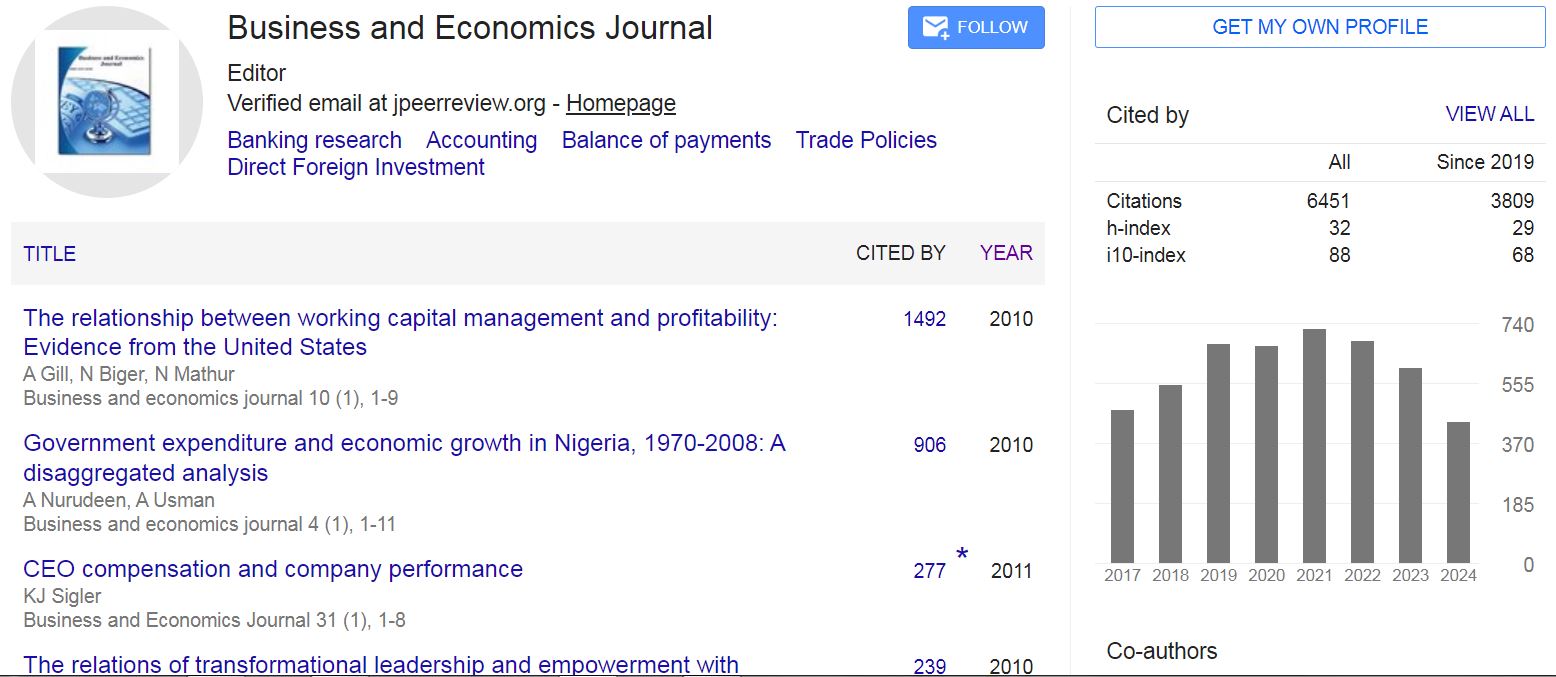
Business and Economics Journal received 6451 citations as per Google Scholar report