Short Communication - (2025) Volume 16, Issue 3
Received: 01-May-2025, Manuscript No. bej-26-182437;
Editor assigned: 05-May-2025, Pre QC No. P-182437;
Reviewed: 19-May-2025, QC No. Q-182437;
Revised: 22-May-2025, Manuscript No. R-182437;
Published:
29-May-2025
, DOI: 10.37421/2161-6219.2025.16.560
Citation: Johansson, Helena. ”Businesses Driving Sustainable
Economic Development and Well-being.” Bus Econ J 16 (2025):560.
Copyright: © 2025 Johansson H. This is an open-access article distributed under the terms of the Creative Commons Attribution License, which permits unrestricted use,
distribution and reproduction in any medium, provided the original author and source are credited.
Businesses are increasingly recognized as pivotal actors in driving sustainable economic development, extending their responsibilities beyond profit generation to encompass environmental and social well-being. This paradigm shift necessitates the integration of ecological and social considerations into the very fabric of corporate strategy, moving towards practices that ensure long-term prosperity for both the economy and society. Key contributions in this domain include the proactive adoption of circular economy principles, substantial investments in renewable energy sources, and the steadfast commitment to ensuring fair labor practices throughout their operations. Furthermore, organizations are increasingly focusing on responsible supply chain management as a critical component of their sustainability efforts. By embracing these multifaceted approaches, businesses are not only poised to drive innovation and enhance their corporate reputation but also to attract socially conscious investors and consumers. Ultimately, these integrated strategies contribute to the development of a more resilient and equitable global economy. Businesses play a crucial role in fostering sustainable economic development by integrating environmental and social considerations into their core strategies. This involves moving beyond profit-maximization to embrace practices that ensure long-term well-being for both the economy and society. Key contributions include adopting circular economy principles, investing in renewable energy, ensuring fair labor practices, and engaging in responsible supply chain management. By doing so, organizations can drive innovation, enhance their reputation, attract socially conscious investors and consumers, and ultimately contribute to a more resilient and equitable global economy [1].
Corporate Social Responsibility (CSR) initiatives represent a significant pathway through which businesses actively contribute to sustainable development. The research in this area meticulously examines the multifaceted impact of these initiatives on critical aspects such as economic growth, the preservation of environmental resources, and the promotion of social equity. Findings consistently indicate that the implementation of well-designed and effectively executed CSR programs yields tangible benefits, including improved resource efficiency across operations, a discernible reduction in the overall environmental footprint of the business, and the cultivation of enhanced community relations. The study further underscores the profound importance of meticulously aligning CSR strategies with both national and international sustainability goals. Such strategic alignment is paramount for maximizing the positive and far-reaching impact of corporate social responsibility endeavors. This research explores how corporate social responsibility (CSR) initiatives contribute to sustainable development by examining their impact on economic growth, environmental protection, and social equity. Findings indicate that well-executed CSR programs can lead to improved resource efficiency, reduced environmental footprint, and enhanced community relations. The study highlights the importance of aligning CSR strategies with national and international sustainability goals to maximize their positive impact [2].
Sustainable finance has emerged as a powerful catalyst for driving economic development in a manner that is both responsible and forward-thinking. This domain of finance actively examines the mechanisms through which financial institutions and a broad spectrum of investors can effectively direct capital towards projects that are not only financially viable but also environmentally sound and socially responsible in their execution. A central emphasis within this field is placed on the development of innovative green financial instruments and the implementation of supportive policies. These instruments and policies are specifically designed to incentivize sustainable investments, thereby accelerating the critical transition towards an economy characterized by low carbon emissions and encompassing inclusivity for all. The paper investigates the role of sustainable finance in driving economic development. It examines how financial institutions and investors can direct capital towards environmentally sound and socially responsible projects. The study emphasizes the development of green financial instruments and policies that incentivize sustainable investments, thereby accelerating the transition to a low-carbon and inclusive economy [3].
Small and medium-sized enterprises (SMEs) play a particularly noteworthy role in the broader landscape of fostering sustainable economic development. These enterprises, due to their inherent agility and strong local embeddedness, are uniquely positioned to implement innovative sustainable practices that can have a significant impact. Moreover, SMEs are instrumental in creating inclusive economic opportunities within their respective communities. The research in this area strongly underscores the indispensable need for supportive policies and robust frameworks. These external structures are crucial for enabling SMEs to effectively adopt and scale sustainable business models, ensuring their continued contribution to a sustainable future. The article focuses on the contribution of small and medium-sized enterprises (SMEs) to sustainable economic development. It highlights how SMEs, through their agility and local embeddedness, can implement innovative sustainable practices and create inclusive economic opportunities. The research underscores the need for supportive policies and frameworks to enable SMEs to adopt sustainable business models effectively [4].
The dynamic influence of stakeholder engagement on the trajectory of business sustainability and overall economic development is a critical area of study. It is argued that a proactive and inclusive approach to engaging with a diverse range of stakeholders, which encompasses employees, customers, local communities, and regulatory bodies, is fundamentally essential. This engagement allows businesses to gain a comprehensive understanding of pressing sustainability challenges and to develop effective strategies for addressing them. Furthermore, fostering effective stakeholder dialogue creates a fertile ground for the co-creation of innovative sustainable solutions. This collaborative process not only enhances the viability of sustainable initiatives but also demonstrably fosters the creation of long-term economic value for all parties involved. This study examines the influence of stakeholder engagement on business sustainability and economic development. It argues that proactive engagement with various stakeholders, including employees, customers, communities, and regulators, is essential for businesses to understand and address sustainability challenges. Effective stakeholder dialogue can lead to the co-creation of sustainable solutions and foster long-term economic value [5].
Businesses can significantly contribute to the advancement of sustainable development through dedicated innovation in green technologies. This line of research meticulously analyzes the dual benefits associated with the adoption and development of such technologies: the economic advantages they confer and their positive environmental impacts. These benefits often manifest as increased operational efficiency, a substantial reduction in pollution levels, and the successful creation of entirely new market opportunities. The study critically emphasizes the vital role of sustained investment in research and development (R&D) activities, coupled with the implementation of supportive government policies. These synergistic elements are crucial for accelerating the pace of green innovation within the business sector. The research investigates how businesses can contribute to sustainable development through innovation in green technologies. It analyzes the economic benefits and environmental impacts of adopting and developing such technologies, including increased efficiency, reduced pollution, and the creation of new markets. The study emphasizes the role of research and development investment and supportive government policies in accelerating green innovation [6].
The intricate link between the sustainability of supply chains and the broader spectrum of overall economic development is a subject of significant academic inquiry. This area of research meticulously explores the various strategies and practices through which businesses can cultivate supply chains that are not only resilient to disruptions but also inherently ethical and environmentally responsible in their operations. The study highlights a range of best practices that are particularly effective in achieving these goals. These include rigorous supplier selection processes, optimized logistics and transportation systems, and comprehensive waste reduction initiatives. Collectively, these practices demonstrate a clear positive ripple effect, contributing to enhanced economic stability and improved social well-being across the entire value chain. This article examines the link between supply chain sustainability and overall economic development. It explores how businesses can create more resilient, ethical, and environmentally responsible supply chains. The study highlights best practices in areas such as supplier selection, logistics optimization, and waste reduction, demonstrating their positive ripple effects on economic stability and social well-being [7].
The crucial impact of effective corporate governance on a firm's capacity to actively promote sustainable economic development is a key area of investigation. This perspective argues compellingly that robust governance structures, fundamentally characterized by principles of transparency, accountability, and ethical decision-making, serve as the essential bedrock for successfully integrating sustainability principles into the core of business operations. The research posits that the establishment and maintenance of good corporate governance practices are not merely about compliance; rather, they can unlock significant new investment opportunities and cultivate a stronger foundation for long-term economic resilience. The paper investigates the impact of corporate governance on a firm's ability to promote sustainable economic development. It argues that strong governance structures, characterized by transparency, accountability, and ethical decision-making, are foundational for integrating sustainability principles into business operations. The research suggests that good governance can unlock new investment opportunities and foster long-term economic resilience [8].
Corporate social responsibility reporting plays a vital role in enhancing the progress towards sustainable economic development. This area of study analyzes the profound influence that transparent and comprehensive reporting on Environmental, Social, and Governance (ESG) performance has on shaping key decisions. Specifically, it impacts investor decisions, significantly improves corporate reputation, and drives crucial operational improvements within organizations. The findings derived from such analyses consistently indicate a clear and positive correlation between the adoption of robust ESG reporting practices and the implementation of genuinely sustainable business practices. This enhanced transparency fosters trust and accountability, ultimately contributing to more sustainable economic outcomes. This study explores the role of corporate social responsibility reporting in enhancing sustainable economic development. It analyzes how transparent and comprehensive reporting on environmental, social, and governance (ESG) performance can influence investor decisions, improve corporate reputation, and drive operational improvements. The findings indicate a positive correlation between robust ESG reporting and sustainable business practices [9].
Businesses possess a significant capacity to foster inclusive economic development through their operational strategies and business models. This focus is particularly directed towards practices that actively promote equitable outcomes, such as ensuring fair wages for all employees, guaranteeing equal employment opportunities regardless of background, and contributing meaningfully to community development initiatives. The research in this field highlights the indispensable role that businesses play in the broader effort to reduce economic inequality and create a landscape of shared prosperity. By actively engaging in these inclusive practices, businesses contribute substantially to establishing a more stable and sustainable economic environment for everyone. The paper examines how businesses can foster inclusive economic development through their operations and strategies. It focuses on practices that promote fair wages, equal employment opportunities, and community development. The research highlights the importance of businesses in reducing inequality and creating shared prosperity, thereby contributing to a more stable and sustainable economic landscape [10].
Businesses are increasingly recognized as pivotal actors in driving sustainable economic development, extending their responsibilities beyond profit generation to encompass environmental and social well-being. This paradigm shift necessitates the integration of ecological and social considerations into the very fabric of corporate strategy, moving towards practices that ensure long-term prosperity for both the economy and society. Key contributions in this domain include the proactive adoption of circular economy principles, substantial investments in renewable energy sources, and the steadfast commitment to ensuring fair labor practices throughout their operations. Furthermore, organizations are increasingly focusing on responsible supply chain management as a critical component of their sustainability efforts. By embracing these multifaceted approaches, businesses are not only poised to drive innovation and enhance their corporate reputation but also to attract socially conscious investors and consumers. Ultimately, these integrated strategies contribute to the development of a more resilient and equitable global economy. Businesses play a crucial role in fostering sustainable economic development by integrating environmental and social considerations into their core strategies. This involves moving beyond profit-maximization to embrace practices that ensure long-term well-being for both the economy and society. Key contributions include adopting circular economy principles, investing in renewable energy, ensuring fair labor practices, and engaging in responsible supply chain management. By doing so, organizations can drive innovation, enhance their reputation, attract socially conscious investors and consumers, and ultimately contribute to a more resilient and equitable global economy [1].
Corporate Social Responsibility (CSR) initiatives represent a significant pathway through which businesses actively contribute to sustainable development. The research in this area meticulously examines the multifaceted impact of these initiatives on critical aspects such as economic growth, the preservation of environmental resources, and the promotion of social equity. Findings consistently indicate that the implementation of well-designed and effectively executed CSR programs yields tangible benefits, including improved resource efficiency across operations, a discernible reduction in the overall environmental footprint of the business, and the cultivation of enhanced community relations. The study further underscores the profound importance of meticulously aligning CSR strategies with both national and international sustainability goals. Such strategic alignment is paramount for maximizing the positive and far-reaching impact of corporate social responsibility endeavors. This research explores how corporate social responsibility (CSR) initiatives contribute to sustainable development by examining their impact on economic growth, environmental protection, and social equity. Findings indicate that well-executed CSR programs can lead to improved resource efficiency, reduced environmental footprint, and enhanced community relations. The study highlights the importance of aligning CSR strategies with national and international sustainability goals to maximize their positive impact [2].
Sustainable finance has emerged as a powerful catalyst for driving economic development in a manner that is both responsible and forward-thinking. This domain of finance actively examines the mechanisms through which financial institutions and a broad spectrum of investors can effectively direct capital towards projects that are not only financially viable but also environmentally sound and socially responsible in their execution. A central emphasis within this field is placed on the development of innovative green financial instruments and the implementation of supportive policies. These instruments and policies are specifically designed to incentivize sustainable investments, thereby accelerating the critical transition towards an economy characterized by low carbon emissions and encompassing inclusivity for all. The paper investigates the role of sustainable finance in driving economic development. It examines how financial institutions and investors can direct capital towards environmentally sound and socially responsible projects. The study emphasizes the development of green financial instruments and policies that incentivize sustainable investments, thereby accelerating the transition to a low-carbon and inclusive economy [3].
Small and medium-sized enterprises (SMEs) play a particularly noteworthy role in the broader landscape of fostering sustainable economic development. These enterprises, due to their inherent agility and strong local embeddedness, are uniquely positioned to implement innovative sustainable practices that can have a significant impact. Moreover, SMEs are instrumental in creating inclusive economic opportunities within their respective communities. The research in this area strongly underscores the indispensable need for supportive policies and robust frameworks. These external structures are crucial for enabling SMEs to effectively adopt and scale sustainable business models, ensuring their continued contribution to a sustainable future. The article focuses on the contribution of small and medium-sized enterprises (SMEs) to sustainable economic development. It highlights how SMEs, through their agility and local embeddedness, can implement innovative sustainable practices and create inclusive economic opportunities. The research underscores the need for supportive policies and frameworks to enable SMEs to adopt sustainable business models effectively [4].
The dynamic influence of stakeholder engagement on the trajectory of business sustainability and overall economic development is a critical area of study. It is argued that a proactive and inclusive approach to engaging with a diverse range of stakeholders, which encompasses employees, customers, local communities, and regulatory bodies, is fundamentally essential. This engagement allows businesses to gain a comprehensive understanding of pressing sustainability challenges and to develop effective strategies for addressing them. Furthermore, fostering effective stakeholder dialogue creates a fertile ground for the co-creation of innovative sustainable solutions. This collaborative process not only enhances the viability of sustainable initiatives but also demonstrably fosters the creation of long-term economic value for all parties involved. This study examines the influence of stakeholder engagement on business sustainability and economic development. It argues that proactive engagement with various stakeholders, including employees, customers, communities, and regulators, is essential for businesses to understand and address sustainability challenges. Effective stakeholder dialogue can lead to the co-creation of sustainable solutions and foster long-term economic value [5].
Businesses can significantly contribute to the advancement of sustainable development through dedicated innovation in green technologies. This line of research meticulously analyzes the dual benefits associated with the adoption and development of such technologies: the economic advantages they confer and their positive environmental impacts. These benefits often manifest as increased operational efficiency, a substantial reduction in pollution levels, and the successful creation of entirely new market opportunities. The study critically emphasizes the vital role of sustained investment in research and development (R&D) activities, coupled with the implementation of supportive government policies. These synergistic elements are crucial for accelerating the pace of green innovation within the business sector. The research investigates how businesses can contribute to sustainable development through innovation in green technologies. It analyzes the economic benefits and environmental impacts of adopting and developing such technologies, including increased efficiency, reduced pollution, and the creation of new markets. The study emphasizes the role of research and development investment and supportive government policies in accelerating green innovation [6].
The intricate link between the sustainability of supply chains and the broader spectrum of overall economic development is a subject of significant academic inquiry. This area of research meticulously explores the various strategies and practices through which businesses can cultivate supply chains that are not only resilient to disruptions but also inherently ethical and environmentally responsible in their operations. The study highlights a range of best practices that are particularly effective in achieving these goals. These include rigorous supplier selection processes, optimized logistics and transportation systems, and comprehensive waste reduction initiatives. Collectively, these practices demonstrate a clear positive ripple effect, contributing to enhanced economic stability and improved social well-being across the entire value chain. This article examines the link between supply chain sustainability and overall economic development. It explores how businesses can create more resilient, ethical, and environmentally responsible supply chains. The study highlights best practices in areas such as supplier selection, logistics optimization, and waste reduction, demonstrating their positive ripple effects on economic stability and social well-being [7].
The crucial impact of effective corporate governance on a firm's capacity to actively promote sustainable economic development is a key area of investigation. This perspective argues compellingly that robust governance structures, fundamentally characterized by principles of transparency, accountability, and ethical decision-making, serve as the essential bedrock for successfully integrating sustainability principles into the core of business operations. The research posits that the establishment and maintenance of good corporate governance practices are not merely about compliance; rather, they can unlock significant new investment opportunities and cultivate a stronger foundation for long-term economic resilience. The paper investigates the impact of corporate governance on a firm's ability to promote sustainable economic development. It argues that strong governance structures, characterized by transparency, accountability, and ethical decision-making, are foundational for integrating sustainability principles into business operations. The research suggests that good governance can unlock new investment opportunities and foster long-term economic resilience [8].
Corporate social responsibility reporting plays a vital role in enhancing the progress towards sustainable economic development. This area of study analyzes the profound influence that transparent and comprehensive reporting on Environmental, Social, and Governance (ESG) performance has on shaping key decisions. Specifically, it impacts investor decisions, significantly improves corporate reputation, and drives crucial operational improvements within organizations. The findings derived from such analyses consistently indicate a clear and positive correlation between the adoption of robust ESG reporting practices and the implementation of genuinely sustainable business practices. This enhanced transparency fosters trust and accountability, ultimately contributing to more sustainable economic outcomes. This study explores the role of corporate social responsibility reporting in enhancing sustainable economic development. It analyzes how transparent and comprehensive reporting on environmental, social, and governance (ESG) performance can influence investor decisions, improve corporate reputation, and drive operational improvements. The findings indicate a positive correlation between robust ESG reporting and sustainable business practices [9].
Businesses possess a significant capacity to foster inclusive economic development through their operational strategies and business models. This focus is particularly directed towards practices that actively promote equitable outcomes, such as ensuring fair wages for all employees, guaranteeing equal employment opportunities regardless of background, and contributing meaningfully to community development initiatives. The research in this field highlights the indispensable role that businesses play in the broader effort to reduce economic inequality and create a landscape of shared prosperity. By actively engaging in these inclusive practices, businesses contribute substantially to establishing a more stable and sustainable economic environment for everyone. The paper examines how businesses can foster inclusive economic development through their operations and strategies. It focuses on practices that promote fair wages, equal employment opportunities, and community development. The research highlights the importance of businesses in reducing inequality and creating shared prosperity, thereby contributing to a more stable and sustainable economic landscape [10].
Businesses are integral to sustainable economic development, moving beyond profit to embrace environmental and social well-being. This involves adopting circular economy principles, investing in renewables, ensuring fair labor, and managing supply chains responsibly. Corporate Social Responsibility (CSR) initiatives demonstrably improve resource efficiency, reduce environmental impact, and enhance community relations, aligning with global sustainability goals. Sustainable finance channels capital into environmentally sound and socially responsible projects, accelerating the transition to a low-carbon economy. Small and medium-sized enterprises (SMEs) contribute through agile, innovative sustainable practices and by creating inclusive economic opportunities. Effective stakeholder engagement is crucial for businesses to understand and address sustainability challenges, fostering co-creation of solutions and long-term value. Innovation in green technologies yields economic benefits and environmental improvements, supported by R&D investment and policy. Sustainable supply chains enhance business value and economic development through resilience, ethical practices, and waste reduction. Strong corporate governance, characterized by transparency and accountability, is foundational for integrating sustainability, unlocking investment, and building resilience. CSR reporting on ESG performance influences investor decisions, enhances reputation, and drives operational improvements, correlating with sustainable practices. Businesses foster inclusive economic development by promoting fair wages, equal opportunities, and community development, reducing inequality and creating shared prosperity.
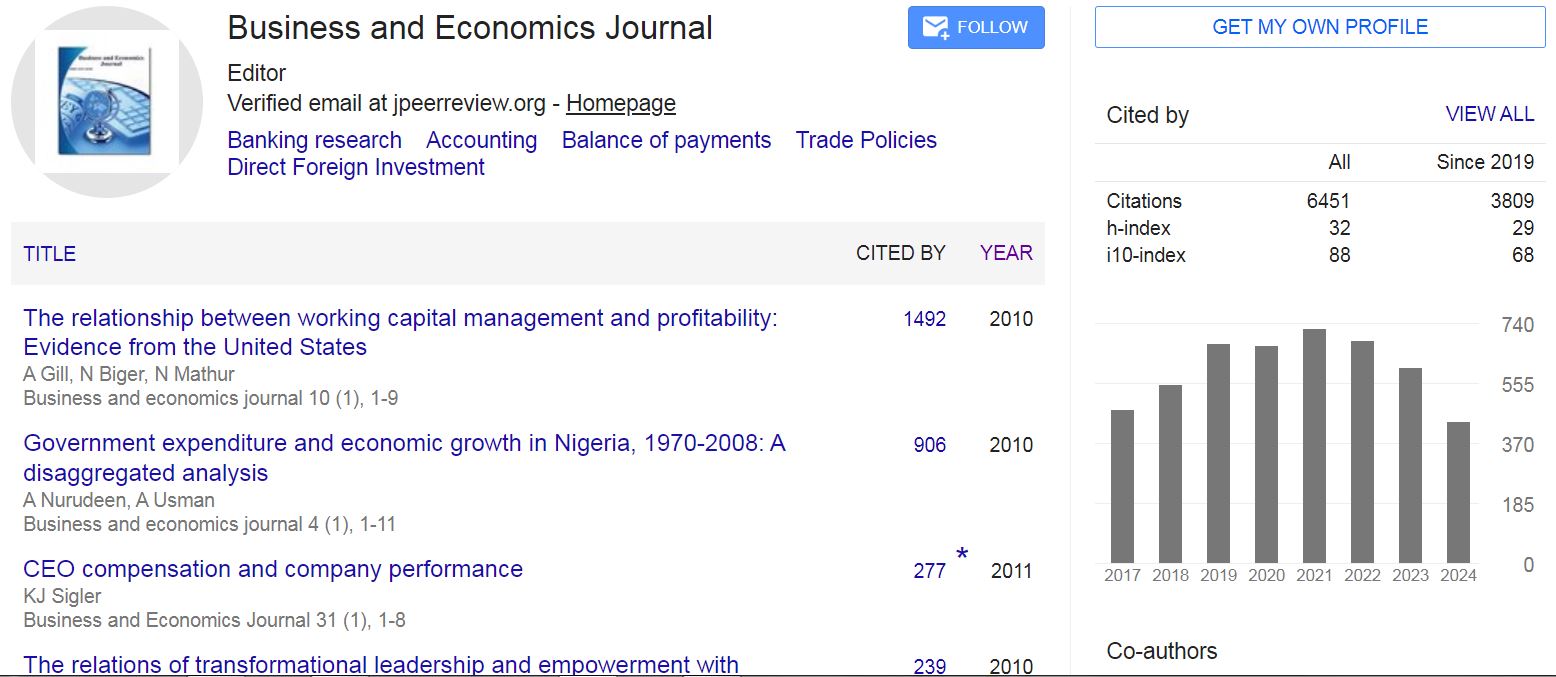
Business and Economics Journal received 6451 citations as per Google Scholar report