Opinion - (2025) Volume 11, Issue 3
Received: 01-Jun-2025, Manuscript No. elj-25-173006;
Editor assigned: 03-Jun-2025, Pre QC No. P-173006;
Reviewed: 17-Jun-2025, QC No. Q-173006;
Revised: 23-Jun-2025, Manuscript No. R-173006;
Published:
30-Jun-2025
, DOI: 10.37421/2472-0895.2025.11.328
Citation: Cohen, Nadav. ”Brain Mapping: Advancements, Personalization, Clinical Impact.” Epilepsy J 11 (2025):328.
Copyright: © 2025 Cohen N. This is an open-access article distributed under the terms of the Creative Commons Attribution License, which permits unrestricted use, distribution and reproduction in any medium, provided the original author and source are credited.
Functional brain mapping represents a foundational endeavor in understanding the complexities of the human brain. This field continuously evolves, driven by advancements in imaging technologies and analytical approaches. A critical area of investigation involves assessing the consistency and reliability of these mapping techniques. For instance, a systematic review and meta-analysis extensively explored the reproducibility of resting-state fMRI functional connectomes. This research revealed significant variability in reproducibility across different studies and preprocessing pipelines, indicating that while some connectome features are consistent, many others are highly sensitive to methodological choices. Recognizing these factors is essential for making progress in reliable brain biomarker discovery and their translation into clinical applications. [1] A parallel but equally vital direction focuses on personalizing functional brain mapping. Current approaches often rely on group-average analyses, which can obscure the unique functional architecture of individual brains. To overcome this, novel methods are being developed to align individual brain activity patterns into a common coordinate system, particularly using multi-task fMRI data. This approach is designed to respect individual variability while still allowing for meaningful comparisons across subjects, paving the way for truly personalized brain insights and interventions. [2] The advent of deep learning has ushered in a transformative era for functional brain imaging. Comprehensive reviews detail how these advanced computational methods are revolutionizing various aspects of the field. This includes significant improvements in image reconstruction, sophisticated denoising techniques, and more complex applications such as precise disease diagnosis, accurate prediction models, and detailed modeling of brain networks. The immense potential of Artificial Intelligence (AI) to extract richer, more nuanced insights from complex brain data is undeniable, pushing the boundaries of what is possible in functional brain mapping. [3] Beyond research, functional brain mapping has profound clinical utility, especially in neurosurgery. These techniques are indispensable for preserving eloquent cortex during delicate procedures like tumor resection or epilepsy surgery. Functional Magnetic Resonance Imaging (fMRI) and Diffusion Tensor Imaging (DTI), among other methods, provide surgeons with critical, real-time information. This guidance informs surgical decision-making, significantly improving patient outcomes by minimizing functional deficits and demonstrating the tangible, practical impact of these tools in complex surgical scenarios. [4] The focus on individual brain function extends to a critical examination of methodologies and the inherent challenges involved in mapping person-specific brain organization. Traditional group-level approaches are being critiqued, with a strong advocacy for a paradigm shift towards individualized functional mapping. This shift aims to better reflect each person's unique brain organization. Discussions around this area encompass various techniques and address the difficulties in achieving robust and reliable individual-level functional parcellations and connectivity patterns. [5] To gain a holistic understanding of the brain, multimodal imaging techniques are becoming increasingly important. A comprehensive overview highlights how integrating different modalities, such as fMRI, Electroencephalography (EEG), Magnetoencephalography (MEG), Positron Emission Tomography (PET), and DTI, can overcome the limitations inherent in single-modality approaches. This integrated strategy offers a richer, complementary perspective on neural processes and how they are disrupted in various diseases. [6] The human brain is not static; its functional organization undergoes dynamic changes throughout the lifespan. A systematic review of fMRI studies across different age groups synthesizes findings, charting these developmental transformations from childhood through old age. This research elucidates patterns of functional segregation and integration, demonstrating how brain networks evolve in parallel with cognitive and behavioral maturation, providing valuable insights into the developmental trajectory of brain function. [7] The application of functional brain mapping extends crucially to neurological disorders. Reviews underscore its utility in diagnosing, understanding, and monitoring a range of conditions. Various functional imaging techniques effectively reveal disease-specific alterations in brain activity and connectivity. These insights are invaluable for comprehending pathophysiology and identifying potential biomarkers for severe conditions like Alzheimerâ??s, Parkinsonâ??s, and stroke, offering hope for earlier detection and more targeted treatments. [8] Technological frontiers are being pushed with the development of ultra-high field fMRI, operating at 7 Tesla (7T) and beyond. This advanced imaging offers unprecedented spatial resolution and heightened sensitivity for functional brain mapping. These powerful scanners enable researchers to map cortical layers and columns with remarkable detail, providing a more granular view of brain function. However, realizing the full potential of this technology requires overcoming significant technical hurdles. [9] Finally, understanding the directional flow of information within brain networks is critical, moving beyond simple correlations to infer effective connectivity from fMRI data. A comparative review evaluates the strengths and weaknesses of different methodologies, including Dynamic Causal Modeling and Granger Causality. This emphasis on discerning causal influences highlights the vital role of understanding directional information flow in fully comprehending functional brain networks. [10]
Functional brain mapping is a rapidly advancing field, constantly refining its methodologies and expanding its applications. A critical aspect of this progress involves addressing the reproducibility of brain imaging findings. Research indicates that the consistency of resting-state fMRI functional connectomes can be highly variable, influenced by diverse study designs and preprocessing pipelines. This variability suggests that while some core features of brain connectivity are robust, others are quite sensitive to the specific choices made during data acquisition and analysis. This sensitivity poses a significant challenge for developing reliable brain biomarkers and translating research insights into clinical tools [1].
One major shift in the field is the move from group-level analyses to individualized functional mapping. Traditional approaches, while useful for general understanding, often obscure the unique functional organization present in each person's brain [5]. New methods are emerging, especially those utilizing multi-task fMRI, which aim to align individual brain activity patterns onto a common coordinate space. These methods are designed to respect the inherent individual variability, thereby enabling more accurate comparisons across subjects and facilitating personalized insights into brain function. Overcoming the difficulties in achieving robust and reliable individual-level functional parcellations and connectivity patterns is key to unlocking the full potential of personalized medicine and diagnostics [2, 5].
Technological innovations are playing a pivotal role in pushing the boundaries of functional brain mapping. Deep learning, a subset of Artificial Intelligence (AI), is transforming functional brain imaging by enhancing image quality, improving denoising, and enabling more sophisticated tasks such as disease diagnosis, prognosis prediction, and intricate modeling of brain networks. The capacity of AI to extract complex patterns and richer insights from vast brain data sets is immense, promising to accelerate discoveries and refine existing techniques [3]. Parallel to this, advancements in hardware, particularly ultra-high field fMRI (7T and above), offer unprecedented spatial resolution and sensitivity. These powerful scanners allow for the detailed mapping of cortical layers and columns, providing a more granular view of brain function than previously possible. However, the full realization of these capabilities requires addressing significant technical hurdles inherent in such high-field imaging [9].
The clinical impact of functional brain mapping is substantial, particularly in neurosurgery and the diagnosis of neurological disorders. In surgical contexts, techniques like fMRI and Diffusion Tensor Imaging (DTI) provide crucial information for preserving eloquent cortex during complex procedures such as tumor resection or epilepsy surgery. This guidance is vital for surgeons, helping them make informed decisions that improve patient outcomes by minimizing post-operative functional deficits [4]. Furthermore, functional imaging techniques are invaluable for understanding, diagnosing, and monitoring a wide array of neurological disorders. They can reveal disease-specific alterations in brain activity and connectivity, offering insights into pathophysiology and helping to identify potential biomarkers for conditions ranging from Alzheimer's and Parkinson's to stroke [8].
Beyond single-modality approaches, the integration of various brain imaging techniques through multimodal analysis offers a more comprehensive understanding of brain structure and function. Combining modalities like fMRI, Electroencephalography (EEG), Magnetoencephalography (MEG), Positron Emission Tomography (PET), and DTI allows researchers to overcome the limitations of any single method, providing a richer, complementary view of neural processes and their disruptions in disease states [6]. This integrated perspective is crucial for understanding dynamic changes, such as those observed in the human brain throughout the lifespan. Systematic reviews of fMRI studies have charted how functional brain organization evolves from childhood through old age, detailing patterns of functional segregation and integration and linking these changes to cognitive and behavioral maturation [7]. Lastly, accurately inferring effective connectivityâ??the causal influences between brain regionsâ??from fMRI data is a growing area of focus. Different methodologies, including Dynamic Causal Modeling and Granger Causality, are continually being compared and refined to better understand the directional information flow within complex functional brain networks, moving beyond mere correlations [10].
Functional brain mapping stands as a cornerstone in neuroscience, revealing the complex interplay of brain activity. Research consistently points to the need for understanding and improving the reliability of these mapping techniques. For example, the reproducibility of resting-state fMRI functional connectomes varies significantly depending on methodological choices and preprocessing pipelines, highlighting challenges in biomarker discovery [1]. Efforts are being made to move beyond group-average analyses towards personalized functional brain mapping, developing methods to align individual brain activity patterns while respecting unique brain architectures [2, 5]. This individualized approach is seen as crucial for capturing the unique functional organization of each brain, despite inherent methodological challenges in achieving robust individual-level parcellations and connectivity [5]. Technological advancements like ultra-high field fMRI (7T and beyond) promise unprecedented spatial resolution, allowing for detailed mapping of cortical layers and columns, though technical hurdles remain [9]. Deep learning methods are also transforming the field, enhancing image reconstruction, denoising, disease diagnosis, and brain network modeling, unlocking richer insights from complex data [3]. Functional brain mapping also finds significant clinical utility. It aids neurosurgeons in preserving eloquent cortex during procedures, improving patient outcomes [4]. Moreover, these techniques are vital for diagnosing, understanding, and monitoring neurological disorders, revealing disease-specific alterations in brain activity and connectivity, and identifying potential biomarkers for conditions like Alzheimer's and Parkinson's [8]. Complementary to these, multimodal brain imaging techniques, which integrate fMRI, EEG, MEG, PET, and DTI, offer a more complete view of neural processes by overcoming single-modality limitations [6]. Furthermore, investigations into lifespan development using fMRI have illuminated dynamic changes in brain organization from childhood through old age, connecting these evolutionary patterns to cognitive and behavioral maturation [7]. Understanding causal influences between brain regions, known as effective connectivity, is also a key focus, with various methods being compared to better map directional information flow [10].
None
None
Indexed at, Google Scholar, Crossref
Indexed at, Google Scholar, Crossref
Indexed at, Google Scholar, Crossref
Indexed at, Google Scholar, Crossref
Indexed at, Google Scholar, Crossref
Indexed at, Google Scholar, Crossref
Indexed at, Google Scholar, Crossref
Indexed at, Google Scholar, Crossref
Indexed at, Google Scholar, Crossref
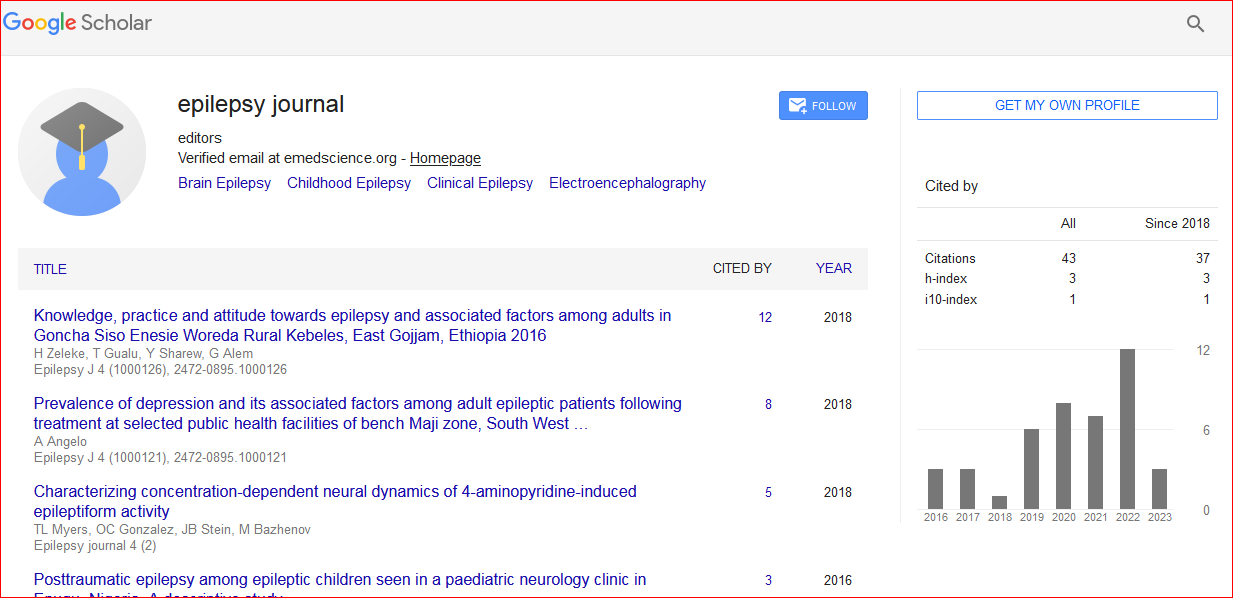
Epilepsy Journal received 41 citations as per Google Scholar report