Brief Report - (2025) Volume 11, Issue 4
Received: 01-Aug-2025, Manuscript No. jpnp-25-175502;
Editor assigned: 04-Aug-2025, Pre QC No. P-175502;
Reviewed: 18-Aug-2025, QC No. Q-175502;
Revised: 22-Aug-2025, Manuscript No. R-175502;
Published:
29-Aug-2025
, DOI: 10.37421/2472-0992.2025.11.373
Citation: García-López, Elena. ”Biological Properties for Medical Advancement.” J Pharmacogn Nat Prod 11 (2025):373.
Copyright: © 2025 García-López E. This is an open-access article distributed under the terms of the Creative Commons Attribution License, which permits unrestricted use, distribution and reproduction in any medium, provided the original author and source are credited.
Extracellular vesicles play a crucial role in cell communication by transferring various bioactive molecules, impacting diverse biological processes. Understanding their unique biological properties, including their biogenesis, specific cargo, and mechanisms of uptake, is fundamental for unlocking their potential as diagnostic biomarkers and targeted therapeutic delivery systems in diseases ranging from cancer to neurodegenerative disorders [1].
These nanometer-sized lipid bilayer vesicles are secreted by almost all cell types and contain proteins, lipids, and nucleic acids, which they transfer to recipient cells. The intricate details of their formation, specific molecular cargo, and mechanisms of cellular internalization are under intensive investigation, as a deep understanding is essential for harnessing their potential as non-invasive diagnostic tools and precise vehicles for targeted drug delivery, particularly in challenging conditions like cancer and various neurodegenerative diseases. Research into these vesicles aims to decipher how their unique biological signatures can be exploited for early disease detection and personalized therapeutic interventions. This work explores the distinctive biological properties of mesenchymal stem cells derived from different tissue sources, highlighting how their origin dictates their immunomodulatory capabilities and differentiation potential. Grasping these variations is key to optimizing their application in regenerative medicine and understanding their impact on tissue repair and disease progression [2].
Mesenchymal stem cells (MSCs) are multipotent stromal cells that can differentiate into various cell types and possess significant immunomodulatory capabilities. Studies reveal that their biological properties, including their capacity to modulate immune responses and differentiate into specialized cells, are heavily influenced by their tissue origin. Recognizing these source-dependent variations is paramount for optimizing their clinical use in regenerative medicine, where they are applied to repair damaged tissues and mitigate disease progression. For instance, MSCs from bone marrow might differ significantly from those derived from adipose tissue, necessitating tailored approaches for specific therapeutic applications. Investigating the biological properties of cancer stem cells reveals their unique capabilities for self-renewal, differentiation into heterogeneous tumor cells, and resistance to conventional therapies. Targeting these specific characteristics is a promising avenue for developing novel anti-cancer strategies that prevent recurrence and overcome drug resistance [3].
Cancer stem cells (CSCs) represent a subpopulation within tumors characterized by their ability to self-renew, drive tumor growth, and resist conventional treatments. These cells are key drivers of cancer recurrence and metastasis. A thorough understanding of their distinct biological characteristics, such as their heightened resistance to chemotherapy and radiation, is critical for developing innovative anti-cancer strategies. New therapeutic approaches aim to selectively target these properties to prevent disease relapse and overcome the challenge of drug resistance, thereby improving patient outcomes. Understanding the biological properties of nanomedicine, particularly how nanoparticles interact with biological systems, is critical for their safe and effective clinical translation. This involves examining their biocompatibility, biodistribution, and cellular uptake mechanisms to ensure they deliver therapeutic agents precisely while minimizing off-target effects [4].
The field of nanomedicine holds immense promise for revolutionizing drug delivery and diagnostics. However, for nanoparticles to be safely and effectively translated into clinical practice, a comprehensive understanding of their biological properties is indispensable. This includes meticulous examination of their biocompatibilityâ??how they interact with biological systems without causing adverse effectsâ??along with their biodistribution and the mechanisms by which cells take them up. Such knowledge ensures that therapeutic agents are delivered with precision to target sites, minimizing potential off-target toxicities and maximizing therapeutic efficacy. Exploring the diverse biological properties of gut microbes offers profound insights into human health and disease. Their metabolic activities, immune modulation, and interaction with host cells directly influence conditions ranging from metabolic disorders to neurological function, emphasizing the microbiome's central role in systemic well-being [5].
Gut microbes, collectively known as the gut microbiota, exhibit a vast array of biological properties that significantly impact human physiology. Their diverse metabolic activities, profound influence on the immune system, and complex interactions with host cells are increasingly recognized as critical determinants of health and disease. These microbial communities play a central role in modulating conditions ranging from metabolic disorders like obesity and diabetes to neurological functions and mental health, underscoring the microbiome's pervasive influence on systemic well-being. Detailed characterization of these microbial properties can lead to targeted interventions for improving health. This review delves into the complex biological properties of extracellular matrix components, which provide structural support and crucially regulate cell behavior. Understanding how these components dynamically interact with cells is essential for designing effective biomaterials for tissue engineering and regenerative therapies [6].
Extracellular matrix (ECM) components are more than just structural scaffolds; they are dynamic regulators of cell behavior, playing pivotal roles in tissue development, homeostasis, and repair. This review highlights the intricate biological properties of various ECM components and their complex interplay with cells. A deep comprehension of these dynamic interactions is essential for the rational design of advanced biomaterials. Such materials are critical for successful tissue engineering applications and the development of effective regenerative therapies that aim to restore tissue function. The study of novel biomaterials focuses on their specific biological properties, particularly their biocompatibility and ability to integrate with host tissues. Tailoring these characteristics allows for the development of advanced implants and scaffolds that promote healing and minimize adverse reactions, pushing the boundaries of medical device innovation [7].
The development of novel biomaterials for medical and dental applications hinges on a thorough understanding of their specific biological properties. Key among these are biocompatibilityâ??the material's ability to perform its function without eliciting undesirable local or systemic responsesâ??and its capacity to seamlessly integrate with host tissues. By carefully tailoring these characteristics, researchers can engineer advanced implants and scaffolds that not only promote natural healing processes but also minimize the risk of adverse reactions, thereby continually innovating in the field of medical device technology. Understanding the unique biological properties of infectious agents, like SARS-CoV-2, is paramount for developing effective countermeasures. This includes deciphering their replication mechanisms, host tropism, and evasion strategies, which directly inform vaccine design, antiviral therapies, and public health interventions [8].
For infectious agents, such as SARS-CoV-2, a comprehensive grasp of their unique biological properties is absolutely critical for the rapid development of effective public health countermeasures. This includes painstakingly deciphering their complex replication mechanisms, their specific host tropism, and the sophisticated strategies they employ to evade the host immune system. Such detailed knowledge directly informs the design of potent vaccines, the discovery of novel antiviral therapies, and the implementation of crucial public health interventions to control disease outbreaks and protect populations. The biological properties of natural products often involve complex interactions with biological targets, offering a rich source for drug discovery. Characterizing their antioxidant, anti-inflammatory, or antimicrobial activities helps us identify lead compounds for therapeutic development, leveraging nature's pharmacy [9].
Natural products represent an unparalleled reservoir for drug discovery, largely due to their diverse biological properties. These compounds often engage in intricate interactions with a multitude of biological targets, presenting unique therapeutic opportunities. Characterizing their various activities, such as antioxidant, anti-inflammatory, or antimicrobial effects, is fundamental for identifying promising lead compounds. By carefully studying nature's vast pharmacy, scientists can accelerate the development of new medicines to address unmet medical needs. This article discusses how different processing methods impact the crucial biological properties of tissue-engineered grafts. Understanding these effects is vital for creating functional tissues that can successfully integrate and perform their intended roles, ensuring the viability and efficacy of regenerative medicine applications [10].
The success of tissue-engineered grafts in regenerative medicine critically depends on their biological properties and how these are affected by different processing methods. Understanding these effects is paramount for creating grafts that not only integrate successfully but also perform their intended physiological roles with high efficacy. Ensuring the viability and long-term function of these engineered tissues requires careful consideration of every step from fabrication to implantation, highlighting the importance of optimizing processing techniques to achieve desired biological outcomes.
The study of fundamental biological entities offers deep insights into disease mechanisms and therapeutic avenues. Extracellular vesicles, for instance, are critical mediators in cell communication, transferring bioactive molecules that influence diverse biological processes. Understanding their biogenesis, cargo, and uptake mechanisms is essential for their development as diagnostic biomarkers and targeted therapeutic delivery systems for conditions like cancer and neurodegenerative disorders [1]. Similarly, mesenchymal stem cells from various tissue sources exhibit distinct immunomodulatory capabilities and differentiation potentials. Grasping these variations is key to optimizing their application in regenerative medicine, influencing tissue repair and disease progression [2]. Another critical area is cancer biology, where investigating cancer stem cells reveals their unique capabilities for self-renewal, differentiation into heterogeneous tumor cells, and resistance to conventional therapies. Targeting these specific characteristics holds promise for novel anti-cancer strategies to prevent recurrence and overcome drug resistance [3].
The development and translation of engineered materials, such as nanomedicine and biomaterials, require a thorough understanding of their interaction with biological systems. For nanomedicine, examining biocompatibility, biodistribution, and cellular uptake mechanisms is critical to ensure precise therapeutic delivery and minimal off-target effects in cancer treatment [4]. Likewise, novel biomaterialsâ?? biocompatibility and ability to integrate with host tissues are paramount. Tailoring these properties allows for advanced implants and scaffolds that promote healing and minimize adverse reactions, pushing the boundaries of medical device innovation [7]. Beyond synthetic materials, tissue-engineered grafts also demand attention to how different processing methods impact their crucial biological properties. This understanding is vital for creating functional tissues that successfully integrate and perform their intended roles, ensuring the viability and efficacy of regenerative medicine applications [10].
Biological properties extend to diverse microscopic life forms and their products. Gut microbes, for example, offer profound insights into human health and disease through their metabolic activities, immune modulation, and interaction with host cells. These directly influence conditions from metabolic disorders to neurological function, emphasizing the microbiome's central role in systemic well-being [5]. Additionally, the biological properties of natural products often involve complex interactions with biological targets, making them a rich source for drug discovery. Characterizing their antioxidant, anti-inflammatory, or antimicrobial activities helps identify lead compounds for therapeutic development, effectively leveraging nature's pharmacy [9].
Beyond cellular and microbial elements, the extracellular environment and infectious threats also possess crucial biological characteristics. Extracellular matrix components provide structural support and crucially regulate cell behavior. Understanding how these components dynamically interact with cells is essential for designing effective biomaterials for tissue engineering and regenerative therapies [6]. Finally, understanding the unique biological properties of infectious agents, such as SARS-CoV-2, is paramount for developing effective countermeasures. This includes deciphering their replication mechanisms, host tropism, and evasion strategies, which directly inform vaccine design, antiviral therapies, and public health interventions [8].
Understanding the biological properties of various entities is fundamental for advancing diagnostic and therapeutic strategies across numerous diseases. This involves studying how extracellular vesicles contribute to cell communication and their potential as biomarkers and drug delivery systems in cancer and neurodegenerative disorders. Likewise, exploring mesenchymal stem cells from different tissue sources reveals their distinct immunomodulatory capabilities and differentiation potential, which is crucial for regenerative medicine and tissue repair. Research also focuses on cancer stem cells, identifying their unique self-renewal and drug resistance mechanisms to develop novel anti-cancer therapies. In nanomedicine, understanding how nanoparticles interact with biological systems is key for safe and effective clinical translation, ensuring precise drug delivery and minimizing side effects. Gut microbes' metabolic activities and immune modulation offer insights into human health, affecting conditions from metabolic disorders to neurological functions. Further investigations explore extracellular matrix components, which are vital for structural support and cell regulation, impacting tissue engineering. The biocompatibility of novel biomaterials is essential for advanced implants and scaffolds. Studying infectious agents like SARS-CoV-2 clarifies their replication and evasion strategies, informing vaccine and antiviral development. Natural products are also scrutinized for their antioxidant, anti-inflammatory, and antimicrobial properties, serving as a rich source for drug discovery. Finally, the impact of processing methods on tissue-engineered grafts' biological properties is critical for their functional integration and efficacy in regenerative medicine.
None
None
Yanan L, Qian L, Shiqi W. "The biological properties of extracellular vesicles and their roles in cell communication".Cell Biosci 12 (2022):64.
Indexed at, Google Scholar, Crossref
Katarzyna W, Ewa T, Joanna W. "Biological properties of mesenchymal stem cells derived from various tissues for application in regenerative medicine".Cell Mol Biol Lett 27 (2022):24.
Indexed at, Google Scholar, Crossref
Qingfeng S, Huili L, Bo P. "Biological properties of cancer stem cells and their application in cancer therapy".Cancer Biol Med 19 (2022):1796-1807.
Indexed at, Google Scholar, Crossref
Tingting G, Qi W, Peng H. "Biological properties of nanomedicine in cancer: recent insights and prospects".Signal Transduct Target Ther 8 (2023):179.
Indexed at, Google Scholar, Crossref
Yanfeng L, Zhipeng W, Huifen H. "The Biological Properties of Gut Microbes: A Narrative Review".J Environ Public Health 2022 (2022):8663784.
Indexed at, Google Scholar, Crossref
Igor BSF, Rodrigo JCA, Nuno MN. "Biological Properties of Extracellular Matrix: A Comprehensive Review".Int J Mol Sci 24 (2023):1398.
Indexed at, Google Scholar, Crossref
Bita P, Maedeh M, Alireza T. "Biological properties of novel biomaterials for medical and dental applications".J Mater Sci Mater Med 33 (2022):30.
Indexed at, Google Scholar, Crossref
Yan X, Ruiying S, Fengling Z. "Biological properties of SARS-CoV-2 and its variants: What we have learned to date".Pharmacol Res 186 (2022):106560.
Indexed at, Google Scholar, Crossref
Saeed MAS, Raed MA, Mahmoud MA. "Biological properties of natural products: A systematic review".Saudi J Biol Sci 29 (2022):103233.
Indexed at, Google Scholar, Crossref
Yuxin Z, Yang Y, Tianzhu L. "Biological properties of tissue-engineered grafts after different processing methods".Int J Biochem Cell Biol 147 (2022):106225.
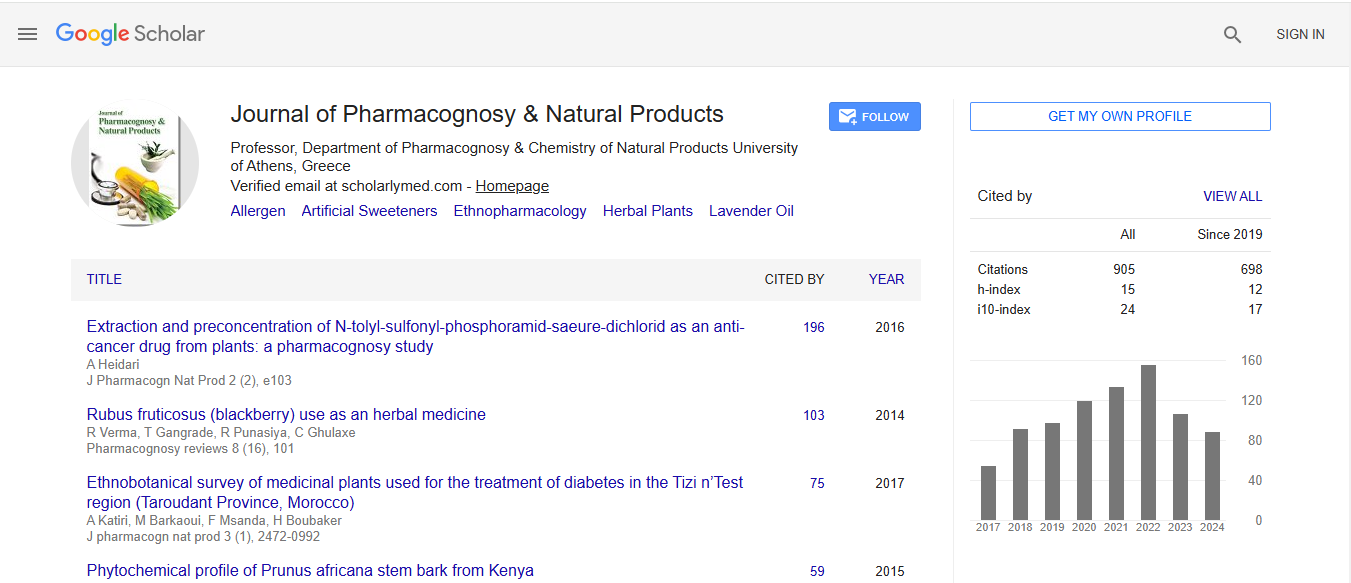
Journal of Pharmacognosy & Natural Products received 606 citations as per Google Scholar report