Short Communication - (2025) Volume 16, Issue 3
Received: 02-Jun-2025, Manuscript No. jbsbe-26-183303;
Editor assigned: 04-Jun-2025, Pre QC No. P-183303;
Reviewed: 18-Jun-2025, QC No. Q-183303;
Revised: 23-Jun-2025, Manuscript No. R-183303;
Published:
30-Jun-2025
, DOI: 10.37421/2165-6210.2025.16.509
Citation: Rojas, Camila. ”Bioelectronic Medicine: Untethered Therapeutics For Health.” J Biosens Bioelectron 16 (2025):509.
Copyright: © 2025 Rojas C. This is an open-access article distributed under the terms of the Creative Commons Attribution License, which permits unrestricted use, distribution and reproduction in any medium, provided the original author and source are credited.
Bioelectronic medicine is an emerging field that integrates electronics with biological systems to develop novel therapeutic strategies. This interdisciplinary area focuses on modulating physiological processes through the use of implantable devices and external stimuli, with broad applications in treating various diseases and disorders. Key areas of impact include neural disorders, cardiovascular conditions, and inflammatory diseases, offering new avenues for patient care and rehabilitation [1].
The application of vagus nerve stimulation (VNS) as a bioelectronic therapy is expanding beyond its established uses in epilepsy and depression. Emerging research indicates its potential in managing inflammatory conditions, gastrointestinal disorders, and metabolic diseases by restoring balance in the autonomic nervous system and reducing pathological inflammation. Innovations in electrode design and stimulation parameters are crucial for achieving more precise and effective neuromodulation [2].
Developing effective bioelectronic interfaces is critical for translating the promise of bioelectronic medicine into clinical reality. Research is intensely focused on creating materials that are not only biocompatible but also possess optimal electrical properties for signal transduction and stimulation. This involves the use of flexible electronics, conductive polymers, and nanomaterials, with a constant challenge to ensure long-term stability and minimize the foreign body response [3].
Peripheral nerve interfaces are a vital component of bioelectronic medicine, particularly for restoring motor and sensory functions following injury. Targeted nerve stimulation and recording techniques enable the control of prosthetics and provide sensory feedback to users. The development of miniaturized, high-density electrode arrays is essential for achieving precise nerve targeting and high-resolution signal acquisition, which requires a deep understanding of the neural code [4].
Bioelectronic devices have a well-established role in cardiovascular health, notably through pacemakers and defibrillators. However, newer applications are continuously emerging, including devices for managing arrhythmias, heart failure, and sensing cardiac biomarkers. Closed-loop neuromodulation of the autonomic nervous system is also being explored to enhance cardiac function and decrease cardiovascular events, though challenges related to miniaturization and long-term power sources persist [5].
The biocompatibility of implantable bioelectronic devices is a paramount consideration to ensure their safety and efficacy. This involves the careful selection of materials that elicit minimal immune responses and degrade predictably if designed for temporary use. Surface modifications and coatings are essential for reducing fibrosis and improving integration with host tissues, demanding a thorough understanding of host-device interactions at the molecular and cellular levels [6].
Neuromodulation serves as a cornerstone of bioelectronic medicine, aiming to influence specific neural circuits to alleviate symptoms associated with neurological and psychiatric disorders. Techniques such as deep brain stimulation (DBS) and transcranial magnetic stimulation (TMS) are continually being refined for more precise targeting and adaptive stimulation strategies. The integration of advanced sensing capabilities facilitates real-time monitoring of neural activity and closed-loop adjustments of stimulation parameters, thereby improving therapeutic outcomes [7].
The development of wireless power transfer and data communication capabilities is indispensable for the long-term functionality of implantable bioelectronic devices. These systems eliminate the need for transcutaneous wires, thereby reducing infection risks and enhancing patient comfort. Advances in miniaturized antennas, energy harvesting, and efficient wireless communication protocols are paving the way for fully implantable, untethered therapeutic systems, with future efforts focused on improving power transfer efficiency and data bandwidth [8].
Bioelectronic devices are increasingly being explored for their potential to manage chronic pain, a significant global health concern. Neuromodulation techniques, including spinal cord and peripheral nerve stimulation, offer alternatives to traditional pharmacotherapy, especially for opioid-resistant pain. The prospect of closed-loop systems that adapt stimulation based on real-time pain feedback promises more personalized and effective pain management strategies [9].
The synergy between bioelectronics and artificial intelligence (AI) and machine learning (ML) is set to revolutionize diagnostic and therapeutic applications. AI/ML algorithms can effectively analyze complex biological signals acquired from bioelectronic sensors to predict disease states, optimize stimulation parameters, and personalize treatment regimens, offering the potential for proactive and highly individualized healthcare interventions [10].
Bioelectronic medicine represents a pioneering approach that bridges the realms of electronics and biology to create innovative therapeutic solutions. The core principle involves the utilization of implantable devices and electrical stimuli to precisely modulate physiological functions, addressing a wide spectrum of conditions from neurological impairments to cardiovascular diseases. This rapidly advancing field holds significant promise for revolutionizing treatment paradigms across numerous medical disciplines [1].
The scope of vagus nerve stimulation (VNS) as a bioelectronic therapy is expanding considerably beyond its established efficacy in treating epilepsy and depression. Current research is actively investigating its therapeutic potential for a variety of inflammatory conditions, gastrointestinal disorders, and even metabolic diseases. This approach leverages the autonomic nervous system's regulatory capabilities to restore physiological balance and mitigate pathological inflammation. Ongoing advancements in electrode technology and stimulation protocols are instrumental in enhancing the precision and effectiveness of these neuromodulatory interventions [2].
Crucial to the clinical realization of bioelectronic medicine is the development of sophisticated bioelectronic interfaces. A primary focus of research in this area is the design and fabrication of materials that exhibit excellent biocompatibility alongside electrical characteristics suitable for both signal acquisition and therapeutic stimulation. This includes the innovative use of flexible electronics, conductive polymers, and nanomaterials. A persistent challenge remains in achieving long-term device stability and minimizing adverse biological reactions, such as fibrosis, to ensure sustained therapeutic benefits [3].
Peripheral nerve interfaces are pivotal in the advancement of bioelectronic medicine, particularly in the context of restoring motor control and sensory feedback following nerve injury. Through targeted nerve stimulation and recording, these interfaces facilitate sophisticated prosthetic control and enable the transmission of sensory information back to the user. The ongoing development of miniaturized, high-density electrode arrays is key to enabling precise nerve targeting and acquiring high-resolution neural data, which necessitates a comprehensive understanding of the neural code for effective interpretation and application [4].
While bioelectronic devices have a long-standing history of application in cardiovascular disease management, with pacemakers and defibrillators being prime examples, the field is continually evolving. Emerging applications include the use of bioelectronic devices for managing complex arrhythmias, advanced heart failure, and even for the real-time sensing of cardiac biomarkers. Furthermore, closed-loop neuromodulation of the autonomic nervous system is being actively explored as a strategy to improve overall cardiac function and reduce the incidence of cardiovascular events. Key challenges that need to be addressed include device miniaturization and the development of sustainable long-term power sources [5].
Ensuring the biocompatibility of implantable bioelectronic devices is an absolute prerequisite for their safe and effective clinical use. This necessitates the meticulous selection of materials that minimize the body's immune response and, if intended for temporary use, degrade predictably. The implementation of advanced surface modifications and coatings plays a critical role in mitigating tissue encapsulation (fibrosis) and promoting better integration with the surrounding host tissues. A deep understanding of the intricate interactions between the biological host and the implanted device at both the molecular and cellular levels is paramount [6].
Neuromodulation stands as a fundamental technique within bioelectronic medicine, designed to selectively influence specific neural circuits for the purpose of alleviating symptoms associated with a variety of neurological and psychiatric disorders. Leading techniques, such as deep brain stimulation (DBS) and transcranial magnetic stimulation (TMS), are undergoing continuous refinement, incorporating more precise targeting capabilities and adaptive stimulation strategies. The integration of sophisticated sensing technologies allows for the real-time monitoring of neural activity, enabling closed-loop adjustments to stimulation parameters and thereby enhancing therapeutic efficacy [7].
For implantable bioelectronic devices to achieve long-term viability and functionality, the development of robust wireless power transfer and data communication systems is essential. These technologies circumvent the need for percutaneous wires, significantly reducing the risk of infection and improving patient comfort. Progress in the design of miniaturized antennas, efficient energy harvesting mechanisms, and advanced wireless communication protocols is crucial for the creation of fully implantable, untethered therapeutic systems. Future research endeavors are focused on enhancing power transfer efficiency and increasing data transmission bandwidth [8].
Bioelectronic devices are emerging as promising therapeutic options for managing chronic pain, a condition that affects a vast global population. Neuromodulation techniques, such as spinal cord stimulation and peripheral nerve stimulation, offer compelling alternatives to conventional pharmacotherapy, particularly for patients whose pain is resistant to opioid treatments. The development of closed-loop systems, which can dynamically adjust stimulation based on real-time pain feedback, holds substantial promise for delivering more personalized and effective pain management solutions [9].
The convergence of bioelectronics with artificial intelligence (AI) and machine learning (ML) represents a transformative frontier poised to redefine diagnostic and therapeutic paradigms. AI/ML algorithms possess the capability to analyze highly complex biological signals captured by bioelectronic sensors, enabling accurate disease state prediction, optimization of stimulation parameters, and the tailoring of personalized treatment regimens. This synergistic integration offers the potential for a paradigm shift towards more proactive and precisely individualized healthcare interventions [10].
Bioelectronic medicine integrates electronics with biology to create novel therapeutic devices and strategies. This field utilizes implantable systems and stimuli to modulate physiological processes, impacting areas like neurological disorders, cardiovascular diseases, and chronic pain management. Key technologies include vagus nerve stimulation, peripheral nerve interfaces, and advanced neuromodulation techniques. Essential developments focus on biocompatible materials, miniaturization, wireless power and data transmission, and the integration of artificial intelligence for personalized treatments. The goal is to develop safe, effective, and untethered systems for improved patient outcomes.
None
None
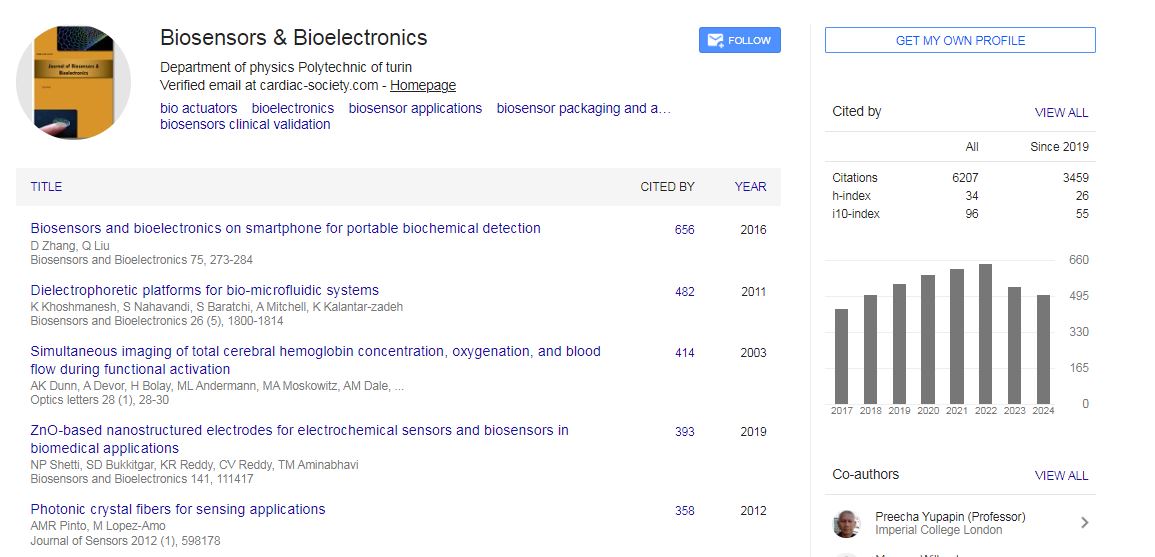
Biosensors & Bioelectronics received 6207 citations as per Google Scholar report