GET THE APP

Biosensors & Bioelectronics

Biosensors & Bioelectronics

ISSN: 2155-6210

Open Access

Articles in press and Articles in process

    Past Conference Report Pages: 1 - 1

    Nickel nanoparticles/electrochemically reduced graphene oxide modified electrode�?�

    Birhanu

    Share this article
    Past Conference Report Pages: 1 - 1

    structure from motion for biological applications

    Corpus

    Share this article
      Review Article Pages: 1 - 12

      Biosensors: Technological Advancement and their Potential Applications

      Tariku Abena*

      Biosensors are analytical devices and a hybrid form of physical and chemical sensing technique that convert a biological response into an electrical signal proportional to the concentration of a specific analytes. In its technical aspect, biosensing is a phenomenon that withholds set techniques for the production of an accessible detection signal of interaction between biological molecules and another molecule or analyte of interest. Such molecular device that enables sensing of these molecular interactions is called biosensors. IUPAC provide recognition to this type of sensors only some seventeen years prior to today. In principle, biosensors are receptor-transducer based tool which could be used for interpreting the biophysical or biochemical property of the medium. The presence of biological/organic recognition element which enables the detection of particular biological molecules in the medium distinguishes biosensors apart from other types of sensors. The first biosensor device was invented in order to measure blood glucose level in biological samples. This strategy involved electrochemical detection of oxygen or hydrogen peroxide by using immobilized glucose oxidase electrode. Since then, amazing progress has been made both in technology and applications of biosensors with innovative approaches involving electrochemistry, nanotechnology to bioelectronics.

        Research Article Pages: 1 - 8

        Development of 3D Printed Microfluidics Lab-on-Chip Colorimetric System in Rapid Testing of Nutrient for Precision Agriculture: Simulation and Validation

        Shashikant Kisanrao Shinde*, Ganesh Sunil Nhivekar, Sushant R. Pol, Bharat T Jadhav, Neha R. Deshpande and Arvind D. Shaligram

        DOI: 10.5281/zenodo.17829186

        The advancement of microfluidic systems enables rapid development of Lab-On-Chip (LOC) for the applications in different fields, such as biomedical diagnostics, environmental monitoring, healthcare and agriculture. Microfluidics LOC is integrated device platform for manipulations of fluids within microscale to perform one or more laboratory functions. Smart technologies have now penetrated every aspect of modern life and is ubiquitous. 3D printed sensors, Internet Of Things (IOT) and smartphone have been used as point of care device. A similar approach can be extended in precision agriculture for nutrient detection. The integration of Microfluidics Lab- On -Chip (LOC), smart sensing and IOT presents a transformative approach to nutrient management in precision agriculture. 3D printed Microfluidics LOC technologies enable the precise analysis of nutrients and allowing for real-time monitoring and optimization of plant growth conditions. Integrating electronic sensors within the microfluidic systems, farmers can receive continuous data on nutrient levels for enhancing decision-making processes. This collaborative approach not only streamlines rapid nutrient detection but also promotes sustainable agriculture. The proposed system has simulation comparison of Y channel and Y serpentine channel with chamber mixer in COMSOL with 3D printed chip design validation. We integrate design simulation and experimental validation.

      Relevant Topics

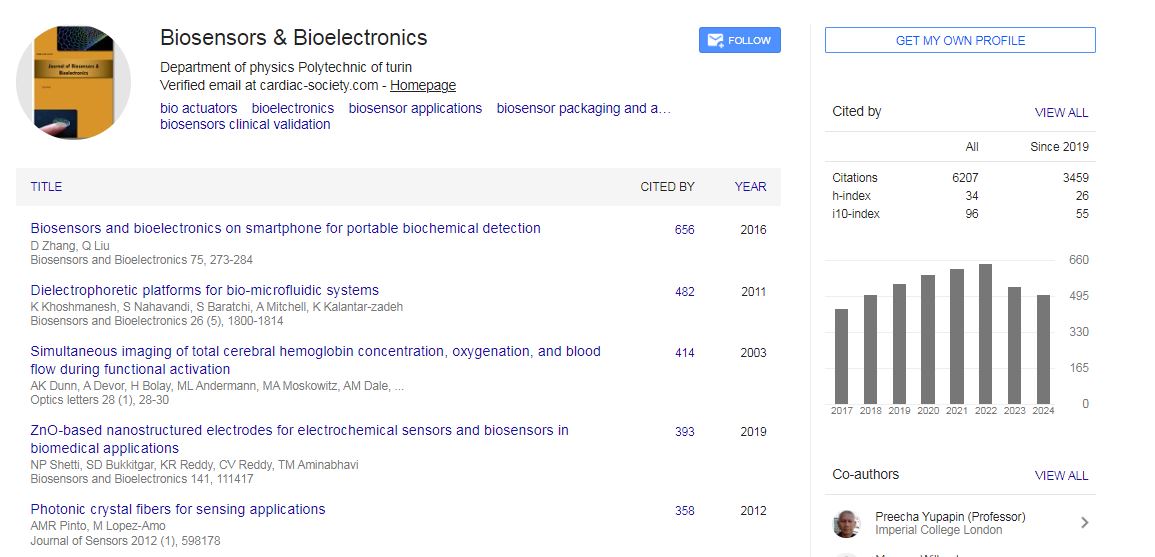
Google Scholar citation report
Citations: 6207

Biosensors & Bioelectronics received 6207 citations as per Google Scholar report
Biosensors & Bioelectronics peer review process verified at publons

Indexed In

 
arrow_upward arrow_upward