Short Communication - (2025) Volume 16, Issue 3
Received: 02-Jun-2025, Manuscript No. jar-25-176626;
Editor assigned: 04-Jun-2025, Pre QC No. P-176626;
Reviewed: 18-Jun-2025, QC No. Q-176626;
Revised: 23-Jun-2025, Manuscript No. R-176626;
Published:
30-Jun-2025
, DOI: 10.37421/2155-6113.2025.16.1070
Citation: Hans-Jurgen Muller. ”Aging HIV: Comorbidities, Syndromes,
and Integrated Care.” J AIDS Clin Res 16 (2025):1070.
Copyright: © 2025 M. Hans-Jurgen This is an open-access article distributed under the terms of the Creative Commons Attribution License, which permits unrestricted use,
distribution and reproduction in any medium, provided the original author and source are credited.
People living with Human Immunodeficiency Virus (HIV) are experiencing longer lifespans due to advancements in antiretroviral therapy (ART). This positive shift, however, brings a new set of health challenges as individuals with HIV increasingly contend with age-related complications. The prolonged exposure to HIV and its treatment often results in an accelerated aging phenotype, leading to a higher prevalence of non-AIDS comorbidities and geriatric syndromes compared to the general population. Addressing these complex health needs requires a comprehensive understanding of their epidemiology, pathophysiology, and effective management strategies. Studies reveal a significant burden and diverse range of non-AIDS comorbidities prevalent among older individuals living with HIV. These conditions, such as cardiovascular diseases, renal dysfunction, and metabolic disorders, are driven by a combination of traditional risk factors and HIV-specific influences like chronic inflammation and antiretroviral therapy. This emphasizes the critical need for integrated screening and management strategies to improve health outcomes in this aging population [1].
Beyond specific diseases, geriatric syndromes are a notable concern. Research highlights the high prevalence and incident rate of geriatric syndromes, including frailty, falls, and cognitive impairment, among older people with HIV. These syndromes are more common in HIV-positive individuals than their HIV-negative counterparts and significantly impact their quality of life and prognosis. Early identification and tailored interventions are essential for proactive care [2].
Specifically, frailty in older adults living with HIV is an escalating concern, with a significantly higher prevalence. It acts as a critical predictor of adverse health outcomes, including hospitalization, functional decline, and mortality, calling for routine screening in clinical practice and the development of tailored interventions to improve resilience and quality of life [9].
The intricate pathophysiological mechanisms accelerating aging phenotypes in people with HIV are becoming clearer. Chronic inflammation, persistent immune activation, and cellular senescence contribute to the premature development of age-associated non-AIDS comorbidities. Understanding these mechanisms highlights potential therapeutic targets aimed at mitigating these underlying biological processes [3].
Cognitive impairment in people with HIV has seen a shift from severe HIV-associated dementia to more subtle neurocognitive disorders that persist even with effective antiretroviral therapy. These milder impairments are particularly relevant in the aging HIV population, outlining critical research priorities to address this growing public health concern [4].
Similarly, there's a heightened risk of cardiovascular disease (CVD) in people living with HIV, driven by both traditional risk factors and HIV-specific mechanisms. Intensified screening, early intervention, and tailored management strategies for CVD are crucial in this population, advocating for a multidisciplinary approach to mitigate morbidity and mortality [5].
Bone disease, including osteoporosis and increased fracture risk, is another multifaceted problem. HIV infection itself, specific antiretroviral treatments, and conventional aging factors collectively contribute to accelerated bone loss. Routine bone density screening and comprehensive strategies for prevention and treatment are important to preserve skeletal health [6].
Furthermore, chronic kidney disease (CKD) in people living with HIV involves intricate pathogenesis and evolving clinical management. Key risk factors such as prolonged HIV infection, specific antiretroviral agents, and co-existing conditions contribute to kidney impairment. Proactive monitoring and tailored therapeutic interventions are advocated to prevent CKD progression and improve long-term renal outcomes [7].
The increased prevalence of metabolic syndrome in individuals with HIV is attributed to a complex interplay of chronic inflammation, specific antiretroviral therapies, and lifestyle factors. The clinical implications of metabolic syndrome, including heightened cardiovascular risk, necessitate integrated management strategies encompassing dietary changes, exercise, and targeted pharmacotherapy to mitigate adverse health outcomes [8].
Here's the thing: managing multiple health conditions often leads to polypharmacy. This systematic review examined the widespread issue of polypharmacy and the use of potentially inappropriate medications in older people with HIV. These medication-related problems are common and contribute significantly to adverse drug reactions, drug-drug interactions, and poorer health outcomes. The findings strongly advocate for comprehensive medication reviews and deprescribing strategies to optimize medication regimens and enhance patient safety in this vulnerable population [10].
What this really means is that the confluence of these health challenges underscores the urgent need for a holistic, integrated approach to care for older individuals with HIV, focusing on early detection, prevention, and tailored management across multiple organ systems.
The landscape of HIV care has transformed, allowing people with HIV (PWH) to live longer, healthier lives. However, this increased longevity brings with it a complex array of age-related health issues, often manifesting as an accelerated aging phenotype. This encompasses a broad spectrum of non-AIDS comorbidities and geriatric syndromes that are more prevalent and often emerge earlier in PWH than in the general population. The chronic inflammatory state inherent in HIV infection, even under effective antiretroviral therapy, plays a significant role in driving many of these age-related pathologies, creating unique challenges for clinical management [1, 2, 3].
Non-AIDS comorbidities represent a substantial burden. Research from Peru, for instance, highlights a diverse range of conditions, including cardiovascular diseases, renal dysfunction, and metabolic disorders, prevalent among older PWH. These are not only influenced by traditional risk factors but also by HIV-specific factors such as chronic inflammation and the very antiretroviral therapy that prolongs lives [1]. Cardiovascular disease (CVD) in particular poses a heightened risk in this population. It stems from a combination of conventional risk factors and HIV-specific mechanisms, emphasizing the need for intensified screening, early intervention, and tailored, multidisciplinary management strategies to reduce morbidity and mortality [5]. Concurrently, metabolic syndrome is more prevalent in PWH, influenced by chronic inflammation, specific ART regimens, and lifestyle. Its clinical implications, including increased cardiovascular risk, demand integrated management approaches that span dietary changes, exercise, and targeted pharmacotherapy [8]. Chronic kidney disease (CKD) is another critical concern, with its pathogenesis intricately linked to prolonged HIV infection, specific antiretroviral agents, and co-existing conditions. Proactive monitoring and tailored therapeutic interventions are essential to prevent CKD progression and improve long-term renal outcomes [7].
Beyond specific disease states, geriatric syndromes significantly impact the well-being of older PWH. The PROMISE Cohort study reveals a high prevalence and incidence of conditions like frailty, falls, and cognitive impairment. These syndromes are notably more common in HIV-positive individuals and profoundly affect their quality of life and prognosis, making early identification and tailored interventions crucial for proactive care [2]. Frailty, specifically, has emerged as an escalating concern among older adults living with HIV. Its significantly higher prevalence compared to age-matched HIV-negative individuals identifies it as a critical predictor of adverse health outcomes, including hospitalization, functional decline, and mortality, advocating for routine screening and the development of tailored interventions to improve resilience and quality of life [9]. Cognitive impairment, having evolved from severe HIV-associated dementia to more subtle neurocognitive disorders, persists even with effective ART. These milder impairments are particularly relevant in the aging HIV population, underscoring critical research priorities to address this growing public health concern [4]. Bone disease, encompassing osteoporosis and an increased risk of fractures, is also a multifaceted problem, with HIV infection itself, specific antiretroviral treatments, and conventional aging factors collectively contributing to accelerated bone loss. The piece stresses the importance of routine bone density screening and comprehensive strategies for prevention and treatment to preserve skeletal health [6].
The underlying pathophysiological mechanisms driving these accelerated aging phenotypes are critical to understand. Chronic inflammation, persistent immune activation, and cellular senescence are key contributors to the premature development of age-associated non-AIDS comorbidities. Identifying and understanding these biological processes are crucial for developing potential therapeutic targets aimed at mitigating their impact [3]. Hereâ??s the thing: managing this complexity is further complicated by medication issues. The widespread problem of polypharmacy and the use of potentially inappropriate medications in older PWH contribute significantly to adverse drug reactions, drug-drug interactions, and poorer health outcomes. This necessitates comprehensive medication reviews and deprescribing strategies to optimize medication regimens and enhance patient safety in this vulnerable population [10].
What this really means is that the overall picture for aging PWH is one of complex, intersecting health challenges. The interplay of multiple comorbidities, geriatric syndromes, unique pathophysiological drivers, and medication complexities underscores an urgent need for integrated screening and management strategies. The focus must shift towards holistic, age-appropriate care models that prioritize early detection, prevention, and tailored interventions across various organ systems to improve overall health, functional independence, and quality of life for this growing and vulnerable population.
Older individuals living with HIV face a significant and diverse burden of non-AIDS comorbidities and geriatric syndromes, driven by traditional risk factors alongside HIV-specific influences like chronic inflammation and antiretroviral therapy. Key non-AIDS comorbidities include cardiovascular diseases, renal dysfunction, and metabolic disorders. Geriatric syndromes such as frailty, falls, and cognitive impairment are also highly prevalent, significantly impacting quality of life and prognosis. The underlying cause for this is often an accelerated aging phenotype, stemming from pathophysiological mechanisms like chronic inflammation, persistent immune activation, and cellular senescence. Specific challenges extend to bone disease, cognitive impairment, and chronic kidney disease, each requiring targeted management. Moreover, the complexities of managing multiple conditions often lead to polypharmacy and the use of potentially inappropriate medications, increasing adverse drug reactions and poorer health outcomes. This necessitates comprehensive medication reviews and deprescribing strategies to optimize regimens and enhance patient safety. Ultimately, the data underscores the critical need for integrated screening, early intervention, and tailored, multidisciplinary management strategies to improve health outcomes and quality of life in the aging HIV population.
Indexed at, Google Scholar, Crossref
Indexed at, Google Scholar, Crossref
Indexed at, Google Scholar, Crossref
Indexed at, Google Scholar, Crossref
Indexed at, Google Scholar, Crossref
Indexed at, Google Scholar, Crossref
Indexed at, Google Scholar, Crossref
Indexed at, Google Scholar, Crossref
Indexed at, Google Scholar, Crossref
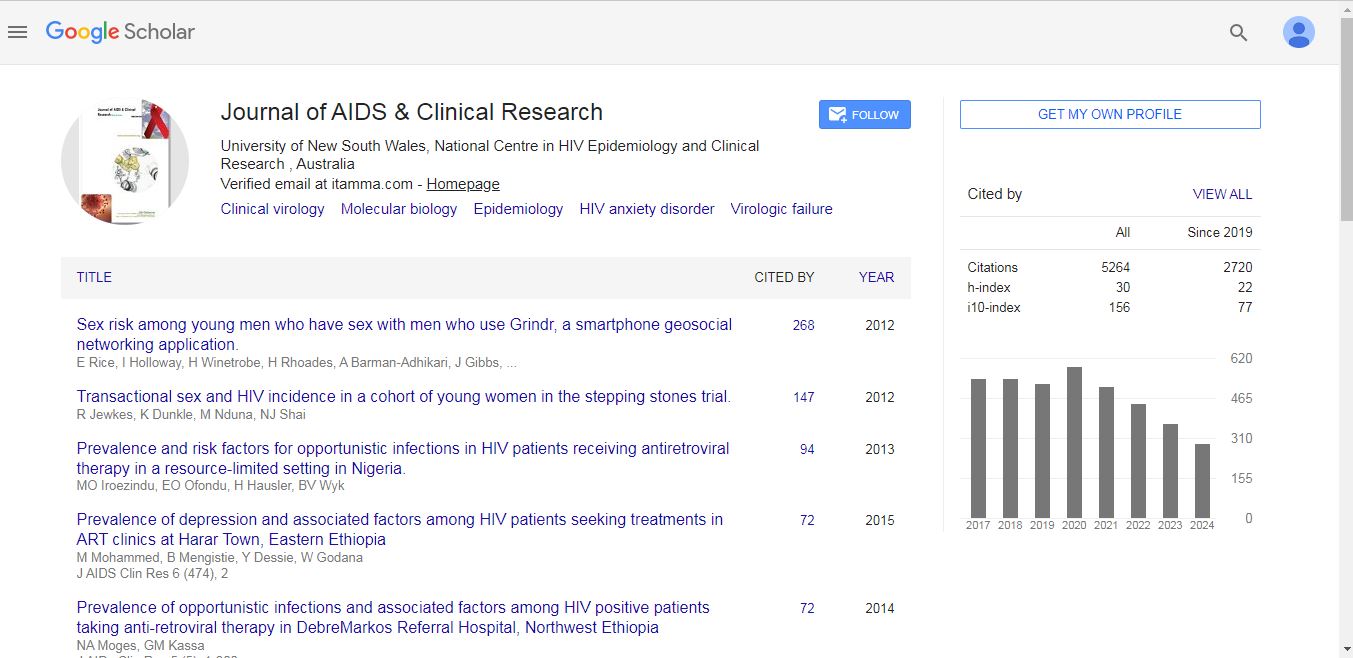
Journal of AIDS & Clinical Research received 5264 citations as per Google Scholar report