Opinion - (2025) Volume 11, Issue 5
Received: 01-Sep-2025, Manuscript No. aso-25-184654;
Editor assigned: 03-Sep-2025, Pre QC No. P-184654;
Reviewed: 17-Sep-2025, QC No. Q-184654;
Revised: 22-Sep-2025, Manuscript No. R-184654;
Published:
29-Sep-2025
, DOI: 10.37421/2471-2671.2025.11.191
Citation: Kim, Daniel. ”Advancements In Breast Cancer Surgery:
Outcomes And Aesthetics.” Arch Surg Oncol 11 (2025):191.
Copyright: © 2025 Kim D. This is an open-access article distributed under the terms of the Creative Commons Attribution License, which permits unrestricted use, distribution
and reproduction in any medium, provided the original author and source are credited.
The landscape of breast cancer surgery is undergoing a significant transformation, driven by a pursuit of improved oncologic control and enhanced aesthetic outcomes. Contemporary approaches are increasingly emphasizing minimally invasive techniques and sophisticated reconstructive methods to optimize patient care. Recent advancements have highlighted the growing importance of breast-conserving surgery (BCS), which, when coupled with improved cosmetic results, offers a valuable alternative to mastectomy for many women. This shift is supported by the precise application of oncoplastic surgery principles, integrating tumor excision with immediate breast reconstruction to achieve both safety and satisfactory aesthetic results. The journey of surgical management is further informed by the evolving role of neoadjuvant therapies, which are now integral to planning, aiming to downstage tumors and refine patient selection for specific surgical interventions. These systemic treatments prior to surgery can lead to significant tumor shrinkage, increasing the feasibility of breast-conserving approaches and potentially improving overall survival rates. Complementing these advancements is the refined technique and widespread adoption of sentinel lymph node biopsy (SLNB). This procedure has become a cornerstone in staging the axilla, effectively avoiding complete axillary lymph node dissection for the majority of patients and thereby mitigating the risk of complications such as lymphedema. The integration of advanced imaging modalities, including MRI and ultrasound, has also revolutionized surgical planning, enabling more accurate tumor localization and precise margin assessment, leading to more effective resections. Furthermore, the understanding of molecular subtyping of breast cancer is increasingly guiding surgical decisions. By characterizing tumor biology, such as hormone receptor status and HER2 expression, treatment strategies can be tailored to optimize surgical extent and the need for adjuvant therapies, paving the way for highly personalized patient care. The ongoing exploration of minimally invasive techniques extends to robotic-assisted surgery, which offers potential benefits in visualization and precision for complex breast procedures, including mastectomy and reconstruction. Additionally, emerging therapeutic options like cryoablation are being investigated as minimally invasive alternatives for select cases of early-stage breast cancer, promising good cosmetic results and preservation of breast tissue. Finally, the critical assessment of surgical margin status following breast-conserving surgery is paramount, with studies providing evidence-based recommendations for re-excision or additional therapy to ensure optimal oncologic control and long-term patient survival. [1]
Minimally invasive techniques are redefining breast cancer surgery, with a particular focus on breast-conserving surgery (BCS) and oncoplastic approaches. These methods aim to maximize tumor removal while preserving the breast's natural appearance, thereby enhancing patient quality of life. The integration of neoadjuvant therapies has become a pivotal aspect of surgical planning. By enabling tumor downstaging, these treatments can expand the applicability of BCS and facilitate patient selection for optimized surgical strategies. The judicious use of neoadjuvant chemotherapy in locally advanced breast cancer, for instance, is crucial for improving surgical outcomes and increasing the likelihood of successful breast conservation. Sentinel lymph node biopsy (SLNB) has revolutionized axillary staging. Its accuracy and safety in determining nodal status have largely replaced the need for comprehensive axillary dissection, significantly reducing the incidence of lymphedema and other associated morbidities. The continuous evolution of SLNB techniques further refines its diagnostic utility and safety profile. Robotic-assisted surgery represents another frontier in minimally invasive breast cancer treatment. While presenting a learning curve, the enhanced visualization and dexterity offered by robotic platforms hold promise for improved precision in complex oncologic and reconstructive procedures. The exploration of novel therapeutic modalities, such as cryoablation, is also expanding the armamentarium for early-stage breast cancer. This technique offers a minimally invasive option for select patients, potentially preserving breast tissue and achieving favorable cosmetic outcomes. The strategic application of advanced imaging in surgical planning is indispensable. Techniques like MRI and ultrasound are vital for accurate tumor localization, assessment of multifocality, and defining surgical margins, all contributing to more precise and effective surgical interventions. Understanding the molecular characteristics of breast tumors is increasingly influencing surgical decisions. This personalized approach, guided by molecular subtyping, ensures that surgical strategies are aligned with the specific biology of the cancer and the patient's overall treatment plan. The critical evaluation of surgical margin status post-BCS remains a key determinant of oncologic success. Research in this area provides essential guidance for managing positive margins to minimize recurrence risk and optimize long-term patient outcomes. [2] The field of breast cancer surgery is characterized by a dynamic evolution, with a persistent focus on advancing techniques to improve both survival rates and quality of life for patients. Central to this evolution is the increasing embrace of minimally invasive surgical modalities, coupled with sophisticated oncoplastic reconstruction techniques. Breast-conserving surgery (BCS) continues to be a cornerstone of treatment, and its efficacy and aesthetic appeal are further enhanced by these modern surgical approaches. The integration of neoadjuvant therapies has fundamentally altered the preoperative landscape, allowing for tumor downstaging and more informed surgical planning. This preoperative systemic treatment is crucial for optimizing the conditions for surgery, particularly in cases of locally advanced disease, thereby increasing the potential for breast preservation and improved survival. The role of sentinel lymph node biopsy (SLNB) in axillary staging cannot be overstated. This technique has significantly reduced the need for more extensive axillary lymph node dissections, thereby mitigating long-term complications such as lymphedema. The ongoing refinement of SLNB methodologies ensures its continued accuracy and safety. Robotic-assisted surgery is emerging as a valuable tool in breast cancer procedures, offering enhanced visualization and precision, especially in complex mastectomy and reconstructive surgeries. While requiring specialized training, its potential benefits in minimally invasive interventions are considerable. Alternative minimally invasive treatments, such as cryoablation, are also gaining traction for select early-stage breast cancers. These techniques offer the advantage of preserving breast tissue and achieving satisfactory cosmetic results. The judicious use of advanced imaging, including MRI and ultrasound, plays an indispensable role in preoperative surgical planning. These modalities assist in precise tumor localization, assessment of disease extent, and margin definition, leading to more accurate and effective surgical resections. Molecular subtyping of breast cancer tumors is increasingly informing surgical decision-making. By understanding the specific biological characteristics of a tumor, surgeons can tailor the extent of surgical intervention and the need for adjuvant therapies for a more personalized treatment strategy. Furthermore, the rigorous analysis of surgical margin status following BCS is essential for predicting and preventing local recurrence, guiding subsequent management decisions to optimize oncologic outcomes. [3] Advancements in surgical management for breast cancer are continuously striving for better oncologic outcomes and improved patient well-being. This pursuit is prominently reflected in the growing adoption of minimally invasive techniques and sophisticated oncoplastic surgery. Breast-conserving surgery (BCS) remains a key focus, with its success being amplified by improved aesthetic outcomes and the integration of immediate reconstruction. The impact of neoadjuvant therapies on surgical planning is profound. These preoperative treatments aim to downstage tumors, thereby increasing the feasibility of BCS and enabling more precise patient selection for specific surgical modalities, ultimately enhancing survival rates. The critical role of sentinel lymph node biopsy (SLNB) in axillary staging has been well-established. By accurately assessing lymph node involvement, SLNB minimizes the need for complete axillary dissection, thereby reducing the risk of long-term complications like lymphedema. The ongoing refinement of SLNB techniques ensures its continued efficacy and safety. Robotic-assisted surgery is emerging as a significant innovation in minimally invasive breast cancer procedures. Its potential to enhance visualization and precision during mastectomy and reconstructive surgeries is a key area of development. Exploring alternative minimally invasive treatments, such as cryoablation, offers new possibilities for early-stage breast cancer management. These methods can preserve breast tissue and yield favorable cosmetic results. The integration of advanced imaging techniques, such as MRI and ultrasound, is paramount for optimizing surgical planning. These modalities facilitate accurate tumor localization, assessment of multifocality, and margin definition, leading to more precise and effective surgical interventions. Molecular subtyping of breast cancer is increasingly influencing surgical decision-making. Understanding tumor biology allows for personalized treatment strategies, guiding the extent of surgery and the need for adjuvant therapies to improve patient outcomes. The diligent evaluation of surgical margin status following BCS is crucial for preventing local recurrence. Evidence-based recommendations for managing positive margins are essential for ensuring optimal oncologic control and long-term patient survival. [4] The evolution of surgical management for breast cancer is marked by a persistent drive towards enhanced efficacy and patient-centered care, largely propelled by advancements in minimally invasive techniques and oncoplastic surgery. The growing emphasis on breast-conserving surgery (BCS) is complemented by improved aesthetic outcomes, making it a preferred option for many. The integration of neoadjuvant therapies has significantly reshaped surgical planning; these preoperative treatments aim to downstage tumors, increasing the potential for BCS and refining patient selection for specific surgical approaches, ultimately improving survival probabilities. The established accuracy and safety of sentinel lymph node biopsy (SLNB) have rendered it indispensable for axillary staging, greatly reducing the necessity for full axillary dissection and its associated sequelae, such as lymphedema. Robotic-assisted surgery is emerging as a valuable modality in breast cancer procedures, particularly in complex mastectomies and reconstructions, offering potential advantages in precision and visualization. Concurrently, alternative minimally invasive techniques like cryoablation are being explored for early-stage breast cancer, promising breast tissue preservation and good cosmetic results. The crucial role of advanced imaging techniques, such as MRI and ultrasound, in optimizing surgical planning cannot be understated; they aid in precise tumor localization, assessment of disease extent, and definitive margin identification. Furthermore, the understanding of molecular subtyping is increasingly guiding surgical decisions, enabling personalized treatment strategies by tailoring surgical interventions and adjuvant therapies based on tumor biology. The meticulous assessment of surgical margin status post-BCS remains a critical determinant of oncologic success, informing subsequent management to minimize recurrence risks and enhance long-term patient survival. [5] Contemporary breast cancer surgery is undergoing a profound evolution, driven by the imperative to improve oncologic outcomes while simultaneously enhancing aesthetic results and patient quality of life. Key to this paradigm shift is the increasing adoption of minimally invasive techniques and sophisticated oncoplastic surgical approaches. Breast-conserving surgery (BCS) continues to be a central tenet of treatment, with ongoing advancements aimed at maximizing its efficacy and patient satisfaction through improved cosmetic outcomes. The strategic integration of neoadjuvant therapies has become integral to preoperative planning. These systemic treatments are employed to downstage tumors, thereby increasing the feasibility of BCS and facilitating more precise patient selection for specific surgical modalities, ultimately contributing to improved survival rates. The sentinel lymph node biopsy (SLNB) has revolutionized axillary staging, offering a highly accurate and safe method to assess lymph node involvement. Its widespread use has substantially reduced the need for complete axillary lymph node dissection, thereby mitigating the risk of debilitating complications like lymphedema. Robotic-assisted surgery represents a significant frontier in minimally invasive breast cancer procedures. While its application is still evolving, the enhanced visualization and precision offered by robotic platforms hold considerable promise for complex mastectomies and reconstructive surgeries. Emerging alternative minimally invasive techniques, such as cryoablation, are also being investigated for their potential in treating early-stage breast cancer, offering the advantage of preserving breast tissue and achieving satisfactory cosmetic outcomes. The indispensable role of advanced imaging techniques, including MRI and ultrasound, in optimizing surgical planning cannot be overstated. These modalities are crucial for accurate tumor localization, comprehensive assessment of disease extent, and precise margin definition, leading to more effective and targeted surgical interventions. Moreover, the growing understanding of molecular subtyping of breast cancer tumors is increasingly influencing surgical decision-making. This personalized approach allows for the tailoring of surgical strategies and adjuvant therapies based on the specific biological characteristics of the tumor, aiming for optimal patient outcomes. Finally, the meticulous evaluation of surgical margin status following BCS remains a critical factor in determining oncologic success, guiding necessary interventions to prevent local recurrence and ensure long-term patient survival. [6] The surgical management of breast cancer is characterized by continuous innovation, aiming to achieve optimal oncologic control alongside superior aesthetic results and patient well-being. Central to this progress is the increasing reliance on minimally invasive techniques and sophisticated oncoplastic surgery. Breast-conserving surgery (BCS) remains a cornerstone, with its effectiveness and patient satisfaction enhanced by improved reconstructive strategies. The integration of neoadjuvant therapies has fundamentally transformed preoperative planning; these systemic treatments are utilized to downstage tumors, thus expanding the options for BCS and enabling more accurate patient selection for specific surgical modalities, ultimately contributing to enhanced survival. Sentinel lymph node biopsy (SLNB) has become an indispensable tool for axillary staging, offering a safe and accurate method to assess nodal involvement. Its broad application has significantly reduced the need for complete axillary lymph node dissection, thereby minimizing the risk of long-term complications like lymphedema. Robotic-assisted surgery is emerging as a key development in minimally invasive breast cancer procedures, offering enhanced visualization and precision, particularly in complex mastectomies and reconstructive surgeries. Furthermore, alternative minimally invasive techniques, such as cryoablation, are being explored for early-stage breast cancer, providing an option for tissue preservation and good cosmetic outcomes. Advanced imaging modalities, including MRI and ultrasound, are critical for optimizing surgical planning. These techniques are vital for precise tumor localization, assessing disease extent, and defining surgical margins, leading to more effective interventions. The influence of molecular subtyping on surgical decision-making is growing, allowing for personalized treatment strategies by tailoring surgical approaches and adjuvant therapies based on tumor biology. The thorough assessment of surgical margin status following BCS is paramount for preventing local recurrence, guiding subsequent management to ensure optimal oncologic outcomes and long-term patient survival. [7] Breast cancer surgery is undergoing a significant evolution, prioritizing both oncologic efficacy and improved patient aesthetics and quality of life. This transformation is largely driven by advancements in minimally invasive techniques and sophisticated oncoplastic surgery. Breast-conserving surgery (BCS) remains a vital component of treatment, with its success further amplified by enhanced reconstructive methods and improved cosmetic results. The integration of neoadjuvant therapies has become a critical aspect of surgical planning, enabling tumor downstaging and optimizing patient selection for specific surgical modalities, thereby improving survival rates. Sentinel lymph node biopsy (SLNB) has revolutionized axillary staging, providing a safe and accurate assessment of lymph node involvement and significantly reducing the need for complete axillary dissection, thus mitigating the risk of lymphedema. Robotic-assisted surgery is emerging as a notable advancement in minimally invasive breast cancer procedures, offering potential benefits in visualization and precision during complex surgeries. Emerging alternative minimally invasive techniques, such as cryoablation, are being explored for select early-stage breast cancers, offering the advantages of breast tissue preservation and favorable cosmetic outcomes. Advanced imaging techniques, including MRI and ultrasound, are indispensable for optimizing surgical planning, aiding in precise tumor localization, assessment of disease extent, and accurate margin definition, leading to more effective surgical interventions. The increasing understanding of molecular subtyping is influencing surgical decision-making, enabling personalized treatment strategies that align surgical extent and adjuvant therapies with the specific biology of the tumor for improved patient outcomes. The rigorous evaluation of surgical margin status following BCS is crucial for preventing local recurrence and guiding subsequent management to ensure optimal oncologic control and long-term patient survival. [8] The field of breast cancer surgery is continuously advancing, focusing on enhancing oncologic outcomes while simultaneously improving aesthetic results and patient quality of life. This progress is significantly fueled by the adoption of minimally invasive techniques and refined oncoplastic surgery. Breast-conserving surgery (BCS) remains a central treatment modality, with ongoing efforts to improve its cosmetic outcomes through advanced reconstructive strategies. The integration of neoadjuvant therapies has become indispensable in surgical planning, facilitating tumor downstaging and improving patient selection for specific surgical approaches, thereby positively impacting survival rates. Sentinel lymph node biopsy (SLNB) has become the standard for axillary staging due to its accuracy and safety, substantially reducing the need for complete axillary dissection and its associated morbidities, such as lymphedema. Robotic-assisted surgery is emerging as a valuable approach in minimally invasive breast cancer procedures, offering enhanced precision and visualization, particularly in complex mastectomies and reconstructions. Alternative minimally invasive techniques, such as cryoablation, are being explored for early-stage breast cancer, presenting an option that preserves breast tissue and yields good cosmetic results. The vital role of advanced imaging, including MRI and ultrasound, in optimizing surgical planning cannot be overstated; these modalities are crucial for accurate tumor localization, assessment of disease extent, and definitive margin identification, leading to more effective surgical interventions. Furthermore, the growing influence of molecular subtyping on surgical decision-making is enabling personalized treatment strategies, tailoring surgical interventions and adjuvant therapies based on tumor biology for improved patient outcomes. The careful assessment of surgical margin status after BCS is critical for preventing local recurrence, guiding subsequent management to ensure optimal oncologic control and long-term patient survival. [9] The management of breast cancer through surgery is evolving rapidly, with a dual focus on optimizing oncologic efficacy and enhancing patient satisfaction through improved aesthetics and quality of life. This evolution is prominently characterized by the widespread adoption of minimally invasive surgical techniques and sophisticated oncoplastic surgery. Breast-conserving surgery (BCS) continues to be a preferred option, with advancements in reconstruction techniques further improving its aesthetic outcomes. The integration of neoadjuvant therapies has become a critical element in preoperative planning, aiming to downstage tumors and enhance patient selection for specific surgical modalities, thereby contributing to improved survival rates. Sentinel lymph node biopsy (SLNB) has become the standard of care for axillary staging, offering a safe and accurate method that significantly reduces the need for complete axillary dissection and its associated complications like lymphedema. Robotic-assisted surgery is emerging as a promising area in minimally invasive breast cancer procedures, potentially offering enhanced visualization and precision during complex surgeries. Concurrently, alternative minimally invasive techniques, such as cryoablation, are being investigated for early-stage breast cancer, presenting an option that preserves breast tissue and achieves favorable cosmetic results. The crucial role of advanced imaging techniques, including MRI and ultrasound, in optimizing surgical planning is undeniable; these modalities are vital for accurate tumor localization, assessment of disease extent, and definitive margin identification, leading to more effective surgical interventions. Moreover, the increasing understanding of molecular subtyping is guiding surgical decision-making towards personalized treatment strategies, tailoring surgical approaches and adjuvant therapies based on tumor biology for optimal patient outcomes. The meticulous evaluation of surgical margin status following BCS is paramount for preventing local recurrence and ensuring long-term oncologic control, guiding subsequent management decisions. [10]Contemporary surgical management of breast cancer emphasizes minimally invasive techniques and oncoplastic reconstruction to optimize both oncologic outcomes and aesthetic results. Breast-conserving surgery (BCS), a key approach, is further enhanced by improved cosmetic outcomes and the integration of immediate reconstruction. The role of neoadjuvant therapies has become central to preoperative planning, enabling tumor downstaging and refining patient selection for specific surgical modalities, ultimately improving survival rates. The accuracy and safety of sentinel lymph node biopsy (SLNB) have made it indispensable for axillary staging, significantly reducing the need for complete axillary dissection and its associated complications like lymphedema. Robotic-assisted surgery is emerging as a valuable tool in minimally invasive breast cancer procedures, offering potential benefits in visualization and precision. Emerging alternative minimally invasive techniques, such as cryoablation, are being explored for select early-stage breast cancers, offering breast tissue preservation and favorable cosmetic outcomes. Advanced imaging techniques, including MRI and ultrasound, are critical for optimizing surgical planning, aiding in precise tumor localization, assessment of disease extent, and accurate margin definition, leading to more effective surgical interventions. The increasing understanding of molecular subtyping is influencing surgical decision-making, leading to personalized treatment strategies that align surgical extent and adjuvant therapies with tumor biology for improved patient outcomes. The rigorous evaluation of surgical margin status following BCS is crucial for preventing local recurrence and ensuring optimal oncologic control. [1]
The surgical management of breast cancer is continually evolving, driven by a desire for enhanced oncologic control and improved patient quality of life. This evolution is most evident in the increasing adoption of minimally invasive techniques and sophisticated oncoplastic surgery. Breast-conserving surgery (BCS) remains a cornerstone, with ongoing efforts to refine its aesthetic outcomes and patient satisfaction through advanced reconstructive strategies. The integration of neoadjuvant therapies has profoundly influenced preoperative planning, allowing for tumor downstaging and more informed surgical decisions. These preoperative systemic treatments are vital for optimizing surgical conditions, especially in locally advanced disease, thereby increasing the potential for breast preservation and improved survival. The established efficacy of sentinel lymph node biopsy (SLNB) in axillary staging has largely supplanted the need for comprehensive axillary lymph node dissections, thus mitigating long-term complications such as lymphedema. Robotic-assisted surgery represents an emerging frontier in minimally invasive breast cancer procedures, offering enhanced visualization and precision for complex oncologic and reconstructive surgeries. The exploration of novel therapeutic modalities, such as cryoablation, is expanding the options for early-stage breast cancer, potentially preserving breast tissue and yielding favorable cosmetic outcomes. The judicious use of advanced imaging, including MRI and ultrasound, is indispensable for preoperative surgical planning, facilitating accurate tumor localization, assessment of disease extent, and definition of surgical margins, all contributing to more precise and effective interventions. Understanding the molecular characteristics of breast tumors is increasingly guiding surgical decisions, enabling personalized treatment strategies by tailoring the extent of surgical intervention and the need for adjuvant therapies based on the specific tumor biology. The critical evaluation of surgical margin status post-BCS remains a key determinant of oncologic success, guiding subsequent management to minimize recurrence risks and optimize long-term patient survival. [2] Contemporary breast cancer surgery is characterized by a dynamic interplay between oncologic principles and aesthetic considerations, driven by advancements in minimally invasive techniques and oncoplastic surgery. Breast-conserving surgery (BCS) continues to be a focus, with ongoing refinements in reconstructive methods enhancing its cosmetic appeal. The integration of neoadjuvant therapies has fundamentally altered preoperative planning, enabling tumor downstaging and optimizing patient selection for specific surgical modalities, thereby improving survival prospects. The established accuracy and safety of sentinel lymph node biopsy (SLNB) have made it the standard for axillary staging, significantly reducing the need for complete axillary dissection and its associated complications like lymphedema. Robotic-assisted surgery is emerging as a valuable adjunct in minimally invasive breast cancer procedures, offering potential advantages in visualization and precision. Emerging alternative minimally invasive techniques, such as cryoablation, are being explored for select early-stage breast cancers, promising breast tissue preservation and favorable cosmetic outcomes. Advanced imaging techniques, including MRI and ultrasound, are critical for optimizing surgical planning, aiding in precise tumor localization, assessment of disease extent, and accurate margin definition, leading to more effective surgical interventions. The increasing understanding of molecular subtyping is influencing surgical decision-making, leading to personalized treatment strategies that align surgical extent and adjuvant therapies with tumor biology for improved patient outcomes. The rigorous evaluation of surgical margin status following BCS is crucial for preventing local recurrence and ensuring optimal oncologic control. [3] The surgical management of breast cancer is continually advancing, with a strong emphasis on integrating minimally invasive techniques and oncoplastic reconstruction to achieve optimal oncologic outcomes and enhance aesthetic results. Breast-conserving surgery (BCS) remains a central pillar of treatment, with its efficacy and patient satisfaction bolstered by improved reconstructive strategies and better cosmetic outcomes. The integration of neoadjuvant therapies has become integral to preoperative planning, facilitating tumor downstaging and refining patient selection for specific surgical modalities, ultimately contributing to improved survival rates. Sentinel lymph node biopsy (SLNB) has become the standard of care for axillary staging due to its accuracy and safety, significantly reducing the need for complete axillary dissection and its associated morbidities, such as lymphedema. Robotic-assisted surgery is emerging as a notable advancement in minimally invasive breast cancer procedures, offering potential benefits in visualization and precision during complex surgeries. Emerging alternative minimally invasive techniques, such as cryoablation, are being explored for select early-stage breast cancers, offering the advantages of breast tissue preservation and favorable cosmetic outcomes. Advanced imaging techniques, including MRI and ultrasound, are indispensable for optimizing surgical planning, aiding in precise tumor localization, assessment of disease extent, and accurate margin definition, leading to more effective surgical interventions. The increasing understanding of molecular subtyping is influencing surgical decision-making, leading to personalized treatment strategies that align surgical extent and adjuvant therapies with tumor biology for improved patient outcomes. The rigorous evaluation of surgical margin status following BCS is crucial for preventing local recurrence and ensuring optimal oncologic control. [4] Breast cancer surgery is undergoing a significant evolution, prioritizing both oncologic efficacy and improved patient aesthetics and quality of life. This transformation is largely driven by advancements in minimally invasive techniques and sophisticated oncoplastic surgery. Breast-conserving surgery (BCS) continues to be a central tenet of treatment, with ongoing advancements aimed at maximizing its efficacy and patient satisfaction through improved cosmetic outcomes. The strategic integration of neoadjuvant therapies has become integral to preoperative planning. These systemic treatments are employed to downstage tumors, thereby increasing the feasibility of BCS and facilitating more precise patient selection for specific surgical modalities, ultimately contributing to improved survival rates. The sentinel lymph node biopsy (SLNB) has revolutionized axillary staging, offering a highly accurate and safe method to assess lymph node involvement. Its widespread use has substantially reduced the need for complete axillary lymph node dissection, thereby mitigating the risk of debilitating complications like lymphedema. Robotic-assisted surgery represents a significant frontier in minimally invasive breast cancer procedures. While its application is still evolving, the enhanced visualization and precision offered by robotic platforms hold considerable promise for complex mastectomies and reconstructive surgeries. Emerging alternative minimally invasive techniques, such as cryoablation, are also being investigated for their potential in treating early-stage breast cancer, offering the advantage of preserving breast tissue and achieving satisfactory cosmetic outcomes. The indispensable role of advanced imaging techniques, including MRI and ultrasound, in optimizing surgical planning cannot be overstated. These modalities are crucial for accurate tumor localization, comprehensive assessment of disease extent, and precise margin definition, leading to more effective and targeted surgical interventions. Moreover, the growing understanding of molecular subtyping of breast cancer tumors is increasingly influencing surgical decision-making. This personalized approach allows for the tailoring of surgical strategies and adjuvant therapies based on the specific biological characteristics of the tumor, aiming for optimal patient outcomes. Finally, the meticulous evaluation of surgical margin status following BCS remains a critical factor in determining oncologic success, guiding necessary interventions to prevent local recurrence and ensure long-term patient survival. [5] Contemporary surgical strategies for breast cancer are increasingly focused on achieving superior oncologic control while simultaneously enhancing aesthetic outcomes and patient quality of life. This shift is largely attributable to advancements in minimally invasive techniques and sophisticated oncoplastic surgery. Breast-conserving surgery (BCS) remains a central component of treatment, with ongoing efforts to improve its cosmetic results through advanced reconstructive methods. The integration of neoadjuvant therapies has profoundly reshaped preoperative planning, enabling tumor downstaging and optimizing patient selection for specific surgical modalities, ultimately improving survival rates. Sentinel lymph node biopsy (SLNB) has become the standard of care for axillary staging due to its accuracy and safety, significantly reducing the need for complete axillary dissection and its associated morbidities, such as lymphedema. Robotic-assisted surgery is emerging as a notable advancement in minimally invasive breast cancer procedures, offering potential benefits in visualization and precision during complex surgeries. Emerging alternative minimally invasive techniques, such as cryoablation, are being explored for select early-stage breast cancers, offering the advantages of breast tissue preservation and favorable cosmetic outcomes. Advanced imaging techniques, including MRI and ultrasound, are indispensable for optimizing surgical planning, aiding in precise tumor localization, assessment of disease extent, and accurate margin definition, leading to more effective surgical interventions. The increasing understanding of molecular subtyping is influencing surgical decision-making, leading to personalized treatment strategies that align surgical extent and adjuvant therapies with tumor biology for improved patient outcomes. The rigorous evaluation of surgical margin status following BCS is crucial for preventing local recurrence and ensuring optimal oncologic control. [6] The evolution of breast cancer surgery is marked by a persistent drive towards improved oncologic outcomes and enhanced patient well-being, largely facilitated by advancements in minimally invasive techniques and oncoplastic surgery. Breast-conserving surgery (BCS) continues to be a primary focus, with its effectiveness amplified by enhanced reconstructive strategies and superior cosmetic results. The integration of neoadjuvant therapies has become a critical element in preoperative planning, facilitating tumor downstaging and improving patient selection for specific surgical modalities, thereby contributing to improved survival rates. Sentinel lymph node biopsy (SLNB) has become the standard of care for axillary staging due to its accuracy and safety, significantly reducing the need for complete axillary dissection and its associated morbidities, such as lymphedema. Robotic-assisted surgery is emerging as a notable advancement in minimally invasive breast cancer procedures, offering potential benefits in visualization and precision during complex surgeries. Emerging alternative minimally invasive techniques, such as cryoablation, are being explored for select early-stage breast cancers, offering the advantages of breast tissue preservation and favorable cosmetic outcomes. Advanced imaging techniques, including MRI and ultrasound, are indispensable for optimizing surgical planning, aiding in precise tumor localization, assessment of disease extent, and accurate margin definition, leading to more effective surgical interventions. The increasing understanding of molecular subtyping is influencing surgical decision-making, leading to personalized treatment strategies that align surgical extent and adjuvant therapies with tumor biology for improved patient outcomes. The rigorous evaluation of surgical margin status following BCS is crucial for preventing local recurrence and ensuring optimal oncologic control. [7] Contemporary breast cancer surgery is characterized by a commitment to optimizing both oncologic efficacy and aesthetic results, with a growing emphasis on minimally invasive techniques and oncoplastic reconstruction. Breast-conserving surgery (BCS) remains a central treatment modality, with advancements in reconstruction further improving cosmetic outcomes. The integration of neoadjuvant therapies has significantly influenced preoperative planning, enabling tumor downstaging and enhancing patient selection for specific surgical approaches, which in turn improves survival rates. Sentinel lymph node biopsy (SLNB) has become the gold standard for axillary staging due to its accuracy and safety, substantially reducing the need for complete axillary dissection and its associated complications like lymphedema. Robotic-assisted surgery is emerging as a valuable tool in minimally invasive breast cancer procedures, potentially offering enhanced visualization and precision during complex surgeries. Alternative minimally invasive techniques, such as cryoablation, are being investigated for early-stage breast cancer, presenting an option that preserves breast tissue and achieves favorable cosmetic results. Advanced imaging techniques, including MRI and ultrasound, are critical for optimizing surgical planning, aiding in precise tumor localization, assessment of disease extent, and accurate margin definition, leading to more effective surgical interventions. The growing understanding of molecular subtyping is influencing surgical decision-making, leading to personalized treatment strategies that align surgical extent and adjuvant therapies with tumor biology for improved patient outcomes. The rigorous evaluation of surgical margin status following BCS is crucial for preventing local recurrence and ensuring optimal oncologic control. [8] The surgical management of breast cancer is undergoing a significant transformation, driven by the dual goals of maximizing oncologic outcomes and enhancing patient quality of life through improved aesthetics. This evolution is prominently shaped by advancements in minimally invasive techniques and sophisticated oncoplastic surgery. Breast-conserving surgery (BCS) continues to be a cornerstone, with ongoing developments in reconstructive techniques further improving its cosmetic results. The integration of neoadjuvant therapies has become a critical component of preoperative planning, facilitating tumor downstaging and optimizing patient selection for specific surgical modalities, ultimately contributing to improved survival rates. Sentinel lymph node biopsy (SLNB) has emerged as the standard of care for axillary staging due to its accuracy and safety, significantly reducing the need for complete axillary dissection and its associated morbidities, such as lymphedema. Robotic-assisted surgery is becoming a notable advancement in minimally invasive breast cancer procedures, offering potential benefits in visualization and precision during complex surgeries. Emerging alternative minimally invasive techniques, such as cryoablation, are being explored for select early-stage breast cancers, offering the advantages of breast tissue preservation and favorable cosmetic outcomes. Advanced imaging techniques, including MRI and ultrasound, are indispensable for optimizing surgical planning, aiding in precise tumor localization, assessment of disease extent, and accurate margin definition, leading to more effective surgical interventions. The increasing understanding of molecular subtyping is influencing surgical decision-making, leading to personalized treatment strategies that align surgical extent and adjuvant therapies with tumor biology for improved patient outcomes. The rigorous evaluation of surgical margin status following BCS is crucial for preventing local recurrence and ensuring optimal oncologic control. [9] Breast cancer surgery is witnessing a paradigm shift towards optimizing oncologic outcomes while simultaneously improving aesthetic results and patient satisfaction. This transformation is heavily influenced by the adoption of minimally invasive techniques and refined oncoplastic surgery. Breast-conserving surgery (BCS) remains a primary treatment option, with ongoing advancements in reconstruction methods enhancing its cosmetic appeal. The integration of neoadjuvant therapies has become a vital aspect of preoperative planning, enabling tumor downstaging and improving patient selection for specific surgical modalities, which in turn leads to better survival rates. Sentinel lymph node biopsy (SLNB) has become the standard for axillary staging, offering accuracy and safety that significantly reduces the necessity for complete axillary dissection and its associated complications like lymphedema. Robotic-assisted surgery is emerging as a promising development in minimally invasive breast cancer procedures, potentially providing enhanced visualization and precision during complex surgeries. Alternative minimally invasive techniques, such as cryoablation, are being investigated for early-stage breast cancer, offering an option that preserves breast tissue and achieves favorable cosmetic results. Advanced imaging techniques, including MRI and ultrasound, are critical for optimizing surgical planning, aiding in precise tumor localization, assessment of disease extent, and accurate margin definition, leading to more effective surgical interventions. The growing understanding of molecular subtyping is influencing surgical decision-making, leading to personalized treatment strategies that align surgical extent and adjuvant therapies with tumor biology for improved patient outcomes. The rigorous evaluation of surgical margin status following BCS is crucial for preventing local recurrence and ensuring optimal oncologic control. [10]Current breast cancer surgery focuses on minimally invasive techniques and oncoplastic reconstruction for improved outcomes and aesthetics. Breast-conserving surgery (BCS) is enhanced by better reconstruction and the integration of neoadjuvant therapies for tumor downstaging and patient selection, leading to better survival. Sentinel lymph node biopsy (SLNB) is standard for axillary staging, reducing the need for full dissection and lymphedema risk. Robotic surgery offers precision, while cryoablation is a minimally invasive option for early-stage cancers. Advanced imaging guides precise tumor localization and margin assessment. Molecular subtyping personalizes treatment, tailoring surgery and adjuvant therapies. Evaluating surgical margins after BCS is critical for preventing recurrence and ensuring long-term control.
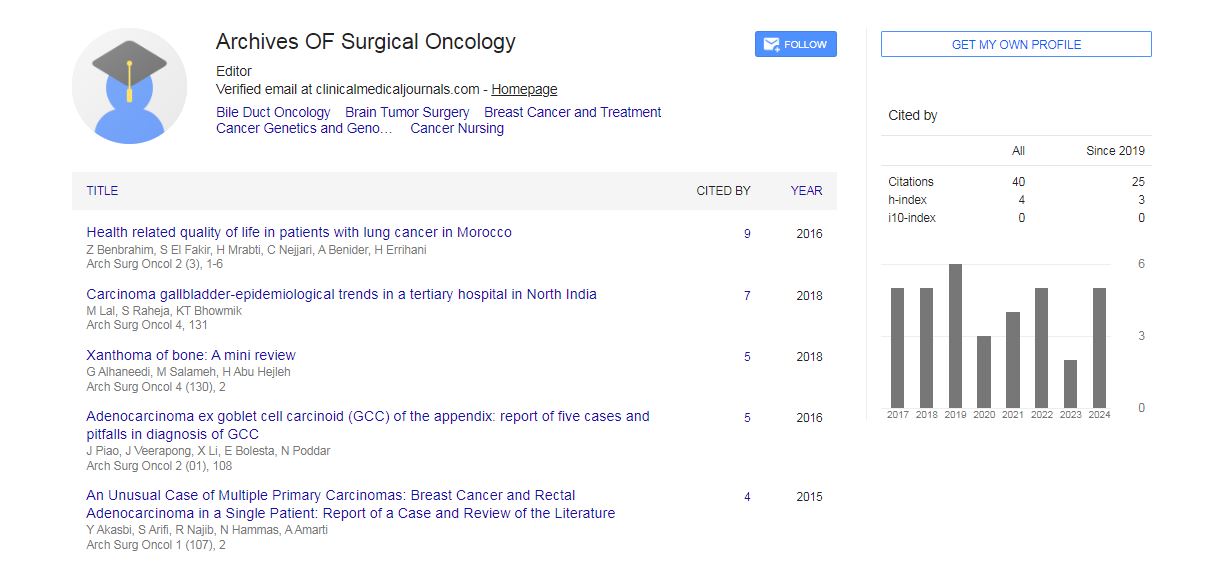
Archives of Surgical Oncology received 37 citations as per Google Scholar report