Perspective - (2025) Volume 14, Issue 3
Received: 01-Sep-2025, Manuscript No. jms-25-172642;
Editor assigned: 03-Sep-2025, Pre QC No. P-172642;
Reviewed: 17-Sep-2025, QC No. Q-172642;
Revised: 22-Sep-2025, Manuscript No. R-172642;
Published:
29-Sep-2025
, DOI: 10.37421/2167-0943.2024.14.416
Citation: Tao, Yueh. "Adipose Tissue, Dietary Fats, Metabolic Health." J Metabolic Synd 14 (2025):416.
Copyright: © 2025 Tao Y. This is an open-access article distributed under the terms of the Creative Commons Attribution License, which permits unrestricted use, distribution
and reproduction in any medium, provided the original author and source are credited.
This article explores the intricate mechanisms behind white adipose tissue dysfunction in obesity [1].
This review examines the complex relationship between dietary fats and cardiovascular disease risk [2].
This comprehensive review delves into the biology of brown adipose tissue (BAT) in humans, detailing its role in non-shivering thermogenesis and energy expenditure [3].
This article investigates the pathophysiological connections between obesity and non-alcoholic fatty liver disease (NAFLD) [4].
This paper explores how the body senses dietary fats in the gut and communicates this information to the brain, influencing satiety and overall metabolic regulation [5].
This review highlights the intertwined roles of inflammation and fibrosis within adipose tissue as key drivers of metabolic dysfunction in obesity [6].
This article investigates the intricate processes of beige adipocyte biogenesis, often referred to as "browning" of white fat [7].
This review highlights how aging significantly impacts adipose tissue, leading to structural and functional remodeling that contributes to metabolic dysfunction [8].
This review explores the fascinating bidirectional communication between gut microbiota and adipose tissue [9].
This review illuminates the complex process of adipogenesis, the development of new fat cells [10].
The intricate mechanisms behind white adipose tissue dysfunction in obesity are a major focus, as metabolic abnormalities in fat cells significantly contribute to systemic health issues [1]. Understanding these cellular and molecular pathways is crucial for identifying therapeutic targets that can restore healthy fat function. Beyond white adipose tissue, the biology of brown adipose tissue (BAT) in humans plays a vital role in non-shivering thermogenesis and energy expenditure [3]. Research explores how BAT activation can be leveraged for treating metabolic disorders, including obesity and diabetes, by covering its fundamental science and emerging therapeutic strategies. Further expanding on fat cell types, the processes of beige adipocyte biogenesis, often referred to as 'browning' of white fat, are also under investigation [7]. This area explores the molecular pathways and environmental cues that trigger white adipose tissue to acquire brown fat-like characteristics, offering insights into enhancing energy expenditure and improving overall metabolic health. The fundamental development of new fat cells, a process called adipogenesis, from their developmental origins to the molecular signals regulating differentiation, is also critical [10]. Altered adipogenesis has implications in various metabolic diseases, leading to explorations of novel therapeutic avenues that target fat cell formation.
Obesity's profound impact extends to severe conditions like non-alcoholic fatty liver disease (NAFLD) [4]. Key molecular and cellular mechanisms, such as insulin resistance, inflammation, and altered lipid metabolism, drive the progression from simple steatosis to more severe liver pathologies. Adipose tissue itself is a site of significant metabolic activity, and its inflammation and fibrosis are recognized as key drivers of metabolic dysfunction in obesity [6]. Delving into the cellular and molecular mechanisms behind these processes helps in identifying therapeutic strategies aimed at mitigating adipose tissue pathology, ultimately improving metabolic health. Furthermore, aging significantly impacts adipose tissue, causing structural and functional remodeling that contributes to metabolic dysfunction [8]. Changes in fat distribution, cellular senescence, and inflammatory profiles within adipose tissue during aging are linked to increased risks of various age-related metabolic diseases.
Dietary fats play a complex role in cardiovascular disease risk [2]. Different types of fatsâ??saturated, unsaturated, and trans fatsâ??impact lipid profiles, inflammation, and endothelial function differently, informing dietary recommendations for heart health. The body's sophisticated sensing of dietary fats in the gut and subsequent communication to the brain significantly influences satiety and overall metabolic regulation [5]. This gut-brain axis involves intricate neural and hormonal pathways crucial for appetite control and maintaining energy balance. This communication extends to the fascinating bidirectional relationship between gut microbiota and adipose tissue [9]. Microbial communities in the gut can influence fat storage, metabolism, and inflammatory responses, while conversely, dietary fats can shape the gut microbiome, collectively impacting host metabolic health.
Identifying potential therapeutic targets is a recurring theme across these studies. Restoring healthy white adipose tissue function [1], leveraging brown adipose tissue activation [3], mitigating adipose tissue inflammation and fibrosis [6], and exploring altered adipogenesis [10] all point towards novel intervention strategies for metabolic diseases. The insights gained from understanding dietary fat impact [2], gut-brain communication [5], and the gut microbiota-adipose tissue axis [9] provide avenues for lifestyle and nutritional interventions. Addressing the links between obesity and NAFLD [4], and the effects of aging on adipose tissue [8], underscores the need for comprehensive approaches in metabolic disease management. The cumulative knowledge from these articles emphasizes a holistic view of fat biology and its systemic implications.
This collection of research explores the multifaceted roles of adipose tissue and dietary fats in metabolic health and disease. It delves into how white adipose tissue dysfunction in obesity contributes to systemic health issues, detailing cellular and molecular pathways, and suggests therapeutic targets for restoring healthy fat function. The impact of different dietary fats on cardiovascular disease risk, lipid profiles, inflammation, and endothelial function is examined, providing insights into heart-healthy dietary recommendations. Another key area is the biology of brown adipose tissue (BAT) in humans, highlighting its role in thermogenesis and energy expenditure, and its potential to treat metabolic disorders like obesity and diabetes through activation strategies. The link between obesity and non-alcoholic fatty liver disease (NAFLD) is investigated, outlining mechanisms such as insulin resistance, inflammation, and altered lipid metabolism. Communication pathways are also a focus, including how the gut senses dietary fats and signals to the brain, influencing satiety and metabolic regulation, and the bidirectional communication between gut microbiota and adipose tissue, affecting fat storage, metabolism, and inflammatory responses. Furthermore, the papers discuss adipose tissue inflammation and fibrosis as critical drivers of metabolic dysfunction, alongside the processes of beige adipocyte biogenesis, which involves 'browning' white fat to enhance energy expenditure. The significant impact of aging on adipose tissue remodeling and metabolic dysfunction, leading to increased risks of age-related diseases, is also addressed. Finally, the collection covers adipogenesis, the development of new fat cells, from developmental origins to its implications in metabolic diseases and emerging therapeutic strategies.
None
None
Indexed at, Google Scholar, Crossref
Indexed at, Google Scholar, Crossref
Indexed at, Google Scholar, Crossref
Indexed at, Google Scholar, Crossref
Indexed at, Google Scholar, Crossref
Indexed at, Google Scholar, Crossref
Indexed at, Google Scholar, Crossref
Indexed at, Google Scholar, Crossref
Indexed at, Google Scholar, Crossref
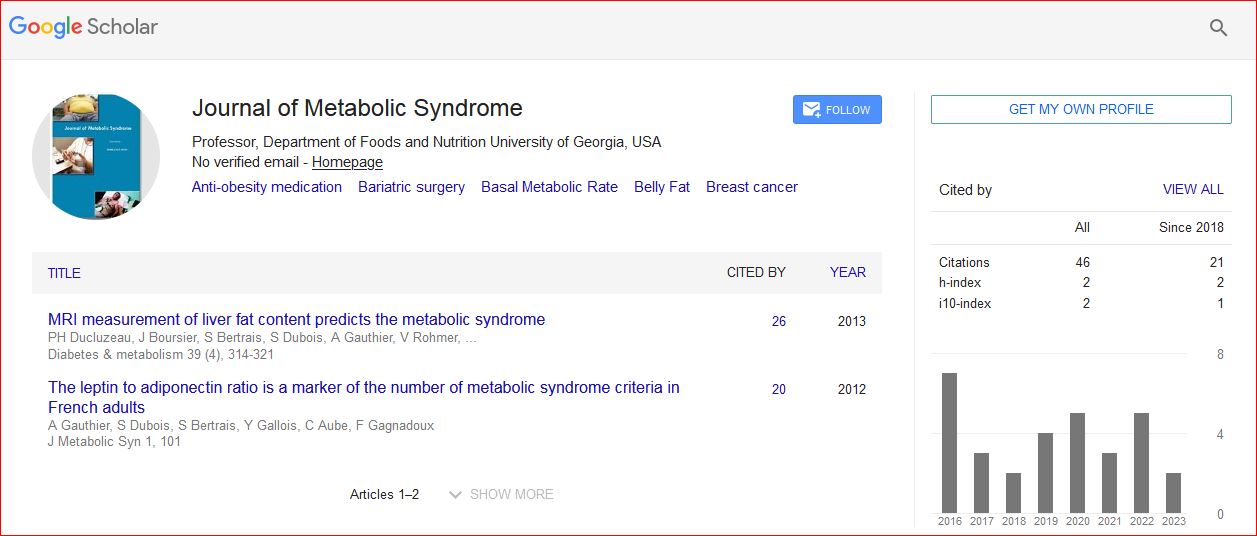
Journal of Metabolic Syndrome received 48 citations as per Google Scholar report