Opinion - (2025) Volume 15, Issue 4
Received: 01-Jul-2025, Manuscript No. jnt-26-178946;
Editor assigned: 03-Jul-2025, Pre QC No. P-178946;
Reviewed: 17-Jul-2025, QC No. Q-178946;
Revised: 22-Jul-2025, Manuscript No. R-178946;
Published:
29-Jul-2025
, DOI: 10.37421/2161-0959.2025.15.573
Citation: Novak, Katarina. ”Acute Kidney Injury on Chronic Kidney Disease: Challenges.” J Nephrol Ther 15 (2025):573.
Copyright: © 2025 Novak K. This is an open-access article distributed under the terms of the Creative Commons Attribution License, which permits unrestricted use, distribution and reproduction in any medium, provided the original author and source are credited.
Acute on chronic kidney disease (CKD) presents a formidable clinical challenge, demanding a nuanced understanding of its complex pathophysiology and management strategies. The intricate interplay between a compromised baseline renal function and superimposed acute insults necessitates a comprehensive approach to diagnosis and intervention. Identifying the triggers that precipitate acute decompensation is paramount to preventing irreversible kidney damage and improving patient outcomes. Differentiating true acute kidney injury (AKI) from a simple progression of CKD is a critical step in guiding appropriate therapeutic decisions, underscoring the need for specialized expertise in nephrology [1].
The underlying etiologies of AKI in the context of pre-existing CKD are diverse and require meticulous investigation to guide effective management. Common causes include volume depletion, exposure to nephrotoxic agents, and significant hemodynamic instability. A detailed diagnostic workup, incorporating judicious use of laboratory tests and imaging modalities, is essential for pinpointing the contributing factors and formulating a targeted therapeutic plan. Promptly addressing and reversing these identifiable causes significantly impacts the prognosis for these vulnerable patients [2].
Inflammatory pathways play a pivotal role in the pathogenesis of AKI superimposed on CKD. The exacerbation of existing renal injury by inflammatory processes contributes to further kidney damage and can accelerate the development of fibrosis. Understanding these inflammatory mechanisms opens avenues for novel therapeutic targets, including cytokine inhibitors and anti-inflammatory agents, offering the potential for personalized medicine approaches based on individual inflammatory profiles [3].
Fluid management in patients with AKI on CKD represents a significant clinical dilemma, requiring a delicate balancing act. Evidence-based recommendations are crucial for optimizing fluid balance, carefully considering the intricate interplay between systemic volume status, cardiac function, and renal perfusion. The risks and benefits associated with both fluid administration and withdrawal must be carefully weighed, emphasizing the necessity of individualized assessment and the judicious use of monitoring tools to guide these critical decisions [4].
Electrolyte disturbances, particularly hyponatremia and hyperkalemia, pose a critical threat to patients with AKI on CKD. The pathophysiology underlying these imbalances necessitates prompt recognition and correction to avert life-threatening complications such as cardiac arrhythmias and seizures. The role of renal replacement therapy, including dialysis, is vital in managing severe electrolyte abnormalities and restoring homeostasis in these complex cases [5].
The early detection and prognostication of AKI in patients with CKD can be significantly enhanced through the use of specific biomarkers. Novel biomarkers, such as urinary neutrophil gelatinase-associated lipocalin (NGAL) and kidney injury molecule-1 (KIM-1), have demonstrated promise in predicting AKI development and severity. These biomarkers hold the potential to aid in risk stratification and facilitate timely therapeutic interventions, leading to improved patient management [6].
Anemia is a common comorbidity in patients with AKI on CKD, and its management presents unique challenges. The impact of AKI on erythropoiesis, coupled with pre-existing CKD-related anemia, complicates the optimization of hemoglobin levels. Current guidelines for iron supplementation and the use of erythropoiesis-stimulating agents require careful consideration, with an emphasis on individualized treatment to minimize adverse effects and enhance the overall quality of life for affected patients [7].
Renal replacement therapy (RRT) strategies are indispensable for patients experiencing AKI superimposed on CKD. A comparative analysis of intermittent hemodialysis, continuous renal replacement therapy (CRRT), and peritoneal dialysis highlights their respective benefits and drawbacks in this complex patient population. The selection of the appropriate RRT modality must be guided by the patient's hemodynamic status, comorbidities, and overarching goals of care [8].
Nutritional management, while often overlooked, plays a critical role in the care of patients with AKI on CKD. Guidance on optimizing protein and calorie intake, along with managing fluid and electrolyte balance through diet, is essential. Addressing micronutrient deficiencies and initiating early nutritional support can significantly contribute to improved recovery and a reduction in associated complications [9].
Cardiovascular complications are intrinsically linked to the presence of AKI on CKD, forming a bidirectional relationship between cardiac and renal dysfunction. Factors such as fluid overload, electrolyte imbalances, systemic inflammation, and the accumulation of uremic toxins contribute to this heightened cardiovascular risk. Integrated management strategies are paramount to mitigating these risks and improving the long-term prognosis for these patients [10].
The clinical landscape of acute on chronic kidney disease (CKD) is fraught with complexities in both diagnosis and management, necessitating timely and effective interventions to halt progression and enhance patient outcomes. Key to this approach is the identification of precipitating events leading to acute decompensation, the careful differentiation between acute kidney injury (AKI) and CKD progression, and the tailoring of treatment strategies to the unique profile of each patient. The importance of a multidisciplinary care model, involving nephrologists, intensivists, and other specialists, cannot be overstated in navigating this challenging condition [1].
Understanding the specific causes of AKI occurring in patients with established CKD is fundamental to implementing effective management. Common etiologies such as volume depletion, exposure to nephrotoxic substances, and hemodynamic instability must be thoroughly investigated. A comprehensive diagnostic workup, including a battery of laboratory tests and appropriate imaging, is crucial for identifying the factors contributing to the AKI and guiding subsequent therapeutic decisions. The emphasis on promptly addressing any reversible causes is a cornerstone of successful management [2].
Inflammatory pathways are increasingly recognized for their significant role in the pathogenesis of AKI superimposed on CKD. These inflammatory processes can amplify existing kidney damage and contribute to the development of fibrotic changes within the renal parenchyma. The exploration of novel therapeutic targets aimed at modulating these inflammatory responses, such as cytokine inhibitors and anti-inflammatory medications, holds promise for future treatment strategies, potentially enabling personalized medicine approaches based on specific inflammatory markers [3].
Fluid management in the context of AKI on CKD presents a significant clinical challenge, requiring a careful balancing act between maintaining adequate perfusion and avoiding fluid overload. Evidence-based guidelines provide critical recommendations for optimizing fluid balance, taking into account the complex interplay between a patient's volume status, cardiac function, and the perfusion of the kidneys. The judicious administration or withdrawal of fluids necessitates individualized assessment and the skillful use of monitoring tools [4].
Electrolyte disturbances, particularly hyponatremia and hyperkalemia, are common and critical complications in patients with AKI on CKD. A thorough understanding of the pathophysiology of these imbalances is essential for their prompt recognition and effective correction. The timely management of these derangements is crucial to prevent life-threatening complications such as cardiac arrhythmias and neurological compromise. Dialysis often plays a vital role in managing severe electrolyte abnormalities [5].
Biomarkers are emerging as valuable tools for the early detection and prognostication of AKI in individuals with CKD. Studies evaluating novel biomarkers, including urinary neutrophil gelatinase-associated lipocalin (NGAL) and kidney injury molecule-1 (KIM-1), have shown their utility in predicting the onset and severity of AKI. These biomarkers can assist in risk stratification, enabling earlier and more targeted therapeutic interventions for at-risk patients [6].
Anemia is a frequent complication encountered in patients with AKI on CKD, impacting erythropoiesis and complicating efforts to optimize hemoglobin levels. Current strategies for managing anemia in this population, including iron supplementation and the use of erythropoiesis-stimulating agents, are reviewed. The importance of an individualized treatment approach is stressed to minimize potential adverse effects and improve the overall quality of life for patients [7].
Renal replacement therapy (RRT) is a critical component of care for patients experiencing AKI superimposed on CKD. The selection of an appropriate RRT modality, whether intermittent hemodialysis, continuous renal replacement therapy (CRRT), or peritoneal dialysis, depends heavily on the patient's hemodynamic stability, existing comorbidities, and overall treatment goals. A comparative understanding of the benefits and drawbacks of each modality is essential for optimal patient management [8].
Nutritional management is a vital yet often underappreciated aspect of caring for patients with AKI on CKD. Providing guidance on achieving adequate protein and calorie intake, along with managing fluid and electrolyte balance through dietary interventions, is crucial. Addressing potential micronutrient deficiencies and initiating nutritional support early in the course of illness can contribute significantly to improved recovery and a reduction in the incidence of complications [9].
Cardiovascular complications are highly prevalent in patients with AKI on CKD, reflecting a complex and often bidirectional relationship between cardiac and renal health. Contributing factors include fluid overload, electrolyte disturbances, systemic inflammation, and the accumulation of uremic toxins, all of which exacerbate cardiovascular risk. The implementation of integrated management strategies is essential for mitigating these cardiovascular risks and improving the long-term prognosis [10].
Acute on chronic kidney disease (CKD) presents significant diagnostic and management challenges. Key aspects include identifying triggers for acute decompensation, differentiating AKI from CKD progression, and tailoring treatments to individual patient needs, often requiring multidisciplinary care. Understanding underlying causes of AKI in CKD, such as volume depletion and nephrotoxins, is crucial, with prompt reversal of reversible factors being paramount. Inflammatory pathways contribute to kidney damage and fibrosis, leading to research into novel anti-inflammatory therapies. Fluid management requires careful balancing of administration and withdrawal based on individual patient status. Electrolyte disturbances like hyponatremia and hyperkalemia necessitate prompt correction, with dialysis often used for severe cases. Biomarkers are being explored for early AKI detection and prognostication. Anemia management in AKI on CKD requires individualized strategies. Renal replacement therapy modalities (hemodialysis, CRRT, peritoneal dialysis) must be chosen based on patient stability and goals. Nutritional support is critical for recovery. Cardiovascular complications are common and require integrated management due to the bidirectional relationship between heart and kidney disease.
None
None
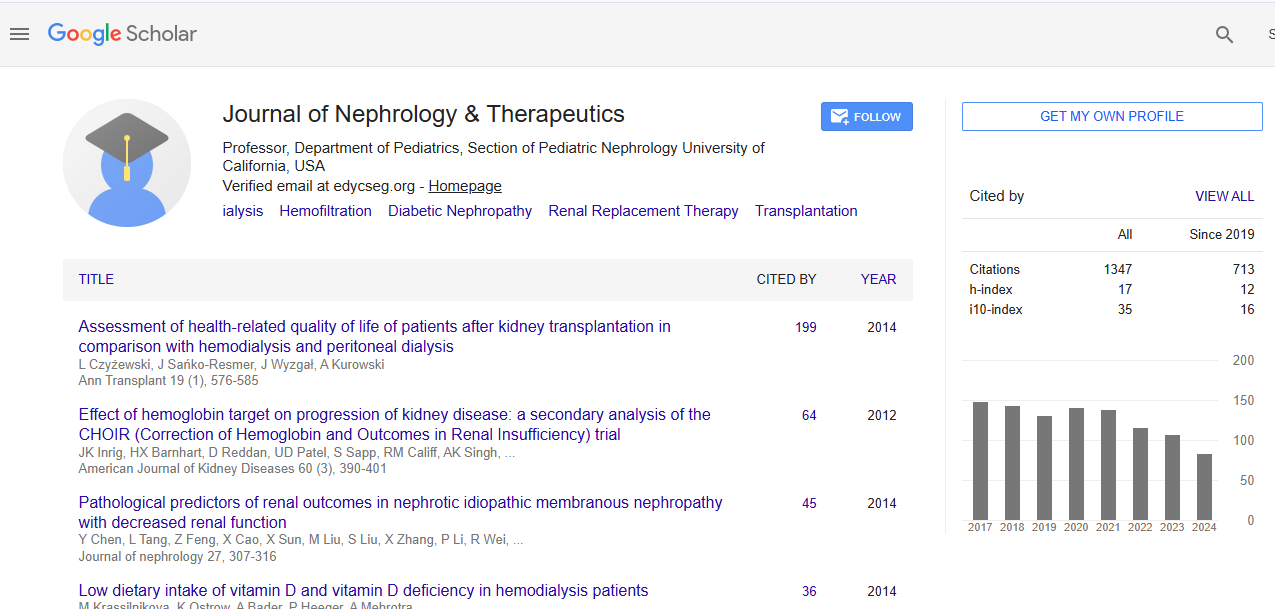
Journal of Nephrology & Therapeutics received 784 citations as per Google Scholar report