Review Article - (2025) Volume 16, Issue 3
Received: 15-Jun-2024, Manuscript No. BEJ-24-139129;
Editor assigned: 18-Jun-2024, Pre QC No. BEJ-24-139129 (PQ);
Reviewed: 02-Jul-2024, QC No. BEJ-24-139129;
Revised: 16-May-2025, Manuscript No. BEJ-24-139129 (R);
Published:
23-May-2025
, DOI: 10.37421/2151-6219.2025.16.545
Citation: Subramaniam, Omprakasam. "A Human Capital Analysis of the Occupational Health and Safety (OHS) Managerial Concerns of Beaconsfield Mine (Technical Report)." Bus Econ J 16 (2025): 545.
Copyright: 2025 Subramaniam O. This is an open-access article distributed under the terms of the creative commons attribution license which permits unrestricted use, distribution and reproduction in any medium, provided the original author and source are credited.
The report discusses the case study subject of “The Beaconsfield Mine” adapted from de Ceiri and its Occupational Health and Safety (OHS) management aspect. It is noted that the organization sees this as a secondary concern when the perspective of operating costs of business are highlighted by the owners and senior management.
The technical paper will elaborate how such an approach may have serious adverse consequences and will explain the lessons HR managers can learn. In view of the case, a discussion underpinning a strategic approach to Human Resources Management (HRM) will be conducted. The intent of this paper is to posit that the strategic approach of HRM investment in OHS can reduce mining accidents.
Readings from the case study literature has been done and findings can be made to conclude that OHS management is important where costs involving OHS is primary and not secondary. These findings are also supported by secondary research involving research done on databases.
Occupational Health and Safety (OHS) • Human Resources Management (HRM) • Accountability • Accidents
Consequences of OHS being a secondary concern
In any organization conducting high risk activities such as mining, there are always negative effects if such OHS concerns are secondary. They include:
Accidents
Because Beaconsfield mining company had no one who understood OHS safety, when OHS related risks occur, it threatens to have an impact on creating accidents in the workplaces It is not in effect the diseases by itself that contributes to occupational accidents, but the workplace environment preceding the manifestation of the diseases. According to, the most prominent ones of these risks leading to the occupational illnesses are especially muscular and skeleton diseases [1].
Confusion and little confidence with company
In Beaconsfield mine, there is little concern for health and safety aspects since the management sees this as a secondary concern. They perceive little for investment in this area since there are no workers trained in safety [2]. When there is a lack of training, there is obviously a lack in proper procedures and communication.
Deteriorating performance and little accountability
Meetings and miner participation for such avoidance of danger was also lacking. The resulting impacts for neglecting these aspects usually lead to a deteriorating performance. In the case quoted, accidents leading to death usually occurs in the mining area without adhering to OHS regulations [3]. Death of workers would mean a full investigation with bans for 6 months to a year of operations. Accountability from the directors is required, and punishment will be meted out through fine or jail sentences.
Depreciates in share value
Any failures to adhere to OHS issues can result in shareholder implications. In one instance, for example, Fry and Lee show that US listed firm value decreases around the date that Occupational Safety and Health Administration (OSHA) sanctions are reported in the Wall Street Journal. They find that the decrease in value is considerably larger than the direct cost arising from the OSHA sanctions [4]. Thus, organizational value drops when authorities act. However, although the intention of safety regulation is good, it is arguable that no amount of OHS can prevent diseases or accidents from resulting, leading to disastrous costs. However, a lack of it is definitely not a good mitigating factor.
Company becomes self-deluded and self-prescriptive
In Beaconsfield’s case, the official regulator for safety standards is the Workplace Standards of Tasmania, Australia. Where the mining accident occurred, there needs to be higher levels of scrutiny standards. However, such regulations are usually self-prescriptive, i.e., the regulations have to be ensured by the mining companies themselves. All organizations are noted to reduce costs without doing more investigation in OHS [5]. For instance, there is lack of investigation of the environment circumventing the mines. In the desolate areas of Australia where the mines reside, according to Eddington and Gratton, it is possible that the appropriate authorities (government, OH and S consultants) have not gone to the sites to conduct in-depth physical inspections in order to make incisive recommendations because these personnel believed the areas of operation were too primitive. They mention a prevalence of infectious diseases in the region or because there were long distances to travel. This explains a lack of responsibility toward OHS and the organizations’ employees [6].
There are much lessons to be learnt from the mining incident at Beaconsfield.
Change of empowerment from employers to employees
Accidents are usually a result derived from human attitudes and behaviour. Accidents maybe controlled or non-controlled, but accidents can be prevented with the correct attitudes and behavior, with the employees given more power to co-create ideas to prevent accidents. Cullen, Matthews and Teske, posit that, an organization may reap various benefits from the implementation of a management system that is focused on issues pertaining to workers’ occupational health and safety. As an example, through augmenting worker job satisfaction, an increase in productivity may be obtained, which can imply greater efficiency and protection for the organization [7].
Complex changes in the workplace
From a macro perspective, urban growth in Asia accounts for 70%. Some of the biggest cities in Asia are facing complex challenges in OHS simply due to the massive population of workers. Australian mining industry provide a good model of example to lead the OHS field. It must be understood that in order to lead, legislation is not sufficient [8]. There is a requirement to enforce the development of national standards and enforcement processes, otherwise it would seem tokenistic to just allow companies to enforce these standards.
Media fragmentation
The media today exposes all kinds of incidences. This may usually strengthen the collective bargaining stance from the trade unions and workers instead of companies having the final say. The mining industry today does not just function with a company running its own business. This would also augment the relations between OHS institutions, of Australia and Asia-pacific nations, facilitate the training and education, and enhancement of domestic arrangements through bills in parliament. Any form of deviation from the OHS regulations will mean that the company will not be able to survive long under the scrutiny of the media [9].
Inadequate knowledge of HRM and OHS integration
Adequate management of occupational health and safety would, thus, also bring a positive influence in shareholders' interest and value, and consequently in the organization’s suppliers, given the opportunities for business. Workers are not just numbers. They are emotional beings. Consumers on the receiving end of the mining products would not relish purchasing products which are derived from causalities.
In comparison with American for instance, highlighting the importance of safety and work injuries to organizations and employees, the National Safety Council reported that American work injuries cost $164.7 billion in the year 2006 alone. Despite this enormous cost, noted that less than 1% of organizational research published in top journals has focused on workplace safety [10]. There needs to be more investigative studies in this area for some other nations. It certainly maybe the result of having a different OHS culture and climate in different nations.
Recommendation of HRM strategies to OHS
OHS plays an important role. Human resources must implement long-term organizational restructuring strategies that will include OHS to reduce accidents and diseases.
Mine reward safety programme
In Beaconsfield mine incident, there should be a “mine reward for safety programme” that stresses on avoiding a participatory facade theme. This would mean asking for employee suggestions for improving workplace safety, which will only be effective if the suggestions are implemented in a timely fashion. If the ideas provided by workers are ignored or implementation is postponed, when they are eventually implemented, the workers will not be motivated to support them [11]. This organizational restructuring strategy must include safety subculture and behavior among work teams.
The programme must be followed not just a talk and no walk session. All the important actors in the company must be aware of this programme. Anybody who flouts the regulations will be severly dealt with. And although in Beaconsfield case, the employees should suggest that there should not be intimidation through punishment, but rewards for employees who follow closely mining procedures and regulations.
Establishing rules and regulations.
It is however preposterous to provide more rewards for employees as this means additional costs. But could this mean a trade-off between following regulations closely and rewarding for following regulations? It is always critical for employees especially in mining, to address, report and suggest incidents and recommendations in their fields of expertise. This is because as mines develop policies and procedures in response to their own unique environments that are often more stringent than federal standards. Regulations found in guides developed by authorities do not always cover everything [12].
Delivering an OHS safety culture and climate
There needs to be a creation of a OHS safety culture and climate from the top to the bottom. It is of no use if the top management personnel support OHS in a vague manner, expressing little concern for it. This poses a difficult challenge to the employees as it would be difficult to identify a certain safety culture. Defines this safety culture as ‘‘occupational culture.’’ These cultures can be identified as, ‘‘a group of people who consider themselves to be engaged in the same sort of work; whose identity is drawn from the work; who share with one another a set of values, norms and perspectives’’ Once that occupational culture is set, it would be difficult to deviate from it. Behavioral practices via training is often perceived in this manner by workers, thus the strategy employed must ensure a leader that understands this bond. If there is a lack of bondship, no amount of communication and coordination will be successful. van Maanen and Barley continues to express.
Danger invites work involvement and a sense of fraternity. Recognition that one’s work entails danger heightens the contrast between one’s own work and the work of others, and encourages comparison of self with those who share one’s work situation. Attitudes, behaviors, and self-images for coping physically and psychologically with threat become part of an occupational role appreciated best, it is thought, only by one’s fellow workers.
Ground level understanding is required from the top directors. Essentially, the directors in Beaconsfield had to be held accountable for the deaths. Putting them in jail or a mandatory death penalty need not always be the case if such an occupational culture was built in the first place. It is to no surprise that the trade union seemed more interested in the case. How can this occupational culture be built then? There is a need to integrate other components apart from the internal culture of the organization. The trade union and workplace standards of Tasmania must also be involved in order to apply pressure on the directors to implement a suitable occupational culture.
Designing job scope
Additionally, there must be thorough knowledge understanding about the job design scope and mining apart from following regulations. A lack of mining work standards with a mismatch with workers’ capabilities should not be tolerated. Knowledge of risk factors has a preventive function. To improve safety, one must.
Integrate knowledge through the practical application of information
The experience and knowledge sets should be applied to older workers, especially if the miners are doing part-time work. Older workers do bring in some advantages when they are slow. They tend to be more careful and awareness of safety standards. It would be redundant if such knowledge not be used during the most critical time. It is one thing to know, but another thing to do. In the Beaconsfield incident, steel meshes were not enhanced to contain the blast of the rocks. Many injuries occur because workers do not adhere to safety procedures suggested.
Eradicate rotten thinking
One reason workers do not follow safety procedures is a belief that they reflect an ideal type of safety rather than real-life experience. Without workers’ confidence, procedures fail to provide workers with a sense of control. Thus integrating knowledge is not just about a sense of inputting some information into the workers’ mind about safety, but there is a need to actually persuade and motivate workers to use that knowledge to effective use in a chaotic environment.
Justification of HRM strategies employed
The justifications for the abovementioned HRM strategical approaches are as follows:
OHS is an important aspect in every organization to ensure that workers are capable of functioning at optimum level. There is also truth that implementing and adhering to OHS can reduce mining accidents and improve the organization’s overall well-being. Without the implementation and concern for OHS, this will lead to more risks in deaths and poorer performance. There are also national standards of rules and regulations for organizations to follow, where organization’s top management will have to take note of. Lessons to be learnt will mean having to take a lead role where OHS lessons can be learnt or taught, especially so when Asia is facing the most challenges with Australia being one of the leader in OHS. The OHS restructuring strategies in the organization will be the most critical part that involve job design, rewards programmer, mining regulations and procedures and safety culture and climate elements.
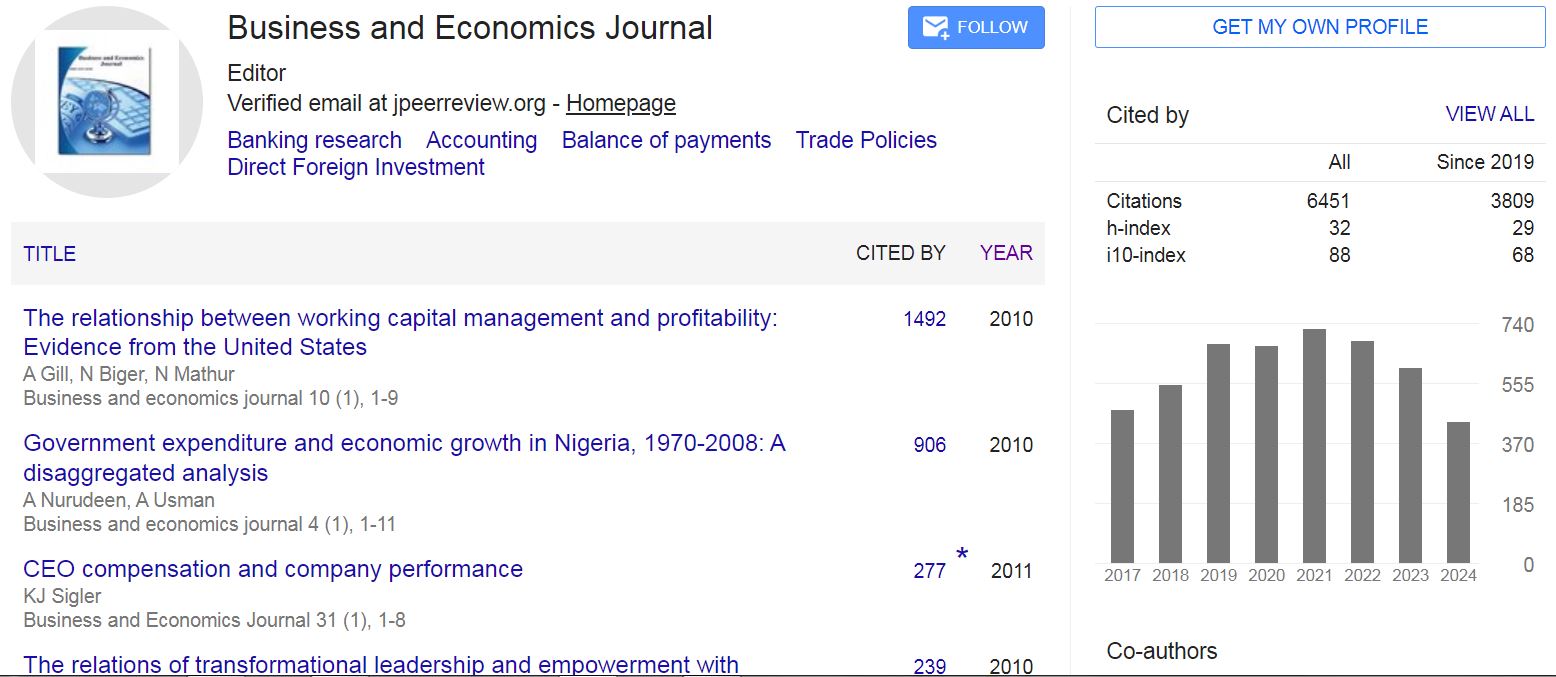
Business and Economics Journal received 6451 citations as per Google Scholar report