Bacillus thuringiensis is an aerobic, spore-forming, Gram-positive, rod-shaped bacterium widely distributed in the natural environment from the Arctic to the tropics. The bacteria's entomopathogenic and insecticidal action was first noted by Ishiwata in Japan in 1901. In 1915, another strain was found in Thuringia, Germany, by Berliner, who found it called B. thuringiensis. The first microbial insecticide based on Bt was marketed in France in 1938; Bt was registered in the United States in 1961. Extensive overviews of the history, biology, early and current use and toxicology of this most important antimicrobial agent are available. This section will address the problems associated with the conventional use of this bacterial insecticide and genetically modified crops expressing BT insecticidal toxins will only be mentioned when approriate.
Research Article: Molecular Biology: Open Access
Research Article: Molecular Biology: Open Access
Research Article: Molecular Biology: Open Access
Research Article: Molecular Biology: Open Access
Research Article: Molecular Biology: Open Access
Research Article: Molecular Biology: Open Access
Research Article: Molecular Biology: Open Access
Research Article: Molecular Biology: Open Access
Editorial: Molecular Biology: Open Access
Editorial: Molecular Biology: Open Access
Accepted Abstracts: Journal of Molecular Biomarkers & Diagnosis
Accepted Abstracts: Molecular Biomarkers & Diagnosis
Scientific Tracks Abstracts: Journal of Tissue Science and Engineering
Scientific Tracks Abstracts: Journal of Tissue Science and Engineering
Scientific Tracks Abstracts: Journal of Tissue Science and Engineering
Scientific Tracks Abstracts: Journal of Tissue Science and Engineering
Scientific Tracks Abstracts: Journal of Cytology & Histology
Scientific Tracks Abstracts: Journal of Cytology & Histology
Accepted Abstracts: Metabolomics:Open Access
Accepted Abstracts: Metabolomics:Open Access
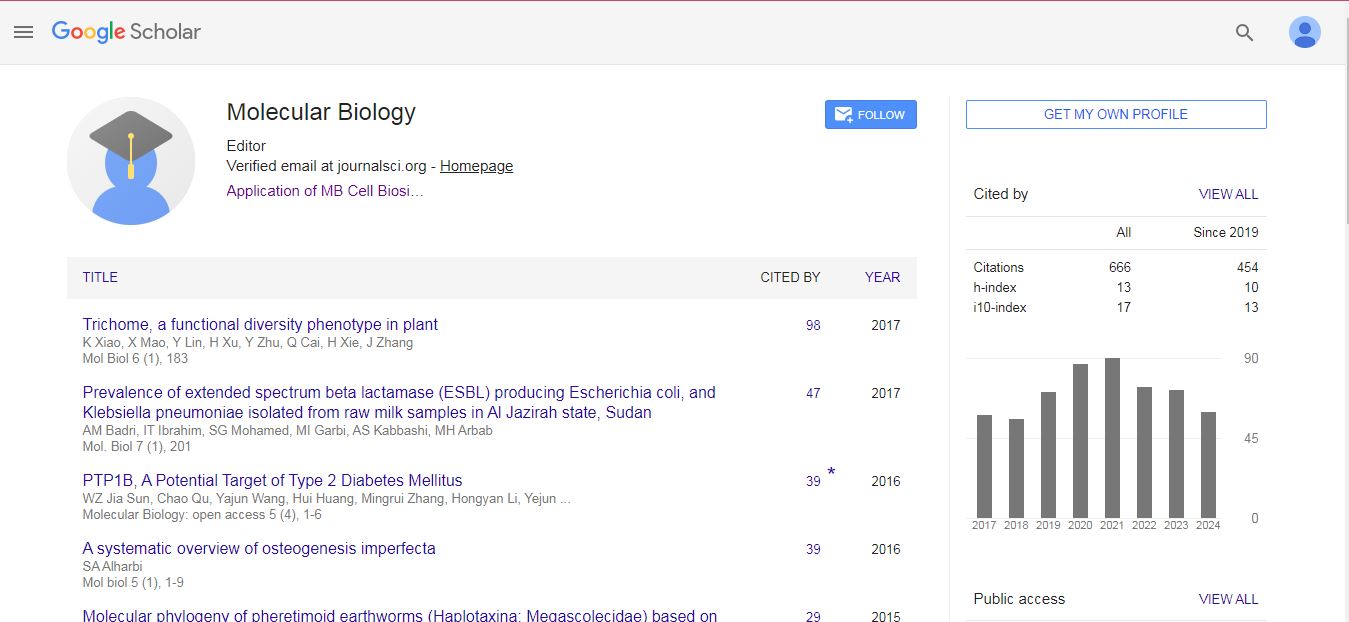
Molecular Biology: Open Access received 607 citations as per Google Scholar report

 Spanish
  Chinese
  Russian
  German
  French
  Japanese
  Portuguese
  Hindi
Hindi 