The automobile industry has seen a very rapid growth in the past decade, this is followed by the evolution from ordinary inline cylinder engines to high performance V-type engines, etc., but the parameters which take the center stage of the competition are efficiency, power, and environmental safety. One technology that is going to be the heart of the future diesel cars is TWIN TURBO technology. The basic principle is derived from the old familiar turbo mechanism. This uses the exhaust from the engine to pressurize the inlet air, thereby providing more oxygen to flow through the combustion chamber, to burn the fuel more efficiently and thus increasing the power output. Unlike the Bi-Turbo mechanism, this Twin Turbo is a combination of two turbo chargers mounted serially rather than in parallel. This configuration offers the car a whopping 112 BHP per litre (1000cc) of engine capacity, which is a world record. And it produces a maximum torque of 400Nm at 1400 RPM. Even though the car delivers a much higher power than its counterparts, it still maintains the conventional 16.5 KMpL as mileage. The environmental safety standard is the major consideration today; this technology is EURO V ready. The only car in India, which has this facility, is Hyundai i20. This technology if properly adopted by the automobile industry could provide a major breakthrough in the Indian commercial car manufacturing.
Market Analysis: Advances in Robotics & Automation
Market Analysis: Advances in Robotics & Automation
Review Article: Advances in Robotics & Automation
Review Article: Advances in Robotics & Automation
Research Article: Advances in Robotics & Automation
Research Article: Advances in Robotics & Automation
Editorial: Advances in Robotics & Automation
Editorial: Advances in Robotics & Automation
Editorial: Advances in Robotics & Automation
Editorial: Advances in Robotics & Automation
Scientific Tracks Abstracts: Biosensors & Bioelectronics
Scientific Tracks Abstracts: Biosensors & Bioelectronics
Scientific Tracks Abstracts: Journal of Material Sciences & Engineering
Scientific Tracks Abstracts: Journal of Material Sciences & Engineering
Posters & Accepted Abstracts: Journal of Material Sciences & Engineering
Posters & Accepted Abstracts: Journal of Material Sciences & Engineering
Accepted Abstracts: Journal of Material Sciences & Engineering
Accepted Abstracts: Journal of Material Sciences & Engineering
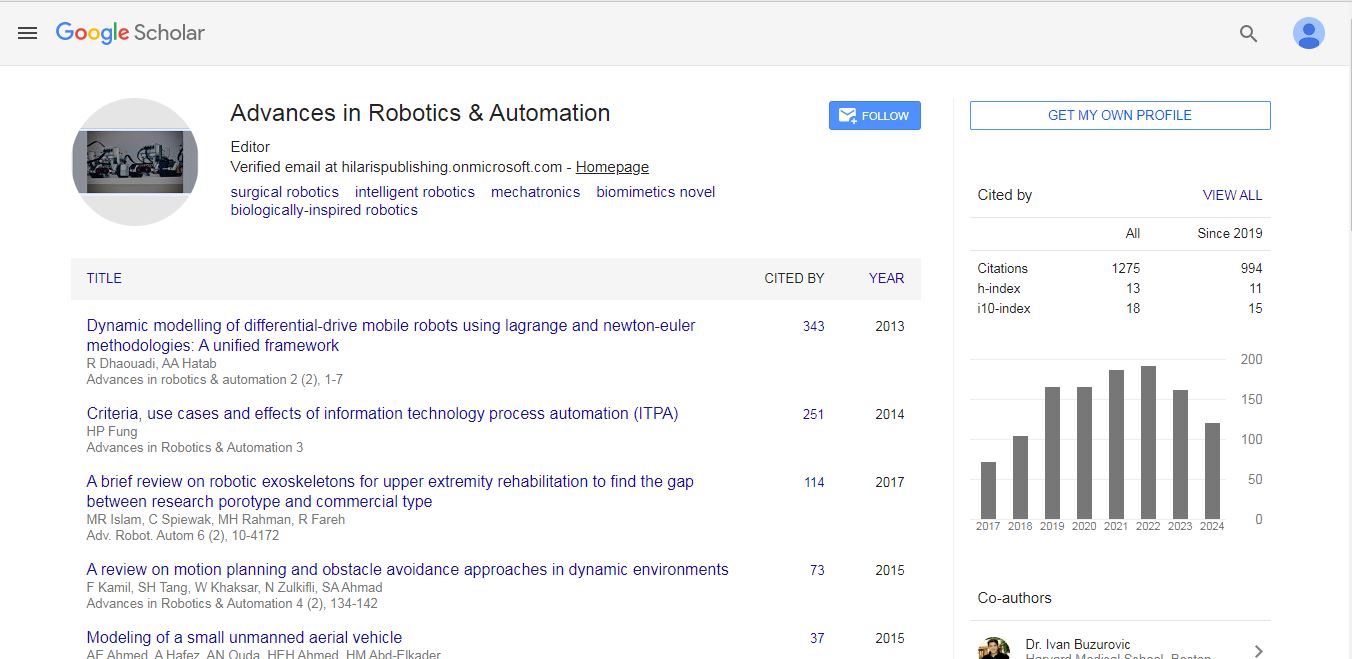
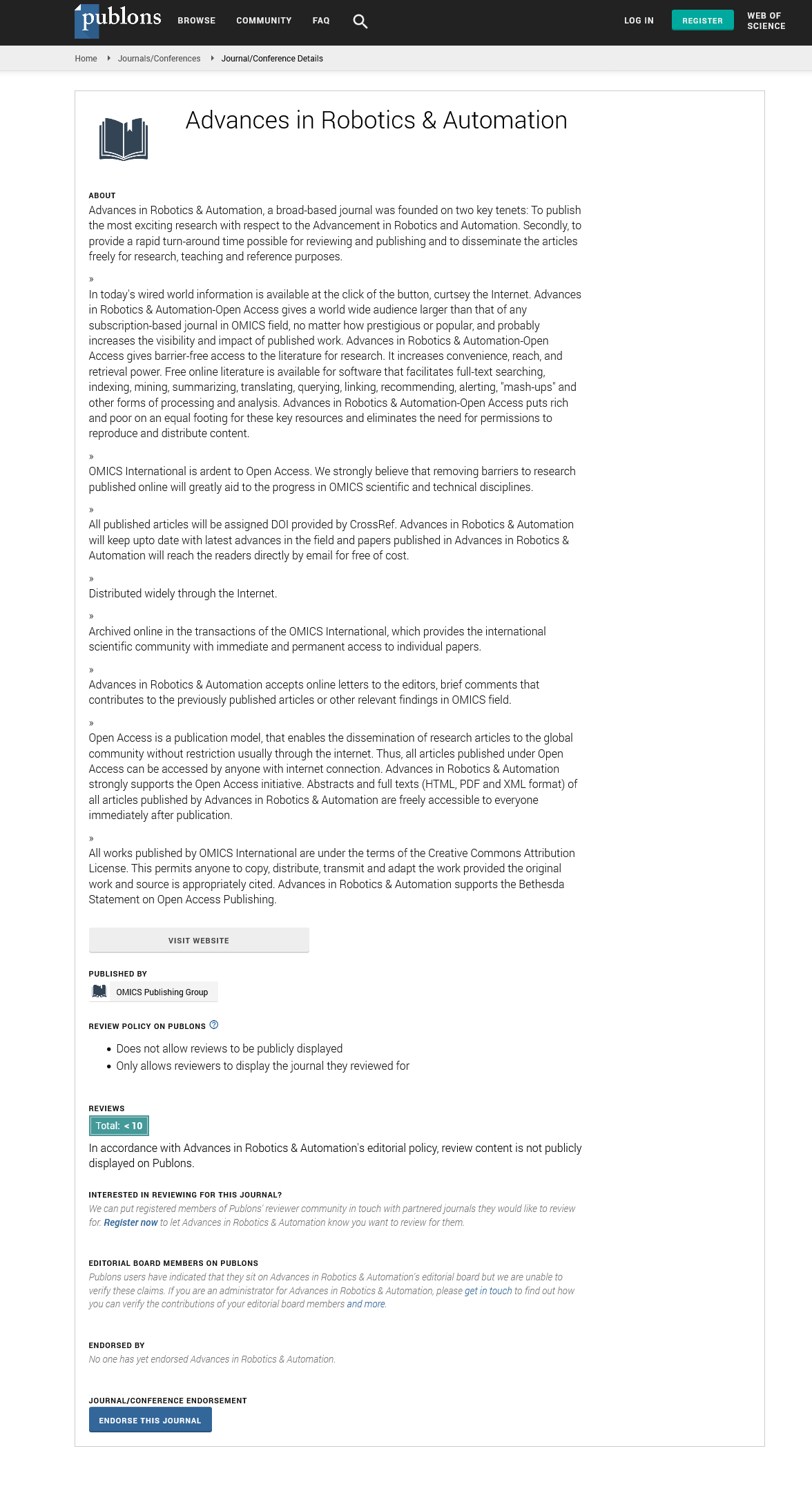
Advances in Robotics & Automation received 1275 citations as per Google Scholar report
 Spanish
  Chinese
  Russian
  German
  French
  Japanese
  Portuguese
  Hindi
Hindi 