DOI: 10.37421/2576-3857.2025.10.296
DOI: 10.37421/2576-3857.2025.10.293
DOI: 10.37421/2576-3857.2025.10.294
Cancer is a life-threatening disease that claims the lives of 3.4 million people each year around the world. Smoking, being overweight or obese, eating processed meat, radiation, family history, stress, environmental variables, and chance are all factors that contribute to cancer. Surgical excision of solid tumors, radiation therapy, and chemotherapy are the first-line treatments for cancer. The fundamental clinical failure of chemotherapy in cancer treatment is systemic delivery of the free drug, because only a little amount of the drug reaches the tumor site. The majority of chemotherapy Active Pharmaceutical Ingredients (APIs) are extremely cytotoxic to both cancer and normal cells. As a result, focusing on the tumor vasculatures is critical for tumor treatment. Encapsulation of anti-cancer medications within the liposomal system provides secure platforms for the delivery of these drugs in this context.
Khalid Hadadi, Mouhcine Hommadi*, Elktaibi Abderrahim, Oukabli Mohammed and Hassan Sifat
DOI: 10.37421/2576-3857.2025.10.295
Prostate cancer is among the most common cancers in males worldwide. Those diagnosed may undergo a variety of treatments ranging from radiation to surgery to chemotherapy and hormonal therapy. Although clinicians often encounter metastases in bones and lymph nodes, there are instances where the spread occurs to more unconventional sites. Here, we document a peculiar scenario involving a 76-year-old individual who had undergone prior treatment for prostate adenocarcinoma. This patient manifested symptomatic metastases specifically in the right testis and a lymph node, without evident widespread disease that might initially suggest a primary testicular tumor. This case report underscores the importance of contemplating the potential for metastatic disease in the differential diagnosis when assessing patients with a history of prostate cancer and a newly discovered mass. This consideration should persist until a whole evaluation of the tissue is conducted.
DOI: 10.37421/2576-3857.2025.10.293
DOI: 10.37421/2576-3857.2025.10.294
DOI: 10.37421/2576-3857.2025.10.295
DOI: 10.37421/2576-3857.2025.10.287
DOI: 10.37421/2576-3857.2025.10.298
DOI: 10.37421/2576-3857.2025.10.299
DOI: 10.37421/2576-3857.2025.10.300
DOI: 10.37421/2576-3857.2025.10.301
DOI: 10.37421/2576-3857.2025.10.302
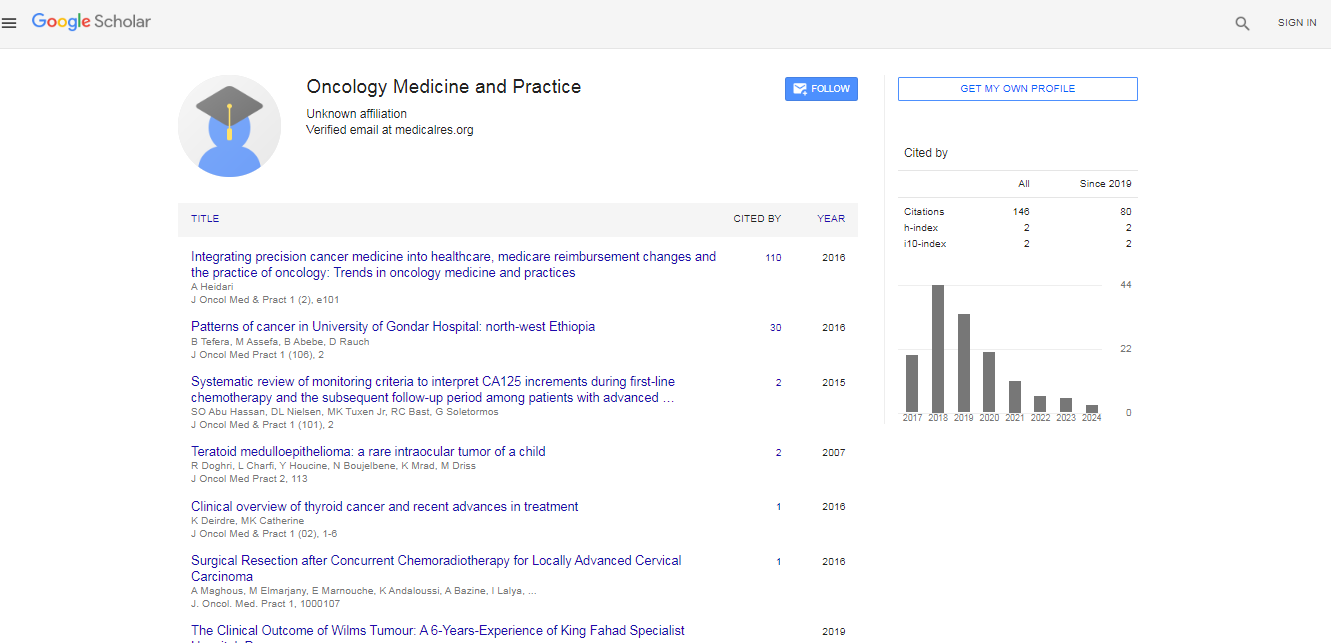
Journal of Oncology Medicine & Practice received 142 citations as per Google Scholar report
 Spanish
  Chinese
  Russian
  German
  French
  Japanese
  Portuguese
  Hindi
Hindi 