Commentary - (2025) Volume 16, Issue 6
Received: 01-Nov-2025, Manuscript No. hycr-25-175046;
Editor assigned: 03-Nov-2025, Pre QC No. P-175046;
Reviewed: 17-Nov-2025, QC No. Q-175046;
Revised: 24-Nov-2025, Manuscript No. R-175046;
Published:
01-Dec-2025
, DOI: 10.37421/2157-7587.2025.16.628
Citation: Ekström, Jonas. ”Wetlands: Indispensable, Threatened, Demanding Urgent Conservation.” Hydrol Current Res 16 (2025):628.
Copyright: © 2025 Ekström J. This is an open-access article distributed under the terms of the Creative Commons Attribution License, which permits unrestricted use,
distribution and reproduction in any medium, provided the original author and source are credited.
Coastal wetlands offer a powerful dual strategy for addressing climate change. They act as significant carbon sinks, effectively mitigating atmospheric CO2, and provide crucial protection against sea-level rise and extreme weather events, making them essential for adapting to a changing climate. Managing these ecosystems thoughtfully is a smart move for building resilience [1].
Restoring freshwater wetlands is critical, but it's a complex endeavor. Success hinges on a clear understanding of the environmental and social drivers impacting these systems, designing interventions that align with natural trajectories, and rigorously monitoring outcomes. It's about moving beyond simple intervention to fostering genuine ecological recovery [2].
Globally, wetlands continue to face significant loss despite increasing conservation efforts and policy development. Understanding the effectiveness of existing protected areas and international agreements is crucial for bridging the gap between policy ambition and on-the-ground outcomes, making sure we don't lose these vital habitats [3].
Peatlands are incredibly important as carbon sinks, holding vast amounts of organic carbon. But here's the thing: they're also highly vulnerable to climate change. Changes in temperature and hydrology can flip them from carbon sinks to carbon sources, creating a tricky feedback loop that accelerates global warming. Protecting and restoring them is a big deal for climate stability [4].
Wetlands excel as nature-based solutions for improving water quality. They naturally filter pollutants, remove excess nutrients, and retain sediments, making them invaluable for maintaining healthy aquatic ecosystems and providing clean water for human use. Integrating them into water management strategies just makes sense [5].
Wetlands worldwide face enormous threats, jeopardizing their rich biodiversity and the essential ecosystem services they provide. Insights from the IUCN Red List underscore how human activities, like habitat conversion and pollution, are pushing many wetland species to the brink. This really highlights the urgent need for stronger conservation efforts [6].
Urban wetlands are more than just green spaces; they profoundly enhance human well-being by offering recreational opportunities, improving air quality, and moderating local climates. What this really means is they provide a suite of ecosystem services crucial for building healthier, more livable cities. Investing in them just makes sense for urban planning [7].
Remote sensing has revolutionized how we map and monitor wetlands, offering powerful tools to track changes over vast areas. However, challenges persist, especially with distinguishing different wetland types and accurately capturing dynamic hydrological conditions. Future advancements in satellite technology and data processing promise even greater precision, which will be vital for effective conservation [8].
Wetlands offer effective, natural strategies for adapting to climate change, particularly in vulnerable coastal areas. They buffer against storm surges, stabilize shorelines, and provide crucial habitats, all while remaining more adaptable than hard infrastructure. What this means is that integrating these solutions into coastal management plans is key for long-term resilience [9].
Governing wetlands effectively in the Anthropocene presents both significant challenges and unique opportunities. Traditional management approaches often fall short in the face of rapid environmental change and complex human pressures. We need more integrated, adaptive governance frameworks that recognize wetlands' interconnectedness and foster collaborative solutions to secure their future [10].
Wetlands are indispensable ecosystems, playing a critical role in mitigating climate change and fostering adaptation worldwide [1]. Coastal wetlands, for example, function as powerful carbon sinks, actively reducing atmospheric carbon dioxide, while simultaneously providing essential buffers against sea-level rise and extreme weather events [1]. Similarly, peatlands hold vast reservoirs of organic carbon, making them incredibly important for climate stability. The concern here is their high vulnerability to climate change; shifts in temperature and hydrology can transform them from vital carbon sinks into carbon sources, creating a dangerous feedback loop that accelerates global warming. Protecting and restoring these unique environments is, therefore, a crucial step for maintaining planetary climate stability [4]. Beyond carbon sequestration, wetlands offer effective, natural strategies for climate change adaptation, especially in vulnerable coastal zones. They buffer against storm surges, stabilize shorelines, and provide essential habitats, proving to be more adaptable than conventional hard infrastructure. Integrating these wetland-based solutions into coastal management plans is absolutely key for ensuring long-term resilience [9].
Despite their undeniable value, wetlands continue to face significant global loss, even with increasing conservation efforts and policy development [3]. Restoring freshwater wetlands, while critical, is a complex endeavor. Success depends on a clear understanding of the environmental and social drivers affecting these systems, carefully designing interventions that align with natural ecological trajectories, and then rigorously monitoring the outcomes. It is about moving beyond simple fixes to genuinely fostering ecological recovery [2]. Understanding the true effectiveness of existing protected areas and international agreements becomes paramount to bridging the gap between stated policy ambitions and tangible, on-the-ground conservation outcomes. Without this understanding, we risk losing these vital habitats entirely [3].
Wetlands also excel as potent nature-based solutions for enhancing water quality. They naturally filter pollutants, remove excess nutrients, and retain sediments, making them invaluable for sustaining healthy aquatic ecosystems and supplying clean water for human consumption [5]. Integrating wetlands into broader water management strategies just makes sense. Moreover, urban wetlands are far more than mere green spaces; they profoundly improve human well-being. They provide crucial recreational opportunities, actively improve air quality, and effectively moderate local climates. What this really means is that these urban ecosystems deliver a comprehensive suite of services essential for building healthier, more livable cities. Investing in urban wetlands should be a core component of modern urban planning [7].
Here's the thing: wetlands worldwide are facing enormous threats, jeopardizing their rich biodiversity and the essential ecosystem services they provide. Insights gleaned from the IUCN Red List starkly highlight how pervasive human activities, such as habitat conversion and pollution, are pushing numerous wetland species to the brink of extinction. This grim reality strongly underscores the urgent need for significantly stronger and more coordinated conservation efforts globally [6]. To manage these complex challenges, remote sensing has revolutionized the way we map and monitor wetlands, offering powerful tools to track changes across vast geographical areas. However, persistent challenges remain, particularly in distinguishing diverse wetland types and accurately capturing dynamic hydrological conditions. Future advancements in satellite technology and data processing promise even greater precision, which will be undeniably vital for effective, data-driven conservation [8].
Finally, governing wetlands effectively in the Anthropocene presents both significant challenges and unique opportunities. Traditional management approaches often fall short when confronted with rapid environmental change and intricate human pressures. This necessitates the development of more integrated, adaptive governance frameworks. These frameworks must fundamentally recognize the inherent interconnectedness of wetlands and actively foster collaborative solutions to truly secure their future [10]. Thoughtful management and strategic investment in these natural systems are not just about environmental protection; they are about building resilience for both ecosystems and human societies [1, 9].
Wetlands are critical global ecosystems, providing a wide array of indispensable benefits essential for both environmental health and human well-being. They serve as significant carbon sinks, with coastal wetlands and peatlands actively mitigating atmospheric CO2 and offering crucial protection against rising sea levels and extreme weather events, making them vital for climate change adaptation [1, 4, 9]. Beyond climate regulation, wetlands act as powerful nature-based solutions for improving water quality, naturally filtering pollutants and ensuring a supply of clean water [5]. Even within urban environments, wetlands profoundly enhance human well-being by providing recreational opportunities, improving air quality, and moderating local climates, delivering essential ecosystem services for more livable cities [7]. Despite their immense value, wetlands globally continue to face substantial loss and numerous threats, including pervasive human activities like habitat conversion and pollution. These pressures jeopardize their rich biodiversity and compromise the essential ecosystem services they provide [3, 6]. Restoring freshwater wetlands is a complex but crucial endeavor, demanding a clear understanding of environmental and social drivers, careful intervention design, and rigorous monitoring to achieve genuine ecological recovery [2]. Effective conservation efforts and sustainable management demand the implementation of integrated, adaptive governance frameworks that can effectively address the rapid environmental changes and complex human pressures characteristic of the Anthropocene [10]. Remote sensing technology has revolutionized our ability to map and monitor wetlands across vast areas, and ongoing advancements promise even greater precision, which will be vital for informed and effective conservation strategies [8]. Ultimately, thoughtful management, robust policy, and strong conservation initiatives are absolutely essential for securing the future of these indispensable natural systems and the profound resilience they provide for both nature and society [1, 10].
None
None
Indexed at, Google Scholar, Crossref
Indexed at, Google Scholar, Crossref
Indexed at, Google Scholar, Crossref
Indexed at, Google Scholar, Crossref
Indexed at, Google Scholar, Crossref
Indexed at, Google Scholar, Crossref
Indexed at, Google Scholar, Crossref
Indexed at, Google Scholar, Crossref
Indexed at, Google Scholar, Crossref
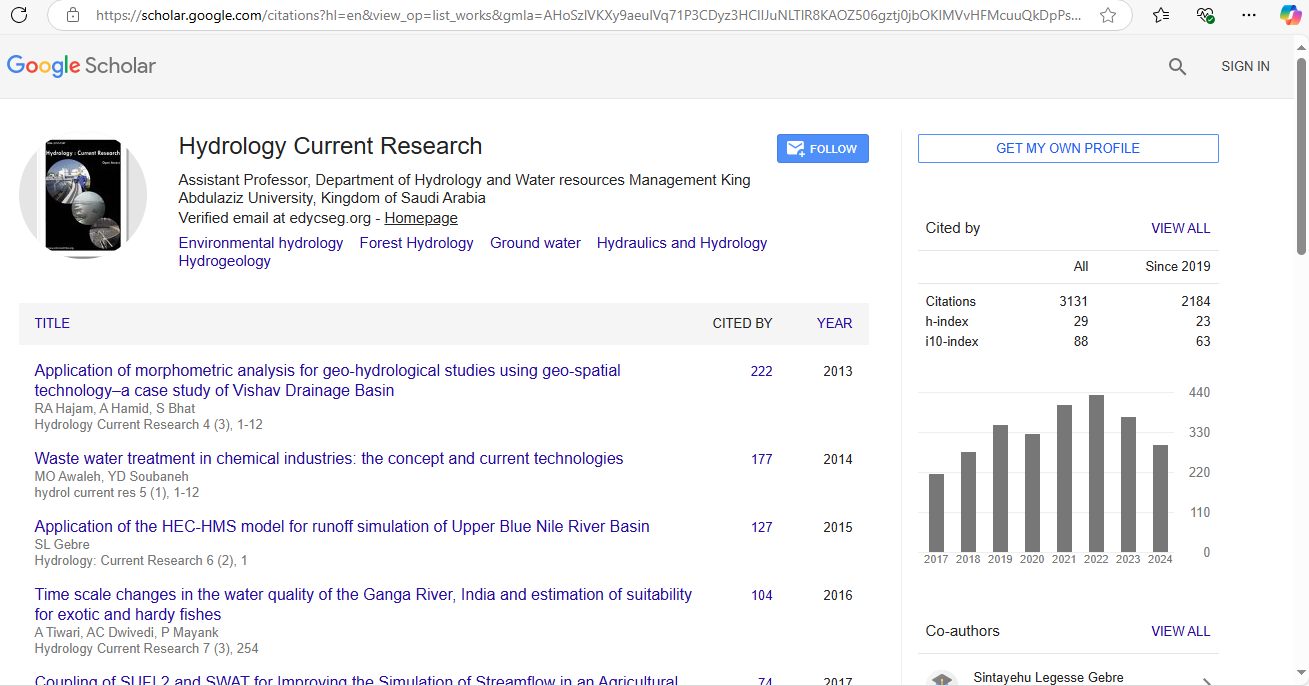
Hydrology: Current Research received 2843 citations as per Google Scholar report