Brief Report - (2025) Volume 14, Issue 5
Received: 01-Sep-2025, Manuscript No. VTE-26-180107;
Editor assigned: 03-Sep-2025, Pre QC No. P-180107;
Reviewed: 17-Sep-2025, QC No. Q-26-180107;
Revised: 22-Sep-2025, Manuscript No. R-180107;
Published:
29-Sep-2025
, DOI: 10.37421/2376-1318.2025.14.388
Citation: Rodriguez, Emily. ”Vitamin K2: A Key to Vascular Health.” Vitam Miner 14 (2025):388.
Copyright: © 2025 Rodriguez E. This is an open-access article distributed under the terms of the Creative Commons Attribution License, which permits unrestricted use, distribution and reproduction in any medium, provided the original author and source are credited.
Vitamin K, particularly its K2 isoform, has emerged as a critical nutrient for maintaining robust vascular health, primarily through its role in preventing arterial calcification. This vital function is mediated by its ability to carboxylate matrix Gla protein (MGP), a potent endogenous inhibitor of vascular calcification, thereby preserving arterial elasticity and reducing the risk of cardiovascular events. Extensive research underscores the significance of adequate vitamin K intake for optimal cardiovascular function, highlighting a growing understanding of its multifaceted benefits in circulatory well-being [1].
Menaquinone-4 (MK-4), a specific form of vitamin K2, has demonstrated notable efficacy in preclinical studies for its capacity to inhibit vascular calcification. Its mechanism of action is centered on the activation of MGP, which is fundamental to its protective effects on the vasculature. Ongoing clinical trials are diligently working to further elucidate the therapeutic potential of MK-4 supplementation, especially in individuals who are at an elevated risk of developing cardiovascular disease, paving the way for novel treatment strategies [2].
The intricate relationship between an individual's vitamin K status and the development of arterial stiffness is an increasingly significant area of scientific inquiry. Preliminary studies suggest a compelling association between higher dietary vitamin K intake and improved arterial elasticity, pointing towards a protective effect against vascular stiffening. This observed association is hypothesized to be influenced by vitamin K-dependent proteins that play crucial roles in regulating vascular smooth muscle cell function and the complex process of extracellular matrix remodeling within artery walls [3].
Emerging scientific evidence strongly indicates that vitamin K2 supplementation can exert a positive influence on endothelial function, which is the health and integrity of the inner lining of blood vessels. By enhancing the activity of vitamin K-dependent proteins, K2 is believed to promote the production of nitric oxide, a key vasodilator, and concurrently reduce oxidative stress, thereby contributing to the overall improvement and maintenance of blood vessel health [4].
Investigations are currently underway to explore the potential role of vitamin K in modulating the inflammatory processes that occur within the vascular wall, a known contributor to the progression of atherosclerosis. Certain derivatives of vitamin K are thought to possess anti-inflammatory properties that could be instrumental in hindering the advancement of atherosclerosis by effectively reducing the levels of pro-inflammatory mediators in the circulatory system [5].
Consistent long-term adherence to recommended dietary guidelines for vitamin K intake has been significantly linked to a demonstrably reduced incidence of coronary heart disease. This finding strongly suggests that vitamin K plays a crucial preventative role in the development of cardiovascular diseases, extending beyond its direct impact on calcification processes. This broader protective effect warrants further investigation [6].
The application and effectiveness of vitamin K supplementation in individuals diagnosed with chronic kidney disease (CKD) who exhibit a substantial burden of vascular calcification are currently subjects of intense scrutiny. Although some preliminary studies have yielded promising results, there remains a clear need for more comprehensive research to establish optimal dosing regimens and to fully understand the long-term benefits of supplementation in this particularly vulnerable patient population [7].
The profound influence of vitamin K on calcium metabolism extends significantly to its critical role in regulating arterial calcification. By actively participating in the process of directing calcium away from soft tissues, such as arteries, and towards bone tissue, vitamin K contributes to both a healthier vascular system and enhanced bone strength, promoting a dual benefit for overall skeletal and cardiovascular health [8].
The distinct forms of vitamin K, specifically phylloquinone (vitamin K1) and the various menaquinones (vitamin K2), may exert differential effects on vascular health. While vitamin K1 is predominantly associated with its essential role in blood coagulation, vitamin K2 is increasingly recognized and studied for its significant involvement in the prevention of vascular calcification and its broader cardiovascular benefits [9].
Clinical guidelines and recommendations are progressively beginning to acknowledge and incorporate advice regarding adequate vitamin K intake to effectively support vascular health. The growing awareness among healthcare professionals concerning the significant benefits of vitamin K, with a particular emphasis on K2, is proving instrumental in enhancing strategies for cardiovascular risk management, signifying a shift towards a more comprehensive approach to heart health [10].
Vitamin K, with a particular emphasis on its K2 form, plays a pivotal role in maintaining vascular health through its significant contribution to preventing arterial calcification. This protective action is achieved by facilitating the carboxylation of matrix Gla protein (MGP), an endogenous inhibitor of vascular calcification, thereby preserving the elasticity of arteries and diminishing the likelihood of cardiovascular events. Current scientific understanding strongly emphasizes the importance of maintaining adequate vitamin K levels for optimal cardiovascular function, highlighting its crucial role in circulatory system well-being [1].
Menaquinone-4 (MK-4), identified as a key form of vitamin K2, has demonstrated considerable effectiveness in preclinical research settings for its ability to inhibit the process of vascular calcification. The core mechanism behind its vascular protective effects lies in its capacity to activate MGP. To further validate and understand the full therapeutic potential of MK-4 supplementation, especially for individuals at heightened risk of cardiovascular disease, clinical trials are currently in progress [2].
The complex interaction between an individual's vitamin K status and the progression of arterial stiffness is an emerging and vital area of scientific investigation. Available evidence from studies suggests that individuals who consume higher amounts of vitamin K exhibit enhanced arterial elasticity, indicating a positive correlation. This relationship is believed to be facilitated by vitamin K-dependent proteins that are integral to the regulation of vascular smooth muscle cell activity and the intricate process of extracellular matrix remodeling within the arterial walls [3].
There is a growing body of evidence suggesting that vitamin K2 supplementation can positively impact endothelial function, which refers to the health and performance of the inner lining of blood vessels. By stimulating the activity of vitamin K-dependent proteins, K2 is thought to enhance the production of nitric oxide, a critical vasodilator, and simultaneously reduce oxidative stress, thereby contributing to improved blood vessel health and function [4].
The potential role of vitamin K in mitigating inflammatory responses within the vascular wall is currently being explored, as inflammation is a key factor in the development and progression of atherosclerosis. Research indicates that certain vitamin K derivatives may possess anti-inflammatory properties that could be beneficial in preventing atherosclerosis by reducing the levels of inflammatory mediators [5].
Long-term adherence to dietary recommendations for vitamin K intake has been consistently associated with a lower incidence of coronary heart disease. This observational data suggests a significant preventative role for vitamin K in the development of cardiovascular disease, going beyond its direct effects on calcification processes. The broader implications of this association require further exploration [6].
The efficacy of vitamin K supplementation in individuals suffering from chronic kidney disease (CKD) who also present with significant vascular calcification is a subject of ongoing research and critical review. While some early studies have shown encouraging outcomes, more extensive research is necessary to pinpoint optimal dosages and to confirm the long-term benefits of such supplementation within this specific patient group [7].
Vitamin K's influence on calcium metabolism is crucial, particularly in its effect on arterial calcification. It plays a role in directing calcium away from soft tissues, such as arteries, and towards bones, thereby promoting both a healthier vascular system and stronger skeletal structure [8].
The distinct forms of vitamin K, specifically phylloquinone (K1) and the menaquinones (K2), may exhibit differential impacts on vascular health. While K1 is primarily recognized for its role in blood clotting, K2 is increasingly acknowledged for its importance in preventing the calcification of blood vessels [9].
Clinical guidelines are starting to incorporate recommendations concerning vitamin K intake to support vascular health. The growing recognition among medical professionals regarding the advantages of vitamin K, especially K2, is enhancing the strategies employed in cardiovascular risk management, indicating a progressive evolution in patient care [10].
Vitamin K, particularly vitamin K2, is crucial for vascular health by preventing arterial calcification through the carboxylation of matrix Gla protein. Menaquinone-4 (MK-4), a form of K2, has shown efficacy in preclinical models for inhibiting vascular calcification. Research indicates a link between vitamin K status and improved arterial elasticity, potentially mediated by vitamin K-dependent proteins. Vitamin K2 supplementation may also enhance endothelial function by promoting nitric oxide production and reducing oxidative stress. Emerging evidence suggests vitamin K may have anti-inflammatory properties relevant to atherosclerosis. Long-term vitamin K intake is associated with reduced coronary heart disease incidence. The effectiveness of vitamin K supplementation in chronic kidney disease patients with vascular calcification requires further study. Vitamin K influences calcium metabolism, directing it towards bone and away from arteries. Different forms of vitamin K, K1 and K2, may have distinct vascular effects, with K2 being more recognized for calcification prevention. Clinical guidelines are beginning to recommend vitamin K for vascular health, increasing its awareness among healthcare professionals for cardiovascular risk management.
None
None
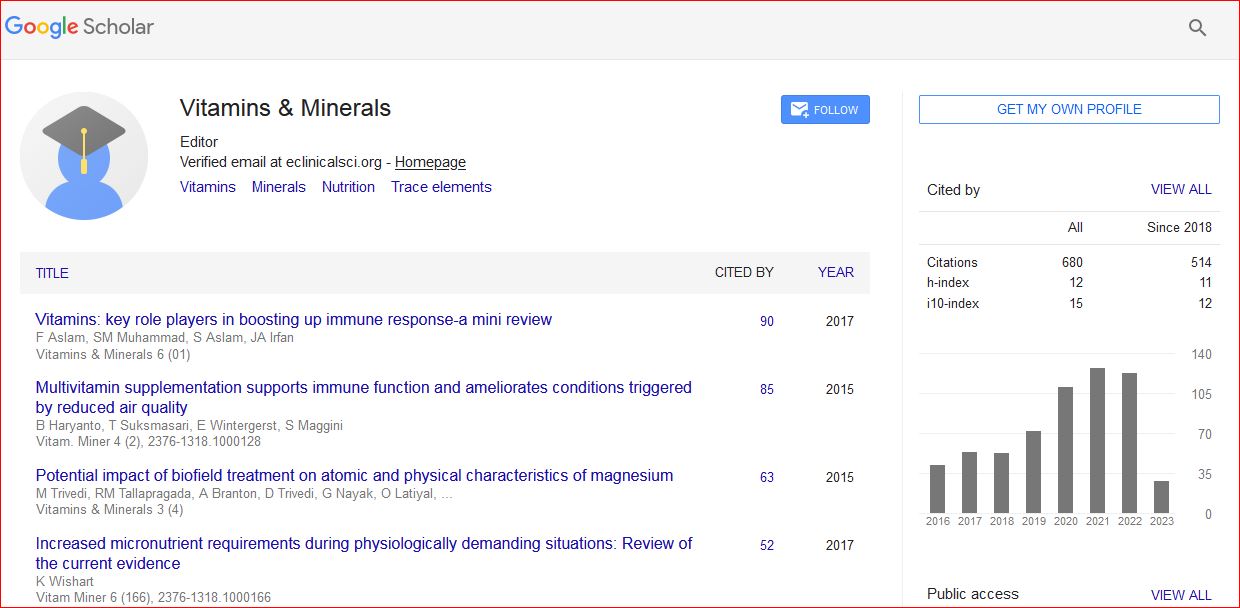
Vitamins & Minerals received 790 citations as per Google Scholar report