Brief Report - (2025) Volume 9, Issue 2
Received: 01-Apr-2025, Manuscript No. jcre-26-187108;
Editor assigned: 03-Apr-2025, Pre QC No. P-187108;
Reviewed: 17-Apr-2025, QC No. Q-187108;
Revised: 22-Apr-2025, Manuscript No. R-187108;
Published:
29-Apr-2025
, DOI: 10.37421/2795-6172.2025.9.291
Citation: Thompson, Daniel. ”Vitamin D In Osteoporosis: Beyond Sole Supplementation.” J Clin Res 09 (2025):291.
Copyright: © 2025 Thompson D. This is an open-access article distributed under the terms of the Creative Commons Attribution License, which permits unrestricted use, distribution and reproduction in any medium, provided the original author and source are credited.
This randomized trial investigated the efficacy and safety of Vitamin D supplementation in elderly patients diagnosed with osteoporosis. The study aimed to determine if increased Vitamin D intake could improve bone mineral density and reduce fracture risk in this vulnerable population. Key findings suggest that while Vitamin D plays a crucial role in bone health, its sole supplementation may not be sufficient to reverse established osteoporosis in the elderly. The results highlight the importance of considering combination therapies and lifestyle interventions alongside Vitamin D for optimal management. [1] Exploring the impact of high-dose Vitamin D on bone metabolism and falls in older adults with osteopenia, this study found that while Vitamin D levels improved, there was no significant reduction in fall incidence or improvement in bone mineral density compared to placebo over a two-year period. This suggests that higher doses may not translate to immediate functional or structural benefits in this specific patient group and points to the complexity of addressing fall prevention and bone health simultaneously. [2] This systematic review and meta-analysis evaluated the role of Vitamin D and calcium co-supplementation in preventing fractures in postmenopausal women. The analysis indicated a modest but statistically significant reduction in the risk of non-vertebral fractures, particularly when combined with adequate calcium intake. However, the effect on vertebral fractures was less pronounced, underscoring the synergistic role of calcium and the potential need for higher Vitamin D doses or longer treatment durations for broader fracture prevention. [3] The study examined the influence of Vitamin D receptor gene polymorphisms on the response to Vitamin D supplementation in elderly individuals with osteoporosis. Results suggested that certain genetic variations may affect how effectively individuals absorb and utilize Vitamin D, leading to differential responses in bone mineral density improvements. This highlights a potential avenue for personalized medicine, where genetic profiling could inform optimal Vitamin D dosing strategies. [4] This prospective cohort study followed a large group of older women to assess the long-term association between Vitamin D status and the incidence of hip fractures. Findings revealed a significant inverse relationship, indicating that individuals with higher serum Vitamin D levels had a substantially lower risk of hip fractures over a decade. This reinforces the importance of maintaining adequate Vitamin D levels throughout life for skeletal integrity, particularly in aging populations. [5] The research explored the potential benefits of Vitamin D supplementation in improving muscle strength and reducing the risk of falls in elderly patients with osteoporosis. While some studies showed a slight improvement in muscle function, the overall impact on fall reduction was inconsistent. The study suggests that Vitamin D's role in fall prevention might be indirect, possibly through its effects on bone health, and may require higher doses or combination with other interventions. [6] This analysis delves into the cost-effectiveness of Vitamin D supplementation for osteoporosis prevention and management in older adults. The findings suggest that widespread supplementation can be cost-effective, particularly in high-risk individuals, by reducing the incidence of fractures and associated healthcare costs. However, the economic benefits are highly dependent on adherence rates and the specific population being targeted. [7] Investigating the impact of baseline Vitamin D levels on the effectiveness of supplementation in elderly patients with osteoporosis, this research indicated that individuals with severe deficiency experienced greater improvements in bone mineral density compared to those with sufficient or insufficient levels. This suggests that supplementation is most beneficial for those who are significantly deficient, prompting a need for targeted screening and treatment strategies. [8] This study assessed the safety profile of high-dose Vitamin D supplementation in elderly individuals with osteoporosis. Adverse events were monitored closely, and the findings indicated that generally, high doses were well-tolerated. However, a small number of participants experienced mild gastrointestinal upset. The study concluded that while generally safe, careful monitoring for hypercalcemia is warranted with high-dose regimens. [9] The research examined the optimal timing and duration of Vitamin D supplementation for maximizing bone density improvements in elderly osteoporosis patients. The study suggests that continuous daily supplementation for at least one year is necessary to observe significant changes. Intermittent high-dose regimens showed less consistent results, highlighting the importance of consistent intake for sustained bone health benefits. [10]
A randomized trial investigated the efficacy and safety of Vitamin D supplementation in elderly patients diagnosed with osteoporosis. The study aimed to determine if increased Vitamin D intake could improve bone mineral density and reduce fracture risk in this vulnerable population. Key findings suggest that while Vitamin D plays a crucial role in bone health, its sole supplementation may not be sufficient to reverse established osteoporosis in the elderly. The results highlight the importance of considering combination therapies and lifestyle interventions alongside Vitamin D for optimal management. [1] Exploring the impact of high-dose Vitamin D on bone metabolism and falls in older adults with osteopenia, this study found that while Vitamin D levels improved, there was no significant reduction in fall incidence or improvement in bone mineral density compared to placebo over a two-year period. This suggests that higher doses may not translate to immediate functional or structural benefits in this specific patient group and points to the complexity of addressing fall prevention and bone health simultaneously. [2] This systematic review and meta-analysis evaluated the role of Vitamin D and calcium co-supplementation in preventing fractures in postmenopausal women. The analysis indicated a modest but statistically significant reduction in the risk of non-vertebral fractures, particularly when combined with adequate calcium intake. However, the effect on vertebral fractures was less pronounced, underscoring the synergistic role of calcium and the potential need for higher Vitamin D doses or longer treatment durations for broader fracture prevention. [3] The study examined the influence of Vitamin D receptor gene polymorphisms on the response to Vitamin D supplementation in elderly individuals with osteoporosis. Results suggested that certain genetic variations may affect how effectively individuals absorb and utilize Vitamin D, leading to differential responses in bone mineral density improvements. This highlights a potential avenue for personalized medicine, where genetic profiling could inform optimal Vitamin D dosing strategies. [4] This prospective cohort study followed a large group of older women to assess the long-term association between Vitamin D status and the incidence of hip fractures. Findings revealed a significant inverse relationship, indicating that individuals with higher serum Vitamin D levels had a substantially lower risk of hip fractures over a decade. This reinforces the importance of maintaining adequate Vitamin D levels throughout life for skeletal integrity, particularly in aging populations. [5] The research explored the potential benefits of Vitamin D supplementation in improving muscle strength and reducing the risk of falls in elderly patients with osteoporosis. While some studies showed a slight improvement in muscle function, the overall impact on fall reduction was inconsistent. The study suggests that Vitamin D's role in fall prevention might be indirect, possibly through its effects on bone health, and may require higher doses or combination with other interventions. [6] This analysis delves into the cost-effectiveness of Vitamin D supplementation for osteoporosis prevention and management in older adults. The findings suggest that widespread supplementation can be cost-effective, particularly in high-risk individuals, by reducing the incidence of fractures and associated healthcare costs. However, the economic benefits are highly dependent on adherence rates and the specific population being targeted. [7] Investigating the impact of baseline Vitamin D levels on the effectiveness of supplementation in elderly patients with osteoporosis, this research indicated that individuals with severe deficiency experienced greater improvements in bone mineral density compared to those with sufficient or insufficient levels. This suggests that supplementation is most beneficial for those who are significantly deficient, prompting a need for targeted screening and treatment strategies. [8] This study assessed the safety profile of high-dose Vitamin D supplementation in elderly individuals with osteoporosis. Adverse events were monitored closely, and the findings indicated that generally, high doses were well-tolerated. However, a small number of participants experienced mild gastrointestinal upset. The study concluded that while generally safe, careful monitoring for hypercalcemia is warranted with high-dose regimens. [9] The research examined the optimal timing and duration of Vitamin D supplementation for maximizing bone density improvements in elderly osteoporosis patients. The study suggests that continuous daily supplementation for at least one year is necessary to observe significant changes. Intermittent high-dose regimens showed less consistent results, highlighting the importance of consistent intake for sustained bone health benefits. [10]
Research indicates that Vitamin D plays a significant role in bone health, but its sole supplementation may not be sufficient for treating established osteoporosis in the elderly. Combination therapies and lifestyle interventions are recommended for optimal management. While high doses of Vitamin D can improve levels, they may not immediately reduce falls or improve bone mineral density in older adults with osteopenia. Co-supplementation with calcium shows a modest benefit in reducing non-vertebral fractures in postmenopausal women. Genetic variations can influence Vitamin D response, suggesting personalized medicine approaches. Maintaining adequate Vitamin D levels is associated with a lower risk of hip fractures in older women. Its role in fall prevention is indirect, and higher doses or combined interventions may be needed. Supplementation can be cost-effective for osteoporosis prevention, particularly in high-risk individuals. Severely deficient individuals benefit most from supplementation. High doses are generally well-tolerated but require monitoring for hypercalcemia. Continuous daily supplementation for at least one year is suggested for optimal bone density improvements.
None
None
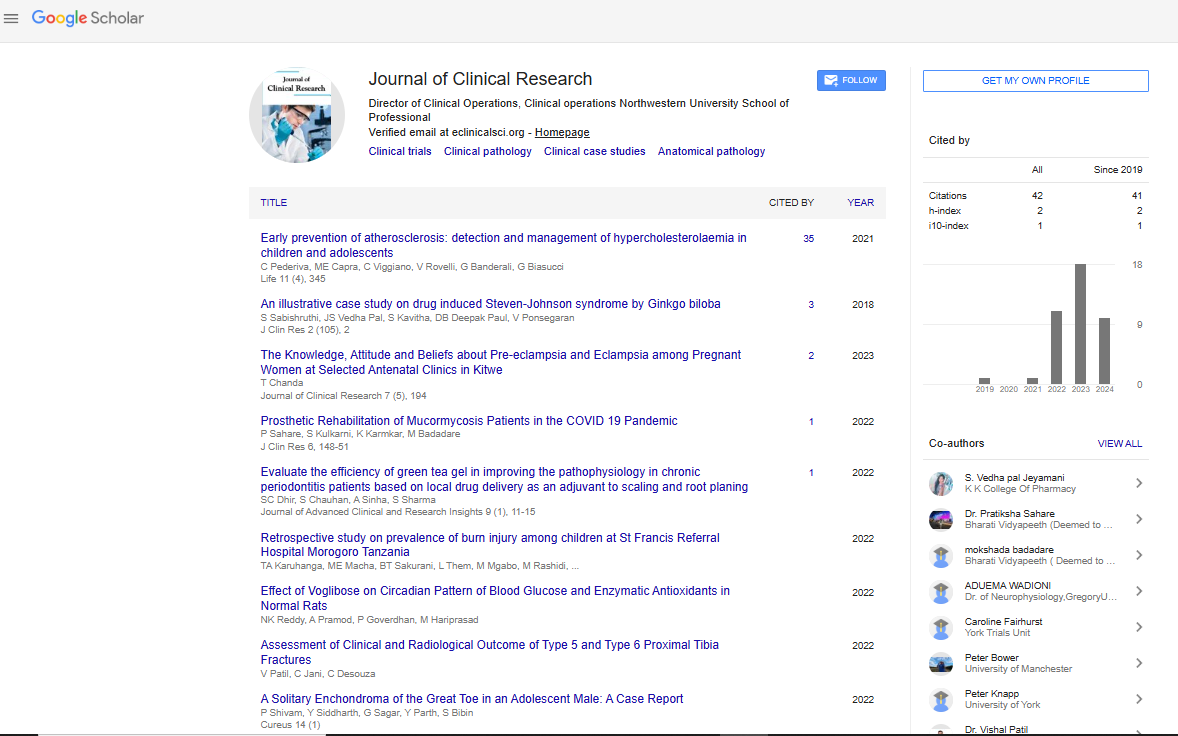
Journal of Clinical Research received 11 citations as per Google Scholar report