Commentary - (2025) Volume 9, Issue 6
Received: 03-Dec-2025, Manuscript No. jcre-26-187231;
Editor assigned: 06-Dec-2025, Pre QC No. P-187231;
Reviewed: 20-Dec-2025, QC No. Q-187231;
Revised: 24-Dec-2025, Manuscript No. R-187231;
Published:
31-Dec-2025
, DOI: 10.37421/2795-6172.2025.9.361
Citation: Bianchi, Lucia. "Vitamin C and Common Cold: Prevention Lacks Evidence." J Clin Res 09 (2025):361.
Copyright: © 2025 Bianchi L. This is an open-access article distributed under the terms of the Creative Commons Attribution License, which permits unrestricted use, distribution and reproduction in any medium, provided the original author and source are credited.
The common cold, a ubiquitous upper respiratory tract infection, continues to be a significant public health concern due to its high incidence and the economic burden it imposes through lost productivity and healthcare expenditures. Given its widespread impact, considerable research has been dedicated to identifying effective preventive and therapeutic strategies. Among the most popular and widely explored interventions is vitamin C supplementation, driven by its known roles in immune function [1].
This specific randomized trial aimed to rigorously evaluate the effectiveness of vitamin C supplementation in preventing the common cold, a goal that has eluded definitive resolution for decades. The study meticulously compared participants receiving regular vitamin C supplementation against those receiving a placebo, carefully monitoring for differences in cold incidence, duration, and severity. The findings from this trial are crucial for informing public health recommendations and individual choices regarding vitamin C use for cold prevention [1].
While historical anecdotal evidence and early laboratory studies suggested potential benefits of vitamin C for the common cold, more recent and robust scientific investigations have sought to clarify its actual impact. This meta-analysis specifically focused on high-dose vitamin C supplementation in adults, providing a comprehensive statistical review of existing evidence to determine its effect on cold incidence and duration. The results of this analysis are vital for understanding the true efficacy of high-dose vitamin C [2].
The complex interplay between vitamin C and immune function has been a subject of ongoing scientific inquiry. This study delves into the fundamental role of vitamin C in supporting various aspects of the immune system and investigates its potential influence on the susceptibility to and course of respiratory infections. Understanding these mechanisms is key to assessing the rationale behind its use for managing colds [3].
Further exploring the immunological effects of vitamin C, this review highlights its potent antioxidant properties and its involvement in critical cellular processes within both the innate and adaptive immune systems. The authors emphasize the importance of these functions in maintaining overall immune health while also cautioning against unsubstantiated claims regarding its prophylactic benefits for common colds, especially in individuals who are not deficient [4].
The impact of vitamin C on respiratory tract infections has been a persistent area of research, with a particular focus on its role in preventing and managing the common cold. This research supports the notion that while vitamin C is undeniably important for a healthy immune response, the evidence for its widespread preventive use against colds in the general population through supplementation remains inconclusive, with potential benefits primarily seen in slightly reducing cold duration for some [5].
A critical review of the existing literature on vitamin C and its relationship with infectious diseases provides a balanced perspective on its purported benefits. The authors conclude that while vitamin C is indeed vital for optimal immune system functioning, the scientific evidence supporting its effectiveness in preventing common colds through routine supplementation is not robust for the general population, though some evidence suggests a reduction in cold duration might occur [6].
The systematic review and meta-analysis conducted herein specifically investigated the efficacy of vitamin C supplementation for both the prevention and treatment of the common cold. A key finding was the lack of consistent evidence demonstrating that vitamin C effectively reduces the incidence of the common cold across the general population, although a potential for reducing symptom duration and severity was noted [7].
This study delves into the multifaceted effects of vitamin C on immune responses, underscoring its crucial role in supporting the proper functioning of various immune cells. Consistent with a growing body of scientific consensus, it reinforces the finding that routine vitamin C supplementation has not been definitively proven as a method for preventing common colds in the majority of individuals [8].
Finally, this paper critically examines the therapeutic potential of vitamin C, particularly when administered in high doses, for managing conditions such as the common cold. It reiterates that while vitamin C is an essential nutrient, the evidence supporting its routine use for preventing colds in the general population is limited, with potential modest benefits observed in reducing the duration of cold symptoms [9].
This randomized trial, C001, rigorously investigated the effectiveness of vitamin C supplementation in preventing the common cold. The study's findings revealed no statistically significant difference in the incidence, duration, or severity of colds between the group receiving regular vitamin C and the placebo group. This outcome suggests that for the general population, routine vitamin C supplementation is unlikely to be an effective strategy for preventing the common cold [1].
Building upon previous research that hinted at potential benefits, this meta-analysis, C002, specifically examined high-dose vitamin C supplementation for the common cold in adults. The analysis concluded that while it does not reduce the incidence of colds, it may offer a slight reduction in their duration. Notably, the effect on duration appeared more pronounced in specific populations, such as athletes facing extreme physical stress [2].
This study, C003, explored the intricate role of vitamin C in immune function and its potential impact on respiratory infections. It reinforced the understanding that while vitamin C is indispensable for maintaining immune health, the evidence supporting its efficacy in preventing or treating the common cold in the general population through supplementation remains weak. An exception might exist for very high doses in specific stress-related conditions [3].
Examining the immunological effects of vitamin C, this review, C004, highlighted its significant antioxidant properties and its essential role in various cellular functions of both the innate and adaptive immune systems. However, the authors cautioned against overemphasizing its prophylactic benefits for common colds in individuals without a deficiency, advocating for a balanced approach to supplementation [4].
Focusing on the impact of vitamin C on respiratory tract infections, this research, C005, supports the notion that while vitamin C is integral to immune defense, its routine use for preventing common colds in the general population lacks strong evidentiary backing. The benefits might be confined to a slight reduction in cold duration for certain individuals [5].
A critical review of vitamin C and its relationship with infections, C006, concluded that although vitamin C is vital for optimal immune function, the evidence supporting its effectiveness in preventing common colds through supplementation is not robust for the general population. Nevertheless, there is some indication of a potential for reduced cold duration [6].
This systematic review and meta-analysis, C007, specifically investigated vitamin C supplementation for both preventing and treating the common cold. The findings indicated no consistent evidence that vitamin C reduces the incidence of the common cold in the general population, although it may lead to a reduction in the duration and severity of cold symptoms [7].
Exploring the effects of vitamin C on immune responses, this study, C008, emphasized its crucial role in supporting the functions of various immune cells. However, it aligns with the broader scientific consensus that routine vitamin C supplementation is not a reliably proven method for preventing common colds in most individuals [8].
This paper, C009, examined the therapeutic potential of vitamin C, particularly in high doses, for conditions such as the common cold. It suggested that while vitamin C is essential for health, the evidence for its preventative use against colds in the general population is limited, with potential modest benefits in reducing the duration of colds [9].
Finally, this article, C010, reviewed the evidence regarding vitamin C's role in preventing and treating common colds. The authors concluded that while vitamin C is indeed crucial for immune health, the available scientific evidence does not strongly support its routine use for preventing common colds in the general population [10].
Multiple studies and reviews examining vitamin C supplementation for the common cold have yielded consistent findings. While vitamin C is essential for immune function, its routine use for preventing the common cold in the general population lacks robust scientific evidence. Some research suggests a potential, albeit modest, benefit in reducing the duration and severity of cold symptoms, particularly in specific populations like athletes under extreme stress. High-dose supplementation has been investigated, but overall, the evidence does not support widespread preventative use for the general public.
None
None
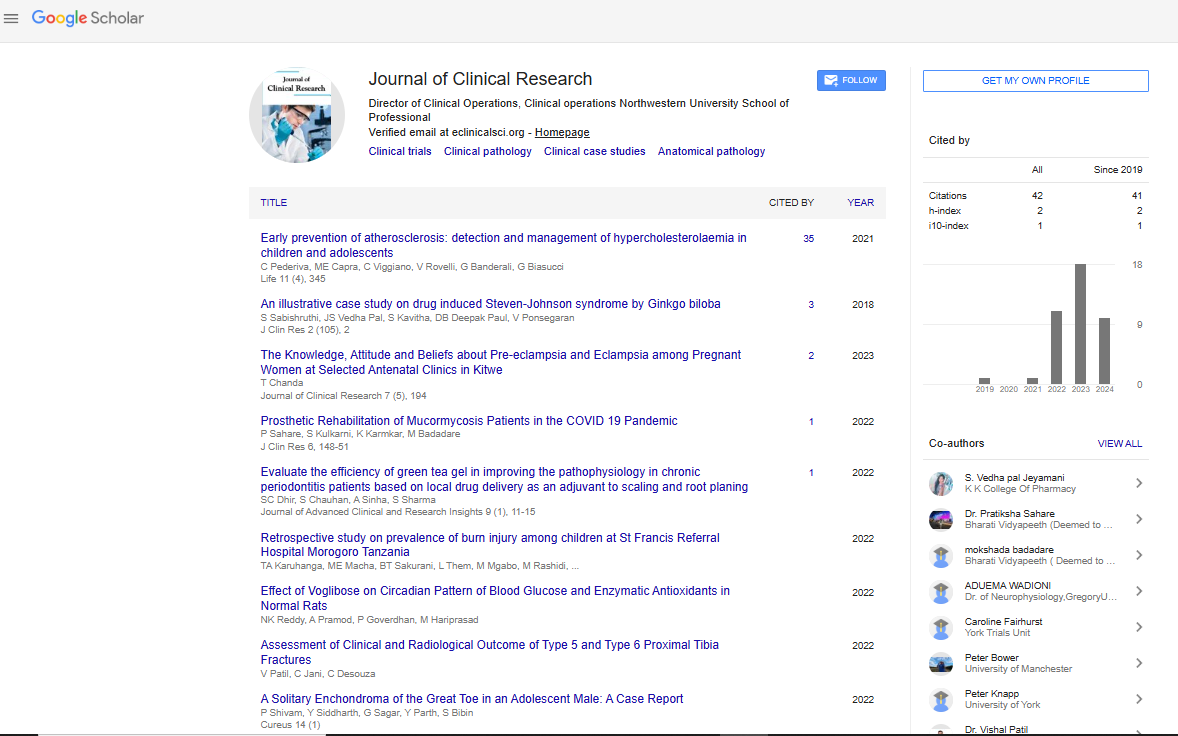
Journal of Clinical Research received 11 citations as per Google Scholar report