Short Communication - (2025) Volume 9, Issue 4
Received: 02-Aug-2025, Manuscript No. jcre-26;
Editor assigned: 04-Aug-2025, Pre QC No. P-187207;
Reviewed: 18-Aug-2025, QC No. Q-187207;
Revised: 25-Aug-2025, Manuscript No. R-187207;
Published:
01-Sep-2025
, DOI: 10.37421/2795-6172.2025.9.310
Citation: Rahman, Layla. ”Vitamin B12: Alleviating Fatigue in Older Adults.” J Clin Res 09 (2025):310.
Copyright: © 2025 Rahman L. This is an open-access article distributed under the terms of the Creative Commons Attribution License, which permits unrestricted use, distribution and reproduction in any medium, provided the original author and source are credited.
The pervasive issue of fatigue, particularly among the elderly population, presents a significant challenge to maintaining quality of life and functional independence. This review endeavors to consolidate current research findings on the efficacy of vitamin B12 supplementation as a therapeutic strategy for mitigating fatigue in this demographic. Vitamin B12 deficiency is increasingly recognized as a common comorbidity in older adults and a potential contributor to persistent fatigue. Understanding the scope of this problem is the first step towards effective intervention [1].
Recent investigations have focused on the direct impact of vitamin B12 on subjective fatigue symptoms within elderly cohorts. These studies employ rigorous methodologies to quantify fatigue levels and assess the direct correlation with vitamin B12 status [2].
The underlying physiological mechanisms by which vitamin B12 influences energy metabolism and neurological function are crucial for comprehending its role in combating fatigue. Research is exploring B12's involvement in essential biochemical pathways relevant to aging [3].
Clinical trials have begun to explore the nuances of vitamin B12 supplementation, including dose-response relationships and optimal administration routes. These studies aim to provide evidence-based recommendations for effective treatment regimens [4].
Furthermore, the association between specific vitamin B12 levels and the prevalence of fatigue symptoms in older adults is being systematically examined. This research highlights the potential for B12 assessment as a diagnostic tool for fatigue [5].
A critical review of the existing body of evidence is essential to synthesize findings, identify methodological strengths and weaknesses, and pinpoint areas requiring further investigation. Such reviews are vital for establishing a robust understanding of B12's role [6].
Beyond general fatigue, studies are beginning to investigate the impact of vitamin B12 supplementation on specific dimensions of fatigue, such as cognitive impairment and physical exhaustion, offering a more detailed perspective [7].
Given the complex interplay between fatigue and other age-related health issues, research is also exploring the potential indirect benefits of vitamin B12, such as improvements in sleep quality, which can significantly influence perceived fatigue [8].
Finally, the economic implications of addressing fatigue in older adults are being considered. Cost-effectiveness analyses of vitamin B12 supplementation can inform healthcare policy and resource allocation for this growing population [9].
The impact of vitamin B12 supplementation on reducing fatigue in older adults is a growing area of research, addressing a common health concern within this demographic. Studies highlight that vitamin B12 deficiency is prevalent in older individuals and can significantly contribute to persistent feelings of tiredness and lack of energy. The research often suggests that appropriate dosing and administration of vitamin B12 can lead to notable improvements in energy levels and a reduction in perceived fatigue, offering a practical therapeutic approach for this age group [1].
Investigations into the efficacy of vitamin B12 for alleviating subjective fatigue symptoms in the elderly are detailed. These studies typically involve validated questionnaires and present findings that indicate a positive correlation between B12 levels and energy, with supplementation demonstrating measurable benefits. A key takeaway emphasizes the importance of screening for B12 deficiency in older adults experiencing chronic fatigue [2].
Delving into the physiological underpinnings, research examines the mechanisms by which vitamin B12 might influence fatigue in the elderly. This includes exploring its critical roles in red blood cell production, neurotransmitter synthesis, and energy metabolism. The findings reinforce the rationale for B12 supplementation as a strategy to address fatigue linked to disruptions in these metabolic pathways due to deficiency [3].
Clinical trials are assessing the effectiveness and safety of various vitamin B12 supplementation regimens for fatigue in older adults. These studies often compare different doses or routes of administration, providing insights into optimal treatment strategies. The conclusion generally supports the safety and effectiveness of B12 supplementation in reducing fatigue, with specific dosage recommendations emerging from trial results [4].
The relationship between vitamin B12 status and the prevalence of fatigue in a diverse older adult population is a significant area of exploration. Studies likely identify that individuals with lower B12 levels report higher levels of fatigue, suggesting a diagnostic role for B12 assessment in managing fatigue. This supports the notion that correcting B12 deficiency is a crucial step in addressing fatigue in this demographic [5].
A critical review of the literature on vitamin B12 supplementation for fatigue in older adults aims to consolidate findings and identify research gaps. Such reviews evaluate the quality of evidence, discuss potential biases, and provide a comprehensive overview of the current knowledge, suggesting directions for future research, including the examination of specific patient subgroups [6].
Studies are also examining the impact of vitamin B12 supplementation on specific facets of fatigue, such as mental fogginess and physical exhaustion, in older adults. These studies often use detailed assessments to differentiate between various fatigue components and determine if B12 supplementation offers targeted benefits, leading to a more nuanced understanding of how B12 affects the multidimensional experience of fatigue [7].
Further research investigates whether vitamin B12 supplementation can improve sleep quality in older adults experiencing fatigue, recognizing the potential interconnectedness of these issues. The study likely assesses both fatigue and sleep parameters to elucidate this relationship, suggesting that B12 supplementation may indirectly improve fatigue by enhancing sleep [8].
The cost-effectiveness of vitamin B12 supplementation as a treatment for fatigue in older adults is also being explored, considering the healthcare burden associated with this symptom. Analyses would assess the economic benefits of improved energy levels and reduced healthcare utilization, indicating that B12 supplementation could be a cost-effective intervention for managing fatigue-related issues [9].
Finally, research explores the role of vitamin B12 in addressing fatigue in older adults with specific comorbidities, such as diabetes or anemia. This investigates whether B12 supplementation offers differential benefits in these populations compared to the general elderly population experiencing fatigue, providing tailored recommendations for individuals with complex health profiles [10].
This collection of research investigates the efficacy of vitamin B12 supplementation in alleviating fatigue among older adults, a demographic where B12 deficiency is common. Studies demonstrate a positive correlation between B12 levels and energy, with supplementation showing significant improvements in fatigue symptoms and energy levels. Research explores the physiological mechanisms, optimal dosages, and the association between B12 status and fatigue prevalence. Additionally, the impact on cognitive function, sleep quality, and cost-effectiveness is being examined, alongside its role in older adults with comorbidities. The findings collectively support vitamin B12 supplementation as a safe and effective strategy for managing fatigue in the elderly, highlighting the importance of screening for deficiency.
None
None
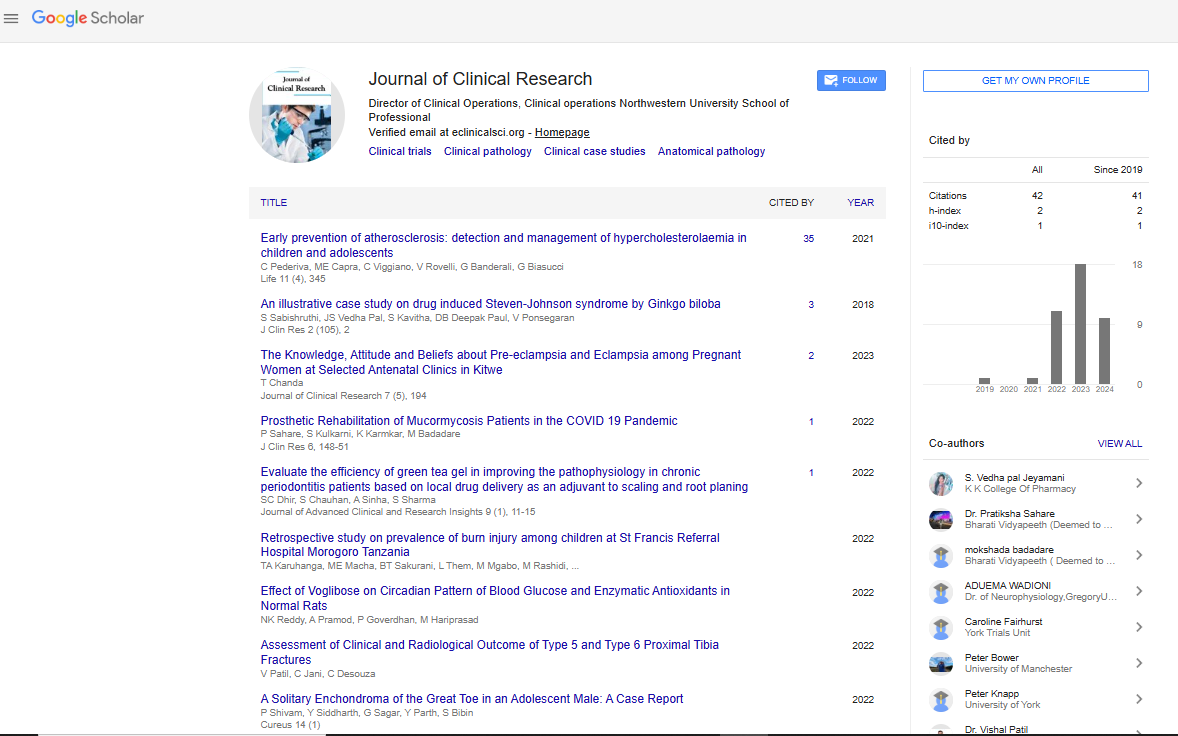
Journal of Clinical Research received 11 citations as per Google Scholar report