Perspective - (2025) Volume 11, Issue 4
Received: 01-Aug-2025, Manuscript No. JOV-26-186431;
Editor assigned: 04-Aug-2025, Pre QC No. P-186431;
Reviewed: 18-Aug-2025, QC No. Q-186431;
Revised: 23-Aug-2025, Manuscript No. R-186431;
Published:
29-Aug-2025
, DOI: 10.37421/2471-9544.2025.11.318
Citation: Torres, Mariana. ”Vasculitis: Micro-whorls and Vascular Mosaic.” J Vasc 11 (2025):318.
Copyright: © 2025 Torres M. This is an open-access article distributed under the terms of the Creative Commons Attribution License, which permits unrestricted use, distribution and reproduction in any medium, provided the original author and source are credited.
The vascular system, a complex network essential for life, is subject to significant alterations in various disease states, particularly in inflammatory conditions such as vasculitis. Understanding these changes, especially the development of aberrant vascular structures, is crucial for diagnosis and treatment. This article aims to explore the concept of micro-whorls within the vascular system, focusing on their formation, characteristics, and role in the pathogenesis of vascular inflammation, drawing upon recent literature that delves into the intricacies of vascular remodeling in autoimmune diseases [1].
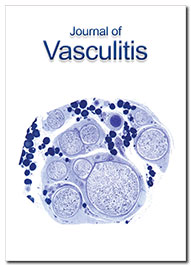
The notion of a 'vascular mosaic' suggests a broader perspective on how different vascular components interact or are affected, potentially highlighting heterogeneity in vascular damage or repair in vasculitic conditions. The intricate patterns of blood vessel development and their significance in disease are areas of active investigation. Disruptions in normal vascular architecture, potentially including micro-whorl-like structures, may contribute to or be indicative of vasculitic processes. The 'mosaic' aspect could refer to the varied appearance of vascular lesions in different patients or over time, reflecting the complex nature of these diseases [2].
Furthermore, research is examining the cellular and molecular mechanisms driving the formation of abnormal vascular structures in inflammatory conditions. Insights into how immune cells and inflammatory mediators contribute to the development of micro-whorls and the overall vascular mosaic seen in vasculitis are vital for identifying therapeutic targets [3].
A comprehensive overview of the microvasculature in inflammatory diseases, including vasculitis, provides critical context. Aberrant vascular patterns, potentially including micro-whorls, are recognized as key features of the disease process, and imaging techniques are being employed to visualize this 'vascular mosaic' [4].
Specific histopathological features of small vessel vasculitis are under investigation, and it is within this context that terms like 'micro-whorls' might be introduced or characterized. These structures likely contribute to a complex 'vascular mosaic' that impacts organ function and disease prognosis [5].
The role of endothelial cells and their abnormalities in the development of vasculitis is a central theme. Cellular dynamics leading to the formation of micro-whorl-like patterns and contributing to the disrupted 'vascular mosaic' characteristic of these diseases are being elucidated [6].
Understanding the molecular signaling pathways involved in vascular remodeling during vasculitis is also paramount. These pathways can provide a basis for comprehending how signals lead to aberrant structures like micro-whorls, thus contributing to the heterogeneity of vascular damage seen in vasculitic disorders [7].
The diagnostic and prognostic implications of specific vascular changes in vasculitis are being explored. Identifying 'micro-whorls' or understanding the 'vascular mosaic' may offer new biomarkers or refine the classification of vasculitic syndromes, improving patient management [8].
The role of angiogenesis and anti-angiogenic therapies in vasculitis presents another important avenue of research. Abnormal neovascularization, potentially forming micro-whorls, is a feature of vasculitis, and targeting these processes could offer therapeutic benefits [9].
Finally, detailed investigations into the inflammatory cascades within the vascular wall in vasculitis are shedding light on how inflammatory mediators and immune cell infiltration lead to structural changes, including the potential formation of micro-whorl structures that contribute to the broader vascular mosaic [10].
The exploration of vascular remodeling in autoimmune diseases highlights the formation of micro-whorls, which are likely specific aberrant structures within the vascular system that manifest in conditions like vasculitis. These structures might be characterized by their unique morphology and arrangement, contributing to the overall pathological landscape of inflamed blood vessels. The concept of a 'vascular mosaic' further suggests that the vascular damage in vasculitis is not uniform but presents a heterogeneous pattern, with micro-whorls being one component of this complex presentation. Such detailed examination of vascular changes is essential for a deeper understanding of disease mechanisms [1].
The study of blood vessel development, particularly when disrupted, offers insights into pathological processes. In the context of vasculitis, abnormal vascular architecture, potentially including the formation of micro-whorl-like structures, could serve as indicators of the ongoing inflammatory disease. The term 'mosaic' in this context likely refers to the varied clinical and pathological manifestations of vasculitis, which can differ significantly between individuals or even within the same individual over time [2].
The cellular and molecular underpinnings of abnormal vascular structure formation in inflammatory settings are a key area of research. Specifically, understanding how immune cells interact with vascular components and how inflammatory mediators influence endothelial cells is critical for deciphering the origin of micro-whorls and the broader 'vascular mosaic' observed in vasculitis. This knowledge is fundamental for developing targeted therapies [3].
A comprehensive understanding of microvascular dysfunction in inflammatory autoimmune diseases is paramount. Aberrant vascular patterns, such as the presence of micro-whorls, are increasingly recognized as significant features of vasculitis. Advanced imaging techniques are being utilized to visualize and characterize this 'vascular mosaic,' aiding in diagnosis and disease assessment [4].
Histopathological analysis of small vessel vasculitis provides granular detail on the changes occurring at the cellular and tissue level. It is within these detailed observations that novel findings, such as 'micro-whorls,' are identified and their contribution to the overall 'vascular mosaic' of the disease is understood, impacting prognosis and treatment strategies [5].
The critical role of endothelial cells in the pathogenesis of vasculitis cannot be overstated. Their dysfunction and aberrant behavior are central to the development of inflammatory processes. The formation of micro-whorl-like patterns and the resulting 'vascular mosaic' are direct consequences of these cellular dynamics, emphasizing the importance of endothelial health in preventing and managing vasculitic conditions [6].
Molecular signaling pathways play a pivotal role in orchestrating vascular remodeling, particularly during inflammation. Identifying these pathways that lead to the development of abnormal structures like micro-whorls is essential for understanding the heterogeneity of vascular damage observed in vasculitis. This knowledge can pave the way for novel therapeutic interventions targeting specific molecular mechanisms [7].
The identification of reliable biomarkers for vascular injury in vasculitis is a critical clinical need. 'Micro-whorls' and the overall 'vascular mosaic' represent potential morphological biomarkers that could aid in the diagnosis, classification, and prognostication of different vasculitic syndromes, thereby improving patient care and outcomes [8].
The process of angiogenesis, or the formation of new blood vessels, is often dysregulated in vasculitis. Aberrant neovascularization, which may manifest as micro-whorl formations, is a characteristic feature. Research into anti-angiogenic therapies aims to control or reverse these abnormal vascular changes, offering a potential therapeutic avenue for managing vasculitis [9].
Delving into the inflammatory cascades within the vascular wall provides a detailed molecular perspective on vasculitis. Understanding how inflammatory mediators and immune cells contribute to structural alterations, including the genesis of micro-whorls and the overall disruption of the 'vascular mosaic,' is crucial for comprehending the pathogenesis of this group of diseases [10].
This collection of research papers explores the complex vascular changes associated with vasculitis, focusing on the emergence of 'micro-whorls' and the concept of a 'vascular mosaic.' The literature suggests that micro-whorls are aberrant structures within the vasculature that develop due to inflammatory processes and endothelial cell dysfunction. These structures, along with other heterogenous vascular alterations, contribute to the overall 'vascular mosaic' observed in vasculitis, impacting disease manifestation, diagnosis, and prognosis. Research delves into the cellular and molecular mechanisms driving these changes, the role of angiogenesis, and the potential for novel biomarkers and therapeutic targets. The papers collectively highlight the intricate interplay between inflammation, vascular remodeling, and the development of pathological vascular patterns in vasculitis, emphasizing the need for a comprehensive understanding to improve patient outcomes.
None
None
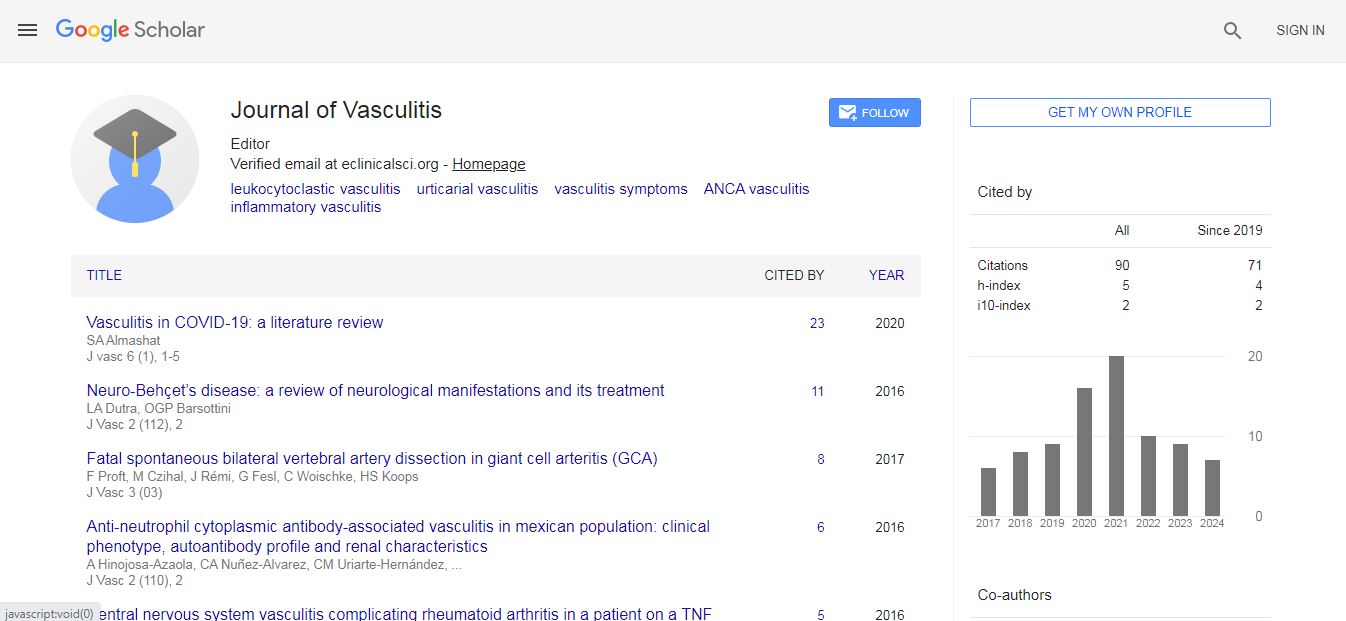
Journal of Vasculitis received 83 citations as per Google Scholar report