Brief Report - (2025) Volume 10, Issue 6
Received: 01-Dec-2025, Manuscript No. jcct-26-183275;
Editor assigned: 03-Dec-2025, Pre QC No. P-183275;
Reviewed: 17-Dec-2025, QC No. Q-183275;
Revised: 22-Dec-2025, Manuscript No. R-183275;
Published:
29-Dec-2025
, DOI: 10.37421/2577-0535.2025.9.338
Citation: Markovic, Elena S.. ”Validating Cancer Biomarkers: Challenges and Precision Medicine.” J Cancer Clin Trials 10 (2025):338.
Copyright: © 2025 Markovic S. Elena This is an open-access article distributed under the terms of the Creative Commons Attribution License, which permits unrestricted use, distribution and reproduction in any medium, provided the original author and source are credited.
Validating biomarkers in cancer clinical trials is a crucial and multifaceted undertaking, essential for ensuring their reliability and utility in guiding patient treatment and advancing drug development strategies. This process necessitates rigorous analytical and clinical validation to confirm the accuracy, reproducibility, and clinical relevance of these biomarkers across diverse settings. A significant challenge lies in selecting appropriate clinical trial designs that can effectively evaluate biomarker performance and its impact on patient outcomes, along with defining robust and interpretable endpoints that accurately reflect clinical benefit. Data integrity throughout the validation process is paramount, requiring meticulous management to prevent errors and ensure the trustworthiness of the findings. Standardization of assays and protocols across different research sites and laboratories is indispensable for ensuring the generalizability of biomarker validation results, allowing for broader application and impact. The advent of precision medicine has amplified the need for robust biomarker validation, as these biomarkers are increasingly relied upon to predict treatment response and guide therapeutic decisions. Demonstrating not only a biomarker's predictive capacity but also its well-defined analytical performance is critical for its successful integration into clinical practice. Ensuring consistency in assay performance across various laboratories and diverse patient populations presents a substantial hurdle that requires dedicated effort and innovative solutions. Regulatory bodies, such as the FDA, are placing growing emphasis on well-validated biomarkers as a prerequisite for drug approval and for informing clinical decision-making, underscoring the importance of rigorous validation. Reproducibility stands as a cornerstone of biomarker validation in clinical trials, demanding that results are consistently obtainable across independent studies and settings. Prospective validation studies and the analysis of real-world data are vital to confirm the utility of biomarkers beyond their initial discovery phases. Challenges related to inter-laboratory variability and the standardization of methodologies frequently impact the reliability of biomarker measurements, necessitating a concerted effort towards harmonized approaches. The development of consensus guidelines for biomarker validation is an ongoing and critical endeavor within the oncology research community, aiming to establish best practices and accelerate the translation of promising biomarkers into clinical care. The selection of appropriate clinical trial designs significantly influences the efficacy of biomarker validation efforts, with adaptive designs and basket trials offering potential to expedite the evaluation of biomarkers across a spectrum of cancer types. Ensuring that the patient population enrolled in a trial accurately reflects the intended clinical use of the biomarker is essential for drawing valid conclusions about its applicability. Statistical methods employed for analyzing biomarker data in clinical trials demand careful consideration to mitigate bias and facilitate the extraction of reliable insights. Integrating multi-omic data into cancer clinical trials introduces unique and complex challenges for biomarker validation, requiring sophisticated analytical approaches and careful interpretation to establish clinical utility. The reproducibility of multi-omic assays and the development of standardized data analysis pipelines are critical for harnessing the full potential of these comprehensive datasets. Collaboration among bioinformaticians, clinicians, and statisticians is vital for navigating the complexities of multi-omic biomarker validation and ensuring its successful translation. The analytical validation of companion diagnostics is intrinsically linked to biomarker validation in cancer clinical trials, as accurate and reliable diagnostic tests are fundamental for identifying patients who may benefit from targeted therapies. Regulatory pathways for companion diagnostics are inherently complex, necessitating extensive and robust validation data to support their use. The continuous evolution of diagnostic technologies requires a dynamic and adaptive approach to validation strategies, ensuring that methods keep pace with innovation. Biomarker discovery and validation represent an iterative process, where initial promising findings from preclinical studies must be subjected to rigorous validation in prospective clinical trials. The definition of 'clinical utility' for a biomarker is paramount, often involving a clear demonstration of its impact on patient outcomes or the modification of treatment decisions. The translation of biomarkers from the laboratory bench to the clinical bedside remains a significant and persistent challenge in the field of oncology, highlighting the need for continued focus on effective validation and implementation strategies. Challenges in biomarker validation are further compounded by the inherent heterogeneity of cancer types, the dynamic evolution of disease within patients, and the influence of prior treatments on biomarker expression. Developing consensus on standardized protocols for sample collection, processing, and assay performance is crucial for achieving reliable and reproducible validation results. Furthermore, the cost-effectiveness of implementing validated biomarkers in routine clinical practice must be carefully considered to ensure their widespread accessibility and impact on patient care. The validation of predictive biomarkers is indispensable for the successful application of targeted therapies, requiring not only a demonstration of the association between the biomarker and treatment response but also an establishment of causality. Prospective studies with well-defined endpoints are essential for definitively establishing this causal link. The robustness of the assay and the reproducibility of results across different settings are key considerations that underscore the need for rigorous validation. The emergence of liquid biopsies has opened new avenues for biomarker validation in cancer, offering minimally invasive approaches for serial monitoring of disease progression and treatment response. However, the analytical and clinical validation of circulating tumor DNA (ctDNA) and other biomarkers in body fluids presents unique challenges, including achieving sufficient sensitivity and specificity and standardizing detection methods. These advancements highlight the dynamic nature of biomarker research and the ongoing need for innovative validation strategies. The successful implementation of biomarkers in clinical practice hinges on a comprehensive understanding of these validation requirements, from analytical precision to clinical utility and regulatory compliance. This intricate process demands collaboration, standardization, and rigorous scientific inquiry to ensure that biomarkers effectively contribute to improved patient care and the advancement of cancer therapeutics.
The validation of biomarkers in cancer clinical trials is a critical step to ensure their reliability and utility in guiding patient treatment and drug development. This process involves rigorous analytical and clinical validation to confirm accuracy, reproducibility, and clinical relevance across diverse settings and patient populations. A key challenge is selecting appropriate trial designs that can effectively assess biomarker performance and its impact on outcomes, alongside defining robust endpoints and managing data integrity meticulously. Standardization of assays and protocols across different sites is paramount for ensuring the generalizability of results and preventing site-specific biases. The increasing emphasis on precision medicine underscores the necessity for robust biomarker validation, which requires demonstrating not only a biomarker's ability to predict treatment response but also its defined analytical performance. Ensuring assay consistency across various laboratories and patient cohorts remains a significant hurdle, necessitating collaborative efforts and standardized methodologies. Regulatory bodies like the FDA are increasingly scrutinizing biomarker validation data, making it a cornerstone for drug approval and clinical decision-making. Reproducibility is a fundamental requirement for biomarker validation in clinical trials, demanding that results are consistently achievable in independent studies and diverse contexts. Prospective validation studies and the analysis of real-world data are crucial for confirming the utility of biomarkers beyond initial discovery phases, offering a more comprehensive understanding of their performance in routine clinical settings. Inter-laboratory variability and the lack of standardized methodologies are persistent challenges that can compromise the reliability of biomarker measurements, thus highlighting the need for harmonized approaches. The ongoing development of consensus guidelines for biomarker validation within the oncology community is an essential effort aimed at establishing best practices and accelerating the translation of promising biomarkers into patient care. The choice of clinical trial designs significantly impacts the success of biomarker validation; adaptive designs and basket trials, for example, can expedite the evaluation of biomarkers across various cancer types and molecular profiles. It is essential to ensure that the patient population enrolled in trials accurately reflects the intended clinical use of the biomarker to draw valid and generalizable conclusions. Statistical methods employed for analyzing biomarker data in clinical trials require careful consideration to avoid bias, enhance interpretability, and ensure the validity of conclusions drawn from the data. The integration of multi-omic data in cancer clinical trials introduces unique and complex challenges for biomarker validation, necessitating sophisticated analytical approaches and careful interpretation to establish clinical utility. The reproducibility of multi-omic assays and the development of standardized data analysis pipelines are critical for unlocking the full potential of these comprehensive datasets and ensuring robust findings. Effective collaboration among bioinformaticians, clinicians, and statisticians is vital for navigating the intricacies of multi-omic biomarker validation and facilitating its successful translation into clinical applications. The analytical validation of companion diagnostics is intrinsically linked to biomarker validation in cancer clinical trials, as accurate and reliable diagnostic tests are fundamental for identifying patients who may benefit from targeted therapies. The complex regulatory pathways for companion diagnostics require extensive and robust validation data to support their widespread adoption and use in patient care. The continuous evolution of diagnostic technologies necessitates a dynamic and adaptive approach to validation strategies, ensuring that methods remain current and relevant as new technologies emerge. Biomarker discovery and validation are inherently iterative processes; initial promising findings from preclinical studies must be subjected to rigorous validation in prospective clinical trials to confirm their clinical relevance. The definition of 'clinical utility' for a biomarker is paramount, often requiring demonstration of its impact on patient outcomes or its ability to guide treatment decisions effectively. The translation of biomarkers from the laboratory bench to the clinical bedside remains a significant and persistent challenge in oncology, underscoring the need for continued focus on robust validation and implementation strategies. Challenges in biomarker validation are exacerbated by the inherent heterogeneity of cancer types, the dynamic evolution of disease within patients, and the influence of prior treatments on biomarker expression, all of which can affect assay performance and interpretation. Developing consensus on standardized protocols for sample collection, processing, and assay performance is crucial for achieving reliable and reproducible validation results that can be trusted by clinicians and researchers alike. Furthermore, the cost-effectiveness of implementing validated biomarkers in routine clinical practice must be carefully considered to ensure their accessibility and broad impact on patient care and health systems. The validation of predictive biomarkers is essential for the successful application of targeted therapies, requiring not only the demonstration of an association between the biomarker and treatment response but also evidence of causality. Prospective studies with well-defined endpoints are critical for establishing this causal link and solidifying the biomarker's role in guiding therapy selection. The robustness of the assay and the reproducibility of results across different settings are key considerations that reinforce the importance of rigorous validation protocols. The development of liquid biopsies has introduced new avenues for biomarker validation in cancer, offering minimally invasive approaches for serial monitoring of disease and treatment response. However, the analytical and clinical validation of circulating tumor DNA (ctDNA) and other biomarkers in body fluids presents unique challenges, including sensitivity, specificity, and standardization of detection methods, requiring innovative validation strategies to address these complexities.
Biomarker validation in cancer clinical trials is a critical process to ensure reliability for patient treatment and drug development. It involves analytical and clinical validation for accuracy, reproducibility, and clinical relevance. Challenges include selecting trial designs, defining endpoints, managing data, and standardizing assays. Precision medicine demands robust validation, proving predictive capacity and analytical performance. Regulatory bodies like the FDA emphasize validated biomarkers for approval and decision-making. Reproducibility, prospective studies, and real-world data are key. Inter-laboratory variability and methodological standardization remain challenges. Consensus guidelines are being developed. Clinical trial designs, patient population representation, and statistical methods are vital for valid conclusions. Multi-omic data integration presents complex validation challenges requiring advanced analytics and collaboration. Companion diagnostics require stringent analytical validation. Biomarker discovery and validation are iterative, with clinical utility needing demonstration. Translation from bench to bedside is a significant hurdle. Heterogeneity, disease evolution, and prior treatments complicate validation. Standardized protocols and cost-effectiveness are important considerations. Predictive biomarker validation for targeted therapies needs causality demonstration. Liquid biopsies offer new validation avenues but present unique challenges in sensitivity, specificity, and standardization.
None
None
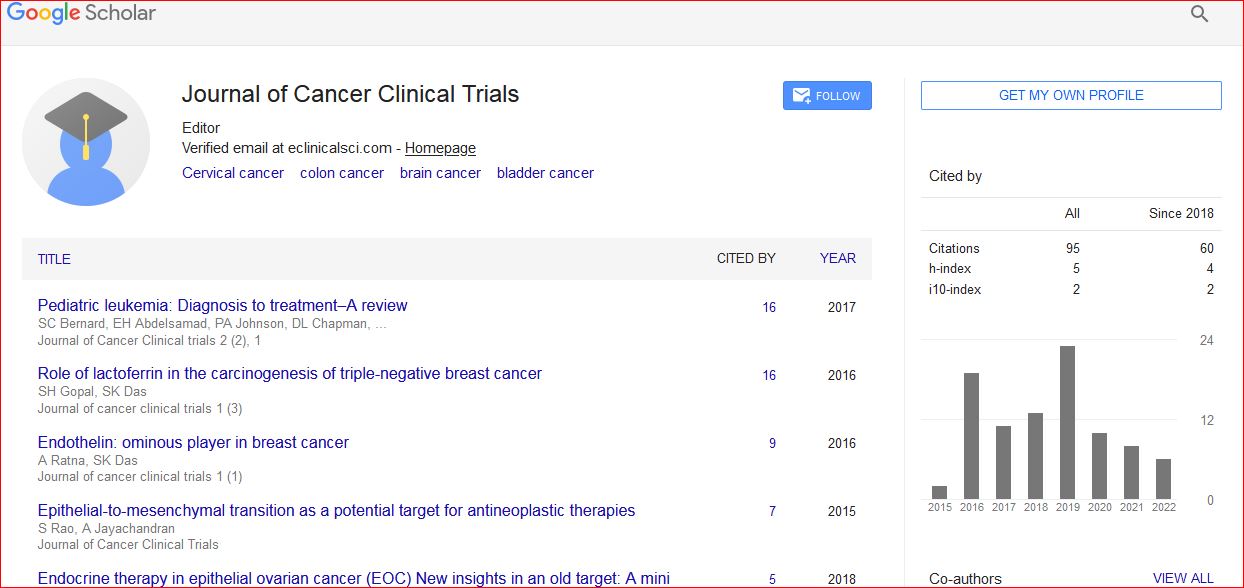
Journal of Cancer Clinical Trials received 95 citations as per Google Scholar report