Perspective - (127) Volume 11, Issue 4
Received: 01-Aug-2025, Manuscript No. cdp-26-185464;
Editor assigned: 04-Aug-2025, Pre QC No. P-185464;
Reviewed: 18-Aug-2025, QC No. Q-185464;
Revised: 24-Aug-2025, Manuscript No. R-185464;
Published:
29-Aug-2025
, DOI: 10.37421/2572-0791.2025.11.191
Citation: Novak, Petra. ”Understanding Major Depressive Disorder: Diagnosis And Assessment.” Clin Depress 11 (2025):191.
Copyright: © 2025 Novak P. This is an open-access article distributed under the terms of the Creative Commons Attribution License, which permits unrestricted use, distribution and reproduction in any medium, provided the original author and source are credited.
The diagnosis of Major Depressive Disorder (MDD) is fundamentally predicated upon the identification of core mood disturbances and vegetative symptoms, typically persisting for a minimum of two weeks. These cardinal features encompass a pervasive sense of sadness and a diminished capacity for pleasure, alongside notable alterations in appetite or sleep patterns [1].
Additional manifestations associated with MDD can include profound fatigue, debilitating feelings of worthlessness or excessive guilt, significant cognitive impairment, and the distressing emergence of recurrent thoughts of death or suicidal ideation [1].
The diagnostic pathway for MDD necessitates a comprehensive clinical interview to meticulously assess the severity and duration of presenting symptoms. This is a critical step to ensure accurate characterization of the patient's condition [1].
Furthermore, the diagnostic process involves a rigorous exclusion of other medical or psychiatric conditions that could present with symptoms that mimic those of depression. This differential diagnosis is crucial for accurate labeling [1].
Early and precise diagnosis of MDD is of paramount importance for the successful implementation of effective management strategies and ultimately, for the amelioration of patient outcomes [1].
However, the identification of MDD is not without its challenges, particularly in diverse patient populations where cultural nuances, co-occurring conditions such as anxiety disorders, and the presentation of somatic symptoms can complicate the diagnostic process [2].
To achieve diagnostic accuracy, it is essential to conduct a comprehensive biopsychosocial assessment. This approach integrates a thorough review of the patient's history, a detailed examination of symptom phenomenology, and an evaluation of the functional impairment experienced by the individual [2].
The typical clinical presentation of MDD is characterized by a constellation of emotional, cognitive, and somatic symptoms. This pervasive low mood and anhedonia are often accompanied by disruptions in sleep, appetite, energy levels, and concentration [3].
These symptoms significantly impact daily functioning and may be accompanied by suicidal ideation, underscoring the continuous need for vigilant assessment and timely intervention [3].
Recognizing the heterogeneity of MDD presentation is vital, as a singular diagnostic approach may prove insufficient. Understanding various subtypes and specifiers, such as melancholic, atypical, or anxious distress features, can inform more personalized and effective treatment selection [4].
The diagnosis of Major Depressive Disorder (MDD) is primarily based on the presence of key mood and vegetative symptoms that persist for at least two weeks. The core features include persistent sadness and a loss of interest or pleasure (anhedonia), along with significant changes in appetite or sleep [1].
Associated symptoms that may be observed in individuals with MDD encompass profound fatigue, feelings of worthlessness or guilt, cognitive difficulties, and recurrent thoughts of death or suicide [1].
The diagnostic procedure for MDD involves a thorough clinical interview where the severity and duration of symptoms are carefully evaluated. This systematic approach is essential for accurate diagnosis [1].
It is imperative to rule out other medical or psychiatric conditions that might present with symptoms similar to those of depression. This differential diagnostic step is critical for ensuring the correct diagnosis [1].
Prompt and accurate diagnosis of MDD is crucial for initiating effective management plans and improving overall patient outcomes [1].
This article investigates the diagnostic complexities and subtleties involved in identifying MDD, especially within varied patient demographics. It highlights how cultural factors, comorbid conditions like anxiety disorders, and somatic presentations can pose challenges to accurate diagnosis [2].
The authors emphasize the importance of a holistic biopsychosocial assessment, which combines patient history, symptom characteristics, and the impact on daily functioning to achieve diagnostic precision [2].
This paper details the typical clinical presentation of MDD, outlining the combination of emotional, cognitive, and somatic symptoms. It underscores the pervasive nature of low mood and anhedonia, alongside alterations in sleep, appetite, energy, and concentration [3].
The authors also discuss how these symptoms affect daily life and the potential for suicidal ideation, stressing the necessity for ongoing assessment and prompt intervention [3].
A review focuses on the diverse presentations of MDD, arguing that a standardized diagnostic approach is inadequate. It examines different subtypes and specifiers of depression, such as melancholic, atypical, and anxious distress, and their relevance to treatment choices. The authors point out that acknowledging these variations in clinical presentation can lead to more individualized and effective care [4].
Major Depressive Disorder (MDD) is diagnosed based on persistent sadness, anhedonia, and vegetative symptoms lasting at least two weeks, often accompanied by fatigue, feelings of worthlessness, cognitive difficulties, and suicidal ideation. Accurate diagnosis involves a thorough clinical interview, symptom assessment, and ruling out other conditions. Challenges in diagnosis include cultural factors, co-occurring conditions, and somatic presentations, necessitating a comprehensive biopsychosocial approach. MDD presents with a spectrum of emotional, cognitive, and somatic symptoms that impair daily functioning. Recognizing the heterogeneity of MDD through subtypes like melancholic or atypical depression is crucial for personalized treatment. Assessment tools and methods, including interviews and questionnaires, aid in capturing the full range of symptoms. Early life adversity can also influence MDD development and presentation. Differential diagnosis is critical to distinguish MDD from other disorders and medical conditions. The DSM-5 provides specific criteria for diagnosis, requiring at least five symptoms over a two-week period, including a depressed mood or loss of interest or pleasure.
None
None
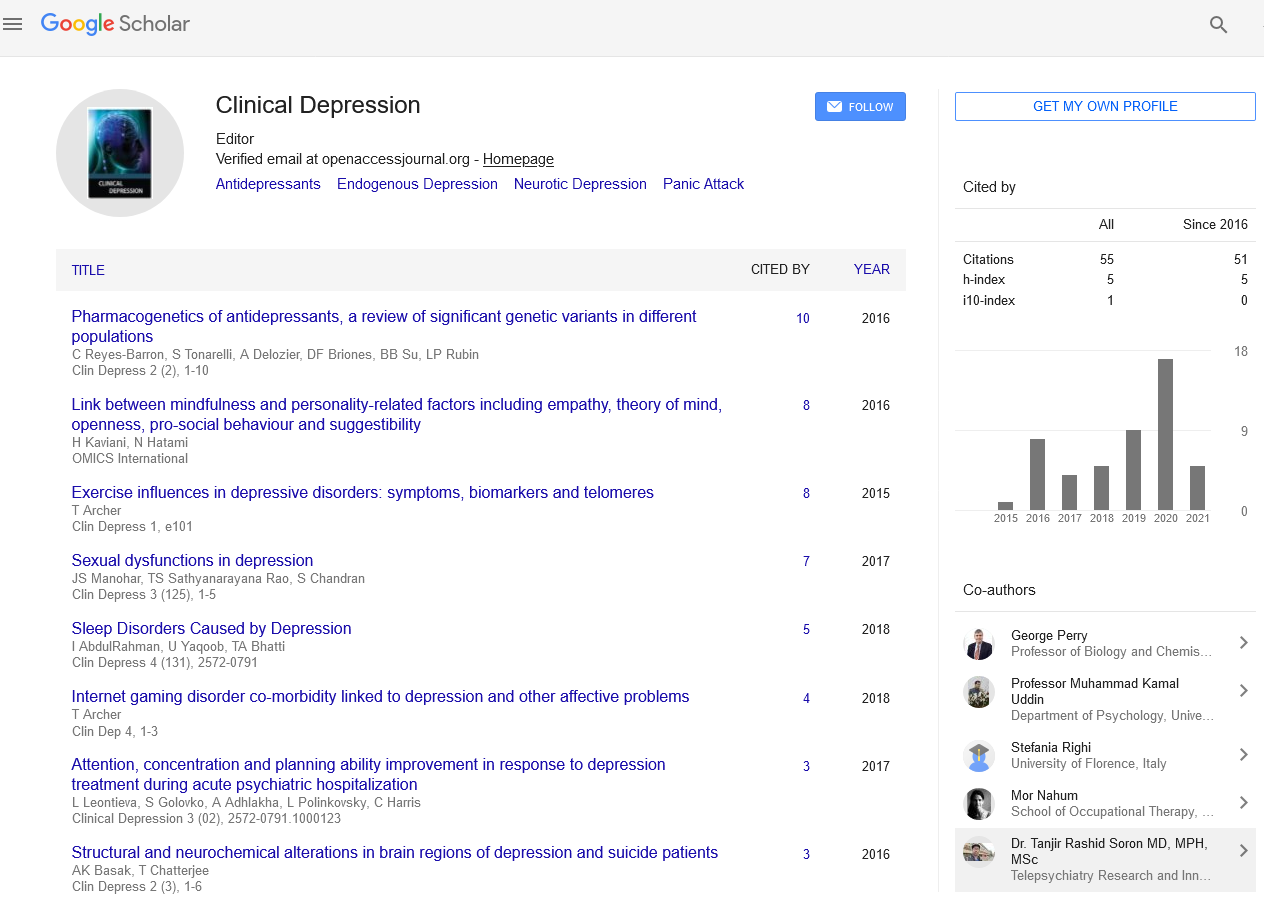
Clinical Depression received 89 citations as per Google Scholar report