Case Series - (2025) Volume 11, Issue 6
Received: 01-Dec-2025, Manuscript No. JOV-25-177373;
Editor assigned: 03-Dec-2025, Pre QC No. P-177373;
Reviewed: 18-Dec-2025, QC No. Q-177373;
Revised: 25-Dec-2025, Manuscript No. R-177373;
Published:
31-Dec-2025
, DOI: 10.37421/2471-9544.2025.11.331
Citation: Stephanie Rosenberg, Tomas Gil Escobar, Florencia
Monge and Ala Ebaid, et al. “Thrombotic Vasculitis Case Series with a Discussion
on Anticoagulation Strategies.” J Vasc 11 (2025): 331.
Copyright: © 2025 Rosenberg S, et al. This is an open-access article distributed under the terms of the Creative Commons Attribution License, which permits unrestricted use, distribution and reproduction in any medium, provided the original author and source are credited.
Thrombotic vasculitis • Anticoagulation therapy • Hypercoagulable states • Antiphospholipid syndrome • Skin biopsy • Cutaneous thrombotic vasculopathy
ANCA: Anti-Neutrophil Cytoplasmic Antibodies; ACR: American College of Rheumatology; EULAR: European Alliance of Associations for Rheumatology; COVID-19: CoronaVIRUS Disease-19; MTHFR: Methylene Tetra Hydro Folate Reductase; PAI-1: Plasminogen Activator Inhibitor-1; CRP: C-Reactive Protein; UBA-1: Ubiquitin Activating enzyme-1; VEXAS: Vacuoles E1 Enzyme X-linked Autoinflammatory Somatic; DOAC: Direct Oral Anticoagulant; ESR: Erythrocyte Sedimentation Rate; ANA: Anti Nuclear Antibody; INR: International Normalized Ratio; ds-DNA: double stranded DNA; PR3: Proteinase 3; JAK2: Janus Kinase 2; HIV: Human Immunodeficiency Virus; PNH: Paroxysmal Nocturnal Hemoglobinuria
Thrombotic vasculitis is an uncommon pathology characterized by vascular occlusion with secondary perivascular inflammation. It is thought to develop from endothelial injury, due to a combination of immune complex deposition, prothrombotic autoantibodies, direct vascular insult and dysregulated coagulation, ultimately leading to activation of the clotting cascade and intravascular fibrin deposition [1]. Microvascular thrombosis reduces tissue perfusion, resulting in ischemic necrosis with a secondary inflammatory response. In contrast to primary systemic vasculitides, inflammation of the vessel wall initiates injury and thrombosis follows, whereas thrombotic vasculitis represents a thrombotic process first and inflammation consequently [2]. This distinction is one of the underlying differences, making this disorder clinically and therapeutically challenging.
The terminology surrounding thrombotic vasculitis is inconsistent. Cutaneous thrombotic vasculopathy is often used as a descriptive term for ischemic skin necrosis caused by microvascular thrombosis in dermal or subcutaneous vessels, usually with little or no vessel wall inflammation [3]. Subcutaneous thrombotic vasculopathy, sometimes describes a precursor to calciphylaxis, with diffuse microvascular thrombosis without vascular calcification [4]. This is reported as a potentially lethal condition overlapping with calciphylaxis sine calcification [5]. Livedoid vasculopathy represents a chronic, relapsing thrombotic vasculopathy of dermal vessels, manifesting as painful lower extremity ulcers that heal with atrophie blanche [6]. Livedoid is typically indolent, often idiopathic or associated with hypercoagulable states and not linked to systemic necrotic syndromes. In contrast, thrombosis in systemic vasculitis, such Behcet’s syndrome, Anti-Neutrophil Cytoplasmic Antibodies (ANCA)-vasculitis or giant cell arteritis, occurs as a downstream complication of vessel wall inflammation [2]. In these cases, inflammation drives vascular injury and thrombosis and management centers on immunosuppression rather than anticoagulation alone.
The 2022 American College of Rheumatology (ACR)/European Alliance of Associations for Rheumatology (EULAR) classification criteria for systemic vasculidities emphasize vessel size, histopathology and clinical syndrome, but do not explicitly recognize thrombotic vasculitis as a distinct entity [7]. Instead, these cases are often grouped under occlusive vasculopathy or vascular injury syndromes. Reported associations include connective tissue disease, antiphospholipid syndrome, cryoglobulinemia, malignancy, medications such as warfarin or corticosteroids and more recently Coronavirus Disease-19 (COVID-19) infection and vaccination [3, 8-10]. However, many patients present without identifiable risk factors, complicating diagnosis and management.
Epidemiologic data on thrombotic vasculitis is limited. Most are described in case reports or case series across dermatology, rheumatology, hematology and hospital medicine. Diagnosis generally relies on skin biopsy, which will demonstrate intravascular fibrin thrombi with minimal or absent leukocytoclasis [11]. Laboratory evaluation is often pursued to test for autoimmune disease, hypercoagulability, or infectious triggers. Yet even with biopsy confirmation, the classification of thrombotic vasculitis is challenging, as overlap with cutaneous small-vessel vasculitis, calciphylaxis, or infectious cellulitis is common. There are no established treatment guidelines. Reported strategies include supportive wound care, systemic anticoagulation, corticosteroids, or immunosuppressive agents [2]. Physicians must balance the risks of anticoagulation, immunosuppression and watchful waiting. This uncertainty highlights the importance of case-based discussions to clarify clinical features and treatment approaches.
We present three cases of thrombotic vasculitis encountered at a single institution. Each case highlights the diagnostic approach, decision-making and individualized management strategies. By describing these cases, we aim to show the variability of thrombotic vasculitis and emphasize the need for greater recognition and evidence-based guidelines.
Case 1
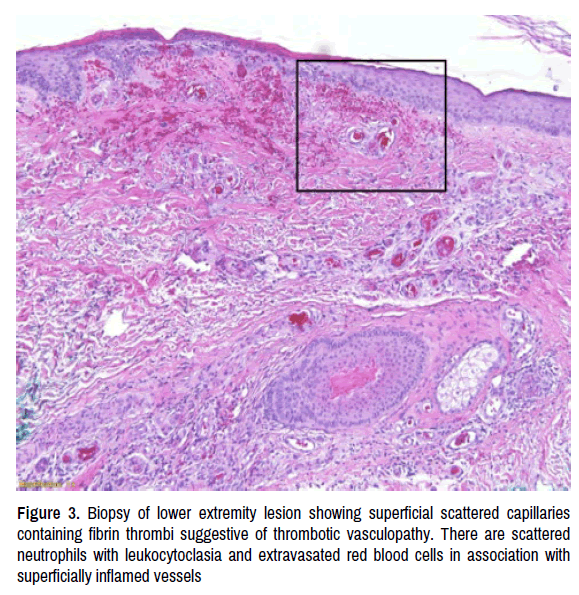
A 70-year-old woman with a past medical history of thyroid cancer, status post thyroidectomy presented to the dermatologist at our center with chronic ulcerations for sixteen months. Her lesions began as small open sores on her ankles, which progressed and developed up to her lower extremities, at times reaching her bilateral blanks and upper extremities. She had previously seen a rheumatologist at an outside hospital, where she trialed topical steroids, aspirin, doxycycline, pentoxifylline and rifampin for two weeks. Still, her rash never completely resolved and continued to wax and wane. On her lab work, she was found to be Perinuclear Anti-Neutrophil Cytoplasmic Antibody (P-ANCA) and Myeloperoxidase Positive, MeThylenetetraHydroFolate (MTHFR) mutation positive and Plasminogen Activator Inhibitor (PAI-1) polymorphism, with several biopsies ranging from capillaritis to leukocytoclastic vasculitis. At our center, she was found to have geometric ulcerations of her bilateral lower extremities, some with surrounding erythema, as depicted in Figure 1. She underwent a punch biopsy of a skin lesion on the left lower extremity, which revealed thrombotic vasculopathy, as shown in Figure 2.
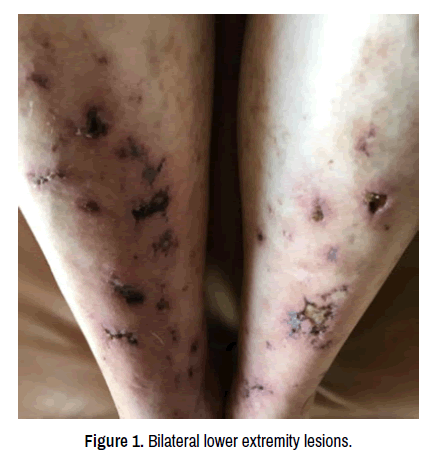
Figure 1. Bilateral lower extremity lesions.
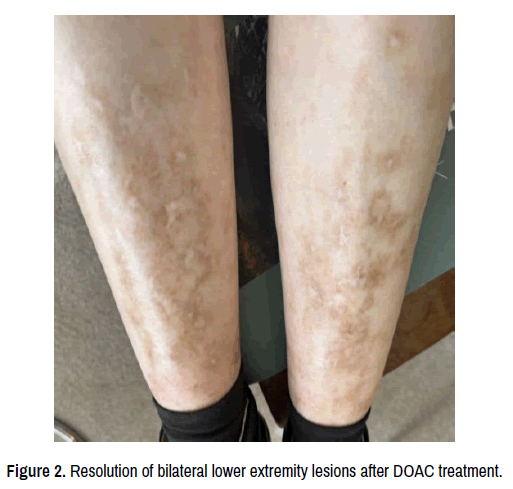
Figure 2. Resolution of bilateral lower extremity lesions after DOAC treatment.
She then established in hematology clinic. The patient denied previous history of blood clots, such as deep vein thrombosis or pulmonary embolism. No previous history of malignancy. She smoked cigarettes socially but quit forty years prior. Her lab workup revealed a high sensitivity C-Reactive Protein (CRP) of 0.3 (<1.0), haptoglobin of 149 (136-195), negative antiphospholipid panel, factor IV mutation negative, Protein C and S negative, antithrombin III normal. Her flow cytometry showed a T cell population with an increased CD4/CD8 ratio. This abnormal population of T cells can be seen in reactive conditions such as autoimmune disorders or in T-cell lymphomas and cutaneous T-cell lymphomas. A bone marrow biopsy was done showing no significant morphologic abnormality. T cells showed mildly increased CD4-CD8 ratio (6:2), but no overt aberrancy. Her Ubiquitin Activating Enzyme (UBA-1) testing was negative for Vacuoles E1 Enzyme X-Linked Autoinflammatory Somatic (VEXAS) syndrome. At this point, the patient was started on apixaban 5 mg twice a day for the thrombotic vasculopathy with excellent response. She had developed only one new lesion within three months, with no new skin lesions in the following two years. She continues this anticoagulation regimen to date (Figures 1-4).
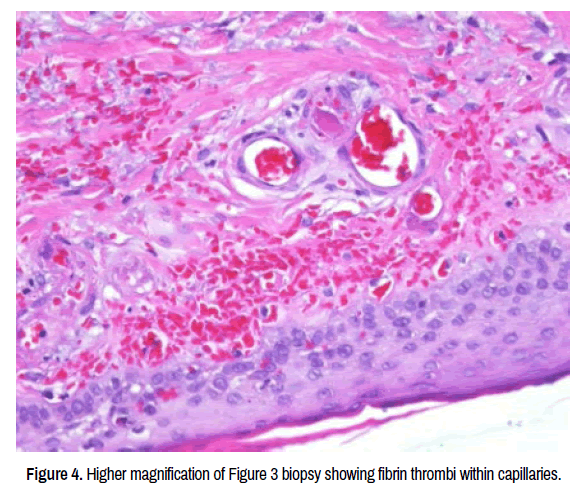
Figure 4. Higher magnification of Figure 3 biopsy showing fibrin thrombi within capillaries.
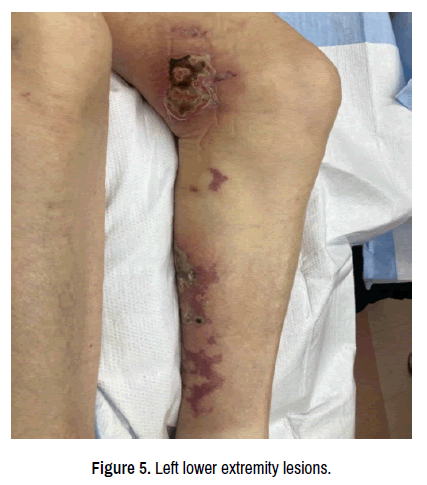
Figure 5. Left lower extremity lesions.
Case 2
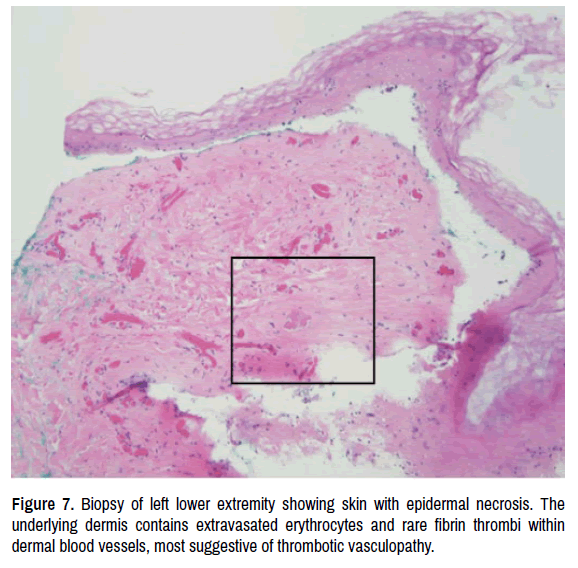
An 87-year-old man with a past medical history of myasthenia gravis, alcohol use disorder with cirrhosis, presented with hyperthermia and rhabdomyolysis after being found down outside his home. He was initially admitted to the intensive care unit, improved with supportive care and was transferred to the medicine service. Burn surgery and dermatology were consulted for evaluation of his bilateral lower extremity wounds, as shown in Figures 5 and 6. During his admission his lesions were initially thought to be related to a burn injury, but evolved and worsened with retiform purpura. His lab workup showed an Erythrocyte Sedimentation Rate (ESR) of 80 (0-30), high sensitivity CRP of 20.2 (<1.0). His Anti Nuclear Antibody (ANA), ANCA, rheumatoid factor, complement 3 and 4 were all negative. His fibrinogen and D-dimer were elevated. His antiphospholipid panel was positive for lupus-like-inhibitor. UBA1 testing for VEXAS syndrome was negative. The left lower medial leg lesion was biopsied, showing thrombotic vasculopathy, as shown in Figure 7. Hematology was consulted and considering his positive lupus like inhibitor, the patient was started on lovenox bridge to warfarin 2.5 mg given his baseline elevated International Normalized Ratio (INR), low albumin and age. He continues to follow in anticoagulation clinic and hematology clinic on this regimen (Figures 5-7)
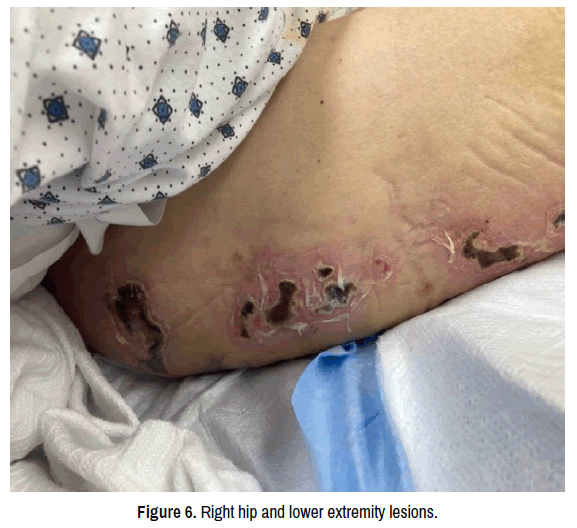
Figure 6. Right hip and lower extremity lesions.
Case 3
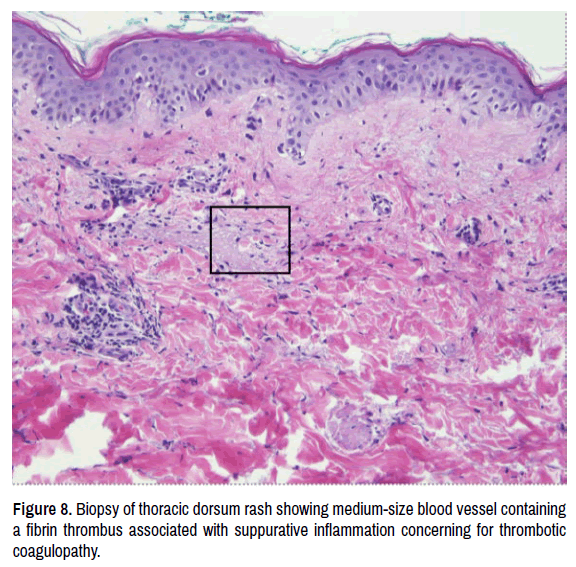
A 57-year-old female presented to the Emergency Room with a rash on her back and buttocks, associated with increasing pain, chills and dizziness. She described the rash as itching, deep stinging pain and worse with walking. She denied previous history of deep venous thrombosis, pulmonary embolism, stroke, or other clotting events. On admission, her ESR and high sensitivity CRP were elevated to 120 (0-30) and 15 (<1.0) respectively. Fibrinogen was >1000 (200-400) and D-dimer was 2192 (0-500). Elevated total protein and low-density lipoprotein. Her urine analysis was positive for leukocyte esterase, white blood cells, complement 3 elevated, normal complement 4 and negative for blood. Her chest X ray was negative as well. The rash had been recently biopsied by her dermatologist, suggestive of thrombotic vasculopathy, shown in Figure 8. She was evaluated by dermatology and rheumatology inpatient, who recommended holding her home estradiol hormonal therapy. She started on enoxaparin inpatient, as a bridge to warfarin, with a goal INR of 2.0-3.0. At her rheumatology follow up her rash and symptoms had been resolved on warfarin therapy. Her autoimmune workup was positive for one lupus-like inhibitor, although her repeat was indeterminate due to being on warfarin therapy. Anticardiolipin and beta-2 glycoprotein were negative. Her other autoimmune workup including ANA, double stranded DNA (ds-DNA), ANCA, (proteinase 3) PR3, anti-smith, anti-ribonucleoproteins and anti-scleroderma were negative. Factor 5 Leiden and Protein C/S were normal. Thyroid stimulating hormone was normal. Janus Kinase 2 (JAK2) was negative. Hepatitis and Human Immunodeficiency Virus (HIV) were negative. Two years after presenting, she was established in hematology clinic. Flow cytometry for Paroxysmal Nocturnal Hemoglobinuria (PNH) clone was negative. Based on resolution of her symptoms with warfarin and positive lupus-like inhibitor, she was recommended to continue likely lifelong anticoagulation. She continues to follow in anticoagulation clinic on warfarin (Figures 8 and 9).
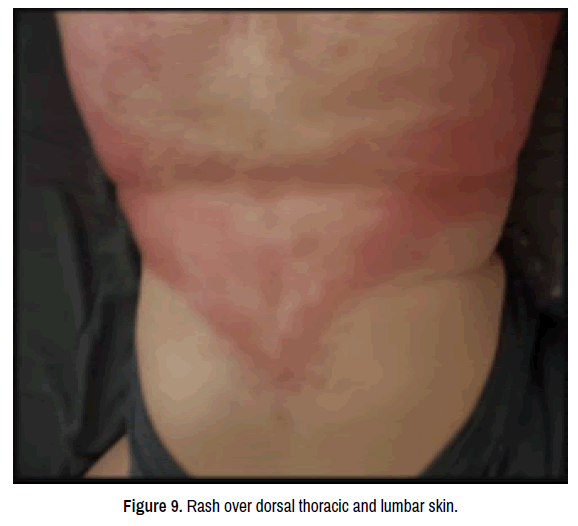
Figure 9. Rash over dorsal thoracic and lumbar skin.
Thrombotic vasculitis is a challenging disorder to diagnose and manage due to its variable clinical presentation, lack of established classification and absence of evidence-based treatment guidelines. Our cases describe the spectrum of clinical features and individualized management decisions.
Patients typically present with cutaneous findings, including palpable purpura, retiform purpura, livedo racemosa, ulcerations, or necrosis. These lesions can be painful and can mimic infectious cellulitis, traumatic lesions, or primary systemic vasculitis. Distribution is often cutaneous and localized, affecting the lower extremities. Recognition requires a high index of suspicion, especially in patients with recurrent or atypical lesions that do not respond to antibiotics or wound care. Two of our patients presented with typical lower extremity lesions, while the other atypically presented with an erythematous rash on her back.
Skin biopsy is the gold standard for diagnosis. Histopathology classically demonstrates intravascular fibrin thrombi within dermal or subcutaneous vessels, with endothelial swelling and variable perivascular inflammation. The minimal or absent leukocytoclasis distinguishes thrombotic vasculitis from leukocytoclasic vasculitis [12]. Direct immunofluorescence may show immune complex deposition in some cases but is not consistently present. Laboratory testing should include screening for hypercoagulability and autoimmune conditions. Suggested workup includes complete blood count, coagulation profile, antiphospholipid antibody panel, antinuclear antibody, extractable nuclear antigens, complement levels, cryoglobulins, viral hepatitis panel, flow cytometry for PNH clone, UBA1 for VEXAS screening and age-appropriate cancer screening. This can help distinguish the isolated cutaneous disease from a vasculopathy secondary to systemic processes, like antiphospholipid antibody syndrome, cryoglobulinemic vasculitis, or connective tissue disease.
There is no standardized treatment guideline for thrombotic vasculitis. Strategies fall into several categories. Supportive care includes involvement of wound care, pain management and infection prevention. Immunosuppression using corticosteroids or steroid-sparing agents can be considered when an autoimmune driver is suspected. However, the usefulness of these agents in a primary thrombotic process is unclear. Additionally, underling conditions like connective tissue disease, viral hepatitis, or malignancy should be addressed.
Anticoagulation is often considered in patients with evidence of hypercoagulable states, recurrent lesions, or progressive disease. Data from antiphospholipid syndrome, subcutaneous thrombotic vasculopathy and calciphylaxis suggest that anticoagulation can stabilize or slow lesion progression, but risks of bleeding should be considered. Case reports and small series describe variable success of low molecular weight heparin, warfarin and Direct Oral Antico Agulants (DOACs). One case described a patient with post-COVID vaccination subcutaneous thrombotic vasculopathy, who was anticoagulated with warfarin and heparin. This failed to halt progression and was complicated by heparin resistance and retroperitoneal bleeding [4]. Similarly, in non-uremic calciphylaxis and subcutaneous thrombotic vasculopathy, therapeutic anticoagulation has been variably effective.
For clinical practice, the following key points should be considered. First, individualized risk-benefit assessment should be done before initiating anticoagulation, particularly in idiopathic thrombotic vasculitis or biopsy limited disease. Factors such as prior bleeding, thrombophilia and lesion progression should guide decision making. Second, concurrent hypercoagulable states generally favor anticoagulation, though optimal agents and duration are still undefined. Two of our patients were treated with warfarin long-term due to the concern for antiphospholipid syndrome. Another patient achieved resolution of her lesions with a DOAC. Third, integration with other therapies such as wound care and pain management is needed, as anticoagulation alone can be insufficient to support the patient. And lastly, close monitoring and reassessment is needed given the potential for lesion progression or treatment-related complications. At our center, the patients on warfarin and DOACs are monitored in anticoagulation clinic, followed by multidisciplinary teams including hematology, dermatology and occasionally rheumatology.
Overall, thrombotic vasculitis represents a spectrum of overlapping thrombotic and inflammatory cutaneous disorders. Biopsy is critical for diagnosis, while laboratory workup is essential to identify systemic associations. Treatment is individualized, ranging from supportive care alone to immunosuppression and systemic anticoagulation. Our series reveals the diagnostic and therapeutic uncertainty that physicians can face and emphasizes the need for further research into diagnosis, predictors of response and optimal anticoagulation strategies.
The authors declare that they have no competing interests. No external funding was used for this work. SR was a major contributor in article review and writing the manuscript. TEG was a major contributor in article review and writing the manuscript. MG was a major contributor in article review and writing the manuscript. AE was a major contributor in writing the manuscript. HE was a major contributor in writing the manuscript. NK was a major contributor in writing the manuscript. DB was a major contributor in writing the manuscript. SB was a major contributor in article review and writing the manuscript. All authors read and approved the final manuscript.
Not applicable.
Google Scholar, Cross Ref, Indexed at
Google Scholar, Cross Ref, Indexed at
Google Scholar, Cross Ref, Indexed at
Google Scholar, Cross Ref, Indexed at
Google Scholar, Cross Ref, Indexed at
Google Scholar, Cross Ref, Indexed at
Google Scholar, Cross Ref, Indexed at
Google Scholar, Cross Ref, Indexed at
Google Scholar, Cross Ref, Indexed at
Google Scholar, Cross Ref, Indexed at
Journal of Vasculitis received 83 citations as per Google Scholar report