Opinion - (127) Volume 11, Issue 2
Received: 31-Mar-2025, Manuscript No. cdp-25-165838;
Editor assigned: 02-Apr-2025, Pre QC No. P-165838;
Reviewed: 16-Apr-2025, QC No. Q-165838;
Revised: 24-Apr-2025, Manuscript No. R-165838;
Published:
30-Apr-2025
, DOI: 10.37421/2572-0791.2025.11.168
Citation: Orgeta, Vandel. “Therapeutic Set and Setting: Optimizing Psilocybin-assisted Therapy Outcomes” Clin Depress 11 (2025): 168.
Copyright: © 2025 Orgeta V. This is an open-access article distributed under the terms of the Creative Commons Attribution License, which permits unrestricted use, distribution and reproduction in any medium, provided the original author and source are credited.
Psilocybin-assisted therapy is rapidly emerging as a promising treatment for a range of mental health conditions, including major depressive disorder, anxiety, post-traumatic stress disorder, and end-of-life existential distress. With a growing body of clinical evidence pointing to its profound and often rapid therapeutic effects, attention has turned not only to the pharmacology of psilocybin but to the contextual variables that critically shape its outcomes. Chief among these are the constructs of â??setâ? and â??settingâ?-terms that have long been recognized within psychedelic research as fundamental to the nature and trajectory of the psychedelic experience. â??Setâ? refers to the mindset, intentions, psychological state, and expectations of the individual undergoing the therapy, while â??settingâ? encompasses the physical, social, and cultural environment in which the session occurs. These variables interact in complex ways with the pharmacological effects of psilocybin and can profoundly influence whether an experience leads to therapeutic breakthroughs or psychological discomfort. Optimizing these contextual factors is therefore essential for maximizing therapeutic benefit and minimizing adverse outcomes in psilocybin-assisted therapy [1].
Clinical trials and observational studies have consistently demonstrated that psilocybin sessions conducted in controlled, supportive environments produce more favorable outcomes than those undertaken in unstructured or recreational contexts. Participants who are well-prepared, psychologically supported, and embedded in a safe and aesthetically conducive space are significantly more likely to report positive emotional breakthroughs, enduring reductions in symptoms, and sustained improvements in well-being. Conversely, individuals who enter a psychedelic session with unresolved psychological turmoil, unrealistic expectations, or in chaotic surroundings may be more vulnerable to confusion, fear, or destabilization. The underlying neuropharmacology of psilocybin-particularly its potent agonism at the 5-HT2A serotonin receptor-induces a temporary but radical reorganization of neural networks and ego function. This creates a period of heightened emotional plasticity, during which thoughts, feelings, and sensory perceptions are intensified and can be deeply influenced by both internal and external cues [2].
In practice, optimizing the therapeutic â??setâ? begins well before the psilocybin dose is administered. Preparation sessions with trained therapists serve to build rapport, explore the participantâ??s personal history, clarify intentions, and set expectations for the experience. This process helps reduce anticipatory anxiety and provides the individual with tools for navigating challenging emotional content. Participants are typically encouraged to adopt an open, non-judgmental mindset and to approach the experience with curiosity rather than control [3]. Techniques such as mindfulness, breathwork, or grounding exercises may be introduced to help participants remain centered if they encounter intense psychological material. These preparatory efforts create a cognitive and emotional framework that supports exploration and integration, increasing the likelihood that difficult experiences are processed constructively rather than avoided or pathologized [4].
Equally important is the physical and interpersonal environment in which the psilocybin session takes place. Therapeutic settings are intentionally designed to promote feelings of safety, comfort, and openness. Rooms are often softly lit and decorated with calming colors, natural elements, and personalizable touches such as photographs or meaningful objects. Music plays a central role in guiding the emotional arc of the session, often selected in advance to match the anticipated trajectory of the experience. The presence of one or two trained therapists throughout the session-typically referred to as guides-provides a stable and compassionate human anchor. These individuals do not direct or interpret the experience but serve as supportive witnesses, helping to create an interpersonal container in which vulnerability is welcomed and emotional expression is honoured [5].
In conclusion, the effectiveness of psilocybin-assisted therapy cannot be understood solely through the lens of pharmacology. The concepts of therapeutic set and setting are not peripheral variables but central determinants of therapeutic outcome. By shaping the participantâ??s internal and external context, these factors mediate how the psychedelic state is experienced, processed, and ultimately integrated. Optimizing set and setting requires thoughtful preparation, skilled therapeutic support, and a safe, respectful environment tailored to the individualâ??s needs and worldview. As psilocybin therapy moves toward broader clinical adoption, the importance of these elements must be upheld and standardized within treatment protocols. A well-calibrated set and setting not only reduce risk but unlock the full transformative potential of psychedelic therapy-facilitating deep emotional healing, enduring psychological change, and renewed engagement with life.
None.
None.
Google Scholar Cross Ref Indexed at
Google Scholar Cross Ref Indexed at
Google Scholar Cross Ref Indexed at
Google Scholar Cross Ref Indexed at
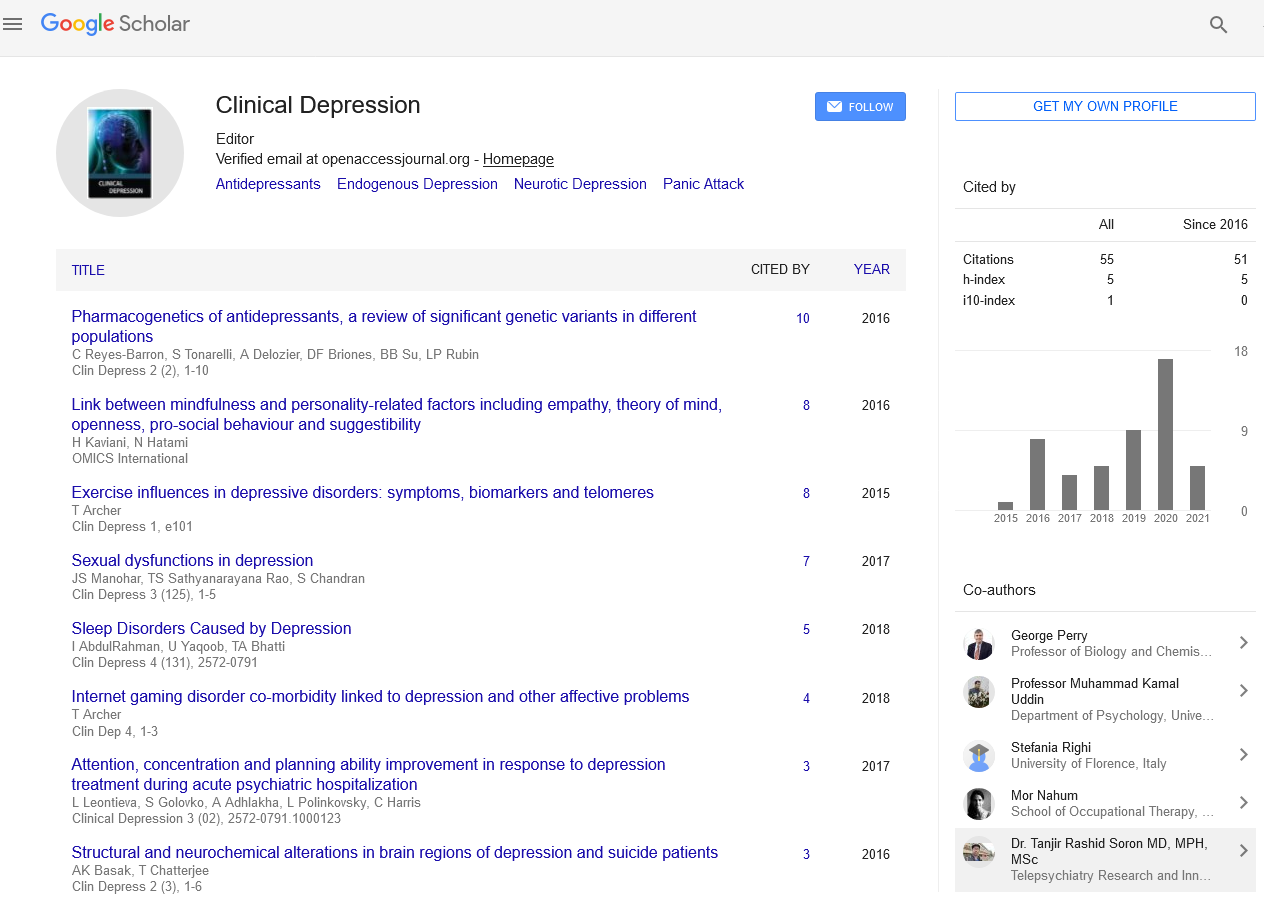
Clinical Depression received 89 citations as per Google Scholar report