Commentary - (2025) Volume 11, Issue 2
Received: 01-Apr-2025, Manuscript No. jpnp-25-166022;
Editor assigned: 03-Apr-2025, Pre QC No. P-166022;
Reviewed: 15-Apr-2025, QC No. Q-166022;
Revised: 22-Apr-2025, Manuscript No. R-166022;
Published:
29-Apr-2025
, DOI: 10.37421/2472-0992.2025.11.360
Citation: Towart, Zairol. “The Pharmacology of Non-nutritive Sweeteners: Benefits and Risks for Public Health.” J Pharmacogn Nat Prod 11 (2025): 360.
Copyright: © 2025 Towart Z. This is an open-access article distributed under the terms of the Creative Commons Attribution License, which permits unrestricted use, distribution and reproduction in any medium, provided the original author and source are credited.
Non-Nutritive Sweeteners (NNS) are artificial or synthetic compounds used to mimic the sweet taste of sugar without contributing significant calories. They are widely used in food and beverage products as a substitute for sugar, particularly in items marketed as low-calorie, sugar-free, or "diet." These sweeteners are often many times sweeter than sucrose (table sugar), which means only small amounts are needed to achieve the desired level of sweetness. Some of the most commonly used non-nutritive sweeteners include aspartame, sucralose, saccharin, stevia, and acesulfame potassium. With the growing global concerns over the health effects of excessive sugar consumption, particularly its link to obesity, diabetes, and cardiovascular diseases, NNS have been promoted as an alternative to reduce calorie intake while still satisfying sweet cravings. The pharmacology of non-nutritive sweeteners involves how these compounds interact with the body once consumed. Unlike sugar, which is broken down into glucose and fructose, non-nutritive sweeteners pass through the digestive system without being absorbed or metabolized in a significant way, which is why they contribute negligible calories. When consumed, they bind to sweet receptors on the tongue, sending signals to the brain that trigger the sensation of sweetness, without raising blood glucose levels [2].
This unique characteristic is why many people with diabetes or those looking to manage their weight use NNS as a tool for reducing calorie intake. For individuals with diabetes, these sweeteners are especially beneficial since they do not cause blood sugar spikes or require insulin for metabolism, thus aiding in blood glucose control. The potential benefits of non-nutritive sweeteners extend beyond weight management and diabetes control. Because they have no or very few calories, NNS can be an important component of low-calorie and low-sugar diets, helping to reduce overall energy intake. This is particularly useful in addressing the obesity epidemic, where calorie-dense sugary foods and beverages are a major contributor to weight gain. Non-nutritive sweeteners are also widely used in "diet" versions of sodas and snacks, providing consumers with an alternative to high-calorie, sugar-laden products. Additionally, sweeteners like stevia, which is derived from the leaves of the Stevia rebaudiana plant, are often marketed as "natural" and may appeal to consumers seeking alternatives to synthetic products. However, the use of non-nutritive sweeteners is not without controversy. While they offer several benefits, there are ongoing concerns and debates surrounding their long-term safety, metabolic effects, and impact on gut health. Some research indicates that artificial sweeteners may alter the composition of gut bacteria, which could have broader implications for metabolism, digestion, and immune function. Additionally, there have been studies investigating the link between NNS and metabolic conditions like insulin resistance, though results have been inconclusive and sometimes contradictory [3].
Safety concerns regarding the consumption of non-nutritive sweeteners have also been the subject of extensive research. Regulatory bodies, such as the U.S. Food and Drug Administration (FDA) and the European Food Safety Authority (EFSA), have evaluated numerous NNS and set acceptable daily intake levels for these substances, based on rigorous toxicological studies. These agencies have declared many NNS, including aspartame, sucralose, and saccharin, to be safe for human consumption within the established limits. Some studies have suggested that the consumption of NNS may lead to changes in appetite regulation, potentially increasing cravings for sweet or high-calorie foods, which could inadvertently contribute to overeating. There are also concerns about the potential effects of NNS on the gut microbiome. However, some individuals report sensitivity to certain sweeteners, particularly aspartame, which has been linked to headaches, dizziness, or allergic reactions in rare cases. Moreover, some studies have raised concerns about the long-term consumption of high doses of NNS and potential links to cancer, though conclusive evidence supporting these claims remains lacking. Another area of concern is the psychological and behavioral impact of consuming non-nutritive sweeteners. Some researchers suggest that consuming artificially sweetened products may lead to a "sweet tooth" effect, whereby individuals develop a heightened preference for sweet flavors over time. This could reinforce unhealthy eating patterns and may make it harder for individuals to reduce their overall sugar intake in the long term [4].
Moreover, there is some evidence to suggest that relying on non-nutritive sweeteners may not be a long-term solution to obesity or metabolic diseases. While they may offer a temporary reduction in calorie intake, they do not address the root causes of these conditions, such as poor dietary habits, lack of physical activity, and other lifestyle factors. Despite these concerns, non-nutritive sweeteners remain widely used, and their role in public health continues to be debated. As the obesity and diabetes epidemics continue to escalate, NNS offer a potential tool for reducing sugar consumption and calorie intake. However, it is essential that public health recommendations consider both the benefits and potential risks of these sweeteners. Research into the long-term effects of NNS on metabolism, gut health, and overall well-being is ongoing, and a clearer understanding of these impacts is necessary to guide recommendations for their safe and responsible use. For now, many experts agree that while non-nutritive sweeteners can be a helpful option for some individualsâ??especially for those with diabetes or those trying to manage their weight they should be used in moderation and as part of a balanced, healthy diet [5].
Google Scholar Cross Ref Indexed at
Google Scholar Cross Ref Indexed at
Google Scholar Cross Ref Indexed at
Google Scholar Cross Ref Indexed at
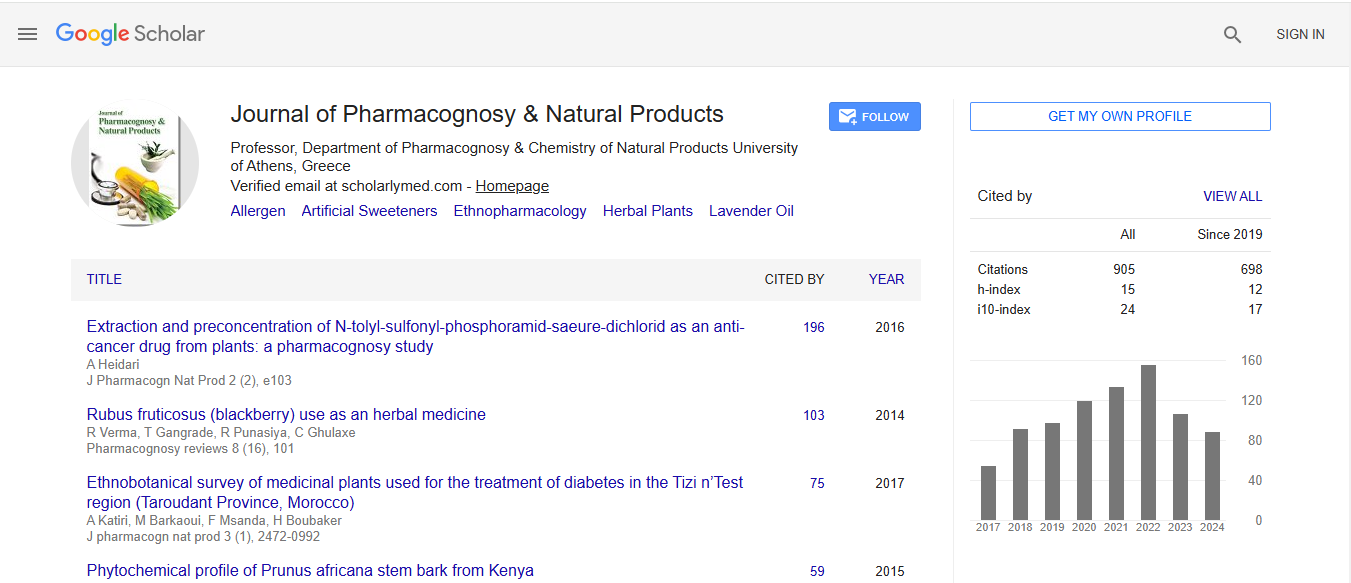
Journal of Pharmacognosy & Natural Products received 606 citations as per Google Scholar report